Umbwe Route Kilimanjaro: Complete Guide, Itinerary & Cost
The Umbwe Route Kilimanjaro climb takes you up one of the mountain’s steepest and most direct trails. It starts on the southern side of Mount Kilimanjaro and moves quickly from dense rainforest into higher, rocky terrain. The route then joins the Southern Circuit at Barranco before continuing to Karanga, Barafu, and Uhuru Peak at 5,895 metres.
Umbwe usually takes 6 or 7 days on the mountain. The 6-day itinerary follows a faster schedule, while the 7-day option adds more time for acclimatization. Because Umbwe gains altitude quickly and includes steep sections, it suits fit and experienced trekkers who understand the demands of high-altitude climbing.
In this complete guide, you will learn about the Umbwe Route itinerary, difficulty, distance, best time to climb, cost, acclimatization, safety, packing needs, and what to expect on summit night. We also explain the difference between the 6-day and 7-day routes so you can understand which itinerary matches your experience and climbing goals.
If you choose to climb Umbwe with WeWild Travel, our local mountain team will guide you through each stage of the trek while helping you manage your pace, energy, hydration, and altitude throughout the climb.
Table of contents
- Umbwe Route Kilimanjaro: Complete Guide, Itinerary & Cost
- Umbwe Route Quick Facts
- Is the Umbwe Route Right for You?
- How Difficult Is the Umbwe Route?
- 6-Day vs 7-Day Umbwe Route
- 6-Day Umbwe Route Itinerary
- 7-Day Umbwe Route Itinerary
- Umbwe Route Map & Elevation Profile
- Umbwe Route Distance
- Umbwe Route Success Rate
- Best Time to Climb Umbwe Route
- Umbwe Route Cost
- What Is Included in a WeWild Umbwe Climb?
- What to Pack for Umbwe Route
- Camping and Accommodation on Umbwe
- Umbwe Route Safety & Altitude Management
- Umbwe Route Pros and Cons
- Umbwe vs Machame vs Lemosho
- Who Should Climb Umbwe?
- Frequently Asked Questions About the Umbwe Route
- Conclusion
Umbwe Route Quick Facts
- Location: Southern side of Mount Kilimanjaro, Tanzania
- Starting Point: Umbwe Gate
- Summit: Uhuru Peak, 5,895 metres
- Duration: 6 or 7 days
- Difficulty: Very challenging
- Accommodation: Mountain camping
- Main Route: Umbwe to Barranco to Karanga to Barafu to Uhuru Peak
- Descent Route: Mweka Route
- Terrain: Rainforest, steep ridges, rocky trails, alpine desert and high-altitude terrain
- Main Challenge: Steep climbing and rapid altitude gain
- Crowds: Usually quieter during the early stages
- Acclimatization: Limited on the 6-day itinerary; the 7-day option allows more time
- Best For: Fit and experienced trekkers seeking a demanding Kilimanjaro climb
- Key Highlight: A direct and dramatic approach through the southern slopes of Kilimanjaro
Is the Umbwe Route Right for You?
The Umbwe Route is right for you if you want a challenging Kilimanjaro climb and feel comfortable hiking on steep mountain terrain. The route gains altitude quickly, so you need good physical preparation and a strong attitude toward long trekking days.
Umbwe can suit you if you:
- Have previous mountain or multi-day trekking experience
- Feel comfortable walking on steep and uneven trails
- Can handle long hiking days with a backpack
- Have prepared your legs and endurance before the climb
- Understand that altitude can affect anyone, regardless of fitness
- Prefer a quieter and more direct approach to Kilimanjaro
- Want to camp throughout your mountain trek
- Are ready for a demanding summit night
Who Should Think Twice About Umbwe?
Umbwe may not suit you if this is your first serious mountain trek or if you prefer a gradual ascent with more time for acclimatization. The rapid elevation gain can make the first days demanding, especially for trekkers who have little experience at high altitude.
If you want a slower schedule, you can consider a longer Kilimanjaro itinerary that gives your body more time to adjust to the increasing elevation.
Choose Your Umbwe Itinerary Carefully
Umbwe offers 6-day and 7-day itineraries, and the extra day changes the pace of the climb. The 6-day route keeps the trek compact, while the 7-day itinerary provides additional time for acclimatization.
Before choosing your itinerary, consider your trekking experience, physical preparation, previous altitude experience, and how much time you can spend on the mountain. Your WeWild Travel mountain team can also discuss these factors with you before the climb.
How Difficult Is the Umbwe Route?
The Umbwe Route is one of the most challenging routes on Mount Kilimanjaro. Its main difficulty comes from steep trails, rapid altitude gain, and demanding hiking days. The route reaches the Barranco area quickly before joining the Southern Circuit toward Karanga and Barafu.
You do not need technical climbing skills for the standard Umbwe Route, but you need good physical preparation, steady endurance, and the ability to walk for several hours each day. Altitude also plays a major role, so fitness alone does not guarantee an easy climb.
Physical Challenge
The first part of the Umbwe Route demands strong legs and steady balance. The trail climbs through the rainforest and then follows steep ridges toward higher ground. Some sections require careful steps over roots, rocks, and uneven surfaces.
As the trek continues, the altitude makes normal walking harder. You may notice slower breathing, tired legs, reduced appetite, or headaches. Long trekking days can also increase fatigue.
Good preparation helps. Before your climb, focus on long walks, uphill training, stair climbing, and regular aerobic exercise. During the trek, walk at a controlled pace and save energy for the higher sections and summit night.
Altitude and Acclimatization
Altitude presents a different challenge from physical fitness. Umbwe gains elevation quickly during its early stages, giving your body less time to adjust compared with longer routes.
Your body needs time to adapt as you climb higher. You may feel the effects of altitude even if you have strong fitness and previous trekking experience. For this reason, your pace, hydration, rest, and response to symptoms matter throughout the climb.
The 6-day Umbwe itinerary follows a faster schedule. The 7-day itinerary adds more time on the mountain, which can give your body additional time to adjust before the summit attempt.
Your mountain guides should monitor how you feel each day and respond appropriately when altitude symptoms appear. If symptoms become serious, safety takes priority over reaching the summit.
Terrain
Umbwe changes character as you gain elevation. The trek begins in dense rainforest, where the trail can feel narrow, steep, and humid. You then move into more open mountain terrain as the vegetation becomes shorter.
Near Barranco, large rocks and steep sections create a more rugged hiking experience. The trail later passes through alpine terrain before reaching the high camp at Barafu.
The famous Barranco Wall adds another memorable challenge. You will use your hands for balance in some places, but the standard route does not require technical rock climbing equipment.
Weather can also change the trail conditions. Rain can make lower sections slippery, while cold, wind, and low temperatures become more important at higher elevations.
Summit Night
Summit night creates the biggest physical and mental test of the Umbwe climb. You normally leave Barafu Camp around midnight and begin walking in darkness toward the summit.
The trail becomes colder and steeper as you climb toward Stella Point on the crater rim. You will walk slowly, take regular breaks, and follow your guide’s pace. The thin air at this elevation makes each step feel harder.
After reaching Stella Point, you continue around the crater rim toward Uhuru Peak at 5,895 metres. The final section can feel demanding because of the altitude, cold, fatigue, and many hours of walking.
Reaching Uhuru Peak is only part of the summit day. After taking time at the top, you descend to lower ground, rest, eat, and continue toward the next camp. The full summit day can therefore require many hours of continuous effort.
The key to summit night is not speed. A steady pace, proper clothing, hydration, energy management, and close communication with your guide can help you manage the challenge safely.
6-Day vs 7-Day Umbwe Route
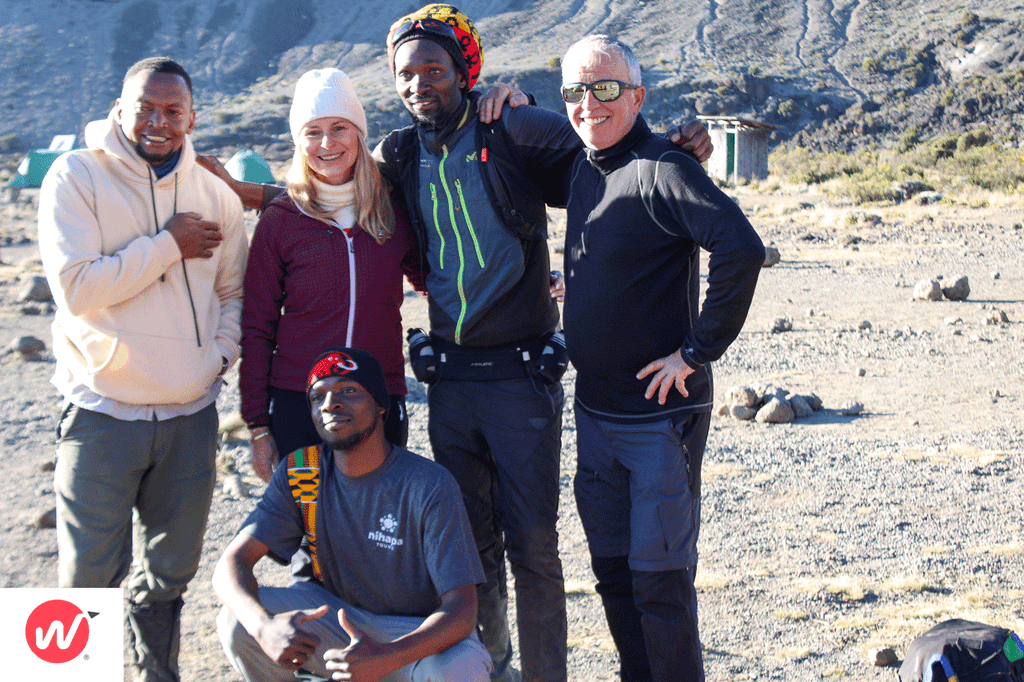
The Umbwe Route usually takes 6 or 7 days to complete. Both itineraries follow the same general trail toward Barranco, Karanga, Barafu, and Uhuru Peak, but the 7-day option gives trekkers more time on the mountain.
The main difference comes from the pace. The 6-day Umbwe Route follows a compact schedule with fewer days for acclimatization. The 7-day Umbwe Route adds an extra day, allowing a slower pace and more time to adjust to the increasing altitude.
| Feature | 6-Day Umbwe | 7-Day Umbwe |
|---|---|---|
| Duration | 6 days | 7 days |
| Pace | Faster | More gradual |
| Acclimatization time | More limited | More time available |
| Physical demand | High | High, with more time |
| Camping | Yes | Yes |
| Summit | Uhuru Peak | Uhuru Peak |
| Descent | Mweka Route | Mweka Route |
Your choice should depend on your trekking experience, preparation, altitude history, available time, and how your body responds during the climb.
6-Day Umbwe Route Itinerary
Day 1: Umbwe Gate to Umbwe Camp
- Elevation: 1,600 m to 2,850 m
- Distance: About 11 km
- Hiking time: 5-7 hours
- Habitat: Montane forest
Your Umbwe adventure begins at Umbwe Gate. After registration and a final equipment check, you start walking through the dense rainforest.
The trail climbs steadily from the beginning. Roots, rocks, and narrow sections make the route feel rugged, while thick vegetation surrounds you. Your guide sets a controlled pace so you can conserve energy for the days ahead.
You finish the day at Umbwe Camp, where you have dinner and rest in your tent.
Day 2: Umbwe Camp to Barranco Camp
- Elevation: 2,850 m to 3,960 m
- Distance: About 6 km
- Hiking time: 4-6 hours
- Habitat: Montane forest to moorland
The trail becomes steeper as you leave the forest behind. You follow the Umbwe Ridge through increasingly open terrain before reaching the Barranco area.
This day brings a significant altitude gain in a relatively short distance. Your guide will keep the pace slow and steady while watching how you respond to the elevation.
Barranco Camp offers dramatic views of the mountain, including the imposing Barranco Wall. After reaching camp, you eat, rest, and prepare for the next morning.
Day 3: Barranco Camp to Karanga Camp
- Elevation: 3,960 m to 4,035 m
- Distance: About 5 km
- Hiking time: 4-5 hours
- Habitat: Alpine desert
You begin the day by climbing the famous Barranco Wall. Although it looks intimidating from camp, the standard trail does not require technical climbing equipment. You use your hands for balance while your guide helps you choose secure steps.
After the wall, the trail rises and falls through the mountain landscape before reaching Karanga Camp.
This shorter day gives you time to rest and prepare for the higher altitude ahead.
Day 4: Karanga Camp to Barafu Camp
- Elevation: 4,035 m to 4,640 m
- Distance: About 4 km
- Hiking time: 4-5 hours
- Habitat: Alpine desert
Today you climb toward Barafu Camp, the main starting point for summit night. The vegetation becomes sparse as you move deeper into the high-altitude environment.
The trail may feel physically demanding because of the elevation. Once you reach Barafu, your team prepares your dinner and sleeping arrangements while your guide explains the summit schedule.
Try to rest as much as possible because you will start the summit attempt around midnight.
Day 5 – Summit: Barafu Camp to Uhuru Peak and Down to Mweka Camp
- Barafu elevation: 4,640 m
- Uhuru Peak: 5,895 m
- Hiking time: About 12-16 hours, depending on conditions and pace
- Habitat: Alpine desert to arctic zone
Summit night begins around midnight. You leave Barafu Camp in darkness and climb slowly toward Stella Point.
The trail becomes colder and steeper as you gain altitude. Your guide maintains a steady pace and monitors the group throughout the climb.
After reaching Stella Point at about 5,739 m, you continue along the crater rim toward Uhuru Peak, the highest point in Africa at 5,895 m.
At the summit, you have time to celebrate, take photographs, and enjoy the views when conditions allow. You then begin the long descent toward Mweka Camp.
The descent gives your body a chance to return to lower altitude, but fatigue can make the final hours demanding.
Day 6: Mweka Camp to Mweka Gate
- Elevation: About 3,100 m to 1,640 m
- Distance: About 10 km
- Hiking time: 3-5 hours
- Habitat: Rainforest
After breakfast, you begin the final walk through the rainforest toward Mweka Gate.
The trail feels different after the summit. You are returning to warmer, lower ground, and the forest becomes thicker as you descend.
At Mweka Gate, you complete the park procedures and meet your transport. Your Kilimanjaro climb ends here.
Read More : 6 Day Umbwe Route Itinerary
7-Day Umbwe Route Itinerary
The 7-day Umbwe itinerary follows the same general route but spreads the climb over an additional day. This creates a slower schedule and gives you more time to adjust to the altitude.
The exact placement of the extra day can vary by operator and itinerary design, so your final program should clearly state where the additional acclimatization time takes place.
What Changes?
The biggest difference is time. Instead of moving through the route on a compact six-day schedule, the seven-day itinerary gives you an additional day before the summit.
This can make the overall experience feel less rushed. You have more time to rest, monitor how your body responds to altitude, and manage your energy before summit night.
The route still includes steep terrain, high altitude, and a demanding summit day. Adding one day does not remove those challenges. It simply gives your body more time to adapt and gives your team more flexibility during the trek.
Extra Acclimatization Day
The extra day provides additional time for acclimatization before the final push toward Uhuru Peak. Depending on the itinerary, your guide may use this time for a shorter hike, rest, or an acclimatization-focused program.
Your guide will consider the group’s condition, altitude symptoms, weather, and overall progress when managing the day.
For trekkers who have limited high-altitude experience, understanding the value of a slower schedule can make an important difference. The mountain does not reward rushing. A steady pace, proper rest, good hydration, and careful altitude management remain important throughout the climb.
Umbwe Route Map & Elevation Profile
The Umbwe Route map shows why this climb feels different from other Kilimanjaro routes. The trail starts on the southern side of the mountain at Umbwe Gate and climbs rapidly through the rainforest before reaching the higher Southern Circuit.
The route follows this general progression:
Umbwe Gate to Umbwe Camp to Barranco Camp to Karanga Camp to Barafu Camp to Uhuru Peak to Mweka Camp to Mweka Gate
The biggest elevation change happens during the first two days. You start around 1,600 metres at Umbwe Gate and climb to roughly 2,850 metres at Umbwe Camp before continuing toward Barranco.
From Barranco, the route joins the Southern Circuit. You pass the Barranco Wall, continue toward Karanga, and then climb to Barafu Camp. Barafu sits at around 4,600 metres and serves as the main base for the summit attempt.
From Barafu, you climb toward Uhuru Peak at 5,895 metres before descending through the Mweka Route.
Understanding the Umbwe Elevation Profile
The elevation profile matters because Umbwe does not spread its ascent evenly across many days. The route gains a lot of height early, which gives your body less time to adjust to the changing altitude.
The profile becomes especially important when comparing the 6-day and 7-day itineraries. The additional day on the longer itinerary can create more time for acclimatization and recovery before the summit attempt.
A good Umbwe map should therefore show more than the trail line. It should help you understand where the route climbs quickly, where you sleep, where the terrain changes, and how the final summit ascent fits into the whole journey.
Umbwe Route Distance
The Umbwe Route covers approximately 50-53 kilometres from Umbwe Gate to the summit and down to Mweka Gate, depending on the exact route measurements used by the operator. Published route maps commonly show about 32 miles, which equals roughly 51 kilometres.
The distance may look manageable on paper, but kilometres alone do not show the true difficulty of Umbwe. The route combines steep climbing, rapid elevation gain, uneven terrain, and a long summit day.
A typical 6-day itinerary covers approximately:
- Day 1: Umbwe Gate to Umbwe Camp – about 11 km
- Day 2: Umbwe Camp to Barranco Camp – about 6 km
- Day 3: Barranco Camp to Karanga Camp – about 5 km
- Day 4: Karanga Camp to Barafu Camp – about 4 km
- Day 5: Barafu Camp to Uhuru Peak and down toward Mweka Camp – about 17 km
- Day 6: Mweka Camp to Mweka Gate – about 10 km
The summit day carries a particularly large workload. You climb from Barafu toward Uhuru Peak and then descend thousands of metres to the lower Mweka area. That combination of altitude, climbing, and descent makes the summit day much more demanding than its distance alone suggests.
For this reason, trekkers should prepare for elevation, terrain and total hiking time, rather than training only for a certain number of kilometres.
Umbwe Route Success Rate
There is no single official success rate for the Umbwe Route that applies to every operator or every climber. Published figures differ because operators use different groups, itineraries, time periods, definitions of success, and data samples.
For example, some current sources estimate around 50% for 6-day Umbwe and around 70% for 7-day Umbwe, while another operator reports its own historical data of 58% for 6-day and 73% for 7-day Umbwe. These figures should not be presented as a universal Kilimanjaro statistic.
Why Does the Success Rate Vary?
Several factors can affect whether a climber reaches Uhuru Peak:
- Itinerary length: More days can provide additional time for acclimatization.
- Altitude response: Every person’s body responds differently to high altitude.
- Pacing: A controlled pace helps conserve energy during the ascent.
- Acclimatization: Gradual exposure to higher elevations gives the body more time to adapt.
- Fitness and preparation: Strong endurance helps with the physical demands of the route.
- Weather: Cold, rain, wind, and poor trail conditions can affect the climb.
- Guide support: Experienced guides can monitor symptoms and adjust the pace or plan when necessary.
- Health and energy: Sleep, hydration, nutrition, and recovery all matter during a multi-day climb.
What Does This Mean for Your Umbwe Climb?
A published success percentage cannot tell you exactly whether you will reach Uhuru Peak. It can only provide context about the route and the conditions surrounding previous climbs.
At WeWild Travel, we focus on the factors our mountain team can manage: steady pacing, altitude monitoring, proper rest, hydration, nutrition, experienced local guides, and careful decision-making throughout the trek.
If you want to understand your chances of completing Umbwe, the better question is not simply, “What is the success rate?” It is “How can I prepare properly for this route and manage altitude safely?”
That approach gives you a more useful picture of what it takes to reach Uhuru Peak at 5,895 metres.
Best Time to Climb Umbwe Route
The best time to climb the Umbwe Route is during Kilimanjaro’s drier periods, especially January to early March and June to October. These months generally bring better trail conditions, clearer mountain views, and less rainfall than the wetter periods. This matters on Umbwe because the route starts with steep terrain where rain can make roots, rocks, and soil slippery.
Unlike some Kilimanjaro routes, Umbwe does not become easier simply because the weather is dry. The route remains steep and demanding, so choosing a period with more stable conditions can help you manage the terrain more comfortably.
January to Early March
January and February offer a useful combination of relatively dry conditions, warmer temperatures at lower elevations, and generally good visibility. The mountain can also feel quieter than during the busiest months of the main dry season.
February often provides good conditions for trekkers who want dry trails and clear mountain scenery. March becomes more changeable as rainfall increases, so exact conditions can vary.
June to October
June through October forms the main dry season on Kilimanjaro. The mountain usually experiences more stable weather, drier trails, and good visibility, although temperatures become colder at higher elevations. July and August attract more climbers across Kilimanjaro, while September and October can offer a different crowd level as the season progresses.
For Umbwe, the dry conditions are particularly useful during the steep opening section. Firm ground makes it easier to place your feet securely and maintain a steady pace.
What About March, April and May?
March can bring a transition toward wetter conditions, while April and May receive the heaviest rainfall. Wet weather can make the lower Umbwe trail muddy and slippery, reduce visibility, and make the steep sections more demanding.
You can still find climbers on Kilimanjaro during these months, but the conditions require greater flexibility. For the Umbwe Route, the combination of steep terrain and wet ground deserves particular consideration.
What About November and December?
November usually brings the short rains. Conditions can change quickly, with rain and cloud affecting the lower mountain and visibility. December can also bring changing weather before the January dry period.
If your travel dates fall during a wetter month, speak with your local operator before choosing Umbwe. The route’s steep character makes trail conditions an important part of the decision.
Which Months Give the Best Umbwe Experience?
For a simple planning guide:
- January to February: Generally dry, relatively warm, and good for mountain views
- Early March: Possible good conditions, but rainfall becomes more variable
- April to May: Long rains; wetter and muddier trail conditions
- June: Start of the main dry period; cooler conditions
- July to August: Dry and popular, with colder high-altitude conditions
- September to October: Generally dry with good trekking conditions
- November: Short rains and more variable weather
- December: Changing conditions before the January dry period
Does the Season Affect Umbwe’s Difficulty?
Yes. The route itself does not change, but weather can change how the trail feels underfoot.
A dry Umbwe trail can give you firmer footing on steep sections. Heavy rain can create mud, slippery roots, wet rocks, and poorer visibility. Cold weather also becomes more important as you approach the summit.
However, weather is only one part of a successful climb. Your itinerary, acclimatization, physical preparation, pacing, guide support, and response to altitude all matter.
For that reason, WeWild Travel looks at your planned climbing dates together with your experience and itinerary rather than treating one month as a guarantee of good summit conditions.
Umbwe Route Cost
The cost to climb Mount Kilimanjaro via the Umbwe Route depends on the number of trekking days, group size, travel season, accommodation, and level of service. Current published Umbwe prices range from about $1,300 to more than $3,800 per person, with larger group climbs generally costing less per person and private climbs costing more.
For a realistic budget, most international climbers should compare packages around these levels:
- Budget group climb: about $1,300 to $2,000 per person
- Standard or mid-range climb: about $2,000 to $2,800 per person
- Private or premium climb: about $2,800 to $3,800+ per person
These figures provide a general market guide rather than a fixed WeWild Travel price. Your final quote depends on your travel dates, group size, itinerary, hotel choice, and services included in your package.
Why Does the Umbwe Route Price Vary?
The number of days on the mountain has a major effect on the cost. A longer climb requires additional park fees, meals, crew support, camping nights, and mountain logistics.
Group size also affects the price. When several climbers travel together, costs for guides, transport, and some equipment can be shared across the group. A private climb costs more because you receive a more personalized arrangement.
The level of service also matters. A package with quality tents, hotel accommodation, airport transfers, health monitoring, emergency equipment, and a strong support crew will normally cost more than a basic package.
At WeWild Travel, we believe you should know what you are paying for before you book. We provide a clear quotation based on your actual trip rather than hiding important costs behind a low advertised price.
What Can Affect Your Umbwe Route Cost?
Your final price may depend on:
- 6-day or 7-day Umbwe itinerary
- Number of climbers in your group
- Private or group departure
- Hotel accommodation before and after the climb
- Airport and mountain transfers
- Camping equipment and toilet arrangements
- Mountain crew and support services
- Travel season and availability
- Optional equipment rental
- Additional nights or activities
Important: International flights, Tanzania visa fees, travel insurance, personal trekking equipment, crew tips, and personal expenses are normally separate unless your quotation specifically includes them.
Get Your Umbwe Route Quote
Instead of choosing an Umbwe climb only because it has the lowest advertised price, compare the complete package. Ask what park fees, crew, meals, camping equipment, transfers, accommodation, and safety services are included.
Contact WeWild Travel for a personalized Umbwe Route quote based on your dates, group size, and preferred itinerary.
What Is Included in a WeWild Umbwe Climb?
A WeWild Travel Umbwe climb is organized as a complete mountain expedition, not simply a trail permit. Your package can cover the main services you need from arrival in Tanzania through your descent from Mount Kilimanjaro.
Included in Your Umbwe Climb
Kilimanjaro National Park Fees
Required park and mountain fees are included in the agreed climbing package.
Professional Local Mountain Guides
Experienced mountain guides lead the trek, control the pace, monitor your condition, and support you throughout the climb.
Porters and Mountain Support Crew
Our porters carry camping equipment, food, and group supplies so you can concentrate on trekking with a manageable daypack.
Mountain Cook and Meals
Breakfast, lunch, and dinner are prepared during the climb to keep you fueled throughout the demanding Umbwe itinerary.
Quality Camping Equipment
Umbwe uses mountain camping accommodation. Your package includes tents and the main group camping setup required for the expedition.
Dining Tent and Camp Equipment
The mountain team provides the dining setup, including the equipment needed for meals and camp organization.
Drinking Water
Purified drinking water is provided during the mountain trek.
Airport and Mountain Transfers
Depending on your selected package, transfers can be arranged between Kilimanjaro International Airport, your hotel, and the mountain gate.
Pre- and Post-Climb Hotel Accommodation
WeWild packages can include hotel accommodation before and after the climb, depending on the package you choose.
Daily Health Monitoring
Our mountain team uses health checks and pulse oximeters to monitor your condition and help identify altitude-related concerns early.
Emergency Oxygen and First Aid
Emergency oxygen and first-aid equipment are carried by the mountain team as part of our safety preparation.
Local Support Before and During Your Climb
Our Arusha-based team remains available to help with planning, preparation, transfers, and mountain logistics.
These services reflect the inclusion structure currently published by WeWild Travel for Kilimanjaro climbing packages.
What Is Not Included?
Unless specifically added to your quotation, you should budget separately for:
- International flights
- Tanzania visa fees
- Travel insurance
- Personal trekking clothing and equipment
- Sleeping bag and rental equipment
- Tips for guides, porters, and cooks
- Personal expenses
- Drinks and other personal purchases
A clear inclusion list helps you compare Umbwe Route prices properly. A cheaper quotation may look attractive until you discover that important services are missing.
What to Pack for Umbwe Route
Packing for the Umbwe Route requires careful preparation because the trail moves through several climate zones. You can start in a warm, humid rainforest and finish in freezing conditions near Uhuru Peak at 5,895 metres.
The steep terrain also makes it important to keep your daypack practical and avoid carrying unnecessary weight.
Clothing for Umbwe Route
Pack clothing that allows you to add or remove layers as temperatures change.
- Moisture-wicking base layers
- Long-sleeve trekking shirts
- Fleece or warm mid-layer
- Insulated summit jacket
- Waterproof and windproof jacket
- Trekking trousers
- Warm thermal underwear
- Waterproof trousers
- Warm hat and sun hat
- Lightweight gloves
- Warm summit gloves
- Neck gaiter or buff
- Several pairs of trekking socks
- Comfortable underwear
Footwear
Your footwear needs to provide good grip on steep and uneven ground.
- Well-broken-in hiking boots
- Lightweight camp shoes
- Several pairs of quality hiking socks
- Gaiters for wet or muddy conditions
Avoid wearing brand-new boots on the mountain. Break them in before your trip to reduce the risk of blisters.
Sleeping and Camping Gear
WeWild provides the main group camping equipment, but you should confirm your personal equipment with us before departure.
You may need:
- Warm sleeping bag suitable for summit temperatures
- Sleeping bag liner
- Headlamp with spare batteries
- Trekking poles
- Small personal towel
- Reusable water bottles or hydration system
- Dry bags or waterproof packing bags
Personal and Health Items
Keep important personal items easy to reach.
- Personal medication
- Basic blister treatment
- Sunscreen
- Lip balm with sun protection
- Sunglasses
- Personal toiletries
- Hand sanitizer
- Wet wipes
- Small first-aid items
- Prescription medication
- Personal documents and travel insurance details
Summit Night Essentials
Summit night is the coldest and most demanding part of the Umbwe climb. Keep your warmest clothing accessible rather than buried at the bottom of your bag.
Your summit pack should include:
- Warm insulated jacket
- Thermal layers
- Warm gloves
- Warm hat
- Headlamp
- Spare batteries
- Water
- High-energy snacks
- Sunglasses
- Sunscreen
- Trekking poles
What Should You Leave at Home?
Do not overload yourself with unnecessary items. Your porters carry the main camping equipment, while you normally carry only the items you need during the day’s trek.
Avoid packing excessive clothing, heavy electronics, unnecessary toiletries, or duplicate equipment. A lighter daypack makes steep sections of the Umbwe Route more comfortable.
Before departure, WeWild Travel can also help you check your packing list and identify equipment you may need to rent or bring from home.
Camping and Accommodation on Umbwe
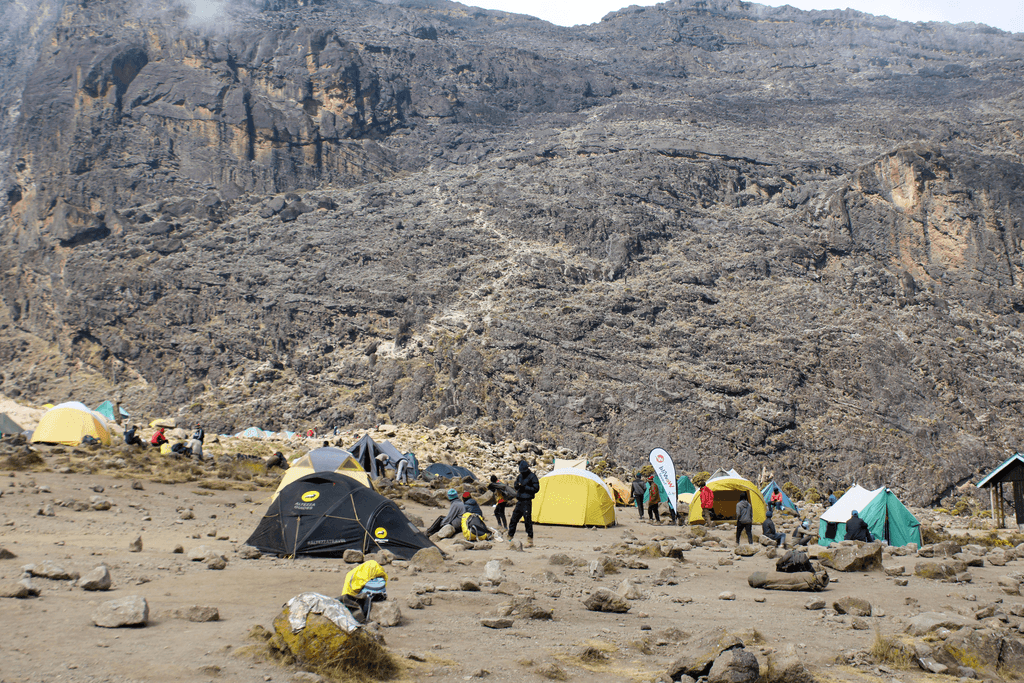
The Umbwe Route uses mountain camping throughout the climb. Unlike the Marangu Route, there are no mountain huts with permanent beds. You sleep in tents at designated camps along the route.
During the first part of the climb, the Umbwe trail is quieter than the more established southern routes. After reaching Barranco Camp, the route joins the Southern Circuit used by climbers coming from Machame and Lemosho. From there, you continue toward Karanga and Barafu before making the summit attempt. The descent follows the Mweka Route.
What Is Umbwe Camping Like?
Your mountain crew sets up camp while you focus on trekking and recovery. A typical camp setup includes:
- Sleeping tent
- Dining area for meals
- Sleeping mats or mattresses, depending on your package
- Cooking equipment
- Dining and eating equipment
- Toilet arrangements according to your package
- Hot meals prepared by the mountain cook
At camp, you can change clothes, eat, rest, drink water, and prepare for the next day’s trek.
Where Do You Sleep on the Umbwe Route?
The exact camps can vary slightly between itineraries and operators, but the standard route follows the general progression:
Umbwe Gate to Umbwe Camp to Barranco Camp to Karanga Camp to Barafu Camp to Uhuru Peak to Mweka Camp to Mweka Gate
The early camps feel quieter because fewer climbers use the Umbwe approach. Once you reach Barranco, you share the camping area with groups arriving from other southern routes.
Is Camping Comfortable on Umbwe?
Mountain camping is basic, but a well-organized camp gives you the essentials for a safe and comfortable night.
You should not expect hotel-style facilities. Temperatures also become much colder as you climb higher, particularly around Barafu Camp and during summit night.
A good sleeping bag, warm clothing, a comfortable sleeping mat, and proper protection from rain and wind make a major difference.
With WeWild Travel, our mountain crew manages the camp setup, meals, and daily mountain logistics so you can concentrate on walking, resting, and preparing for the next stage.
Umbwe Route Safety & Altitude Management
Safety on the Umbwe Route starts with understanding its biggest challenge: rapid altitude gain.
The route climbs steeply during the first two days and reaches Barranco Camp at around 3,900–3,960 metres relatively quickly. This gives your body less time to adapt than longer Kilimanjaro routes. Current route sources identify this rapid ascent as the main reason Umbwe demands careful acclimatization and experienced trekking.
How Does WeWild Manage Altitude?
Our mountain team monitors your condition throughout the trek. We pay attention to symptoms such as:
- Headache
- Nausea
- Dizziness
- Unusual tiredness
- Loss of appetite
- Shortness of breath
- Difficulty walking normally
- Confusion or unusual behaviour
Tell your guide immediately if you feel unwell. Do not hide altitude symptoms because you want to reach the summit.
Your guide can slow the pace, recommend rest, monitor your condition, or arrange descent when continuing would create an unacceptable safety risk.
Why Is a Slow Pace Important?
Umbwe is steep, especially during the first two days. Walking too quickly wastes energy and can make the climb harder.
Our guides use a controlled pace that allows you to breathe comfortably and conserve energy. Regular breaks also give you time to drink, eat, and check how your body feels.
What About the Barranco Wall?
The Barranco Wall looks dramatic, but it does not require technical climbing equipment on the standard route. You may use your hands for balance on some sections as you move over rocks and around the wall.
The important point is to follow your guide’s instructions and move carefully rather than rushing.
What Happens If Someone Becomes Sick?
Altitude sickness can become serious. If a climber develops concerning symptoms, the priority changes from reaching the summit to getting the person to a safer altitude.
The mountain team can assess the situation and arrange descent when necessary. Emergency oxygen and first-aid equipment should form part of a properly prepared Kilimanjaro expedition.
On Umbwe, reaching Uhuru Peak is never more important than your safety.
Umbwe Route Pros and Cons
The Umbwe Route offers a very different Kilimanjaro experience. It gives you a direct, steep approach and quieter early days, but it also gives your body less time to adjust to altitude.
Pros of the Umbwe Route
1. Direct approach to Kilimanjaro
Umbwe takes a direct line up the southern side of the mountain rather than following a long gradual approach.
2. Quiet first days
The early Umbwe trail normally sees fewer trekkers than the busier routes.
3. Dramatic scenery
You move from rainforest into moorland and higher alpine terrain before joining the Southern Circuit.
4. Challenging trekking experience
The steep terrain makes Umbwe attractive to experienced trekkers who enjoy demanding mountain routes.
5. Camping experience
You spend the climb sleeping in mountain camps and experiencing Kilimanjaro away from hotel-style accommodation.
6. Joins the Southern Circuit
After Barranco, the route connects with the popular southern approach toward Karanga, Barafu, and Uhuru Peak.
Cons of the Umbwe Route
1. Rapid altitude gain
This is the main disadvantage. Umbwe reaches high sleeping elevations quickly, giving your body less time to acclimatize.
2. Steep first days
The opening section is physically demanding and requires steady effort.
3. Not ideal for beginners
Trekkers with little mountain or altitude experience may find the combination of steep terrain and rapid elevation gain difficult.
4. Limited acclimatization on the shorter itinerary
A 6-day schedule keeps the climb compact. A 7-day itinerary can add more time for acclimatization, depending on the itinerary used by the operator.
5. Mountain camping only
If you prefer huts with permanent beds and indoor facilities, Umbwe will not provide that type of accommodation.
So, What Are the Main Advantages and Disadvantages?
The simple answer is:
Umbwe gives you a direct, steep, quieter approach, but its rapid altitude gain makes acclimatization the main challenge.
Choose Umbwe because you understand the demands of the route, not simply because it is shorter or quieter. Your trekking experience, altitude history, physical preparation, itinerary, and ability to follow your guide’s instructions all matter.
Umbwe vs Machame vs Lemosho
Umbwe, Machame, and Lemosho all lead to Uhuru Peak, but they give you very different experiences on the mountain. The main differences are the starting approach, climbing pace, terrain, number of days, and time available for acclimatization.
| Feature | Umbwe Route | Machame Route | Lemosho Route |
|---|---|---|---|
| Typical duration | 6 to 7 days | 6 to 7 days | 7 to 8 days |
| Approach | Southern side | Southern side | Western side |
| Early terrain | Steep rainforest and ridges | Rainforest and steep trails | Rainforest, Shira Plateau |
| Early traffic | Usually quieter | Usually busier | Quieter at first |
| Acclimatization | Faster and more demanding | Better on 7-day itinerary | More gradual on longer itineraries |
| Camping | Yes | Yes | Yes |
| Main character | Direct and steep | Scenic and challenging | Gradual and varied |
| Best suited to | Experienced trekkers | Fit trekkers | Trekkers wanting more acclimatization time |
Current route guides generally describe Umbwe as the more direct and demanding approach, while Machame provides a longer southern approach and Lemosho gives climbers more time on the mountain on its longer itineraries.
Umbwe vs Machame
The biggest difference is the pace of the early climb.
Umbwe takes a more direct line up the mountain and gains altitude quickly. The first two days can feel particularly demanding because of the steep terrain and rapid elevation gain.
Machame also has steep sections, but its route profile spreads the climb differently. The 7-day Machame itinerary gives more time to adapt than a compressed 6-day schedule.
Both routes eventually reach the southern section around Barranco, Karanga, and Barafu before the summit attempt.
Choose Umbwe if: you want a direct, steep mountain experience and have strong trekking experience.
Choose Machame if: you want dramatic scenery, a challenging climb, and a little more time for acclimatization on the 7-day itinerary.
Read More : Machame Route 7 Day itinerary
Umbwe vs Lemosho
Umbwe and Lemosho feel very different during the first part of the climb.
Starting from the southern side, Umbwe climbs steeply and reaches the Southern Circuit quickly. Lemosho takes a more gradual approach, allowing climbers to gain elevation more slowly while enjoying a longer route through varied landscapes.
The longer Lemosho itineraries allow a more gradual ascent and more time for your body to adapt to altitude. Lemosho also starts more quietly before joining the busier southern routes.
Choose Umbwe if: you want a shorter, steeper, more direct trekking experience.
Choose Lemosho if: you have more time and prefer a gradual itinerary with more acclimatization opportunities.
Read More : Lemosho Route 9 Day itinerary
Which Route Fits Your Climbing Goals?
There is no single route that suits every climber.
For a direct and demanding climb, Umbwe provides that experience from the start.
Climbers looking for a challenging route with varied scenery and a 6- to 7-day schedule can consider Machame.
Those who prefer more time for acclimatization and a longer approach may find Lemosho suitable, with 7- to 8-day itineraries.
The important thing is to match the route and itinerary with your experience, preparation, available time, and ability to handle altitude.
Who Should Climb Umbwe?
The Umbwe Route is best suited to fit and experienced trekkers who are comfortable with steep terrain, long hiking days, and rapid altitude gain.
This route is not simply about being physically strong. You also need to understand how your body responds to altitude and be prepared to follow your guide’s instructions throughout the climb.
Umbwe Is Suitable For You If You:
- Have previous multi-day trekking experience
- Have experience hiking on steep and uneven terrain
- Have prepared well for long walking days
- Feel comfortable with mountain camping
- Can maintain a slow and steady pace
- Understand that fitness does not prevent altitude sickness
- Are prepared for a demanding summit night
- Prefer a quieter and more direct route
- Have enough time to choose a 7-day itinerary if appropriate
Who Should Avoid the Short Umbwe Itinerary?
The 6-day Umbwe itinerary moves quickly and gives your body less time to adapt to altitude. If you have little trekking experience, no previous high-altitude experience, or you are unsure how you respond to altitude, a longer route may provide a more suitable acclimatization profile.
This does not mean that every experienced climber will find Umbwe easy. Altitude affects people differently, and previous experience cannot guarantee that you will reach Uhuru Peak.
Is Umbwe Suitable for First-Time Climbers?
A first-time Kilimanjaro climber can physically complete difficult mountain terrain, but Umbwe requires more careful consideration than routes with a more gradual ascent.
If you have never completed a serious multi-day mountain trek, Umbwe may not be the most suitable starting point. Discuss your previous trekking experience, available days, fitness preparation, and altitude history with your local mountain operator before booking.
What Experience Helps on Umbwe?
Useful experience includes:
- Multi-day hiking
- Steep mountain trekking
- Long-distance walking
- Camping in changing weather
- Hiking at higher elevations
- Managing your pace over several consecutive days
You do not need technical rock-climbing skills for the standard Umbwe Route. The challenge comes mainly from steep trekking, endurance, altitude, and the long summit push.
Who Should Choose Umbwe?
Choose Umbwe because you understand its character: steep, direct, physically demanding, and fast-gaining in altitude.
If that matches your trekking experience and climbing goals, Umbwe can give you a demanding and memorable way to approach Kilimanjaro.
If you want more gradual acclimatization, you can also compare Umbwe with the 7-day Machame or 8-day Lemosho before making your decision. Your WeWild Travel team can help you compare the routes based on your experience, dates, and preferred number of days.
Frequently Asked Questions About the Umbwe Route
The Umbwe Route is a steep and direct trail to Mount Kilimanjaro’s southern slopes. It reaches Barranco before joining the Southern Circuit toward the summit.
Umbwe is one of Kilimanjaro’s most challenging routes because of its steep trails, rapid elevation gain, and demanding early days.
Most Umbwe climbs take 6 or 7 days. A 7-day itinerary gives you more time on the mountain and supports better acclimatization.
The 7-day Umbwe route generally provides better acclimatization because it gives your body more time to adjust to altitude before the summit attempt.
Umbwe is not usually the first choice for beginners because of its steep terrain and faster altitude gain. Experience with long mountain hikes helps.
The cost depends on the number of days, group size, season, and services included. Your operator should provide a detailed quotation before booking.
Success rates vary between operators and depend on itinerary length, acclimatization, weather, and individual preparation. Longer itineraries generally allow more acclimatization time.
The best periods are generally the drier months, especially January to February and June to October. Weather can still change quickly on the mountain.
The Umbwe Route starts at Umbwe Gate, located on the southern side of Mount Kilimanjaro near Machame.
Most Umbwe climbs descend through the Mweka Route after reaching Uhuru Peak, finishing at Mweka Gate.
Conclusion
The Umbwe Route offers a challenging and direct way to climb Mount Kilimanjaro. Its steep trails, dramatic scenery, and quieter sections make it different from the more popular Machame and Lemosho routes. However, the route demands good preparation and a realistic approach to altitude.
Choosing between 6 and 7 days depends on your experience, fitness, and acclimatization needs. The 7-day option adds more time on the mountain, giving your body extra time to adjust before the summit.
Before booking, consider the route difficulty, climbing season, total cost, equipment, safety support, and what your package includes. A well-planned itinerary can make your climb more comfortable and give you a better opportunity to enjoy the mountain.
At WeWild Travel, we focus on well-organized Kilimanjaro climbs with experienced mountain crews, proper planning, and support throughout your journey. If the Umbwe Route matches your experience and goals, we can help you choose the right itinerary and prepare for your climb.