Deals of The Year: Join a trekking group Adventure 2025! Up to 15% OFF
d
h
m
s
Deals of The Year: Join a trekking group Adventure 2025! Up to 15% OFF
The 8 Days Lemosho Route Kilimanjaro Itinerary is a scenic and gradual trek across Mount Kilimanjaro, starting at Londorossi Gate on the western side of the mountain and continuing across the Shira Plateau toward Uhuru Peak at 5,895 meters. This 8-day route combines varied landscapes, steady altitude gain, and extra trekking time to help you adjust before the summit attempt.
The Lemosho Route 8-Day Kilimanjaro Itinerary takes you through several of Kilimanjaro’s natural zones, from montane rainforest and moorland to alpine desert and the high-altitude summit zone. Along the way, you will experience the Shira Plateau, Lava Tower, Barranco Valley, Karanga, Barafu Camp, and finally Uhuru Peak.
With eight days on the mountain, this itinerary provides a well-paced approach to the summit while giving you more time to experience the route. It is suitable for both first-time and experienced trekkers who want a scenic Kilimanjaro climb with a gradual progression toward higher elevations. No technical climbing skills are required, but good preparation and a positive mindset are important.
On this page, you will find the complete 8-day Lemosho Route itinerary, including daily hiking times, route stretches, elevations, habitats, meals, accommodation, daily highlights, and the main stages of your journey from Londorossi Gate to Uhuru Peak and Mweka Gate.
The 8-Day Lemosho Route itinerary includes eight trekking days on Mount Kilimanjaro, with a gradual ascent, strong acclimatization opportunities, and a summit climb to Uhuru Peak.
| Day | Route | Hiking time | Sleeping altitude |
|---|---|---|---|
| Arrival Day | Kilimanjaro International Airport to hotel in Arusha to pre-climb briefing | No | Hotel in Arusha |
| Day 1 | Londorossi Gate to Mti Mkubwa Camp (Big Tree Camp) | 3 to 4 hours | 2,650 to 2,895 m |
| Day 2 | Mti Mkubwa Camp to Shira 1 Camp | 5 to 6 hours | 3,500 to 3,510 m |
| Day 3 | Shira 1 Camp to Shira 2 Camp | 3 to 4 hours | 3,840 m |
| Day 4 | Shira 2 Camp to Lava Tower to Barranco Camp | 6 to 8 hours | 3,950 to 3,960 m |
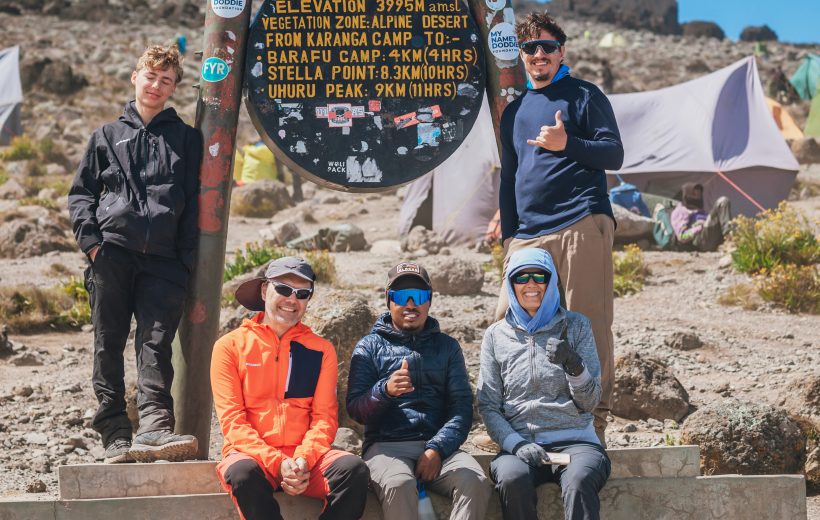
| Day 5 | Barranco Camp to Karanga Camp | 4 to 5 hours | 4,035 m |
| Day 6 | Karanga Camp to Barafu Camp | 3 to 4 hours | 4,640 to 4,673 m |
| Day 7 | Barafu Camp to Stella Point to Uhuru Peak to Mweka Camp | 12 to 15 hours | 3,100 m |
| Day 8 | Mweka Camp to Mweka Gate to hotel in Moshi | 3 to 4 hours | Hotel in Moshi |
| Departure Day | Hotel in Moshi to Kilimanjaro International Airport | No End of Safari | No |
The main advantage of the 8-day itinerary on Mount Kilimanjaro is improved acclimatization. The extra time at key camps such as Shira and Karanga allows the body to adjust more gradually to increasing altitude. This slower ascent significantly reduces the risk of Acute Mountain Sickness (AMS), making the climb safer and more comfortable for most trekkers.
The 8-day option also delivers higher summit success rates compared to shorter itineraries. With more time to adapt before the final push to Uhuru Peak, climbers experience less physical strain on summit night. This makes it the preferred choice for beginners, first-time high-altitude trekkers, and anyone prioritizing a successful summit over a faster schedule.
In addition, the extended itinerary enhances the overall trekking experience. Climbers spend more time in the quieter western and southern sections of the mountain, enjoying diverse landscapes ranging from rainforest to alpine desert. This creates a more immersive and less rushed journey, with better opportunities to appreciate the natural beauty of Kilimanjaro.
The best time to climb the 8-Day Lemosho Route is during the dry seasons from January to March and June to October. These months offer stable weather, clear skies, and excellent trekking conditions, making the climb more enjoyable and increasing your chances of reaching the summit.
January to March brings warmer temperatures, fewer crowds, and beautiful mountain scenery. This period is ideal for climbers looking for a quieter experience and excellent summit views.
June to October is the most popular climbing season on Mount Kilimanjaro. The weather is generally dry, visibility is outstanding, and trail conditions are excellent. However, the mountain attracts more climbers, especially from July to September.
April, May, and November usually bring rain, which can make some sections of the trail muddy and slippery. Despite the wetter conditions, these months offer greener landscapes and fewer people on the mountain.
The 8-Day Lemosho Route is an excellent choice year-round because the extra acclimatization day provides a slower pace and one of the highest summit success rates on Mount Kilimanjaro. For the best combination of weather, scenery, and summit success, we recommend climbing between January and March or June and October.
Choosing the right operator for your climb on Mount Kilimanjaro directly impacts your safety, comfort, and summit success. At WeWild Travel, every expedition is structured to prioritize controlled pacing, proper acclimatization, and strong on-mountain support all the way to Uhuru Peak.
This approach ensures every climber has the best possible balance between safety, support, and summit success.
If you are planning to climb Mount Kilimanjaro, the most important step is choosing a trusted local operator. Booking with an experienced company ensures proper safety support, reliable logistics, and a well-organized expedition from start to summit.
For trekkers who want a safe and professionally guided experience, it is strongly recommended to book with a licensed local operator such as WeWild Travel, which provides structured support throughout the entire journey to Uhuru Peak.
Your Kilimanjaro adventure begins the moment you arrive in Tanzania at Kilimanjaro International Airport. Upon arrival, you will be warmly welcomed by a WeWild Travel representative who will assist you with airport procedures and your transfer to Arusha depending on your trekking arrangement.
The drive from the airport offers a smooth introduction to northern Tanzania. Along the way, you will pass local villages, open landscapes, and farmland with views of Mount Meru on clear days. This journey helps you slowly transition from international travel into the relaxed rhythm of East Africa.
Once you arrive at your hotel, you will check in and take time to rest after your flight. This day is not physically demanding, but it is very important for recovery, especially if you have traveled long distances. Depending on your arrival time, you may also meet your guide for a short briefing about your upcoming Kilimanjaro climb, including safety guidelines, route overview, and equipment preparation.
The rest of the day is free for relaxation. You can organize your gear, hydrate well, and mentally prepare for the adventure ahead. A good rest today helps your body adjust and prepares you for the mountain journey starting the next day.
This is your first day in Tanzania, so your body begins adjusting to travel fatigue and environmental changes. Proper rest and preparation are very important before starting the trek.
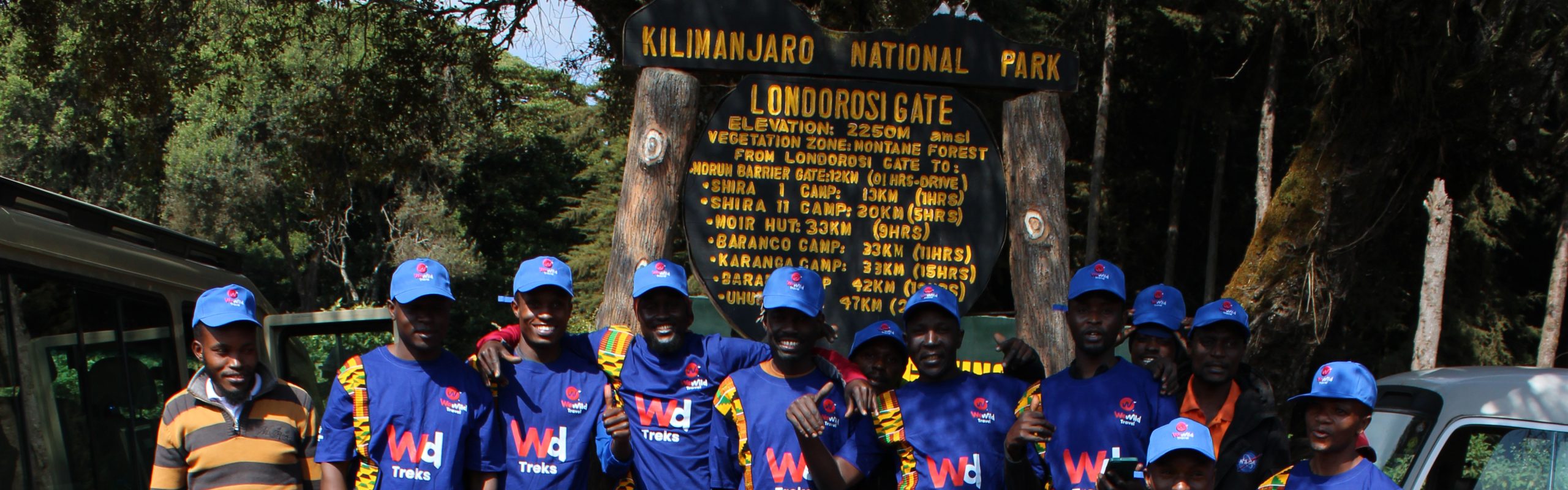
After breakfast in Arusha, you travel to the Londorossi Gate area on the western side of Mount Kilimanjaro. The drive and registration process can take time, so keep your daypack close and prepare for a later start on the trail.
Once the team completes the park formalities, you begin walking through dense montane rainforest. The forest feels quiet and green, with tall trees, ferns, vines, and damp ground underfoot. The trail rises gradually toward Mti Mkubwa Camp, also called Big Tree Camp.
This first day gives you time to settle into the mountain routine. Walk slowly, drink regularly, and let your guide set the pace. When you reach camp, the crew prepares your tents and dinner while you rest.
Hiking time: Approximately 3 to 4 hours
Distance: Approximately 6 to 7 km / 4 miles
Start elevation: Londorossi Gate area, approximately 2,100 to 2,360 m
Sleeping elevation: Mti Mkubwa Camp, approximately 2,650 to 2,895 m
Habitat: Montane rainforest
Meals: Breakfast, lunch, and dinner
Accommodation: Camping at Mti Mkubwa Camp
Today, you leave the forest and climb onto the Shira Ridge. The path becomes steeper, and the trees gradually give way to open heath, grasses, volcanic rock, and low shrubs.
This is a steady uphill day, so you need to manage your energy. Your guide keeps the pace slow and gives the group time to stop for water and snacks. As the trail rises, the views become wider and the air begins to feel cooler.
By afternoon, you reach Shira 1 Camp on the Shira Plateau. This open camp sits much higher than the forest camp, and temperatures often drop soon after the sun goes down. Put on warm layers early, eat well at dinner, and keep drinking water.
Hiking time: Approximately 5 to 6 hours
Distance: Approximately 7 to 8 km / 4 to 5 miles
Start elevation: Mti Mkubwa Camp, approximately 2,650 to 2,895 m
Sleeping elevation: Shira 1 Camp, approximately 3,500 to 3,610 m
Habitat: Heath and moorland
Meals: Breakfast, lunch, and dinner
Accommodation: Camping at Shira 1 Camp
Today gives you more time on the Shira Plateau and lets your body adjust to the higher elevation before the Lava Tower day. The route travels across open volcanic ground with wide views of the plateau and Kilimanjaro’s upper slopes when weather allows.
The walking day is shorter than Day 2, but you still need to take altitude seriously. Keep the pace relaxed, eat small snacks, and drink water throughout the day. The group arrives at Shira 2 Camp in time for lunch or early afternoon rest.
Use the afternoon wisely. Do not treat this as a day to walk around camp for no reason. Rest, organize your layers for the cooler evening, and listen to your guide’s advice about hydration and altitude symptoms.
Hiking time: Approximately 3 to 4 hours
Distance: Approximately 7 to 10 km / 4 to 6 miles
Start elevation: Shira 1 Camp, approximately 3,500 to 3,610 m
Sleeping elevation: Shira 2 Camp, approximately 3,840 to 3,850 m
Habitat: Shira Plateau and alpine moorland
Meals: Breakfast, lunch, and dinner
Accommodation: Camping at Shira 2 Camp
After breakfast, you leave Shira 2 Camp and move into a more rugged alpine environment. The trail climbs toward Lava Tower, a volcanic formation that stands at approximately 4,630 m.
This day brings you to a much higher elevation before you sleep lower at Barranco Camp. You may notice that simple tasks take more effort in the thinner air. Your guide sets a patient pace and checks on the group during the climb.
The team stops near Lava Tower for lunch, then begins the descent toward Barranco Camp. The descent matters as much as the climb. It gives your body time at a high point during the day while allowing you to sleep at a lower altitude that night.
Barranco Camp sits in a striking valley below the Barranco Wall. Giant groundsels, steep rock faces, and views toward Kibo create a completely different setting from the Shira Plateau.
Hiking time: Approximately 6 to 8 hours
Distance: Approximately 10 km / 6 miles
Start elevation: Shira 2 Camp, approximately 3,840 to 3,850 m
Highest point: Lava Tower, approximately 4,630 m
Sleeping elevation: Barranco Camp, approximately 3,900 to 3,976 m
Habitat: Alpine desert
Meals: Breakfast, lunch, and dinner
Accommodation: Camping at Barranco Camp
The day begins with the Barranco Wall. From camp, this section can look much harder than it feels on the trail. You follow your guide through a series of short scrambles, using your hands for balance in a few places. You do not need technical climbing experience, but you do need patience, attention, and a steady pace.
After the wall, the route crosses ridges and dips into valleys along Kilimanjaro’s southern side. The trail includes several ups and downs, which can feel tiring at this altitude even though the total distance is not long.
You stop at Karanga Camp for the night rather than pushing on to Barafu. This extra overnight stop gives the 8-day Lemosho Route a more gradual rhythm before summit night. Spend the afternoon resting, drinking water, and preparing for the move to high camp tomorrow.
Hiking time: Approximately 4 to 5 hours
Distance: Approximately 5 to 6 km / 3 to 4 miles
Start elevation: Barranco Camp, approximately 3,900 to 3,976 m
Sleeping elevation: Karanga Camp, approximately 3,995 to 4,035 m
Habitat: Alpine desert
Meals: Breakfast, lunch, and dinner
Accommodation: Camping at Karanga Camp
Today, you’ll leave Karanga Camp and trek to Barafu Camp, the final campsite before your summit attempt. The trail climbs steadily through Kilimanjaro’s rocky alpine desert, where vegetation becomes sparse, and the mountain landscape grows more dramatic.
As you gain altitude, you’ll enjoy impressive views of Kibo Peak and the surrounding southern slopes. Your guide will maintain a slow, steady pace to help you conserve energy for the challenging summit climb ahead.
After 3 to 4 hours of hiking, you’ll reach Barafu Camp. You’ll enjoy an early dinner, organize your warm clothing and summit gear, and rest for a few hours. Around midnight, you’ll wake up and prepare for the final climb to Uhuru Peak (5,895 m).
Hiking time: Approximately 3 to 4 hours
Distance: Approximately 4 km / 2.5 miles
Start elevation: Karanga Camp, approximately 3,995 to 4,035 m
Sleeping elevation: Barafu Camp, approximately 4,673 m
Habitat: Alpine desert
Meals: Breakfast, lunch, and dinner
Accommodation: Camping at Barafu Camp
Today, you’ll climb from Barafu Camp to Uhuru Peak, the highest point in Africa, before descending to Mweka Camp. Your summit journey begins around midnight as you follow a steep trail toward Stella Point on Kilimanjaro’s crater rim.
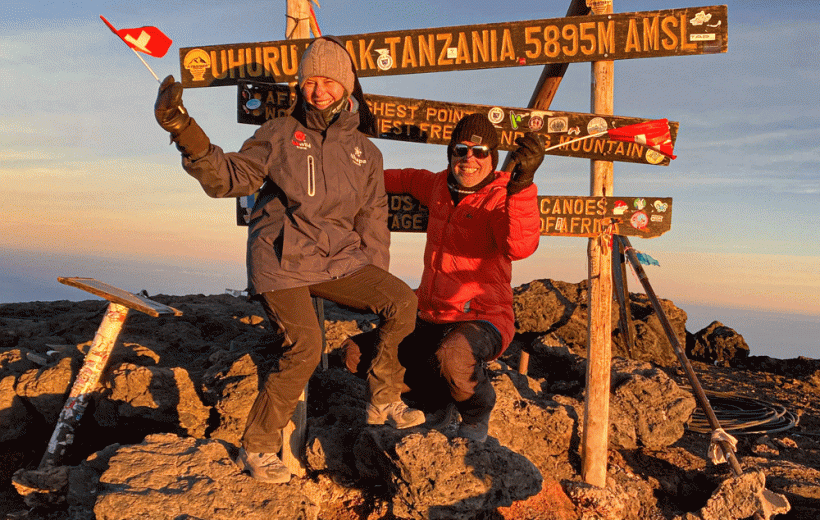
After reaching Stella Point (5,756 m), you’ll continue along the crater rim toward Uhuru Peak (5,895 m). As the sun rises, you’ll enjoy spectacular views across Kilimanjaro’s summit landscape. At Uhuru Peak, celebrate your achievement and capture memorable photos at the Roof of Africa.
After the summit, you’ll descend to Barafu Camp for a short rest before continuing down to Mweka Camp. The long descent takes you to a lower altitude, where warmer air and a well-earned meal await.
Hiking time: Approximately 12 to 15 hours
Distance: Approximately 17 km / 10.5 miles
Start elevation: Barafu Camp, approximately 4,673 m
Crater rim: Stella Point, approximately 5,756 m
Highest point: Uhuru Peak, 5,895 m
Sleeping elevation: Mweka Camp, approximately 3,100 m
Habitat: Arctic summit zone, alpine desert, and moorland
Meals: Breakfast, lunch, and dinner
Accommodation: Camping at Mweka Camp
Today, you’ll descend from Mweka Camp to Mweka Gate, completing your 8-Day Lemosho Route Kilimanjaro climb. After breakfast, you’ll follow the trail through Kilimanjaro’s lush rainforest as you make your way down the mountain.
As you descend, the air becomes warmer, and the forest grows thicker. You may hear colorful birds or spot monkeys among the trees while enjoying the final hours of your Kilimanjaro trek.
After 3 to 4 hours of hiking, you’ll reach Mweka Gate and sign out of Kilimanjaro National Park. If you reach the qualifying summit point, you’ll receive your summit certificate and celebrate with your mountain crew. Afterwards, our driver will transfer you to your hotel in Moshi or Arusha for a well-earned rest.
Hiking time: Approximately 3 to 4 hours
Distance: Approximately 10 km / 6 miles
Start elevation: Mweka Camp, approximately 3,100 m
Finish elevation: Mweka Gate, approximately 1,640 to 1,800 m
Habitat: Montane rainforest
Meals: Breakfast and lunch
Accommodation:Â Arusha Planet Lodge
Today marks the end of your 8-Day Lemosho Route Kilimanjaro adventure. After breakfast at your hotel in Moshi or Arusha, you’ll have time to relax and prepare for your departure.
At the arranged time, our driver will transfer you to Kilimanjaro International Airport for your flight home. You’ll leave Tanzania with unforgettable memories of Mount Kilimanjaro and the achievement of reaching the Roof of Africa.
Activity: Airport transfer
Driving Time: 1-1.5 hours
Departure Point: Hotel in Arusha
Accommodation: None
| Number of People | Cost Per Person in Mid-Range | Cost Per Person in VIP |
|---|---|---|
| 1 person | $3,700 | $7,400 |
| 2 people | $2,800 | $6,900 |
| 3 people | $2,700 | $6,400 |
| 4 people | $2,650 | $6,200 |
| 5 people | $2,600 | $6,000 |
| 6 people | $2,550 | $5,800 |
| 7 people | $2,500 | $5,600 |
| 8 people | $2,450 | $5,400 |
| 9 people | $2,400 | $5,200 |
| 10 people + | $2,350 | $5,000 |
| Mid-Range Package | VIP (Luxury) Package |
|---|---|
| Two Nights Accommodations on BB at either of the following Ameg Lodge or Arusha Palanet Lodge | Two Nights Accommodations at Mount Meru Hotel on FB or at Gran Melia Hotel |

Scan Qr to Add as a friend
We are a team of seasoned African travel experts with over a decade of combined experience in the safari industry designing the best affordable safari adventures in Tanzania, without compromising on quality.
Meru Spring Plaza,
Box 13287, Arusha Tanzania,
Plot 690 Block D, 23106 Sakina.