Marangu Route Kilimanjaro: Complete Guide, Itinerary, Cost, Map and Success Rate
Estimated reading time: 24 minutes
The Marangu Route is a 5- or 6-day Kilimanjaro trek to Uhuru Peak, 5,895 meters above sea level. It is the only Kilimanjaro route that uses permanent mountain huts instead of tents, with the trail starting at Marangu Gate on the mountain’s southeastern side. Known as the “Coca-Cola Route,” Marangu follows a gradual trail through rainforest, moorland, and alpine desert before reaching the summit.
The main challenge on Marangu is altitude, not technical climbing. The 5-day itinerary gives your body less time to adjust to the increasing elevation, while the 6-day itinerary adds an acclimatization day at Horombo Hut before continuing toward Kibo and the summit. For this reason, the extra day changes the pace and acclimatization profile of the climb.
This guide explains the 5-day and 6-day Marangu Route, including the itinerary, distance, elevation, huts, difficulty, acclimatization, summit day, best time to climb, costs, packing requirements, and what to expect on the mountain with WeWild Travel.
Table of contents
- Marangu Route Kilimanjaro: Complete Guide, Itinerary, Cost, Map and Success Rate
- Marangu Route Quick Facts
- What Is the Marangu Route?
- Marangu Route 5-Day Itinerary
- Marangu Route 6-Day Itinerary
- Marangu Route Distance and Elevation
- Marangu Route Camps and Huts
- How Difficult Is the Marangu Route?
- Marangu Route Success Rate
- Marangu Route Success Rate
- Altitude and Acclimatization
- Marangu Route Scenery and Wildlife
- Best Time to Climb the Marangu Route
- Marangu Route Cost
- What to Pack for Marangu
- Marangu vs Machame
- What Is Included in a WeWild Marangu Climb?
- Why Climb Marangu With WeWild Travel?
- Frequently Asked Questions
- Conclusion
Marangu Route Quick Facts
- Location: Southeastern side of Mount Kilimanjaro, Tanzania
- Duration: 5 or 6 days
- Distance: Approximately 64-72 km (40-45 miles) round trip
- Starting Elevation: Marangu Gate at about 1,870 m (6,135 ft)
- Summit Elevation: Uhuru Peak at 5,895 m (19,341 ft)
- Accommodation: Permanent communal mountain huts
- Difficulty: Moderate overall, with altitude as the main challenge
- Main Camps: Mandara Hut, Horombo Hut, and Kibo Hut
- Nickname: The “Coca-Cola Route”
- Descent Route: The same Marangu trail used during the ascent
What Is the Marangu Route?
The Marangu Route is a well-established trekking route on Mount Kilimanjaro that approaches Uhuru Peak from the southeastern side of the mountain. It begins at Marangu Gate and follows a gradual trail through several of Kilimanjaro’s natural zones before reaching the summit at 5,895 meters.
Unlike other Kilimanjaro routes, Marangu provides permanent mountain huts for overnight accommodation, so climbers do not need to sleep in tents. The route passes through rainforest, moorland, alpine desert, and the high-altitude summit zone, with key overnight stops at Mandara Hut, Horombo Hut, and Kibo Hut.
Marangu uses one trail for both the ascent and descent, meaning you return along the same path after reaching the summit. The route offers 5-day and 6-day itineraries, with the extra day on the 6-day option providing more time for acclimatization at Horombo.
Why Is Marangu Called the Coca-Cola Route?
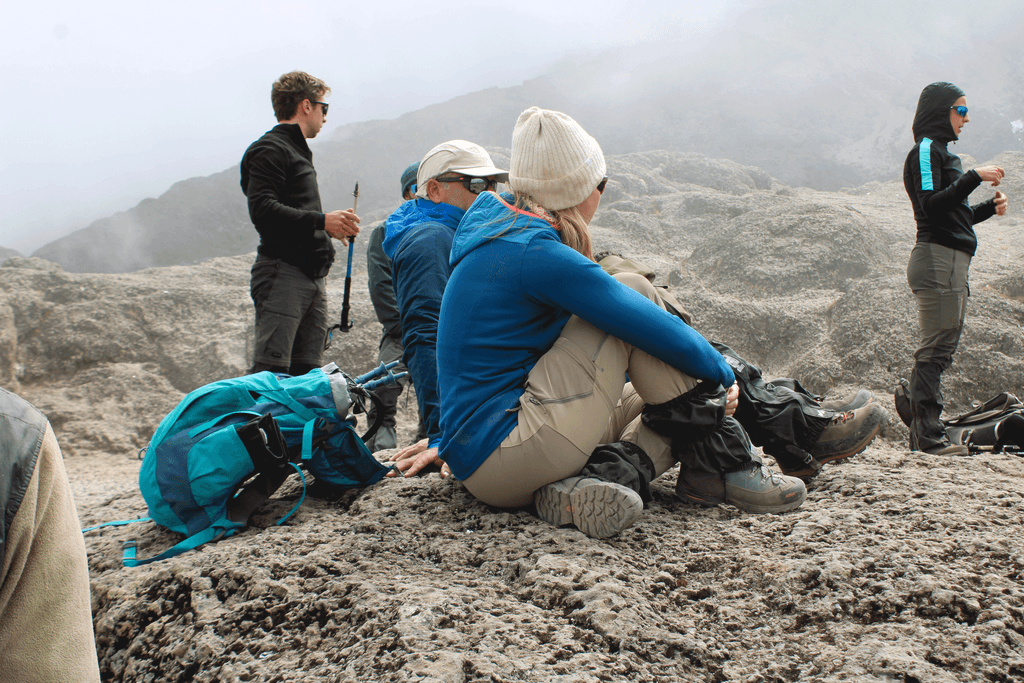
The Marangu Route is known as the “Coca-Cola Route” because climbers traditionally found bottled soft drinks, including Coca-Cola, at huts and stops along the trail. The nickname also became associated with Marangu’s established huts, gradual trail, and straightforward trekking experience compared with more rugged camping routes.
The name is now widely used by climbers and tour operators, but Marangu is still a serious high-altitude trek. The route reaches Uhuru Peak at 5,895 meters, so altitude remains the main challenge regardless of its nickname.
Marangu Route 5-Day Itinerary
The 5-day Marangu Route takes you from Marangu Gate to Uhuru Peak and back through the same trail, with overnight stays in mountain huts. The itinerary moves from rainforest to moorland, alpine desert, and the high-altitude summit zone before descending to the gate.
Day 1: Marangu Gate to Mandara Hut
- Starting elevation: 1,870 m
- Mandara Hut: 2,700 m
- Distance: About 8 km
- Hiking time: 4-5 hours
- Habitat: Montane rainforest
Your climb begins at Marangu Gate, where your team completes park registration before starting the hike. The trail enters the lush rainforest and gradually climbs toward Mandara Hut. The forest is dense and humid, with opportunities to see birds and wildlife along the trail.
Overnight: Mandara Hut.
Day 2: Mandara Hut to Horombo Hut
- Starting elevation: 2,700 m
- Horombo Hut: 3,720 m
- Distance: About 12 km
- Hiking time: 5-6 hours
- Habitat: Moorland
The trail leaves the rainforest and opens into moorland, with wider views of Kilimanjaro’s slopes. You continue at a steady pace toward Horombo Hut, where you spend the night at higher elevation.
Overnight: Horombo Hut.
Day 3: Horombo Hut to Kibo Hut
- Starting elevation: 3,720 m
- Kibo Hut: 4,703 m
- Distance: About 9-10 km
- Hiking time: 5-7 hours
- Habitat: Alpine desert
The landscape becomes drier as you leave Horombo and cross the Saddle, the broad alpine area between Mawenzi and Kibo. Vegetation becomes sparse as you gain altitude. At Kibo Hut, you rest and prepare for the summit attempt.
Overnight: Kibo Hut.
Day 4: Kibo Hut to Uhuru Peak and Horombo Hut
- Kibo Hut: 4,703 m
- Uhuru Peak: 5,895 m
- Distance: About 22 km total
- Hiking time: 11-14 hours
- Habitat: Alpine desert to summit zone
This is the hardest day of the 5-day Marangu Route. You normally start around midnight and climb toward Gilman’s Point at 5,685 m, then continue along the crater rim toward Uhuru Peak at 5,895 m.
After reaching the summit, you descend to Kibo Hut for a short rest before continuing down to Horombo Hut. The long ascent and descent make this a demanding day, especially at high altitude.
Overnight: Horombo Hut.
Day 5: Horombo Hut to Marangu Gate
- Starting elevation: 3,720 m
- Marangu Gate: About 1,870 m
- Distance: About 18-20 km
- Hiking time: 5-7 hours
- Habitat: Moorland to rainforest
The final day follows the trail downhill from Horombo through the moorland and back into the rainforest. At Marangu Gate, you complete the park formalities and finish your Kilimanjaro climb before transferring back to your hotel.
5-Day Marangu Route at a Glance
Marangu Gate to Mandara to Horombo to Kibo to Uhuru Peak to Horombo to Marangu Gate
The key thing to understand is that the 5-day itinerary has no dedicated acclimatization day. You climb from 1,870 m to 5,895 m within a short schedule, making altitude management especially important.
Read More : Marangu Route 5-Day Itinerary
Marangu Route 6-Day Itinerary
The 6-day Marangu Route adds an acclimatization day at Horombo Hut, giving you more time to adjust to the increasing altitude before the summit attempt. You sleep in permanent mountain huts throughout the trek and follow the same trail back down after reaching Uhuru Peak.
Day 1: Marangu Gate to Mandara Hut
- Starting elevation: 1,860 m
- Mandara Hut: 2,720 m
- Distance: 8 km
- Hiking time: 4-5 hours
- Habitat: Tropical rainforest
After registration at Marangu Gate, you begin your climb through the lush rainforest. The trail gradually gains elevation as you approach Mandara Hut, your first overnight stop.
Overnight: Mandara Hut.
Day 2: Mandara Hut to Horombo Hut
- Starting elevation: 2,720 m
- Horombo Hut: 3,720 m
- Distance: 12 km
- Hiking time: 5-7 hours
- Habitat: Moorland and heath
The trail gradually leaves the forest and enters open moorland and heath. As you climb, views of Mawenzi and Kibo become more prominent. You continue to Horombo Hut, where you spend the night.
Overnight: Horombo Hut.
Day 3: Horombo Acclimatization Day
- Elevation: 3,720 m to around 4,400 m and back
- Distance: About 5 km
- Hiking time: 2-3 hours
- Purpose: Acclimatization
Today gives your body extra time to adjust to the altitude. You hike toward Mawenzi Ridge, gaining elevation before returning to Horombo Hut. After the hike, you have time to rest, eat, and prepare for the next stages of the climb.
Overnight: Horombo Hut.
Day 4: Horombo Hut to Kibo Hut
- Starting elevation: 3,720 m
- Kibo Hut: About 4,720 m
- Distance: 10 km
- Hiking time: 5-6 hours
- Habitat: Alpine desert
You leave Horombo and cross the Saddle, the open alpine area between Mawenzi and Kibo. Vegetation becomes increasingly sparse as you approach Kibo Hut. After arriving, you rest and prepare for the summit attempt, which starts during the night.
Overnight: Kibo Hut.
Day 5: Kibo Hut to Uhuru Peak and Horombo Hut
- Kibo Hut: About 4,720 m
- Uhuru Peak: 5,895 m
- Distance: About 22 km total
- Hiking time: 10–13 hours
- Route: Kibo to Gilman’s Point to Uhuru Peak to Kibo to Horombo
You start around midnight and climb toward Gilman’s Point on the crater rim. From there, you continue toward Uhuru Peak, the highest point in Africa at 5,895 m.
After reaching the summit, you descend to Kibo Hut for a short rest before continuing down to Horombo Hut. This is the longest and most demanding day of the itinerary because of the altitude, steep summit section, and long descent.
Overnight: Horombo Hut.
Day 6: Horombo Hut to Marangu Gate
- Starting elevation: 3,720 m
- Marangu Gate: 1,860 m
- Distance: About 20 km
- Hiking time: 5-7 hours
- Habitat: Moorland and rainforest
Your final day takes you downhill through the moorland and rainforest to Marangu Gate. After completing the park exit procedures, you finish your Kilimanjaro climb and transfer back to your hotel.
6-Day Marangu Route at a Glance
Marangu Gate to Mandara to Horombo to Horombo acclimatization to Kibo to Uhuru Peak to Horombo to Marangu Gate
Read More : Marangu Route 6-Day Itinerary
Marangu Route Distance and Elevation
The Marangu Route covers approximately 64-72 km (40-45 miles) round trip, depending on the itinerary and the route measurements used. The trail starts at around 1,870 m at Marangu Gate and climbs to Uhuru Peak at 5,895 m.
The biggest elevation gains happen in stages rather than all at once:
- Marangu Gate to Mandara Hut: 1,870 m to 2,700 m. The trail climbs steadily through the rainforest.
- Mandara to Horombo Hut: 2,700 m to 3,720 m. This is another significant gain as you move into the moorland.
- Horombo to Kibo Hut: 3,720 m to about 4,703 m. The trail crosses the Saddle into the alpine desert, with less vegetation and thinner air.
- Kibo Hut to Uhuru Peak: about 4,703 m to 5,895 m. This is the most demanding elevation gain, especially because you make it during the night and climb on steep, rocky terrain toward Gilman’s Point before continuing to Uhuru Peak.
Marangu Route Camps and Huts
The Marangu Route uses three main mountain huts: Mandara Hut, Horombo Hut, and Kibo Hut. Each hut gives you a different experience as you move from the rainforest toward the summit.
Mandara Hut – 2,700 m
Mandara Hut is the first overnight stop, reached after hiking through Kilimanjaro’s rainforest from Marangu Gate. The huts provide shared sleeping accommodation, so you do not need to sleep in a tent.
After arriving, you can rest, eat, and enjoy the surrounding forest before the next day’s climb toward Horombo.
Horombo Hut – 3,720 m
Horombo Hut is where you spend the most time on the 6-day itinerary. You stay here after hiking from Mandara and return here after the summit.
On the 6-day route, Horombo also serves as the acclimatization base. You spend an extra day hiking to higher elevation and returning to Horombo to sleep, giving your body more time to adjust before you continue toward Kibo.
Kibo Hut – 4,703 m
Kibo Hut is the final overnight stop before the summit. It sits in the alpine desert between Mawenzi and Kibo, where the landscape becomes dry, rocky, and much colder.
You arrive here on the afternoon before summit night. After an early meal and a short rest, you prepare for the midnight summit attempt toward Gilman’s Point and Uhuru Peak.
What to Expect in the Huts
Expect shared mountain-hut accommodation rather than private hotel-style rooms. The huts provide a place to sleep, eat, and rest between hiking days, but conditions become more basic as you climb higher.
The important difference is that Marangu gives you hut accommodation throughout the route, while most other Kilimanjaro routes use tents.
How Difficult Is the Marangu Route?
The Marangu Route is physically manageable for regular hikers, but the high altitude and demanding summit night make it a serious trek. The difficulty comes from three different challenges.
Physical Difficulty
The trail has a gradual profile for much of the ascent, so you do not need technical climbing skills. However, you still walk several hours each day, with longer distances on the summit and descent days.
The final approach to Kibo becomes steeper and more demanding. Good walking fitness helps you handle the daily distances, uneven ground, and long summit day.
Altitude Difficulty
Altitude is the main challenge on Marangu. The route climbs from about 1,870 m at Marangu Gate to 5,895 m at Uhuru Peak, where the air contains much less available oxygen.
The 5-day itinerary gives less time to acclimatize because it moves from Horombo toward Kibo without a dedicated acclimatization day. The 6-day itinerary adds a day at Horombo, allowing you to hike higher and return to sleep lower before continuing upward.
Common altitude symptoms can include headache, nausea, tiredness, dizziness, and loss of appetite. Your guide should monitor how you feel and respond appropriately if symptoms become serious.
Summit-Night Difficulty
Summit night is the hardest part of the Marangu Route. You normally leave Kibo Hut around midnight and climb through the darkness toward Gilman’s Point before continuing along the crater rim to Uhuru Peak.
The combination of steep terrain, cold temperatures, darkness, limited oxygen, and several hours of continuous hiking makes the summit push demanding even for fit trekkers.
After reaching Uhuru Peak, you still have a long descent to Kibo and then Horombo. This makes summit day a test of endurance, pacing, hydration, and altitude management, not simply fitness.
Marangu Route Success Rate
There is no reliable official percentage for the Marangu Route success rate that applies to every climber. Summit success depends on factors such as the itinerary, acclimatization, fitness, weather, altitude response, pacing, and guide support. For this reason, a single percentage can give a misleading picture of your chances.
The main difference is between the 5-day and 6-day Marangu Route. The 5-day itinerary moves from Marangu Gate to the summit with less time for your body to adjust to altitude. The 6-day itinerary adds an acclimatization day at Horombo, where you climb to a higher elevation and return to sleep lower. This gives your body more time to adapt before the summit attempt.
Why the 6-Day Route Can Have Better Outcomes
The extra day does not guarantee that you will reach Uhuru Peak, but it improves the acclimatization profile of the climb. Your body gets more time at altitude before the demanding summit night.
Other factors also affect the outcome:
- Acclimatization: Gradual altitude gain gives your body more time to adjust.
- Pacing: Walking slowly helps conserve energy and manage altitude.
- Altitude response: People react differently to high altitude.
- Fitness: Good endurance helps with long hiking days and summit night.
- Guide support: Experienced guides can monitor symptoms and adjust the pace when necessary.
- Weather and trail conditions: Cold, rain, wind, and poor visibility can make the trek harder.
- Summit preparation: Resting properly at Kibo before the midnight summit attempt matters.
Marangu Route Success Rate
The Marangu Route does not have one official success rate for every climber. Results vary because operators use different groups, trip lengths, and ways of measuring summit success.
The 5-day route gives less time for acclimatization, while the 6-day route adds an acclimatization day at Horombo before the summit attempt. This extra time can help your body adjust to altitude.
However, more days do not guarantee reaching Uhuru Peak. Your response to altitude, preparation, pacing, rest, and overall condition also affect your summit attempt.
At WeWild Travel, we focus on proper acclimatization, steady pacing, daily monitoring, and safe decisions rather than promising a fixed success percentage.
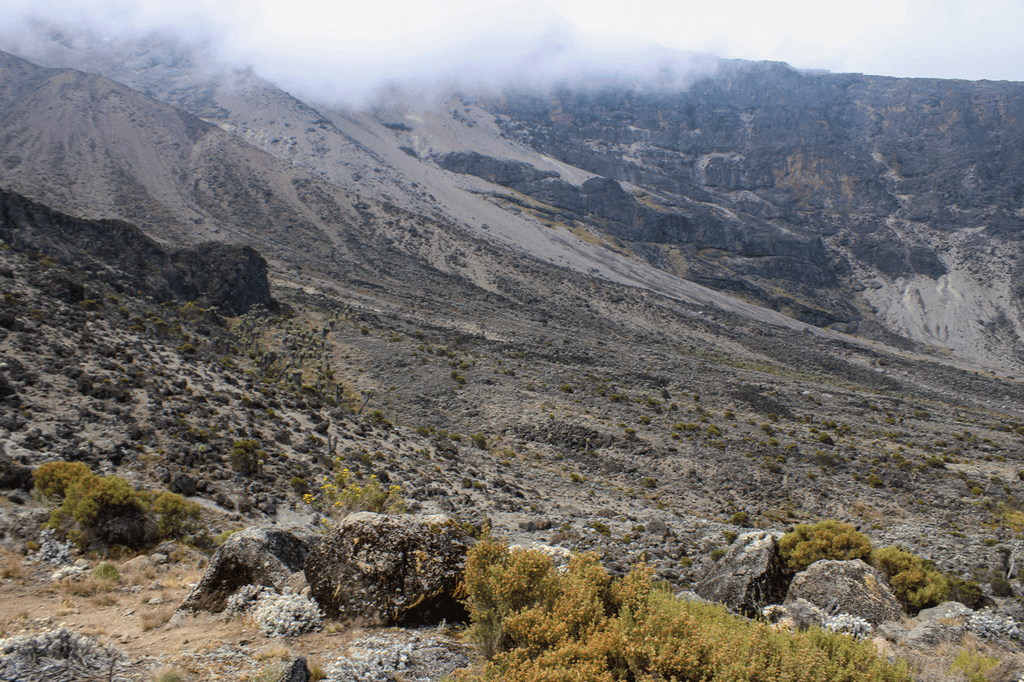
Altitude and Acclimatization
Altitude is one of the biggest challenges on the Marangu Route. You start at Marangu Gate at about 1,860 m, then climb to Horombo Hut at around 3,720 m and Kibo Hut at about 4,703 m. The summit, Uhuru Peak, stands at 5,895 m.
As you climb higher, the air contains less available oxygen, so your body needs time to adjust. Some climbers may experience headache, nausea, dizziness, tiredness, or loss of appetite. These symptoms can become serious if they worsen.
A slow and steady pace gives your body more time to adapt. Drink regularly, rest when needed, and avoid pushing yourself when you feel unwell.
The 6-day Marangu Route adds an acclimatization day at Horombo. You can hike toward Mawenzi Ridge and return to Horombo to sleep at the same altitude. This extra day gives your body more time to adjust before summit night.
Your mountain guide should monitor how you feel throughout the climb. If altitude symptoms become severe or continue to worsen, descent may become necessary. Reaching the summit matters, but getting down safely matters more.
Marangu Route Scenery and Wildlife
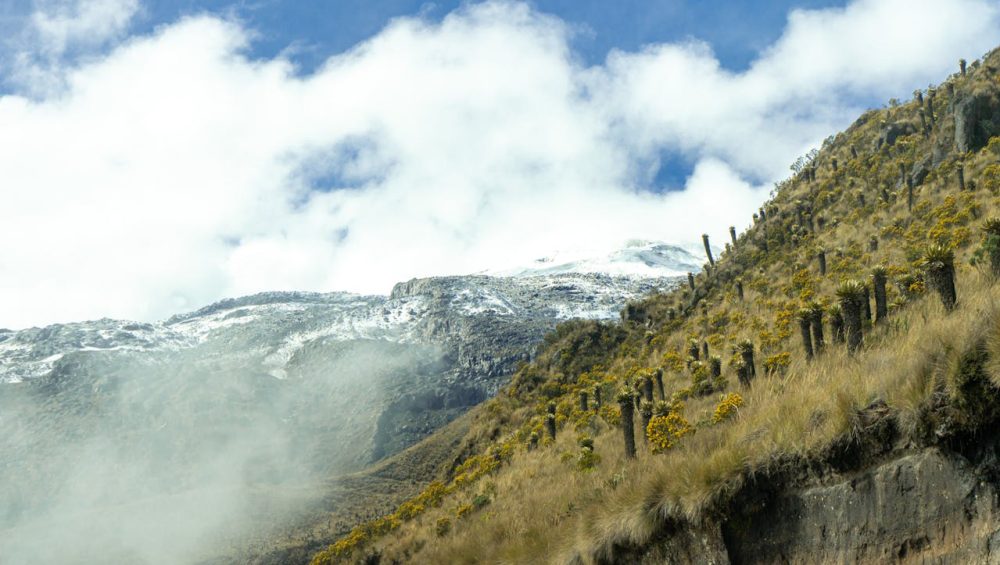
The Marangu Route takes you through several distinct landscapes as you climb higher. You begin on the cultivated lower slopes before entering the montane rainforest, where tall trees, moss and dense vegetation surround the trail. The forest also provides habitat for black-and-white colobus monkeys, blue monkeys and forest duikers, although wildlife sightings are never guaranteed. (Tanzania Parks)
Around Mandara Hut, the forest starts to open into higher vegetation. From Horombo, the landscape changes again to moorland, with giant lobelias and senecios adding a distinctive Kilimanjaro character. You also get clearer views toward the rugged peaks of Mawenzi.
Above Horombo, vegetation becomes much thinner as you cross the Kibo-Mawenzi Saddle. The trail reaches an alpine desert with open volcanic terrain and very little shelter. Near Kibo, the landscape feels completely different from the green forest below.
The final section leads toward Uhuru Peak, where the scenery becomes rocky, cold and exposed. At the summit, you can look across Kibo’s volcanic landscape and, when conditions allow, see the surrounding plains and clouds far below.
Best Time to Climb the Marangu Route
The best time to climb the Marangu Route is during the drier months from January to mid-March and June to October. These periods usually offer better trail conditions, clearer views, and more comfortable trekking weather.
January to mid-March: This period offers warm conditions and generally good visibility. You may still experience some rain in the rainforest, but the route often feels quieter than during the main mid-year season.
June to October: These months bring generally drier conditions and good visibility. July and August are popular, so expect more climbers on the trail and busier huts.
April and May: These months fall within the long-rain period. Rain can make the lower trail wet and slippery, while clouds can reduce mountain views.
November to December: The short rains can bring wet sections and changing weather, although conditions can vary from day to day.
For Marangu, the weather matters because you sleep in mountain huts rather than tents. The huts provide shelter, but good timing still helps you enjoy the trail and summit attempt.
Marangu Route Cost
The cost of climbing the Marangu Route depends mainly on the number of days, group size, and services included in your package. A 5-day climb normally costs less than a 6-day climb because the 6-day itinerary includes an additional mountain day.
For an accurate price, WeWild Travel should show the current 5-day and 6-day prices directly on the page rather than using a general industry estimate.
What Your Marangu Price Should Include
A complete WeWild package can include:
- Kilimanjaro National Park fees
- Mountain hut accommodation
- Professional mountain guides
- Porters and cook
- Meals during the trek
- Drinking water
- Rescue and park-related fees
- Airport or hotel transfers, if included in your package
- Pre-climb briefing
Extra Costs to Plan For
Your personal budget may also need to cover:
- International flights
- Visa
- Travel insurance
- Personal mountain equipment
- Equipment rental, if needed
- Tips for the mountain crew
- Hotel nights before or after the climb
- Personal expenses
Important: The cheapest Marangu package is not always the easiest price to understand. Before booking, check exactly what the operator includes, what you pay separately, and whether the quoted price covers the full trek.
What to Pack for Marangu
Marangu is different from most Kilimanjaro routes because you sleep in mountain huts instead of tents. However, you still need a proper sleeping bag, warm clothing, and reliable hiking gear because temperatures can drop sharply at higher elevations.
Clothing
Pack clothes that you can layer as temperatures change. Bring moisture-wicking base layers, hiking trousers, a fleece or warm mid-layer, a waterproof jacket and trousers, warm gloves, a hat, and comfortable hiking socks. For summit night, pack extra warm layers because temperatures can fall below freezing.
Sleeping
Although Marangu provides hut accommodation, you still need your own warm sleeping bag suitable for cold mountain conditions. A sleeping bag liner can add warmth and make the hut sleeping setup more comfortable. You do not need to carry a tent.
Hiking Gear
Bring comfortable, broken-in hiking boots with good grip. You should also have trekking poles, a headlamp with spare batteries, a water bottle or hydration system, sunglasses, sunscreen, and a small backpack for daily essentials. A waterproof cover or dry bags can protect your belongings from rain.
Health and Personal Items
Pack personal medication, basic first-aid supplies, lip balm, toiletries, hand sanitizer, tissues, and any altitude-related medication prescribed by your doctor. Sunscreen and sunglasses remain important even when the weather feels cold.
Documents and Electronics
Keep your passport, Tanzania visa, travel insurance details, emergency contacts, and other important documents in a waterproof pouch. For electronics, bring your phone, charging cables, a power bank, and a camera if you want to take photos. Power availability at mountain huts can be limited, so charge your devices before starting the trek.
Daypack Essentials
Your daypack should carry the items you may need while walking: water, snacks, rain jacket, sunscreen, sunglasses, phone, camera, tissues, and an extra warm layer. Keep heavier luggage with the mountain crew when your package includes porter support.
The goal is to pack for changing mountain conditions, not to bring everything you own. Choose reliable equipment, keep your daypack manageable, and make sure your most important items stay easy to reach.
Marangu vs Machame
Marangu and Machame are two established routes up Mount Kilimanjaro, but they provide different trekking experiences. The main differences involve accommodation, route shape, scenery, duration, and acclimatization opportunities.
| Feature | Marangu | Machame |
|---|---|---|
| Accommodation | Huts | Camping |
| Typical duration | 5-6 days | 6-7+ days |
| Route profile | Out-and-back | More varied route |
| Scenery | Forest, moorland, alpine desert | Forest, moorland, alpine terrain |
| Summit approach | Kibo | Barafu |
| Descent | Marangu | Mweka |
| Camping required | No | Yes |
| Acclimatization options | More limited on 5-day | Depends on itinerary |
| Main consideration | Hut comfort + altitude | Camping + longer route |
Accommodation
Marangu uses mountain huts, so climbers sleep indoors each night. Machame uses tents, meaning climbers need to be comfortable with camping at different elevations and in changing mountain weather.
Route Profile
Marangu follows the same general trail for the ascent and descent. Machame takes a different descent route, creating a more varied overall trekking circuit.
Duration and Acclimatization
Marangu commonly takes 5 or 6 days. The 6-day option adds an acclimatization day at Horombo. Machame commonly takes 6 or 7 days or longer, depending on the itinerary and operator. The extra days can provide additional time for gradual acclimatization.
Scenery
Both routes pass through Kilimanjaro’s major vegetation zones, including rainforest, moorland, and higher alpine terrain. Machame follows a more varied trail, while Marangu provides a more direct route toward Kibo.
Summit and Descent
Marangu climbers normally approach the summit from Kibo Hut and descend through the Marangu route. Machame climbers usually spend the final night before the summit at Barafu Camp and descend through Mweka.
The choice therefore comes down to the experience you want: hut accommodation and a more direct route with Marangu, or camping and a more varied route with Machame.
Read More : Machame route 7 Day Itinerary
What Is Included in a WeWild Marangu Climb?
A WeWild Marangu climb includes the main services you need from the start of the trek to your return from the mountain. Because Marangu uses mountain huts, your package includes hut accommodation rather than camping. WeWild also provides a professional mountain crew, meals, drinking water, park fees, transport, and mountain safety support.
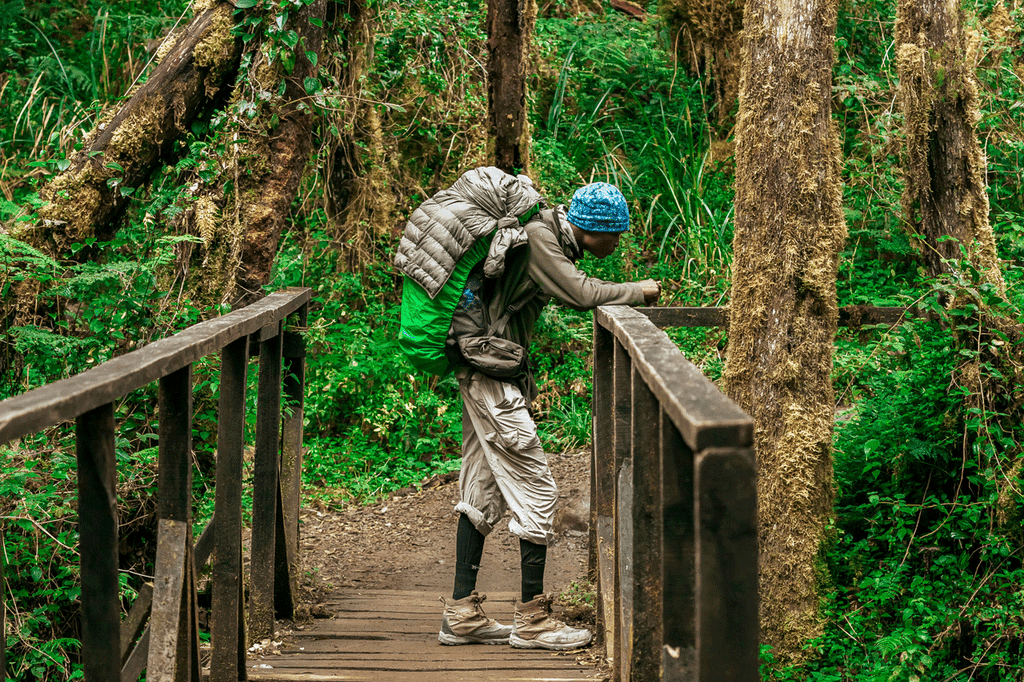
Professional Mountain Guide
A professional mountain guide leads your climb, manages the daily route, supports your pace, and monitors your condition as you gain altitude. WeWild lists professional guides licensed by Kilimanjaro National Park as part of its climbing packages.
Porters
Porters support the expedition by carrying group equipment, food, and other mountain supplies. This allows you to focus on walking with a manageable daypack.
Cook and Meals
Your mountain food is prepared by the climbing crew. The package includes breakfast, lunch, and dinner during the trek, along with drinking water.
Kilimanjaro National Park Fees
The package includes the required Kilimanjaro National Park fees applicable to the climb, including the official mountain charges listed by WeWild.
Mountain Hut Accommodation
Marangu is the only Kilimanjaro route that uses mountain huts throughout the main trekking itinerary. WeWild includes hut accommodation at the route’s mountain stops rather than tent camping.
Rescue and Safety Support
WeWild includes the required mountain rescue fees and provides emergency safety support. Its wider Kilimanjaro package information also lists emergency oxygen, first-aid equipment, and health monitoring as part of its mountain support.
Transportation
Transportation to and from the Kilimanjaro trailhead forms part of WeWild’s listed climbing services. Airport and hotel transfers can also be included depending on the selected package.
Pre-Climb Briefing
Before starting the trek, WeWild provides pre-trek preparation and route briefing. This gives you an opportunity to review the itinerary, equipment, and important preparations before entering the mountain.
Equipment Support
WeWild provides the mountain equipment required for the expedition, while personal climbing equipment and clothing remain the climber’s responsibility. Equipment rental may be available when needed, depending on the package.
Before booking, check the exact 5-day or 6-day package with WeWild Travel because individual inclusions can vary by itinerary and package. This helps you understand exactly what your quoted price covers before you travel.
Why Climb Marangu With WeWild Travel?
Choosing a Marangu operator is not only about the price. You also want to know how the company communicates before the trek, organizes the mountain team, monitors your condition, and handles the practical details of the climb.
Pre-Climb Communication
WeWild provides preparation support before you reach the mountain. You can discuss the itinerary, packing requirements, arrival arrangements, and equipment before the trek. A pre-climb briefing helps you understand the route, daily hiking plan, safety procedures, and what to expect on the mountain.
Experienced Mountain Team
Your Marangu climb is supported by professional mountain guides, porters, and cooks. The guide leads the trek and manages the group, while the support crew handles food, supplies, and other mountain logistics.
Daily Health Monitoring
Altitude requires attention throughout the climb. WeWild describes daily health monitoring, including oxygen saturation checks and monitoring how climbers respond to altitude. Your guide can adjust the pace, recommend rest, or arrange a descent when a climber’s condition requires it.
Food and Hut Organization
Marangu uses mountain huts instead of tents. WeWild organizes the mountain accommodation, meals, drinking water, and crew support needed during the trek. This lets you focus on walking rather than managing the daily mountain logistics yourself.
Safety Procedures
WeWild includes mountain safety and emergency support in its Kilimanjaro services. Its published climbing information also lists rescue fees, medical kits, oxygen and oximeters as part of its mountain safety arrangements.
Porter Welfare
The mountain crew plays an important role in every organized climb. WeWild publishes information about responsible porter treatment, including reasonable loads, food and water, suitable equipment, safe sleeping conditions, and fair working practices.
Airport and Hotel Coordination
WeWild can coordinate transportation between Kilimanjaro International Airport, your hotel, and the mountain trailhead when those services form part of your selected package. The team also handles the practical preparation at the route gate before the trek begins.
Post-Climb Support
Your support does not necessarily end when you reach Uhuru Peak. Depending on your package, WeWild can arrange the return transfer and any included hotel accommodation after the climb. Check your specific quotation to confirm exactly what your package covers.
The main difference is the organization behind the trek. With WeWild, the aim is to keep communication, mountain logistics, health monitoring, crew support, and safety arrangements connected from your preparation in Tanzania through your return from Kilimanjaro.
Frequently Asked Questions
Yes. Marangu has a gradual trail in many sections and hut accommodation, which can make it practical for first-time Kilimanjaro climbers. Altitude remains the main challenge.
Marangu is often considered one of the more straightforward routes because of its established trail and huts. However, reaching 5,895 m still requires good preparation and acclimatization.
Five days is the shortest standard itinerary, but it gives you less time to acclimatize. Your response to altitude can strongly affect the climb.
The 6-day itinerary adds an acclimatization day at Horombo, with a hike toward Mawenzi Ridge before returning to the hut.
Yes. Marangu uses mountain huts instead of tents throughout the main route.
Daily distances vary by itinerary. Most days involve several hours of walking, while summit day is considerably longer.
Summit night is the toughest part for many climbers because you walk for hours in darkness, cold temperatures, and high altitude.
Yes. Marangu is the only Kilimanjaro route that uses huts rather than camping throughout the trek.
January to mid-March and June to October generally offer better climbing conditions, although weather can change quickly.
The price depends on the number of days, group size, and services included. Ask WeWild for the current 5-day or 6-day quotation.
Marangu uses huts and follows an out-and-back route. Machame uses tents and follows a more varied route with a different descent.
Your guide should assess your symptoms and monitor your condition. Serious or worsening symptoms may require immediate descent rather than continuing toward the summit.
Conclusion
The Marangu Route offers a different way to climb Mount Kilimanjaro, with mountain huts, a direct trail, and a 5 or 6-day itinerary. The 5-day option gives you a shorter schedule, while the 6-day route adds an acclimatization day at Horombo before the summit attempt.
Although Marangu has hut accommodation, reaching Uhuru Peak at 5,895 metres still requires preparation, suitable equipment, and careful attention to altitude. Your pace, physical condition, acclimatization, and guide support all matter during the climb.
If you are considering Marangu, start by choosing the itinerary that matches your available time and altitude experience. WeWild Travel can help you prepare your climb, organize the mountain crew, arrange the required logistics, and support you throughout the trek.
Ready to plan your Marangu climb? Contact WeWild Travel to discuss your dates, itinerary, and current package price.