kilimanjaro Eruption History
Kilimanjaro Eruption History: Formation, Volcanic Cones & Last Eruption (2026 Guide)
Estimated reading time: 22 minutes
Kilimanjaro eruption history began more than 2.5 million years ago when volcanic activity along the East African Rift System formed the mountain’s three volcanic cones: Shira, Mawenzi, and Kibo. Today, Shira and Mawenzi are extinct, while Kibo remains a dormant volcano, meaning it has not erupted for hundreds of thousands of years but still shows geothermal activity beneath the summit. Scientists have found no evidence that an eruption is imminent.
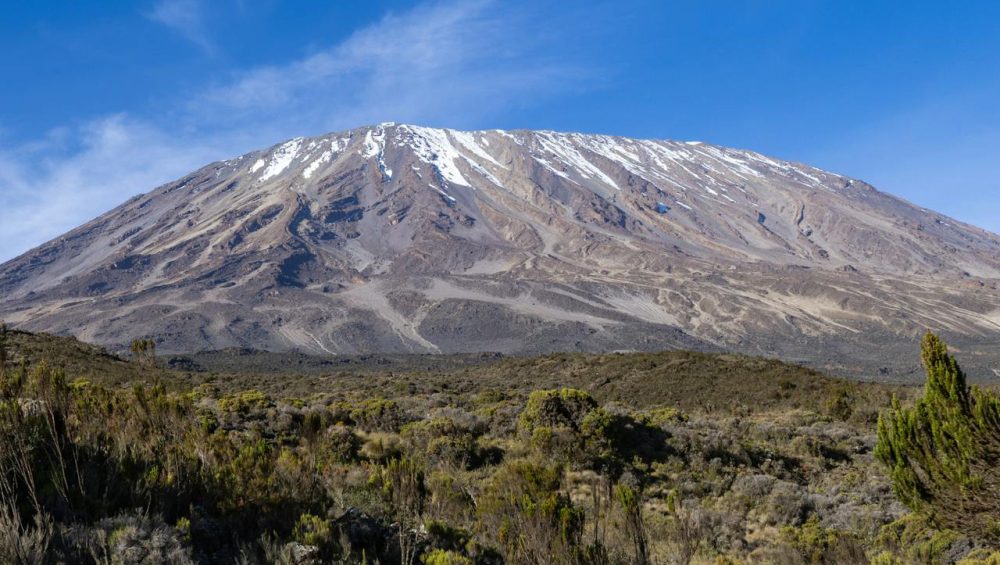
Mount Kilimanjaro is much more than Africa’s highest mountain. It is also one of the world’s largest dormant stratovolcanoes and the highest free-standing mountain on Earth. Every year, thousands of climbers reach Uhuru Peak without realizing they are standing on the summit of a volcano shaped by millions of years of lava flows, explosive eruptions, volcanic ash, and powerful geological forces.
The mountain’s story began deep beneath the Earth’s surface as the African continent slowly stretched apart. Rising magma built one volcanic cone after another, creating Shira, Mawenzi, and finally Kibo, the highest and youngest cone. Over time, eruptions, erosion, and volcanic collapse transformed these volcanoes into the spectacular landscapes that climbers explore today, including the Shira Plateau, Kibo Crater, ancient lava fields, and glaciers near the Equator.
In this guide, you’ll learn about Kilimanjaro eruption history, how the mountain formed, the evolution of its three volcanic cones, when it last erupted, why Kibo is dormant instead of extinct, and what scientists know about its volcanic future.
Table of contents
- Kilimanjaro Eruption History: Formation, Volcanic Cones & Last Eruption (2026 Guide)
- What Is the Eruption History of Mount Kilimanjaro?
- How Did Mount Kilimanjaro Form?
- Will Mount Kilimanjaro Erupt Again?
- Is Mount Kilimanjaro Still an Active Volcano?
- Will Mount Kilimanjaro Erupt Again?
- What Can You See Inside Kibo Crater?
- Timeline of Kilimanjaro’s Eruption History
- Fascinating Facts About Kilimanjaro’s Volcano
- Frequently Asked Questions
- Conclusion
- Read Also:
What Is the Eruption History of Mount Kilimanjaro?
Mount Kilimanjaro’s eruption history began more than 2.5 million years ago when magma rose through the Earth’s crust along the East African Rift. Over hundreds of thousands of years, this volcanic activity formed three volcanic cones Shira, Mawenzi, and Kibo. Shira and Mawenzi are now extinct, while Kibo remains a dormant volcano. Kibo’s last major eruptive phase occurred hundreds of thousands of years ago, and although scientists have detected geothermal activity beneath the summit, there is no evidence that Mount Kilimanjaro is close to erupting today.
Unlike many volcanoes that formed during a single eruptive period, Mount Kilimanjaro developed through several stages of volcanic activity. Each cone formed at a different time, creating the massive stratovolcano that dominates northern Tanzania today. As eruptions continued, thick layers of lava, volcanic ash, and other volcanic materials gradually built the mountain higher until Kibo became Africa’s highest peak.
The oldest cone, Shira, formed first and later collapsed to create the broad Shira Plateau that climbers cross on the Lemosho and Shira routes. Mawenzi formed next, developing into the mountain’s rugged eastern peak before volcanic activity ended and erosion shaped its dramatic spires. Finally, Kibo emerged as the youngest and largest cone. It continued erupting long after the other two volcanoes became inactive, eventually reaching 5,895 meters (19,341 feet) and forming the summit that thousands of climbers visit every year.
Although Kibo has remained quiet for a very long time, scientists classify it as dormant rather than extinct. Steam vents, volcanic gases, and geothermal heat inside the summit crater show that the volcano still has an active heat source beneath the surface. However, volcanic monitoring has found no signs of an imminent eruption, making Mount Kilimanjaro safe to climb while remaining one of the world’s most fascinating dormant volcanoes.
How Did Mount Kilimanjaro Form?
Mount Kilimanjaro formed through millions of years of volcanic activity driven by the East African Rift System, one of the world’s largest geological features. As the African continent slowly stretched apart, enormous forces deep beneath the Earth’s surface allowed magma to rise through cracks in the crust. Over time, repeated volcanic eruptions built layers of lava, volcanic ash, and rock that eventually created the massive mountain we see today.
Unlike many famous volcanoes that have a single summit, Kilimanjaro developed through several stages of volcanic activity. Three volcanic cones Shira, Mawenzi, and Kibo formed at different times, each playing an important role in shaping Africa’s highest mountain. Today, Shira and Mawenzi are extinct, while Kibo remains dormant and rises to 5,895 meters (19,341 feet) above sea level.
The mountain’s formation took more than two million years. During this time, powerful eruptions, lava flows, volcanic collapses, and erosion transformed the landscape into the glaciers, craters, ridges, and plateaus that climbers explore today.
Formation of the East African Rift
The story of Mount Kilimanjaro began long before the first volcanic eruption. Around 25 to 30 million years ago, the Earth’s crust in East Africa started to stretch and slowly split apart, creating the East African Rift System. This enormous geological feature extends for thousands of kilometers through several African countries and remains one of the most active continental rift systems on Earth.
As the crust stretched, it became thinner and developed deep fractures. These openings allowed extremely hot magma from the Earth’s mantle to move upward toward the surface. Over millions of years, this process produced many volcanoes across East Africa, including Mount Kenya, Mount Meru, Ol Doinyo Lengai, and eventually Mount Kilimanjaro.
Without the East African Rift, Mount Kilimanjaro would never have formed. The rift created the conditions that allowed magma to reach the surface and build Africa’s tallest mountain.
How Magma Reached the Surface
Deep beneath the Earth’s surface, temperatures are high enough to melt rock into molten magma. As pressure increased below the thinning crust, magma searched for weak points where it could rise.
When magma reached the surface, it erupted as lava, volcanic ash, and gases. Each eruption added another layer to the growing volcano. Some eruptions produced thick lava flows that strengthened the mountain, while explosive eruptions spread ash and volcanic debris across the surrounding landscape.
This cycle repeated many times over hundreds of thousands of years. Instead of forming in a single eruption, Mount Kilimanjaro grew gradually as one volcanic cone developed after another. The youngest cone, Kibo, eventually became the dominant summit after continuing to erupt long after Shira and Mawenzi had become inactive.
Millions of Years of Volcanic Activity
Mount Kilimanjaro did not appear overnight. Scientists estimate that volcanic activity began more than 2.5 million years ago, making the mountain the result of a long and complex geological history.
The first major cone, Shira, formed and grew before its central section collapsed, creating the broad Shira Plateau that climbers cross today. Later, Mawenzi rose to the east with steep volcanic slopes and jagged peaks. As volcanic activity shifted westward, Kibo emerged and continued erupting for hundreds of thousands of years, eventually becoming the highest and largest of the three cones.
Powerful lava flows built Kibo’s broad summit, while explosive eruptions formed the crater that visitors see today. Over time, volcanic activity declined, glaciers developed near the summit during colder periods, and erosion sculpted the mountain into its present shape.
Today, Mount Kilimanjaro stands as the highest free-standing mountain in the world and one of Earth’s most remarkable stratovolcanoes. Its towering glaciers, volcanic craters, lava formations, and three distinct volcanic cones tell the story of millions of years of geological change that continues to fascinate scientists and climbers alike.
Will Mount Kilimanjaro Erupt Again?
The short answer is no one knows for certain. Scientists cannot predict exactly if or when Kibo, the highest volcanic cone of Mount Kilimanjaro, could erupt again. However, based on current scientific evidence, there is no indication that an eruption is imminent.
Mount Kilimanjaro is not considered an extinct volcano. Instead, volcanologists classify Kibo as a dormant volcano because it still shows signs of geothermal activity beneath the summit. Although the volcano has remained quiet for a very long time, it has not completely lost the internal heat that once fueled its eruptions.
Why Do Scientists Call Kibo a Dormant Volcano?
A dormant volcano is a volcano that has not erupted for a long period but still has the potential to become active in the future. Unlike an extinct volcano, a dormant volcano continues to show geological signs that magma and heat remain deep below the surface.
Scientists have observed several features that support Kibo’s dormant status, including:
- Steam vents (fumaroles) that release warm gases inside the summit crater.
- Sulfur deposits around active fumaroles.
- Elevated ground temperatures in parts of the crater.
- Geophysical studies suggesting heat and magma remain beneath Kibo.
These features indicate that the volcano is still geologically alive, even though it has not produced a recent eruption.
Is There Any Sign That Kilimanjaro Will Erupt Soon?
At present, no scientific evidence suggests that Mount Kilimanjaro is close to erupting. Volcanologists monitor the mountain for changes such as increased earthquakes, ground deformation, unusual gas emissions, and other signs that magma is moving toward the surface.
To date, researchers have not detected the combination of signals that usually precedes a volcanic eruption. This is why Mount Kilimanjaro remains a safe destination for thousands of climbers who reach Uhuru Peak every year.
What Would Happen If Kibo Became Active Again?
If Kibo were ever to show signs of renewed volcanic activity, scientists would likely detect changes long before an eruption occurred. Modern monitoring techniques can measure seismic activity, ground movement, gas emissions, and changes in underground heat, allowing authorities to assess the situation and issue warnings if necessary.
While it is impossible to rule out future volcanic activity completely, the probability of an eruption in the near future is considered very low based on current scientific observations.
For climbers, there is no reason to avoid Mount Kilimanjaro because of volcanic concerns. Today, the mountain is best known for its glaciers, breathtaking landscapes, and world-class trekking routes not for active eruptions. Its quiet summit offers a rare opportunity to stand on the highest point in Africa while exploring one of the world’s largest dormant volcanoes.
Is Mount Kilimanjaro Still an Active Volcano?
No. Mount Kilimanjaro is not an active volcano, but it is not completely extinct either. The mountain consists of three volcanic cones with different geological histories. Kibo, the highest and youngest cone, is dormant, while Mawenzi and Shira are extinct. This means Kibo still shows signs of underground geothermal activity, whereas Mawenzi and Shira have permanently stopped erupting.
Understanding the difference between active, dormant, and extinct volcanoes helps explain why scientists continue to monitor Mount Kilimanjaro.
What Is an Active Volcano?
An active volcano is a volcano that has erupted in recent history or currently shows clear signs that an eruption could occur. Active volcanoes often experience frequent earthquakes, rising magma, lava eruptions, or large releases of volcanic gases.
Examples of active volcanoes include those that regularly erupt or show continuous volcanic activity.
What Is a Dormant Volcano?
A dormant volcano has not erupted for a very long time, but it still has the potential to erupt again in the future. Scientists classify a volcano as dormant when evidence shows that heat and magma remain beneath the surface, even though the volcano appears quiet.
Dormant volcanoes can remain inactive for thousands of years before showing signs of renewed activity. Because of this uncertainty, volcanologists continue to study and monitor them.
What Is an Extinct Volcano?
An extinct volcano has reached the end of its volcanic life. Scientists believe its magma supply has stopped, making another eruption extremely unlikely.
Over time, extinct volcanoes become heavily eroded by wind, rain, and ice, leaving behind rugged peaks and ancient volcanic landscapes.
Kibo: A Dormant Volcano
Kibo is the youngest, highest, and largest of Kilimanjaro’s three volcanic cones. It rises to 5,895 meters (19,341 feet) and contains the famous Uhuru Peak, Reusch Crater, and the Ash Pit.
Although Kibo has not erupted for a very long time, scientists classify it as dormant because it still shows evidence of geothermal activity beneath the summit.
Visitors exploring Kibo Crater may notice:
- Fumaroles that release warm steam and volcanic gases.
- A noticeable sulfur smell near some vents.
- Areas of warm ground inside parts of the crater caused by heat rising from below the surface.
These features show that Kibo still has an active geothermal system, even though there is no evidence that an eruption is imminent.
Mawenzi: An Extinct Volcano
Mawenzi is the second-highest cone on Mount Kilimanjaro, reaching 5,149 meters (16,893 feet). Volcanic activity at Mawenzi ended hundreds of thousands of years ago, and erosion gradually shaped the cone into the dramatic ridges, pinnacles, and steep cliffs visible today.
Scientists classify Mawenzi as extinct because there is no evidence of remaining geothermal activity or magma movement beneath the cone.
Shira: An Extinct Volcano
Shira is the oldest of Kilimanjaro’s three volcanic cones. It formed more than two million years ago before collapsing to create the broad Shira Plateau, one of the highlights of the Lemosho and Shira climbing routes.
Like Mawenzi, Shira is extinct. Its volcanic activity ended long ago, and millions of years of erosion transformed the original cone into the high plateau that climbers cross today.
A Mountain With Three Different Volcanic Histories
One of the most fascinating facts about Mount Kilimanjaro is that it combines three volcanic cones in three different stages of geological evolution:
| Volcanic Cone | Current Status | Key Characteristics |
|---|---|---|
| Kibo | Dormant | Highest cone, geothermal activity, fumaroles, Reusch Crater, Ash Pit |
| Mawenzi | Extinct | Rugged volcanic peak shaped by erosion |
| Shira | Extinct | Oldest cone, collapsed to form the Shira Plateau |
This unique combination makes Mount Kilimanjaro one of the world’s most remarkable stratovolcanoes. Climbers who reach Uhuru Peak are not only standing on the highest mountain in Africa they are also exploring the summit of a dormant volcano that tells the story of millions of years of volcanic activity.
Will Mount Kilimanjaro Erupt Again?
No one can say with complete certainty whether Mount Kilimanjaro will erupt again. Scientists cannot predict exactly if or when Kibo, the mountain’s highest volcanic cone, could become active in the future. However, based on current geological evidence, there is no indication that an eruption is imminent, and Mount Kilimanjaro remains a safe destination for climbers.
The uncertainty exists because volcanoes can remain dormant for thousands of years before showing signs of renewed activity. Although Kibo has not erupted for a very long time, it still contains geothermal heat beneath the summit. For this reason, volcanologists classify Kibo as a dormant volcano rather than an extinct one.
Why Could Kibo Erupt Again?
Kibo still displays several geological features that show the volcano has not completely cooled. Scientists have observed:
- Fumaroles that release steam and volcanic gases inside the summit crater.
- Sulfur deposits around some geothermal vents.
- Warm ground in parts of the crater caused by heat rising from below the surface.
- Geological evidence that magma remains deep beneath the volcano.
These features indicate that Kibo still has an active geothermal system. However, geothermal activity alone does not mean an eruption will happen soon.
Is Mount Kilimanjaro Being Monitored?
Yes. Geologists and volcanologists continue to study Mount Kilimanjaro using modern scientific methods. They monitor seismic activity, ground movement, volcanic gases, and other geological changes that could indicate magma is rising toward the surface.
At present, researchers have not detected the combination of warning signs that normally precede a volcanic eruption. This is why scientists do not consider Mount Kilimanjaro to be an immediate volcanic threat.
Should Climbers Be Concerned?
No. Every year, tens of thousands of people safely climb Mount Kilimanjaro. National park authorities, scientists, and local experts continue to monitor the mountain, and there is no scientific evidence suggesting that climbers face volcanic danger today.
For most visitors, the greatest challenges are altitude, weather, and physical endurance not volcanic activity.
The Future of Kibo
The future of Kibo remains a subject of ongoing scientific research. Because it is a dormant volcano, scientists cannot completely rule out the possibility of future volcanic activity. At the same time, there is no evidence that an eruption is likely in the foreseeable future.
For now, Mount Kilimanjaro stands as one of the world’s most remarkable dormant volcanoes a mountain where climbers can walk across ancient lava flows, stand beside glaciers near the Equator, and reach the highest point in Africa while exploring a landscape shaped by millions of years of volcanic history.
What Can You See Inside Kibo Crater?
Kibo Crater is one of the most fascinating volcanic landscapes in Africa. Located just beyond Uhuru Peak, the crater reveals the geological history of Mount Kilimanjaro through its ash pit, volcanic rocks, fumaroles, glaciers, and ice fields. While most climbers finish their trek at Uhuru Peak, those who continue into the crater discover a unique environment where volcanic activity and ancient ice exist side by side.
The crater stretches across the summit of Kibo, the youngest and highest of Kilimanjaro’s three volcanic cones. Although Kibo has not erupted for a very long time, the crater still contains features that remind visitors of the powerful volcanic forces that built Africa’s highest mountain.
The Ash Pit
The Ash Pit lies near the center of Reusch Crater and marks one of the youngest volcanic features on Mount Kilimanjaro. It is a deep, circular depression formed by past volcanic activity and surrounded by layers of volcanic ash, lava, and rock.
The Ash Pit gives scientists valuable clues about Kilimanjaro’s geological past. It also reminds visitors that Kibo is a dormant volcano, not an extinct one. Climbers who spend a night at Crater Camp often visit the Ash Pit with a guide, making it one of the mountain’s most unique attractions.
Fumaroles
One of the most remarkable features inside Kibo Crater is the presence of fumaroles. These are small openings in the ground that release warm steam and volcanic gases from beneath the Earth’s surface.
As you walk through parts of the crater, you may notice steam rising from cracks in the ground and detect a faint sulfur smell. These fumaroles show that geothermal heat still exists beneath Kibo, even though the volcano has remained quiet for thousands of years.
Scientists continue to monitor these geothermal features because they provide important information about the volcano’s internal activity.
Volcanic Rocks
The floor and walls of Kibo Crater display a remarkable collection of volcanic rocks created by countless eruptions over millions of years.
Visitors can see:
- Hardened lava flows.
- Dark volcanic ash.
- Basaltic rocks.
- Loose volcanic gravel.
- Layers of material deposited during different eruptive periods.
These rocks tell the story of how repeated eruptions gradually built Mount Kilimanjaro into the highest mountain in Africa. Every step across the crater takes climbers over ancient lava that once flowed from deep beneath the Earth’s crust.
Glaciers
One of the greatest surprises inside Kibo Crater is the presence of glaciers. Despite standing only a few degrees south of the Equator, several glaciers still survive near the summit because of the mountain’s extreme elevation.
The best-known glacier is Furtwängler Glacier, located close to Uhuru Peak. Its towering walls of ice create a dramatic contrast with the dark volcanic landscape surrounding it.
Seeing glacier ice beside an ancient volcanic crater is one of the reasons Mount Kilimanjaro is unlike any other mountain in the world.
Ice Fields
In addition to individual glaciers, Kibo’s summit also contains extensive ice fields, including the Northern Ice Field and the Southern Ice Fields.
These ice fields formed over thousands of years as snowfall accumulated and compressed into dense glacier ice. Although they cover a much smaller area than they did in the past, they remain among Kilimanjaro’s most spectacular natural features.
From the crater rim, visitors can admire towering ice cliffs, brilliant white snow, and sweeping views across the African plains thousands of meters below. The combination of volcanic craters, geothermal features, and ancient glaciers makes Kibo Crater one of the world’s most extraordinary high-altitude landscapes.
Whether you are interested in geology, photography, or mountaineering, exploring Kibo Crater offers a rare opportunity to witness the powerful forces that shaped Mount Kilimanjaro over millions of years.
Timeline of Kilimanjaro’s Eruption History
Mount Kilimanjaro did not form during a single volcanic eruption. Instead, it developed over more than two million years through a series of eruptions that created its three volcanic cones Shira, Mawenzi, and Kibo. As volcanic activity shifted from one cone to another, the mountain gradually grew into the highest peak in Africa. The timeline below highlights the major stages in Kilimanjaro’s geological history.
| Time | Major Volcanic Event |
|---|---|
| About 2.5 million years ago | Volcanic activity begins as magma rises through the Earth’s crust along the East African Rift, marking the birth of Mount Kilimanjaro. |
| About 1.9 million years ago | Shira, the first volcanic cone, forms through repeated lava eruptions. It later collapses, creating today’s Shira Plateau. |
| About 1 million years ago | Volcanic activity shifts eastward, leading to the formation of Mawenzi and later Kibo. Both cones continue to grow through successive eruptions. |
| About 500,000 years ago | Kibo becomes the dominant volcanic cone. Powerful lava flows and explosive eruptions increase its height, making it the tallest of Kilimanjaro’s three peaks. |
| About 360,000 years ago | Major volcanic activity shapes Kibo Crater and the summit area. Explosive eruptions leave behind volcanic ash, lava deposits, and the broad crater visible today. |
| About 150,000-200,000 years ago | Kibo experiences its last major eruptive phase. Volcanic activity gradually declines, although geothermal heat remains beneath the summit. |
| Today | Kibo remains dormant, with fumaroles, sulfur gases, and geothermal heat inside the crater providing evidence that the volcano is not extinct. Scientists continue to monitor the mountain, but there is no evidence that an eruption is imminent. |
This timeline shows how Mount Kilimanjaro evolved from a series of volcanic eruptions into the spectacular mountain we see today. Millions of years of lava flows, explosive eruptions, erosion, and glaciation transformed the landscape into a mountain with three volcanic cones, ancient craters, alpine deserts, and glaciers near the Equator. Every climber who reaches Uhuru Peak stands on the summit of Kibo, the youngest and only dormant cone, making Kilimanjaro one of the world’s most remarkable geological landmarks.
Fascinating Facts About Kilimanjaro’s Volcano
Mount Kilimanjaro is much more than Africa’s highest mountain. It is one of the world’s most remarkable volcanoes, with a geological history that spans more than two million years. From its three volcanic cones and towering glaciers to its dormant summit and active geothermal features, Kilimanjaro continues to fascinate scientists, climbers, and nature lovers from around the world.
Here are some of the most interesting facts about Mount Kilimanjaro’s volcanic past and present.
It Is the Highest Volcano in Africa
At 5,895 meters (19,341 feet) above sea level, Mount Kilimanjaro is the highest volcano in Africa. Its summit, Uhuru Peak, stands above the surrounding plains of northern Tanzania and attracts tens of thousands of climbers every year.
Despite its enormous size, Kilimanjaro has remained quiet for thousands of years, making it one of the world’s most accessible dormant volcanoes.
It Is the Highest Free-Standing Mountain in the World
Unlike mountain ranges such as the Himalayas or the Andes, Mount Kilimanjaro rises independently from the surrounding landscape. It is the highest free-standing mountain on Earth, rising nearly 4,900 meters (16,100 feet) above the plains below.
This unique formation allows climbers to experience an extraordinary journey through several climate zones, from tropical rainforest to glaciers near the summit.
Mount Kilimanjaro Has Three Volcanic Cones
Most volcanoes have a single summit, but Mount Kilimanjaro consists of three distinct volcanic cones:
- Shira – The oldest cone, now extinct and collapsed into the Shira Plateau.
- Mawenzi – The second cone, extinct and famous for its steep, rugged peaks.
- Kibo – The youngest and highest cone, home to Uhuru Peak and classified as dormant.
Together, these three cones tell the story of millions of years of volcanic activity along the East African Rift.
Glaciers Still Cover Parts of a Volcano
One of Kilimanjaro’s most extraordinary features is that glaciers and permanent ice fields still exist on the summit of a dormant volcano located just a few degrees south of the Equator.
Climbers can still see famous ice formations such as:
- Northern Ice Field
- Southern Ice Fields
- Furtwängler Glacier
- Rebmann Glacier
- Credner Glacier
Few places on Earth combine volcanic landscapes and glaciers in such a spectacular setting.
Kibo Is Dormant, Not Extinct
Many people believe Mount Kilimanjaro is an extinct volcano, but this is not correct.
Scientists classify Kibo as a dormant volcano because it still contains geothermal heat beneath the summit. Although Kibo has not erupted for a very long time, geological evidence shows that the volcano has not completely cooled.
By contrast, Shira and Mawenzi are considered extinct because their volcanic activity ended long ago.
Hot Gases Still Escape From the Summit Crater
One of the strongest pieces of evidence that Kibo remains dormant is the presence of fumaroles inside the summit crater.
These natural openings release warm steam and volcanic gases from beneath the Earth’s surface. Visitors exploring Kibo Crater may notice:
- Steam rising from small vents.
- A faint sulfur smell near geothermal areas.
- Warm ground in parts of the crater.
These geothermal features remind climbers that, although Mount Kilimanjaro appears peaceful today, powerful volcanic forces still exist deep beneath Africa’s highest mountain.
Kilimanjaro Continues to Shape Scientific Research
Mount Kilimanjaro is not only a popular trekking destination but also an important natural laboratory. Geologists, volcanologists, glaciologists, and climate scientists continue to study the mountain to better understand volcanic evolution, glacier change, mountain weather, and the geological history of the East African Rift.
Its combination of ancient volcanic cones, glaciers near the Equator, and ongoing geothermal activity makes Kilimanjaro one of the most scientifically significant mountains in the world.
Frequently Asked Questions
Scientists believe that Kibo, the highest of Kilimanjaro’s three volcanic cones, experienced its last major eruptive phase approximately 150,000 to 200,000 years ago. Since then, no confirmed volcanic eruption has occurred, although geothermal activity still exists beneath the summit.
No one can predict with certainty whether Mount Kilimanjaro will erupt again. Scientists classify Kibo as a dormant volcano, which means it still has the potential to become active in the future. However, there is no scientific evidence that an eruption is imminent, and the mountain remains safe for climbers.
Mount Kilimanjaro is not an active volcano. It has three volcanic cones with different geological statuses. Kibo is dormant, while Mawenzi and Shira are extinct. Steam vents, geothermal heat, and volcanic gases inside Kibo Crater show that the volcano has not completely cooled.
Mount Kilimanjaro formed over millions of years as volcanic activity shifted across the East African Rift. Instead of building one volcano, repeated eruptions created three separate cones Shira, Mawenzi, and Kibo. Each cone formed during a different period of the mountain’s geological history.
Shira is the oldest volcanic cone on Mount Kilimanjaro. It began forming about 1.9 million years ago before collapsing to create the broad Shira Plateau, which climbers cross on the Lemosho and Shira routes.
Yes. Climbers can visit Kibo Crater, but only on specialized itineraries that include Crater Camp. Most standard Kilimanjaro routes end at Uhuru Peak, while crater expeditions allow hikers to explore features such as the Ash Pit, volcanic rocks, fumaroles, and nearby glaciers.
The Ash Pit is a deep volcanic depression located inside Reusch Crater on the summit of Kibo. It formed during Kilimanjaro’s volcanic history and provides valuable evidence of the mountain’s past eruptions. Today, it remains one of the most fascinating geological features on Mount Kilimanjaro.
Conclusion
Mount Kilimanjaro’s eruption history is a remarkable story that began more than two million years ago. Through powerful volcanic eruptions, lava flows, and geological change, the mountain developed its three volcanic cones Shira, Mawenzi, and Kibo. Today, Shira and Mawenzi are extinct, while Kibo remains dormant, reminding us that Africa’s highest mountain is still a geologically fascinating volcano.
Although Kibo still contains geothermal heat, fumaroles, and volcanic gases beneath its summit, scientists have found no evidence that an eruption is imminent. Instead, Mount Kilimanjaro stands as one of the world’s safest and most rewarding trekking destinations, where climbers can walk across ancient lava fields, stand beside glaciers near the Equator, and reach the highest point in Africa.
Understanding Kilimanjaro’s volcanic past makes every climb even more meaningful. As you hike through the Shira Plateau, cross volcanic ridges, or stand on Uhuru Peak overlooking Kibo Crater, you are witnessing the result of millions of years of Earth’s geological history. Every trail, rock formation, crater, and glacier tells part of the story that shaped this extraordinary mountain.
At WeWild Travel, our experienced local guides don’t just lead you to the summit they help you understand the mountain beneath your feet. We share the history, geology, wildlife, and culture of Kilimanjaro, giving you a deeper appreciation of Africa’s highest peak and making your climb far more than a trekking adventure.