Lemosho vs Machame Route: Which Kilimanjaro Route Is Better? (2026 Guide)
Estimated reading time: 1 minute
Lemosho vs Machame Route is one of the most common comparisons for climbers planning a Mount Kilimanjaro adventure. Both routes offer breathtaking scenery, excellent summit opportunities, and unforgettable trekking experiences, but they differ in difficulty, acclimatization, duration, cost, and crowd levels. This guide compares the Lemosho Route and Machame Route to help you choose the best option for your fitness level, budget, and climbing goals.
Quick Answer
The main difference between the Machame Route and the Lemosho Route is that the Lemosho Route offers a longer itinerary, better acclimatization, fewer crowds during the first few days, and a higher summit success rate. The Machame Route is shorter, more affordable, and more physically demanding because of its steeper ascent and busier trails. If you want the best chance of reaching Uhuru Peak, the 8-day Lemosho Route is usually the better choice, while the 7-day Machame Route is ideal for climbers with limited time and a smaller budget.
Table of contents
- Lemosho vs Machame Route: Which Kilimanjaro Route Is Better? (2026 Guide)
- Machame Route vs Lemosho Route at a Glance
- What Is the Difference Between the Machame Route and Lemosho Route?
- Machame Route vs Lemosho Route Comparison
- Route Maps: Machame Route vs Lemosho Route
- Elevation Profile Comparison: Machame Route vs Lemosho Route
- Day-by-Day Itinerary Comparison: Machame Route vs Lemosho Route
- Machame Route Daily Schedule (7 Days)
- Lemosho Route Daily Schedule (8 Days)
- Quick Itinerary Comparison
- Pros and Cons of the Machame Route
- Which Route Has the Better Summit Success Rate?
- Which Route Is Better for Beginners?
- Why Beginners Choose Lemosho
- Which Route Is Better for Experienced Hikers?
- Which Route Is Better for Different Types of Climbers?
- Best Time to Climb the Machame and Lemosho Routes
- Machame Route vs Lemosho Route Cost Comparison
- Average Kilimanjaro Package Cost Comparison
- Why Lemosho Costs More Than Machame
- Why Choose WeWild Travel for Your Kilimanjaro Climb?
- Frequently Asked Questions
- Conclusion: Machame Route vs Lemosho Route – Which Should You Choose?
- Read Also:
Machame Route vs Lemosho Route at a Glance
If you’re deciding between the Machame Route and the Lemosho Route, the biggest difference is that the Lemosho Route offers better acclimatization, a higher summit success rate, and fewer crowds during the first half of the climb. The Machame Route is shorter, more affordable, and attracts more climbers because it requires fewer days on the mountain. Both routes feature spectacular scenery and share the same final ascent to Uhuru Peak, making them excellent choices for reaching the summit of Mount Kilimanjaro.
| Feature | Machame Route | Lemosho Route |
|---|---|---|
| Difficulty | Moderate to Challenging | Moderate |
| Distance | Approximately 62 km (39 miles) | Approximately 70 km (43 miles) |
| Duration | 6-7 Days | 7-8 Days |
| Summit Success Rate | 85-90% (7 Days) | 90-95% (8 Days) |
| Starting Point | Machame Gate | Londorossi Gate |
| Ending Point | Mweka Gate | Mweka Gate |
| Highest Camp | Barafu Camp (4,673 m / 15,331 ft) | Barafu Camp (4,673 m / 15,331 ft) |
| Acclimatization | Very Good | Excellent |
| Scenery | Diverse landscapes with rainforest, moorland, alpine desert, and glaciers | Highly diverse landscapes plus the Shira Plateau and panoramic western views |
| Crowds | Busy throughout most of the route | Quiet during the first few days, then joins the Machame Route |
| Cost | Lower because of the shorter itinerary | Higher because of the longer itinerary |
| Camping | Scenic campsites with good facilities | Spacious campsites and a quieter wilderness experience |
| Best For | Experienced hikers, budget-conscious climbers, and those with limited time | First-time climbers, photographers, and anyone seeking the highest summit success rate |
Which Route Is Better?
The Lemosho Route is the better choice for most climbers because it provides a longer and more gradual ascent, giving your body more time to adapt to the altitude. It also offers quieter trails at the beginning of the trek and one of the highest summit success rates on Mount Kilimanjaro.
The Machame Route is a great option if you want a shorter itinerary, a lower overall cost, and don’t mind busier trails or a more demanding climb. It remains one of the most popular routes because it combines excellent scenery with a rewarding trekking experience.
Recommendation: If your priority is reaching Uhuru Peak with the best possible chance of success, choose the 8-day Lemosho Route. If you have previous trekking experience or a tighter budget, the 7-day Machame Route offers excellent value and stunning scenery.
What Is the Difference Between the Machame Route and Lemosho Route?
The biggest difference between the Machame Route and the Lemosho Route is the starting point, itinerary length, and acclimatization. The Lemosho Route starts on the quieter western side of Mount Kilimanjaro and follows a longer, more gradual ascent that gives climbers more time to adjust to the altitude. The Machame Route starts from the south and reaches higher elevations more quickly, making it a shorter but more demanding climb.
Both routes eventually merge near Lava Tower and follow the same trail through Barranco Camp, Karanga Camp, Barafu Camp, and Uhuru Peak. This means they share the same summit day and descent route to Mweka Gate. However, the first few days offer very different trekking experiences, which can affect your comfort, acclimatization, and overall summit success.
Machame Route Overview
The Machame Route, often called the Whiskey Route, is one of the most popular ways to climb Mount Kilimanjaro. The route begins at Machame Gate on the mountain’s southern side and usually takes 6 or 7 days to complete. It passes through lush rainforest, moorland, alpine desert, and rocky landscapes before reaching Uhuru Peak.
Many climbers choose the Machame Route because it offers spectacular scenery, a challenging trek, and a lower overall cost than longer routes. The trail attracts more visitors than most other routes, especially during the dry seasons. A 7-day itinerary provides better acclimatization and a higher summit success rate than the shorter 6-day option, making it the preferred choice for most trekkers.
Lemosho Route Overview
The Lemosho Route begins at Londorossi Gate on the western side of Mount Kilimanjaro and usually takes 7 or 8 days to reach the summit. The route crosses the beautiful Shira Plateau before joining the Machame Route near Lava Tower. This longer approach creates a slower ascent and gives climbers more time to adapt to the altitude.
Many climbers consider the Lemosho Route the best all-around route on Kilimanjaro because it combines outstanding scenery, excellent acclimatization, and a high summit success rate. The first few days remain quieter than the Machame Route, allowing trekkers to enjoy a more peaceful experience before the routes merge. If your goal is to maximize your chances of reaching Uhuru Peak, the 8-day Lemosho Route is one of the strongest options available.
Machame Route vs Lemosho Route Comparison
The Machame Route and Lemosho Route share the same final approach to Uhuru Peak, but they offer different experiences during the first half of the climb. The Lemosho Route begins on the western side of Mount Kilimanjaro and follows a longer path that allows more time for acclimatization. In contrast, the Machame Route starts in the south and reaches higher elevations more quickly, making it a shorter but more demanding trek. Comparing their difficulty, distance, duration, scenery, and summit success rate will help you choose the route that best fits your experience, fitness level, and climbing goals.
Difficulty
Both the Machame Route and Lemosho Route rank among the more challenging routes on Mount Kilimanjaro because they require several days of continuous hiking over steep and varied terrain. However, the Lemosho Route is generally easier for most climbers because it follows a longer itinerary with a gradual ascent. The extra days give your body more time to adjust to the altitude, reducing the risk of altitude sickness and improving your chances of reaching the summit.
The Machame Route, often called the “Whiskey Route,” climbs more aggressively during the first few days. Although the hiking distances remain manageable, the steeper trails and faster altitude gain make the climb more physically demanding. Climbers should have good fitness and prepare for long trekking days, especially during the summit push.
If your main goal is to maximize your summit success, the 8-day Lemosho Route offers the better balance of challenge and acclimatization. If you have previous trekking experience and prefer a shorter adventure, the 7-day Machame Route provides an exciting and rewarding climb.
Route Distance
The Lemosho Route covers a longer distance than the Machame Route, mainly because it starts on the remote western side of Mount Kilimanjaro before joining the Machame trail near Lava Tower. This longer approach creates a more gradual climb and gives trekkers additional time to enjoy the mountain’s changing landscapes.
The Machame Route covers approximately 62 kilometers (39 miles) over 6 or 7 days. The Lemosho Route covers approximately 70 kilometers (43 miles) on the popular 8-day itinerary, although the exact distance may vary slightly depending on the itinerary and campsite locations.
While the Lemosho Route requires more walking overall, many climbers find it less tiring because the daily elevation gain is more gradual. The Machame Route involves fewer total kilometers but includes steeper ascents, making some trekking days feel more demanding. If you prefer a slower pace with better acclimatization, the Lemosho Route is the stronger choice. If you want a shorter trek without sacrificing spectacular scenery, the Machame Route remains an excellent option.
Number of Days
The number of days you spend on Mount Kilimanjaro plays an important role in your comfort, acclimatization, and summit success. The Machame Route usually takes 6 or 7 days, while the Lemosho Route normally takes 7 or 8 days. Some operators offer shorter itineraries, but spending more days on the mountain gives your body more time to adjust to the altitude.
The 7-day Machame Route is the most popular option because it adds an extra acclimatization day compared with the 6-day itinerary. It allows climbers to follow the “climb high, sleep low” principle and increases the chance of reaching Uhuru Peak.
The 8-day Lemosho Route provides an even slower pace, making it one of the best choices for first-time Kilimanjaro climbers. The additional days allow trekkers to enjoy the scenery, rest properly, and adapt gradually before the challenging summit night.
Quick comparison:
| Route | Common Duration | Best Option |
|---|---|---|
| Machame Route | 6-7 Days | 7 days for better acclimatization |
| Lemosho Route | 7-8 Days | 8 days for the highest success chance |
If you have limited time and good hiking experience, the Machame Route can be a great choice. However, if your priority is a safer pace and a better chance of reaching the summit, the longer Lemosho Route has the advantage.
Summit Success Rate
The summit success rate is one of the most important factors when comparing the Machame Route and Lemosho Route. A longer itinerary usually gives climbers a better chance of reaching Uhuru Peak (5,895 m / 19,341 ft) because the body has more time to adjust to the high altitude.
The Machame Route has an estimated summit success rate of around 85-90% for the 7-day itinerary. The route offers good acclimatization opportunities, but the shorter schedule and busy trails can make the climb more demanding.
The Lemosho Route achieves a higher success rate, with approximately 90-95% for the 8-day itinerary. The longer approach, gradual elevation gain, and additional acclimatization time help climbers manage altitude more effectively.
| Route | Duration | Approximate Summit Success Rate |
|---|---|---|
| Machame Route | 6 Days | Lower success rate due to faster ascent |
| Machame Route | 7 Days | 85-90% |
| Lemosho Route | 7 Days | Around 90% |
| Lemosho Route | 8 Days | 90-95% |
For climbers who want the highest possible chance of standing on the roof of Africa, the 8-day Lemosho Route is usually the better choice. The Machame Route still provides an excellent chance of success, especially when climbers choose the longer 7-day itinerary and prepare properly.
Acclimatization
Acclimatization is the process your body uses to adjust to lower oxygen levels at high altitude. It is one of the most important factors for a successful Kilimanjaro climb because altitude affects every climber differently, regardless of fitness level.
The Lemosho Route offers better acclimatization than the Machame Route because it follows a longer route with a slower elevation gain. The route gives climbers more time to experience gradual altitude changes before reaching the summit. It also includes important acclimatization points, such as Shira Plateau and Lava Tower, where trekkers climb higher during the day and sleep at a lower elevation.
The Machame Route also provides good acclimatization, especially on the 7-day itinerary. Climbers follow the same “climb high, sleep low” strategy when they pass Lava Tower before descending to Barranco Camp. However, the shorter 6-day option gives the body less time to adapt.
For most climbers, especially first-time high-altitude trekkers, the 8-day Lemosho Route provides the best acclimatization experience. The slower pace reduces physical stress and gives you more time to enjoy the journey to the summit.
Scenery
Both the Machame Route and Lemosho Route offer some of the most beautiful landscapes on Mount Kilimanjaro, but the experience feels different because each route approaches the mountain from a different side.
The Lemosho Route is often considered the most scenic Kilimanjaro route because it starts in a remote western area and passes through a wide variety of landscapes. Climbers experience untouched rainforest, the dramatic Shira Plateau, volcanic valleys, alpine desert, and stunning views of Kibo Peak before reaching the summit. The quieter beginning of the route also allows trekkers to enjoy the natural surroundings without large crowds.
The Machame Route also offers incredible scenery and gives climbers a classic Kilimanjaro experience. The trail moves through dense rainforest, open moorland, rocky valleys, and high-altitude desert before reaching the southern circuit. Highlights include the famous Barranco Wall, Karanga Valley, and panoramic views of Kibo Peak.
The main difference is that Lemosho offers more variety during the early days of the climb, while Machame provides a more direct route with equally impressive landscapes later in the trek. If photography and diverse scenery are your priorities, Lemosho has a slight advantage.
Rainforest Experience
The rainforest is the first major environment climbers experience on both the Machame Route and Lemosho Route. This section creates a completely different atmosphere before the landscape changes into the higher mountain zones.
The Lemosho Route offers a quieter and more natural rainforest experience because it begins at Londorossi Gate, away from the busy southern routes. During the first days, climbers walk through ancient forest areas filled with tall trees, moss-covered branches, and the sounds of birds and wildlife. The lower traffic makes this section feel more peaceful and remote.
The Machame Route starts at Machame Gate and also passes through beautiful rainforest, but it receives more climbers because it is one of the most popular routes on Kilimanjaro. The trail can become busy, especially during peak climbing seasons. However, the forest remains impressive, with thick vegetation and a chance to see monkeys and different bird species.
Both routes provide a memorable rainforest journey, but Lemosho offers a more exclusive wilderness feeling, while Machame provides a more traditional Kilimanjaro trekking experience.
Shira Plateau
The Shira Plateau is one of the biggest differences between the Lemosho Route and Machame Route. This ancient volcanic caldera creates one of the most spectacular sections of the Kilimanjaro climb.
The Lemosho Route reaches the Shira Plateau during the early days of the trek, allowing climbers to explore this wide, open landscape before joining the southern circuit. The plateau offers breathtaking views of Kibo Peak, unique volcanic formations, and unforgettable sunrise and sunset photography opportunities. Many climbers consider this one of the most beautiful areas on the entire mountain.
The Machame Route does not cross the original Shira Plateau approach, but it joins the same trail later near Lava Tower and the southern circuit. Climbers on Machame still experience the volcanic landscapes around the Shira area, but they do not enjoy the same quiet approach that Lemosho provides.
For travelers who want more dramatic scenery, fewer people, and a deeper connection with Kilimanjaro’s wilderness, the Lemosho Route has the advantage. The Shira Plateau is one of the main reasons many climbers choose Lemosho over Machame.
Barranco Wall
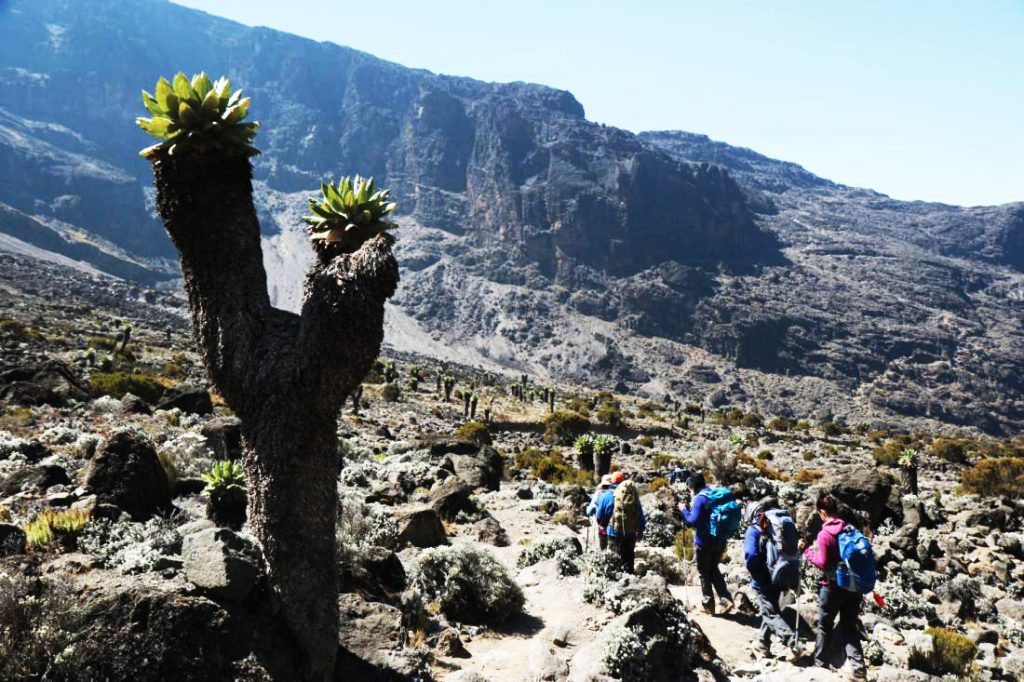
The Barranco Wall is one of the most famous highlights on both the Machame Route and the Lemosho Route. This impressive volcanic rock formation stands at around 4,000 meters (13,123 feet) and creates one of the most exciting sections of the Kilimanjaro climb.
Both routes reach Barranco Camp after passing through the high-altitude desert zone and descending from Lava Tower. On the following morning, climbers tackle the Barranco Wall, which requires careful walking, balance, and some easy scrambling. Although the wall looks intimidating from below, it does not require technical climbing skills. Most trekkers can complete it with support from experienced guides.
The experience feels slightly different depending on the route you choose. Machame Route climbers reach Barranco Wall after several challenging days of trekking, making it a rewarding achievement and a memorable part of the journey. Lemosho Route climbers usually arrive with better acclimatization because of the longer approach, allowing them to enjoy the climb with more energy.
After reaching the top of Barranco Wall, climbers enjoy spectacular views of Kibo Peak, the surrounding valleys, and the glaciers above. For many trekkers, this section becomes one of their favorite memories on Kilimanjaro.
Winner for Barranco Wall experience: Tie both routes include this iconic Kilimanjaro highlight.
Lava Tower
Lava Tower is one of the most important acclimatization points on both the Machame Route and the Lemosho Route. This massive volcanic rock formation stands at approximately 4,600 meters (15,092 feet) and plays an important role in helping climbers prepare for the summit.
Both routes follow the famous Kilimanjaro acclimatization principle of “climb high, sleep low.” Climbers reach Lava Tower during the day, allowing their bodies to experience a higher altitude before descending to sleep at a lower elevation.
The Lemosho Route reaches Lava Tower after a slower and more gradual ascent, giving climbers more time to adjust to altitude before arriving at this high point. This extra preparation is one reason Lemosho often achieves a higher summit success rate.
The Machame Route also passes through Lava Tower, but the climb reaches this area in a shorter timeframe. The route still provides excellent acclimatization, especially on the 7-day itinerary, but the 6-day option gives less time for altitude adjustment.
Beyond its importance for acclimatization, Lava Tower offers incredible scenery. Climbers can see the surrounding volcanic landscape, glaciers, and the dramatic slopes of Kibo Peak.
Winner for acclimatization at Lava Tower: Lemosho Route because of its slower approach.
Camping Experience
Both the Machame Route and Lemosho Route use mountain campsites instead of mountain huts, giving climbers a traditional Kilimanjaro camping experience. Trekkers sleep in tents, enjoy meals prepared by the mountain crew, and spend evenings surrounded by incredible views of Africa’s highest mountain.
The Lemosho Route provides a quieter camping experience, especially during the first few nights. Because the route starts on the western side of Kilimanjaro, campsites feel more remote and peaceful. Climbers can enjoy the wilderness atmosphere, open landscapes, and beautiful views with fewer groups around.
The Machame Route also offers excellent campsites, but it attracts more climbers throughout the season. Popular camps such as Machame Camp, Shira Camp, Barranco Camp, and Barafu Camp can become busy during peak periods. However, the route’s popularity creates a lively atmosphere where trekkers often meet people from around the world.
Both routes provide comfortable camping when you choose a professional Kilimanjaro operator that provides quality tents, sleeping equipment, nutritious meals, and experienced mountain crews.
Winner for camping experience: Lemosho Route for a quieter wilderness experience, while Machame remains a great choice for climbers who enjoy a more social atmosphere.
Crowds
Crowds are an important factor when choosing between the Machame Route and the Lemosho Route, especially if you prefer a peaceful mountain experience.
The Machame Route is one of the busiest routes on Mount Kilimanjaro because it offers a shorter itinerary, beautiful scenery, and a more affordable price compared with longer routes. During the high seasons, especially from June to October and January to March, the trail can become crowded around popular camps and sections such as Machame Camp, Shira Camp, Barranco Camp, and Barafu Camp. However, the route remains popular because it provides an excellent balance of challenge, scenery, and cost.
The Lemosho Route offers a quieter experience during the first few days of the climb because it starts from the less crowded western side of Kilimanjaro. Trekkers can enjoy peaceful forest trails, open landscapes, and the beautiful Shira Plateau before joining the Machame route near Lava Tower. After joining the southern circuit, the number of climbers increases because both routes share the same trail toward the summit.
If avoiding crowds is one of your priorities, the Lemosho Route is the better choice. It provides more solitude at the beginning of the trek while still offering the famous southern circuit highlights.
Winner for fewer crowds: Lemosho Route
Wildlife
The lower slopes of Mount Kilimanjaro contain a rich ecosystem, and both the Machame Route and Lemosho Route give climbers a chance to experience the mountain’s natural environment. However, the wildlife experience differs because the routes begin in different areas.
The Lemosho Route offers a stronger wildlife experience during the first days because it begins in a remote forest zone on the western side of Kilimanjaro. The quieter trails increase your chances of seeing animals and birds that live in the rainforest, including colobus monkeys, blue monkeys, bushbucks, and different bird species. The surrounding forest also feels more untouched because fewer hikers pass through this area.
The Machame Route also passes through Kilimanjaro’s rainforest, where climbers may spot monkeys and birds. However, the busy trail means wildlife often stays deeper in the forest away from large groups of hikers.
Neither route guarantees wildlife sightings because animals move freely through the mountain ecosystem. The main attraction of Kilimanjaro remains the changing landscapes and the journey to the summit.
For travelers who enjoy nature, forests, and a quieter beginning, the Lemosho Route provides a slightly better wildlife experience.
Winner for wildlife experience: Lemosho Route
Photography Opportunities
Both the Machame Route and Lemosho Route provide incredible photography opportunities, but the Lemosho Route has a slight advantage because it offers more diverse landscapes and quieter viewpoints.
The Lemosho Route is often considered the most scenic route on Kilimanjaro. Photographers can capture dramatic rainforest scenes, the wide-open Shira Plateau, volcanic landscapes, views of Kibo Peak, and beautiful sunrise and sunset moments. The fewer crowds during the first days also make it easier to take photos without many people in the background.
The Machame Route also delivers amazing photography moments. Climbers can capture the lush rainforest, dramatic ridges, the famous Barranco Wall, Lava Tower, glaciers, and the unforgettable summit sunrise. The route’s southern circuit provides some of the most iconic Kilimanjaro views.
The best photography locations on both routes include:
- Shira Plateau
- Lava Tower
- Barranco Wall
- Karanga Valley
- Barafu Camp
- Uhuru Peak summit
If you want the greatest variety of landscapes and more peaceful photography sessions, choose the Lemosho Route. If you want a shorter trek with famous Kilimanjaro viewpoints, the Machame Route still offers outstanding photo opportunities.
Winner for photography opportunities: Lemosho Route (because of scenery variety and fewer crowds).
Weather Conditions
Weather conditions on Mount Kilimanjaro can change quickly, and both the Machame Route and Lemosho Route experience similar weather patterns because they eventually follow the same southern circuit toward the summit. However, the first few days feel different because the routes approach the mountain from different sides.
The Lemosho Route starts on the western side of Kilimanjaro, where climbers spend more time in remote forest areas and the open Shira Plateau. The longer approach allows trekkers to experience gradual changes in weather, from warm and humid rainforest conditions to cold alpine temperatures near the summit.
The Machame Route begins on the southern side and moves through the same ecological zones, including rainforest, moorland, alpine desert, and the Arctic zone. Because the route climbs more quickly, some trekkers may feel the effects of changing temperatures sooner.
Both routes face:
- Warm and humid conditions in the rainforest
- Cooler temperatures in the moorland zone
- Strong winds and cold nights in the alpine desert
- Freezing temperatures during summit night
The best climbing seasons for both routes are generally January to March and June to October, when the weather is usually more stable.
Winner for weather experience: Lemosho Route because the gradual ascent allows climbers to adapt better to changing conditions.
Summit Night Experience
Summit night is the most challenging and memorable part of any Machame Route or Lemosho Route Kilimanjaro climb. Both routes follow the same final ascent from Barafu Camp (4,673 m / 15,331 ft) to Uhuru Peak (5,895 m / 19,341 ft), so the summit experience is very similar.
Climbers usually begin the summit attempt around midnight and hike through the darkness toward Stella Point (5,739 m) before continuing along the crater rim to Uhuru Peak. The climb requires patience, mental strength, and proper pacing because the altitude makes every step more difficult.
The main difference comes from how prepared your body feels before summit night. Climbers on the Lemosho Route usually arrive better acclimatized because they spend more days gaining altitude gradually. This can make the final push feel more manageable.
The Machame Route also offers an incredible summit experience, especially on the 7-day itinerary. However, climbers on shorter programs may feel more tired when they begin the final ascent.
Reaching the summit at sunrise provides unforgettable views of glaciers, clouds below the mountain, and the African landscape stretching into the distance.
Winner for summit preparation: Lemosho Route because better acclimatization can improve comfort and confidence during summit night.
Safety
Safety is a priority on both the Machame Route and Lemosho Route, and both routes offer a reliable path to the summit when climbers choose an experienced Kilimanjaro operator.
The Lemosho Route has a safety advantage because of its longer itinerary and gradual altitude gain. The extra days allow climbers to monitor their bodies, adjust to higher elevations, and reduce the pressure of reaching the summit too quickly.
The Machame Route is also a safe option, especially when climbers choose the 7-day itinerary. The route follows the important acclimatization principle of “climb high, sleep low” by reaching Lava Tower before descending to Barranco Camp.
A professional guide team improves safety on both routes by providing:
- Daily health checks
- Altitude monitoring
- Experienced mountain guides
- Emergency support equipment
- Proper pacing
- Quality food and hydration
No route completely removes the risk of altitude-related problems, but choosing a longer itinerary, preparing properly, and climbing with qualified local guides greatly improves your experience.
Winner for safety: Lemosho Route because the slower pace gives climbers more time to adapt to altitude.
Cost Comparison
The cost difference between the Machame Route and Lemosho Route mainly comes from the number of days spent on the mountain. Longer climbs require additional park fees, camping fees, food supplies, crew wages, and logistics.
The Machame Route is usually more affordable because most climbers choose a 6 or 7-day itinerary. It provides excellent scenery and a high summit success rate while keeping the overall cost lower.
The Lemosho Route costs more because it usually takes 7 or 8 days and starts from a more remote gate. The extra days increase expenses but provide better acclimatization, quieter trails, and a higher chance of summit success.
| Cost Factor | Machame Route | Lemosho Route |
|---|---|---|
| Typical Duration | 6-7 Days | 7-8 Days |
| Park Fees | Lower | Higher |
| Crew Costs | Lower | Higher |
| Transport | Lower | Slightly Higher |
| Overall Package Price | More Budget-Friendly | More Expensive |
For travelers who want a balance between price and success rate, the 7-day Machame Route offers excellent value. For climbers who prioritize comfort, acclimatization, and the best chance of reaching Uhuru Peak, the 8-day Lemosho Route is worth the extra investment.
Winner for cost: Machame Route
Winner for value and success: Lemosho Route
Route Maps: Machame Route vs Lemosho Route
A Kilimanjaro route map helps climbers understand how the Machame Route and Lemosho Route approach the mountain, where they join, and how they reach Uhuru Peak. Although both routes follow different starting points, they eventually connect near Lava Tower and continue through the southern circuit before reaching the summit.
The main difference is that the Lemosho Route approaches Kilimanjaro from the western side, while the Machame Route starts from the southern side. Lemosho takes a longer path across the mountain, while Machame follows a more direct route with fewer days.
Adding route maps to this comparison helps travelers visualize the journey, compare distances, and choose the route that matches their climbing goals.
Machame Route Map
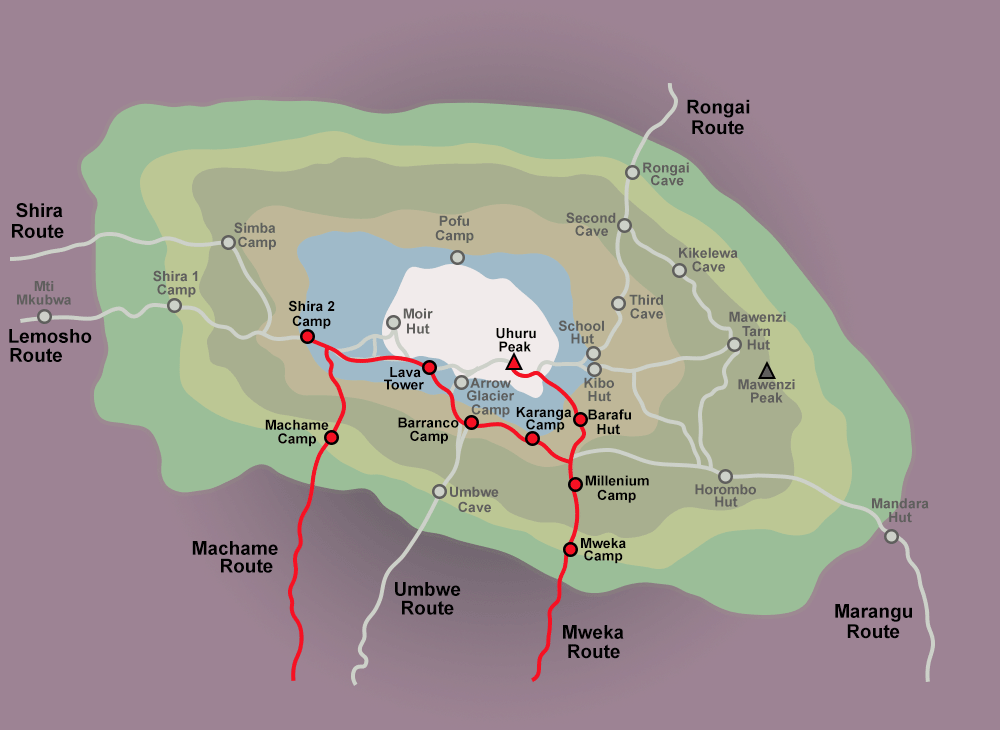
The Machame Route map shows a southern approach to Mount Kilimanjaro, beginning at Machame Gate (1,800 m / 5,905 ft) on the southwest side of the mountain. The route passes through the rainforest before climbing into the moorland zone and joining the southern circuit.
A typical 7-day Machame Route itinerary follows this path:
Machame Gate → Machame Camp → Shira Camp → Barranco Camp → Karanga Camp → Barafu Camp → Uhuru Peak → Mweka Camp → Mweka Gate
Key locations on the Machame Route map include:
- Machame Gate: Starting point of the climb
- Machame Camp: First overnight campsite inside the rainforest
- Shira Camp: First high-altitude campsite with views of Kibo Peak
- Lava Tower: Important acclimatization point at 4,600 m
- Barranco Camp: Home of the famous Barranco Wall
- Karanga Camp: Final acclimatization stop before summit preparation
- Barafu Camp: Starting point for summit night
- Uhuru Peak: Highest point in Africa at 5,895 m
The Machame map shows why this route remains popular: it provides a direct southern approach with diverse landscapes and famous highlights such as Barranco Wall and Lava Tower.
Best for: Climbers looking for a shorter, scenic, and more affordable Kilimanjaro adventure.
Lemosho Route Map
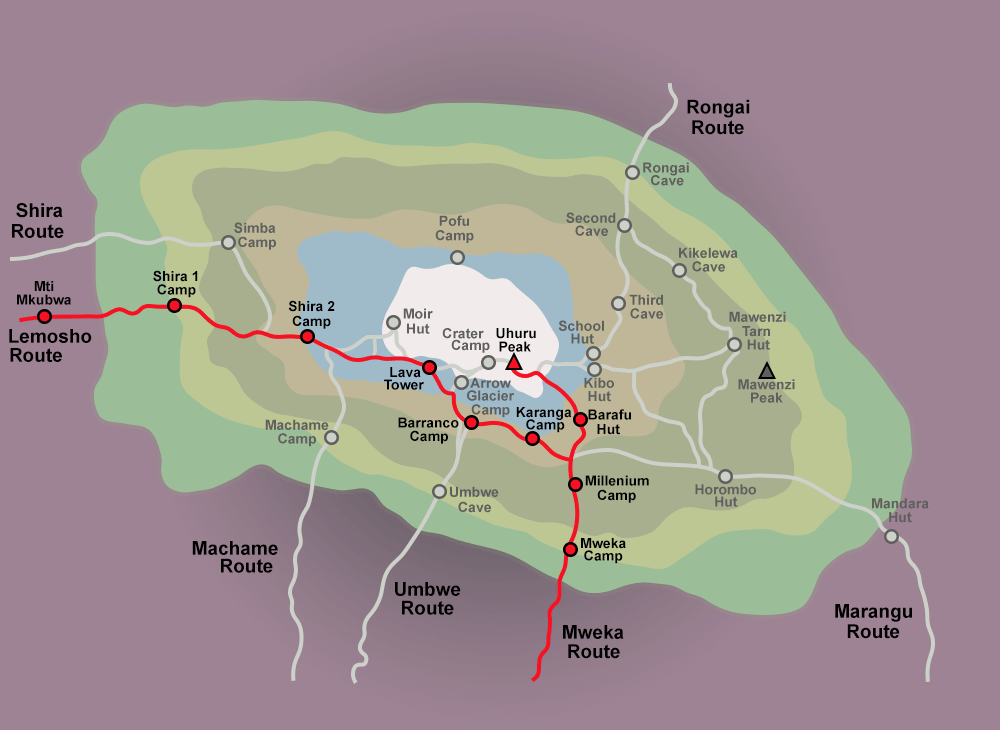
The Lemosho Route map shows a western approach to Mount Kilimanjaro, beginning at Londorossi Gate (2,100 m / 6,890 ft). This route crosses the remote western slopes before reaching the spectacular Shira Plateau, one of the most beautiful areas on Kilimanjaro.
A typical 8-day Lemosho Route itinerary follows this path:
Londorossi Gate → Mti Mkubwa Camp → Shira Camp → Moir Hut → Lava Tower → Barranco Camp → Karanga Camp → Barafu Camp → Uhuru Peak → Mweka Camp → Mweka Gate
Important locations on the Lemosho Route map include:
- Londorossi Gate: Remote western starting point
- Mti Mkubwa Camp: First campsite in the rainforest
- Shira Plateau: Ancient volcanic landscape with panoramic views
- Moir Hut: Quiet acclimatization area on the northern side
- Lava Tower: High-altitude acclimatization point
- Barranco Camp: Famous viewpoint below the Barranco Wall
- Barafu Camp: Summit preparation camp
- Uhuru Peak: Final destination
The Lemosho map highlights why many climbers consider it one of the best Kilimanjaro routes. The longer approach provides better acclimatization, quieter trails, and more time to enjoy the mountain scenery.
Best for: First-time climbers, photographers, and travelers who want the highest chance of reaching the summit.
Quick Comparison
| Feature | Machame Route | Lemosho Route |
|---|---|---|
| Starting Side | Southern side | Western side |
| Starting Gate | Machame Gate | Londorossi Gate |
| First Major Highlight | Rainforest | Rainforest + Shira Plateau |
| Route Length | Shorter | Longer |
| Crowds | More crowded | Quieter at the beginning |
| Best Advantage | Affordable and scenic | Better acclimatization and higher success rate |
Elevation Profile Comparison: Machame Route vs Lemosho Route
The elevation profile shows how quickly a route gains altitude during the climb and helps explain why acclimatization differs between the Machame Route and the Lemosho Route. Although both routes reach the same summit of Uhuru Peak (5,895 m / 19,341 ft), they follow different altitude patterns during the first few days.
The main difference is that the Lemosho Route gains elevation more gradually, giving climbers more time to adapt to the thinner air. The Machame Route climbs faster, which creates a more challenging experience, especially on shorter itineraries.
Both routes use the important acclimatization strategy of “climb high, sleep low” when they reach Lava Tower (4,600 m) before descending to lower camps. This helps the body prepare for the final summit push.
| Elevation Feature | Machame Route | Lemosho Route |
|---|---|---|
| Starting Elevation | Machame Gate: 1,800 m | Londorossi Gate: 2,100 m |
| Highest Point | Uhuru Peak: 5,895 m | Uhuru Peak: 5,895 m |
| Elevation Gain | About 4,095 m | About 3,795 m |
| Altitude Adjustment | Good | Excellent |
| Recommended Duration | 7 Days | 8 Days |
Machame Elevation Profile
The Machame Route elevation profile follows a faster climb from the southern side of Mount Kilimanjaro. The route begins at Machame Gate (1,800 m) in the rainforest and quickly moves upward through different ecological zones.
A typical 7-day Machame elevation profile looks like this:
| Day | Camp | Elevation |
|---|---|---|
| Day 1 | Machame Gate to Machame Camp | 1,800 m – 3,000 m |
| Day 2 | Shira Camp | 3,000 m – 3,840 m |
| Day 3 | Lava Tower to Barranco Camp | 4,600 m – 3,960 m |
| Day 4 | Karanga Camp | 3,960 m – 4,035 m |
| Day 5 | Barafu Camp | 4,035 m – 4,673 m |
| Day 6 | Uhuru Peak Summit | 4,673 m – 5,895 m |
| Day 7 | Descent to Mweka Gate | 3,100 m – 1,640 m |
The biggest altitude challenge on Machame comes during the first few days because climbers gain height quickly. However, the route also provides a valuable acclimatization day at Lava Tower, where trekkers climb high before sleeping lower at Barranco Camp.
The 7-day Machame Route gives climbers enough time to adjust and provides a much better experience than the shorter 6-day option.
Lemosho Elevation Profile
The Lemosho Route elevation profile offers a slower and more gradual approach to the summit. The route begins at Londorossi Gate (2,100 m) and crosses the western slopes before reaching the famous Shira Plateau.
A typical 8-day Lemosho elevation profile looks like this:
| Day | Camp | Elevation |
|---|---|---|
| Day 1 | Londorossi Gate to Mti Mkubwa Camp | 2,100 m – 2,780 m |
| Day 2 | Shira Camp | 2,780 m – 3,500 m |
| Day 3 | Moir Hut | 3,500 m – 4,200 m |
| Day 4 | Lava Tower to Barranco Camp | 4,600 m – 3,960 m |
| Day 5 | Karanga Camp | 3,960 m – 4,035 m |
| Day 6 | Barafu Camp | 4,035 m – 4,673 m |
| Day 7 | Uhuru Peak Summit | 4,673 m – 5,895 m |
| Day 8 | Descent to Mweka Gate | 3,100 m – 1,640 m |
The longer elevation profile allows climbers to spend more time at moderate altitudes before reaching the summit zone. This gradual approach helps reduce altitude stress and improves the chance of a successful summit attempt.
Day-by-Day Itinerary Comparison: Machame Route vs Lemosho Route
The daily itinerary is one of the biggest differences between the Machame Route and the Lemosho Route. Both routes eventually follow the same southern circuit toward Uhuru Peak, but Lemosho takes a longer western approach that allows a slower pace and better acclimatization.
The Machame Route usually takes 6-7 days, while the Lemosho Route commonly takes 7-8 days. Choosing a longer itinerary gives your body more time to adjust to altitude and increases your chances of reaching the summit successfully.
Machame Route Daily Schedule (7 Days)
The 7-day Machame Route itinerary offers a good balance between challenge, scenery, and acclimatization. The route begins through the rainforest, crosses the Shira Plateau, climbs through the alpine desert, and reaches the summit through Barafu Camp.
Day 1: Machame Gate (1,800 m) to Machame Camp (3,000 m)
The climb begins at Machame Gate after registration and a briefing from your guide team. The trail enters the lush rainforest, where climbers walk beneath tall trees and may see different bird species and monkeys.
The first day helps you adjust to the mountain environment as you gradually gain elevation. After several hours of trekking, you reach Machame Camp, where the crew prepares dinner and you spend your first night on Kilimanjaro.
Distance: Approximately 11 km
Walking Time: 5-7 hours
Habitat: Rainforest
Day 2: Machame Camp (3,000 m) to Shira Camp (3,840 m)
The trail leaves the rainforest and enters the moorland zone. The landscape becomes more open, with views of Mount Meru and the impressive slopes of Kibo Peak.
You continue upward toward Shira Camp, located on the Shira Plateau. This area offers incredible views and allows your body to begin adjusting to higher altitude.
Distance: Approximately 5 km
Walking Time: 4-6 hours
Habitat: Moorland
Day 3: Shira Camp (3,840 m) to Lava Tower (4,600 m) to Barranco Camp (3,960 m)
This is an important acclimatization day. You climb to Lava Tower, one of the highest points before the summit, then descend to Barranco Camp.
This “climb high, sleep low” approach helps your body prepare for the thin air at higher elevations.
Distance: Approximately 10 km
Walking Time: 6-8 hours
Habitat: Alpine desert
Day 4: Barranco Camp (3,960 m) to Karanga Camp (4,035 m)
The day begins with the famous Barranco Wall, one of Kilimanjaro’s most exciting sections. Although it looks steep, most climbers can complete it without technical climbing skills.
After reaching the top, you cross valleys and ridges before arriving at Karanga Camp.
Distance: Approximately 5 km
Walking Time: 4-5 hours
Day 5: Karanga Camp (4,035 m) to Barafu Camp (4,673 m)
The trail continues through the rocky alpine desert toward Barafu Camp, the final base before the summit attempt.
You rest, prepare your equipment, and receive a briefing before beginning the midnight summit climb.
Distance: Approximately 4 km
Walking Time: 4-5 hours
Day 6: Barafu Camp to Uhuru Peak (5,895 m) to Mweka Camp (3,100 m)
The summit attempt begins around midnight. Climbers walk slowly through the darkness toward Stella Point and continue along the crater rim to Uhuru Peak, the highest point in Africa.
After celebrating at the summit, you descend to Mweka Camp for your final night on the mountain.
Distance: Approximately 17 km
Walking Time: 12-15 hours
Day 7: Mweka Camp to Mweka Gate (1,640 m)
The final day follows a gentle descent through the rainforest to Mweka Gate. After completing park procedures, you transfer back to your hotel.
Distance: Approximately 10 km
Walking Time: 3-4 hours
Lemosho Route Daily Schedule (8 Days)
The 8-day Lemosho Route itinerary is one of the best options for climbers who want excellent acclimatization, beautiful scenery, and a higher chance of reaching Uhuru Peak. The route starts on the western side of Kilimanjaro and crosses the spectacular Shira Plateau.
Day 1: Londorossi Gate (2,100 m) to Mti Mkubwa Camp (2,780 m)
The adventure begins at Londorossi Gate on the western side of Kilimanjaro. After registration, the trail enters the rainforest and leads to Mti Mkubwa Camp.
This first day provides a gentle introduction to the mountain.
Distance: Approximately 6 km
Walking Time: 3-4 hours
Habitat: Rainforest
Day 2: Mti Mkubwa Camp to Shira Camp (3,500 m)
The trail climbs out of the rainforest into the moorland zone. You reach the famous Shira Plateau, one of Kilimanjaro’s most scenic areas.
The views of Kibo Peak and the surrounding volcanic landscape make this one of the most memorable days.
Distance: Approximately 8 km
Walking Time: 5-7 hours
Day 3: Shira Camp to Moir Hut (4,200 m)
This day explores the northern side of the mountain. The quieter trail provides beautiful views and an excellent opportunity for acclimatization.
Moir Hut offers a peaceful campsite away from the busier southern circuit.
Distance: Approximately 11 km
Walking Time: 5-7 hours
Day 4: Moir Hut to Lava Tower (4,600 m) to Barranco Camp (3,960 m)
This important acclimatization day follows the same “climb high, sleep low” principle. You reach Lava Tower before descending to Barranco Camp.
The changing landscape and views of Kibo create an unforgettable trekking experience.
Distance: Approximately 10 km
Walking Time: 6-8 hours
Day 5: Barranco Camp to Karanga Camp (4,035 m)
You begin the day by climbing the famous Barranco Wall. After crossing valleys and ridges, you arrive at Karanga Camp.
This shorter day allows your body to recover before the summit preparation.
Distance: Approximately 5 km
Walking Time: 4-5 hours
Day 6: Karanga Camp to Barafu Camp (4,673 m)
The trail continues to Barafu Camp, where climbers rest and prepare for the summit attempt.
The guides provide a safety briefing before the final ascent.
Distance: Approximately 4 km
Walking Time: 4-5 hours
Day 7: Barafu Camp to Uhuru Peak (5,895 m) to Mweka Camp (3,100 m)
The summit day begins after midnight. Climbers ascend slowly to Stella Point and continue to Uhuru Peak.
After taking photos at the roof of Africa, you descend to Mweka Camp.
Distance: Approximately 17 km
Walking Time: 12-15 hours
Day 8: Mweka Camp to Mweka Gate
The final descent passes through the rainforest before reaching Mweka Gate.
Your Kilimanjaro adventure ends with a transfer back to your hotel.
Distance: Approximately 10 km
Walking Time: 3-4 hours
Quick Itinerary Comparison
| Feature | Machame Route | Lemosho Route |
|---|---|---|
| Duration | 7 Days | 8 Days |
| Starting Point | Machame Gate | Londorossi Gate |
| Main Highlight | Barranco Wall and southern circuit | Shira Plateau and gradual ascent |
| Pace | Faster | Slower |
| Acclimatization | Very Good | Excellent |
| Best For | Experienced hikers and shorter trips | First-time climbers and highest success rate |
Recommendation: Choose the 8-day Lemosho Route if you want the best acclimatization and highest chance of reaching Uhuru Peak. Choose the 7-day Machame Route if you want a shorter, more affordable climb with equally beautiful scenery.
Pros and Cons of the Machame Route
The Machame Route is one of the most popular routes for climbing Mount Kilimanjaro because it combines stunning scenery, a challenging trekking experience, and a more affordable price compared with longer routes. Known as the “Whiskey Route,” Machame attracts climbers who want a rewarding adventure through different landscapes, from rainforest to alpine desert.
However, the route also has some challenges. The faster altitude gain and higher number of climbers mean it may not suit everyone. Understanding the advantages and disadvantages of the Machame Route will help you decide if it matches your fitness level, budget, and climbing goals.
Advantages of the Machame Route
1. Beautiful and Diverse Scenery
The Machame Route offers some of the most impressive landscapes on Mount Kilimanjaro. During the climb, trekkers pass through five different ecological zones, including rainforest, moorland, alpine desert, and the Arctic zone near the summit.
Highlights include:
- Lush rainforest at Machame Gate
- Views of Shira Plateau
- Lava Tower volcanic landscapes
- The famous Barranco Wall
- Glaciers and panoramic summit views
The changing scenery keeps the trek exciting from the first day until the final summit push.
2. More Affordable Than Longer Routes
One of the biggest advantages of the Machame Route is its cost. Because most climbers choose a 6 or 7-day itinerary, the total package price is usually lower than longer routes such as Lemosho or Northern Circuit.
The shorter duration means lower costs for:
- Park fees
- Camping fees
- Crew wages
- Food supplies
- Mountain logistics
For travelers who want a great Kilimanjaro experience while keeping expenses reasonable, Machame offers excellent value.
3. Excellent Acclimatization Opportunities
Although Machame climbs faster than Lemosho, it still provides good acclimatization, especially on the 7-day itinerary.
The route follows the important altitude strategy of “climb high, sleep low” when climbers reach Lava Tower before descending to Barranco Camp. This helps the body adjust before the summit attempt.
Choosing the 7-day Machame Route instead of the shorter option significantly improves comfort and summit chances.
4. Popular and Well-Established Trail
The Machame Route has operated for many years and has excellent support infrastructure. Because many climbers choose this route, guides and mountain crews know the trail extremely well.
Benefits include:
- Experienced guides
- Established campsites
- Clear trail systems
- Reliable logistics
- Many route options
This makes Machame a trusted choice for many international climbers.
5. Exciting Challenge for Adventure Seekers
The Machame Route provides a more adventurous feeling compared with easier routes. The steep sections, changing terrain, and demanding summit night create a rewarding experience for hikers who enjoy physical challenges.
The famous Barranco Wall adds an exciting element to the journey without requiring technical climbing skills.
Disadvantages of the Machame Route
1. More Crowded Than Lemosho
The biggest disadvantage of the Machame Route is the number of climbers. Because it is affordable, scenic, and popular, the trail can become busy during peak climbing seasons.
Crowded areas often include:
- Machame Camp
- Shira Camp
- Barranco Wall
- Barafu Camp
If you prefer a quieter wilderness experience, the Lemosho Route provides a more peaceful beginning.
2. Faster Altitude Gain
The Machame Route gains elevation more quickly than the Lemosho Route. Some climbers may find the first few days physically demanding because the body has less time to adjust.
The shorter 6-day itinerary creates a bigger challenge because it gives less time for acclimatization.
For first-time high-altitude trekkers, the 7-day option is usually a better choice.
3. Physically More Demanding
The Machame Route includes steep climbs and long trekking days. Sections such as the approach to Lava Tower and the summit night require good fitness and mental preparation.
Although the route does not require technical climbing skills, climbers should prepare with:
- Regular hiking
- Cardio training
- Strength exercises
- Practice walks with a backpack
4. Less Remote Experience
Compared with the Lemosho Route, Machame feels less remote because many climbers use the trail every season. The first days do not offer the same level of solitude and wilderness feeling.
Travelers looking for quiet trails and untouched landscapes may prefer Lemosho.
Machame Route Summary
| Advantages | Disadvantages |
|---|---|
| More affordable | More crowded |
| Beautiful scenery | Faster altitude gain |
| Excellent 7-day option | More physically demanding |
| Well-established route | Less remote experience |
| Famous highlights like Barranco Wall | Shorter itineraries have lower success rates |
Which Route Has the Better Summit Success Rate?
The Lemosho Route has a higher summit success rate than the Machame Route, mainly because it offers a longer itinerary and better acclimatization. While both routes can take climbers to Uhuru Peak (5,895 m / 19,341 ft), the extra days on Lemosho allow your body more time to adjust to the increasing altitude.
The biggest factor affecting summit success on Kilimanjaro is not technical difficulty but how well your body adapts to altitude. A longer climb gives your body more time to produce the necessary adjustments to lower oxygen levels, reducing the chances of altitude-related problems and increasing your comfort during the final summit push.
The 7-day Machame Route provides good acclimatization because it includes the important “climb high, sleep low” approach. Climbers reach Lava Tower (4,600 m) before descending to Barranco Camp (3,960 m), allowing the body to experience higher altitude before sleeping lower. This itinerary gives most prepared climbers a strong chance of reaching the summit.
The 8-day Lemosho Route usually achieves a higher success rate because it follows a slower approach from the western side of Kilimanjaro. The additional acclimatization day, gradual elevation gain, and quieter beginning help climbers arrive at summit night feeling stronger and better prepared.
Summit Success Rate Comparison
| Route | Duration | Approximate Summit Success Rate | Why |
|---|---|---|---|
| Machame Route | 6 Days | Lower success rate | Faster ascent with less acclimatization time |
| Machame Route | 7 Days | 85-90% | Good balance of challenge and altitude adjustment |
| Lemosho Route | 7 Days | Around 90% | Longer approach and better acclimatization |
| Lemosho Route | 8 Days | 90-95% | Excellent acclimatization and slower pace |
Why Longer Itineraries Improve Summit Success
A longer Kilimanjaro itinerary helps because it allows climbers to:
- Adjust gradually to higher elevations
- Reduce physical fatigue before summit night
- Follow a slower walking pace
- Recover properly between trekking days
- Improve hydration and energy management
- Recognize altitude symptoms early
Many climbers underestimate the importance of time on the mountain. A strong fitness level helps, but even very fit hikers can struggle if they ascend too quickly.
Which Route Should You Choose for the Best Chance of Reaching the Summit?
If your main goal is to maximize your chance of standing on Uhuru Peak, the 8-day Lemosho Route is the better choice. It provides one of the best combinations of scenery, comfort, acclimatization, and summit success.
The 7-day Machame Route remains an excellent option for climbers who want a shorter and more affordable climb while still maintaining a strong chance of success.
Best summit success choice: 8-Day Lemosho Route
Best balance of cost and success: 7-Day Machame Route
Which Route Is Better for Beginners?
For most first-time Kilimanjaro climbers, the Lemosho Route is the better choice because it offers a slower pace, better acclimatization, fewer crowds during the first days, and a higher chance of reaching Uhuru Peak. Although both the Machame Route and Lemosho Route require physical preparation, Lemosho gives beginners more time to adjust to the altitude and enjoy the journey without rushing.
The Machame Route can also work well for beginners, especially when choosing the 7-day itinerary and preparing properly. However, it involves a faster ascent and more challenging trekking days, which can make the climb feel more demanding for people with no previous high-altitude experience.
Choosing the right route depends on your fitness level, available time, budget, and personal goals. For beginners who want the best overall experience and the highest chance of success, the longer Lemosho itinerary usually provides the greatest advantage.
Why Beginners Choose Lemosho
Many first-time Kilimanjaro climbers choose the Lemosho Route because it creates a more comfortable and gradual introduction to high-altitude trekking.
The main reasons beginners prefer Lemosho include:
1. Better Acclimatization
The Lemosho Route takes 7-8 days, giving your body more time to adapt to increasing altitude. The gradual elevation gain reduces the pressure of climbing too quickly and helps beginners feel stronger during the final summit attempt.
The route also follows the important “climb high, sleep low” principle when it reaches Lava Tower before descending to Barranco Camp.
2. Higher Summit Success Rate
Beginners often worry about whether they can reach the top of Africa. The longer Lemosho itinerary improves the chance of success because it allows proper rest, acclimatization, and recovery.
The 8-day Lemosho Route reaches around 90-95% summit success rate, making it one of the best options for first-time climbers.
More Time to Enjoy the Experience
A Kilimanjaro climb is not only about reaching the summit. It is also about enjoying the landscapes, camps, and changing environments along the way.
Lemosho gives beginners more time to appreciate:
- The rainforest
- Shira Plateau
- Volcanic landscapes
- Mountain views
- Sunrise and sunset moments
The slower pace makes the journey more enjoyable and less stressful.
4. Quieter First Days
The beginning of Lemosho feels more remote because the route starts from the western side of Kilimanjaro. Beginners can enjoy peaceful trails before joining the busier southern circuit.
This quieter environment helps many first-time climbers feel more comfortable and connected with nature.
When Machame Is a Good Choice
The Machame Route can be an excellent choice for beginners who prepare well and choose the right itinerary. Although it is more demanding than Lemosho, many first-time climbers successfully complete this route every year.
Machame is a good choice when:
1. You Have Limited Time
The Machame Route usually takes -7 days, making it suitable for travelers who cannot spend a full 8 days on the mountain.
The 7-day Machame Route provides much better acclimatization than the shorter option and remains a strong choice.
2. You Want a Lower-Cost Option
Machame is usually cheaper than Lemosho because it requires fewer days on the mountain. Beginners with a smaller budget can still enjoy a high-quality Kilimanjaro experience without choosing the shortest itinerary.
3. You Enjoy Challenging Adventures
Machame offers a more adventurous trekking experience with steep sections, dramatic landscapes, and famous highlights such as:
- Barranco Wall
- Lava Tower
- Karanga Valley
- Barafu Camp
Beginners who enjoy hiking challenges may find Machame extremely rewarding.
4. You Prepare Properly Before the Climb
A beginner does not need previous mountain climbing experience to complete Machame. Good preparation makes a big difference.
Before climbing, beginners should focus on:
- Regular walking and hiking
- Building endurance
- Practicing with a backpack
- Learning about altitude awareness
- Choosing a professional guide company
Final Recommendation for Beginners
| Beginner Priority | Best Choice |
|---|---|
| Highest summit success | 8-Day Lemosho Route |
| Better acclimatization | Lemosho Route |
| More affordable climb | 7-Day Machame Route |
| Shorter itinerary | Machame Route |
| Quiet experience | Lemosho Route |
| More challenging adventure | Machame Route |
Which Route Is Better for Experienced Hikers?
For experienced hikers, both the Machame Route and Lemosho Route offer a rewarding Kilimanjaro experience, but the better choice depends on what you want from the climb. Experienced trekkers who enjoy a more challenging pace, lower cost, and a direct route often choose Machame, while hikers who want incredible scenery, a quieter trail, and the highest chance of summit success usually prefer Lemosho.
The Machame Route is often the better option for experienced hikers who want a challenging adventure. Its faster elevation gain, steep sections, and demanding trekking days create a more intense experience. The route rewards climbers with famous highlights such as Barranco Wall, Lava Tower, and the southern circuit views. Experienced hikers who already understand altitude, pacing, and mountain conditions can handle the challenge well.
The Lemosho Route is ideal for experienced hikers who want a more complete Kilimanjaro journey. Although it follows a longer itinerary, the route provides more time to explore the mountain, enjoy different landscapes, and prepare for summit night. Experienced trekkers who value photography, nature, and a higher summit success rate often choose the 8-day Lemosho itinerary.
Experienced Hikers Who Prefer Machame Route
The Machame Route is a great choice if you:
- Want a shorter Kilimanjaro climb
- Prefer a more physically demanding trek
- Have previous high-altitude hiking experience
- Want to reduce the overall cost
- Enjoy a popular and social trail
- Like challenging terrain
Experienced climbers often appreciate Machame because it feels more adventurous. The route requires good endurance, especially during the climb toward Lava Tower and the summit push from Barafu Camp.
Experienced Hikers Who Prefer Lemosho Route
The Lemosho Route is a better choice if you:
- Want the highest chance of reaching Uhuru Peak
- Prefer a slower and more strategic ascent
- Enjoy remote wilderness areas
- Want better photography opportunities
- Prefer fewer crowds during the first days
- Have enough time for an 8-day adventure
Even experienced hikers benefit from proper acclimatization. Fitness and previous hiking experience help, but altitude affects everyone differently. The extra days on Lemosho allow strong hikers to enjoy the climb rather than simply rushing toward the summit.
Machame vs Lemosho for Experienced Climbers
| Factor | Machame Route | Lemosho Route |
|---|---|---|
| Challenge Level | Higher due to faster pace | Moderate with longer distance |
| Duration | 6-7 days | 7-8 days |
| Scenery | Excellent | Exceptional |
| Crowds | More crowded | Quieter start |
| Summit Success | Very good | Excellent |
| Cost | Lower | Higher |
| Adventure Style | Challenging and direct | Scenic and strategic |
Final Recommendation for Experienced Hikers
If you are an experienced hiker looking for a shorter, more challenging, and budget-friendly climb, the 7-day Machame Route is an excellent choice.
If you want the best overall Kilimanjaro experience with outstanding scenery, better acclimatization, and a higher summit success rate, the 8-day Lemosho Route is the stronger option.
For most experienced climbers who have enough time, Lemosho provides the most complete Kilimanjaro adventure, while Machame delivers a more intense and exciting challenge.
Which Route Is Better for Different Types of Climbers?
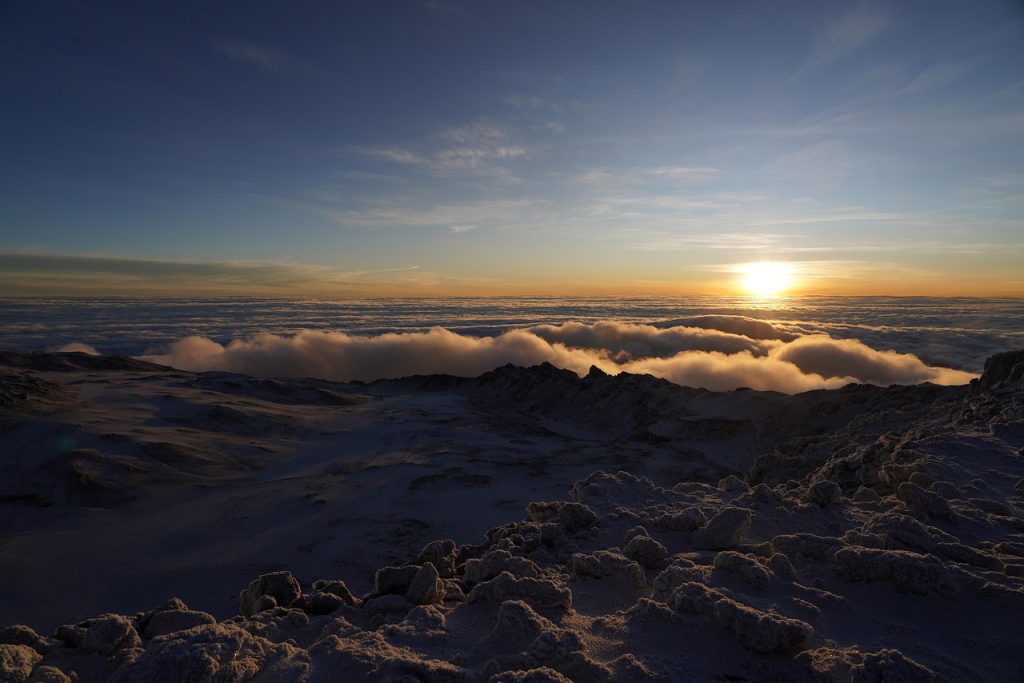
Choosing between the Machame Route and the Lemosho Route depends on more than just difficulty and cost. Every climber has different goals, whether you want an affordable adventure, a peaceful experience, a romantic journey, or the highest chance of reaching Uhuru Peak.
The Machame Route works well for climbers who want a shorter, more affordable, and challenging trek. The Lemosho Route is better for those who prefer a slower pace, better acclimatization, fewer crowds, and a more scenic experience.
Below is a guide to help different types of travelers choose the best Kilimanjaro route.
Budget Travelers
For budget travelers, the Machame Route is usually the better choice because it offers an excellent Kilimanjaro experience at a lower cost.
The Machame Route normally takes 6-7 days, which reduces expenses related to:
- Mountain park fees
- Camping fees
- Crew wages
- Food supplies
- Logistics
The 7-day Machame Route provides a good balance between price and summit success. It includes important acclimatization opportunities while keeping the overall cost lower than longer routes.
The Lemosho Route costs more because it usually takes 7-8 days and begins from the remote western side of Kilimanjaro. However, the extra cost provides benefits such as quieter trails, better acclimatization, and a higher chance of reaching the summit.
Best choice for budget travelers: Machame Route
Recommended option: 7-Day Machame Route
Families
For families climbing Kilimanjaro together, the Lemosho Route is generally the better choice because it provides a slower pace and a more comfortable trekking experience.
Family groups often benefit from:
- More time to adjust to altitude
- Shorter daily walking pressure
- Better rest opportunities
- More time to enjoy scenery together
The quieter beginning of Lemosho also creates a more relaxed environment, especially for families who want to enjoy nature and spend quality time together.
The Machame Route can work for active families with older children or teenagers who have good fitness and hiking experience. However, the faster pace and busier trails may feel more demanding.
Best choice for families: Lemosho Route
Recommended option: 8-Day Lemosho Route
Solo Travelers
Both routes work well for solo travelers, but the better choice depends on the type of experience you want.
The Machame Route is popular among solo climbers because many hikers choose this route, making it easy to meet other trekkers from around the world. The busy camps create a social atmosphere where solo travelers can connect with other groups.
The Lemosho Route is better for solo travelers who prefer a quieter and more personal experience. The route offers more peaceful days at the beginning, allowing climbers to enjoy the mountain environment away from large crowds.
A professional Kilimanjaro operator can place solo travelers into a group joining climb, making either route a great option.
Best choice for social solo travelers: Machame Route
Best choice for peaceful solo travelers: Lemosho Route
Couples
For couples looking for a memorable Kilimanjaro adventure, the Lemosho Route is often the better choice.
The route offers:
- More private moments
- Beautiful photography locations
- Peaceful campsites
- A slower pace to enjoy the journey together
The Shira Plateau, mountain views, and quiet early days create a special atmosphere for couples celebrating a honeymoon, anniversary, or shared adventure.
The Machame Route also provides a romantic experience with incredible scenery, especially around Barranco Wall and the southern circuit. However, the higher number of climbers can reduce the feeling of solitude.
Best choice for couples: Lemosho Route
Recommended option: 8-Day Lemosho Route
Older Climbers
For older climbers, the Lemosho Route is usually the better option because it allows a gradual ascent and more recovery time.
Age alone does not determine whether someone can climb Kilimanjaro. Many older hikers successfully reach the summit with proper preparation and the right itinerary.
The advantages of Lemosho for older climbers include:
- Slower altitude gain
- More acclimatization time
- Less physical pressure each day
- Better chance to manage fatigue
The Machame Route can still work for experienced older hikers who maintain good fitness and have previous trekking experience. Choosing the 7-day itinerary instead of the shorter option improves the experience.
Best choice for older climbers: Lemosho Route
Photographers
For photographers, the Lemosho Route has a clear advantage because it offers more diverse landscapes and quieter viewpoints.
The route provides excellent photography opportunities, including:
- Rainforest landscapes
- Shira Plateau
- Volcanic valleys
- Kibo Peak views
- Sunrise and sunset scenes
- Less crowded viewpoints
The Machame Route also offers amazing photo opportunities, especially at:
- Barranco Wall
- Lava Tower
- Karanga Valley
- Uhuru Peak
However, the Lemosho Route gives photographers more time and space to capture unique mountain scenes.
Best choice for photographers: Lemosho Route
First-Time Climbers
For most first-time Kilimanjaro climbers, the Lemosho Route is the best choice because it provides the highest level of comfort, acclimatization, and summit preparation.
First-time climbers benefit from:
- A slower climbing pace
- More days on the mountain
- Better altitude adjustment
- Higher summit success rates
- More time to enjoy the experience
The Machame Route can also suit beginners, especially the 7-day itinerary, if they prepare properly and want a more challenging adventure.
Best choice for first-time climbers: 8-Day Lemosho Route
Alternative choice: 7-Day Machame Route
Quick Recommendation Table
| Type of Climber | Best Route |
|---|---|
| Budget Travelers | Machame Route |
| Families | Lemosho Route |
| Solo Travelers | Depends on preference |
| Couples | Lemosho Route |
| Older Climbers | Lemosho Route |
| Photographers | Lemosho Route |
| First-Time Climbers | Lemosho Route |
Final Recommendation
If you want the most affordable and challenging Kilimanjaro experience, choose the Machame Route.
If you want the best overall experience with better acclimatization, beautiful scenery, and a higher chance of reaching Uhuru Peak, choose the Lemosho Route. For most travelers, especially first-time climbers, the 8-day Lemosho Route remains the strongest choice.
Best Time to Climb the Machame and Lemosho Routes
The best time to climb the Machame Route and Lemosho Route is during the dry seasons from January to March and June to October. These months offer more stable weather, clearer mountain views, and better trail conditions, making them the most popular periods for climbing Mount Kilimanjaro.
Both routes experience similar weather because they eventually join the same southern circuit before reaching Uhuru Peak (5,895 m). However, your choice of season can affect visibility, trail conditions, temperatures, and the number of climbers you meet along the way.
The Lemosho Route often provides a more comfortable experience during busy seasons because the first days remain quieter, while the Machame Route becomes more crowded due to its popularity.
January to March
January to March is one of the best times to climb both the Machame and Lemosho Routes, especially for travelers who want clearer skies, fewer crowds, and excellent photography opportunities.
During this period, Kilimanjaro usually experiences:
- More stable weather conditions
- Clear views of Kibo Peak
- Less crowded trails compared with the main summer season
- Good conditions for photography
The temperatures remain comfortable in the lower rainforest areas, while higher elevations become cold, especially during summit night. The mountain may receive some snow around the summit zone, creating beautiful winter scenery.
The Lemosho Route is an excellent choice during January to March because climbers can enjoy the peaceful western approach and the stunning views of the Shira Plateau. Photographers especially enjoy this season because the skies often provide dramatic mountain views.
The Machame Route also performs well during this period, but popular camps and sections of the trail may still feel busy, especially around the summit approach.
Best for:
- Photographers
- Climbers who want fewer crowds
- Travelers looking for clear mountain views
Recommended route: Lemosho Route for a quieter experience
June to October
June to October is the most popular climbing season for both Machame and Lemosho Routes because it offers the most reliable weather conditions on Mount Kilimanjaro.
During these months, climbers usually experience:
- Dry trails
- Clear skies
- Excellent visibility
- Comfortable trekking conditions
July, August, and September are the busiest months because many international travelers visit Tanzania during summer holidays. The Machame Route can become especially crowded during this period because it is one of the most popular routes.
The Lemosho Route provides an advantage during the busy season because the first few days offer a quieter and more remote experience before joining the southern circuit.
The temperatures become very cold near the summit, especially during the midnight summit attempt. Proper clothing and preparation are essential.
Best for:
- First-time climbers
- Families and groups
- Travelers who want the most predictable weather
Recommended route: Lemosho Route for fewer crowds, Machame Route for a more social experience
November
November is a transition month on Mount Kilimanjaro because it marks the beginning of the short rainy season. Both the Machame and Lemosho Routes remain open, but climbers should prepare for changing weather conditions.
During November, you may experience:
- Rain showers in the rainforest
- Cloudier skies
- Muddy trail sections
- Fewer climbers compared with peak seasons
The advantage of climbing in November is that the mountain becomes much quieter. Travelers who prefer solitude can enjoy a more peaceful experience, especially on the Lemosho Route.
The Lemosho Route can be a better option during November because its longer itinerary provides more flexibility if weather conditions change. The route also offers better scenery during cloudy conditions because of its diverse landscapes.
The Machame Route is still possible in November, but wet conditions can make some sections more challenging, especially in the rainforest.
Best for:
- Experienced hikers
- Travelers who want fewer crowds
- Budget-conscious climbers
Recommended route: Lemosho Route for comfort and scenery
Best Season Comparison: Machame vs Lemosho
| Season | Weather | Crowds | Best Route |
|---|---|---|---|
| January-March | Good weather, clear views | Moderate | Lemosho |
| June-October | Best conditions, busiest season | High | Lemosho for quiet trails / Machame for social climbs |
| November | Rain possible, fewer hikers | Low | Lemosho |
Final Recommendation
For the best overall Kilimanjaro experience, choose the Lemosho Route during January-March or June-October. It provides excellent scenery, better acclimatization, and a more comfortable journey.
The Machame Route remains a great option throughout the main dry seasons, especially for climbers who want a shorter and more affordable adventure.
Machame Route vs Lemosho Route Cost Comparison
The cost of climbing the Machame Route and Lemosho Route depends on several factors, including Kilimanjaro National Park fees, the number of trekking days, mountain crew support, transportation, meals, and equipment. Both routes have similar government costs because they operate inside Kilimanjaro National Park, but the final package price changes depending on the route duration and services included.
The main reason the Lemosho Route usually costs more than Machame is the longer itinerary. An 8-day Lemosho climb requires extra days of park access, camping, food supplies, and crew support. The Machame Route offers a shorter option, which makes it more budget-friendly while still providing an excellent Kilimanjaro experience.
Machame Route vs Lemosho Route Cost Breakdown
| Cost Factor | Machame Route | Lemosho Route |
|---|---|---|
| Park Fees (TANAPA) | Includes conservation fees, camping fees, rescue fees, and required park charges based on the number of days inside Kilimanjaro National Park | Similar TANAPA charges, but usually higher because Lemosho itineraries spend more days inside the park |
| Camping Fees | Lower because most itineraries use fewer nights on the mountain | Higher because longer itineraries require additional campsite nights |
| Mountain Crew (Guides, Porters & Cooks) | Lower crew cost due to a shorter climbing period | Higher crew cost because the team supports climbers for more days |
| Transport | Usually lower because Machame Gate is closer to Moshi and Arusha | Slightly higher because Londorossi Gate is farther and located on the western side of Kilimanjaro |
| Food & Supplies | Fewer trekking days require fewer meals and supplies | More days require additional meals, fuel, and mountain supplies |
| Total Package Cost | Usually the more affordable option | Usually more expensive but offers more acclimatization time |
Average Kilimanjaro Package Cost Comparison
| Route | Common Duration | Estimated Package Range* |
|---|---|---|
| Machame Route | 6 Days | $1,800 – $2,800+ per person |
| Machame Route | 7 Days | $2,000 – $3,200+ per person |
| Lemosho Route | 7 Days | $2,300 -$3,500+ per person |
| Lemosho Route | 8 Days | $2,500 – $4,000+ per person |
Why Lemosho Costs More Than Machame
The price difference between Machame and Lemosho mainly comes from the extra time spent on the mountain. The longer Lemosho itinerary includes:
- More Kilimanjaro National Park days
- More camping nights
- More meals and drinking water
- More crew support days
- More mountain logistics
However, the additional cost provides important advantages:
- Better acclimatization
- A slower climbing pace
- Quieter trails during the first days
- More time to enjoy the scenery
- Higher summit success potential
Why Choose WeWild Travel for Your Kilimanjaro Climb?
Choosing the right Kilimanjaro operator is just as important as choosing the right route. At WeWild Travel, we combine local expertise, experienced mountain crews, and personalized service to give every climber the best possible chance of reaching Uhuru Peak safely and confidently.
Whether you choose the Machame Route or the Lemosho Route, our team supports you from your arrival in Tanzania until you celebrate your successful summit.
Local Tanzanian Guides Who Know Kilimanjaro
Our climbs are led by professional local Tanzanian mountain guides who know Mount Kilimanjaro better than anyone. They understand the mountain’s changing weather, trail conditions, and altitude challenges because they guide climbers on Kilimanjaro throughout the year.
Their experience allows them to set the right pace, monitor your health, and help you enjoy every stage of your adventure.
Small Groups for a Better Experience
We keep our climbing groups small so every climber receives personal attention on the mountain.
Small groups allow our guides to:
- Monitor each climber closely
- Adjust the pace when needed
- Provide individual support
- Create a friendly and enjoyable atmosphere
You never feel like just another booking.
safety Is Our Highest Priority
Your safety comes before the summit.
Every climb follows strict safety procedures, including:
- Daily health monitoring
- Altitude assessments
- Emergency response planning
- Experienced guide supervision
- Safe climbing pace
Our guides encourage climbers to walk slowly, stay hydrated, and acclimatize properly to improve both safety and summit success.
High-Quality Camping Equipment
A comfortable camp makes a big difference after a full day of trekking.
We provide quality mountain equipment, including:
- Spacious four-season tents
- Comfortable sleeping mattresses
- Dining tents with tables and chairs
- Private toilet tents on private climbs
- Nutritious freshly prepared meals
Our goal is to help you rest well before the next day’s adventure.
Oxygen and Daily Health Checks
Every WeWild Travel climb includes emergency oxygen and daily health checks throughout the expedition.
Our guides monitor:
- Oxygen saturation levels
- Heart rate
- General health
- Signs of altitude sickness
Regular health checks help identify problems early and allow guides to make informed decisions if a climber needs additional care.
Fair Treatment of Porters
We believe successful Kilimanjaro climbs depend on the hardworking mountain crew behind every expedition.
We support fair porter treatment by:
- Providing fair wages
- Supplying proper meals
- Ensuring appropriate equipment
- Respecting safe working conditions
- Treating every crew member with dignity and respect
When you climb with WeWild Travel, you support responsible tourism that benefits local communities.
High Summit Success Rates
Our climbing approach focuses on preparation, acclimatization, and safety, helping climbers maximize their chances of reaching Uhuru Peak.
We encourage longer itineraries such as:
- 7-Day Machame Route
- 8-Day Lemosho Route
These itineraries give your body more time to adjust to altitude and improve your overall climbing experience.
Personalized Service from Start to Finish
Every climber has different goals, experience, and fitness levels. That is why we provide personalized support before, during, and after your Kilimanjaro climb.
Our team helps you with:
- Choosing the best route
- Preparing your packing list
- Selecting the right itinerary
- Airport transfers
- Hotel accommodation
- Climbing advice before arrival
- Support throughout your expedition
From your first inquiry until you receive your summit certificate, we are with you every step of the way.
Frequently Asked Questions
The Lemosho Route offers better acclimatization, fewer crowds during the first days, and a higher summit success rate. The Machame Route is shorter, more affordable, and better suited for climbers who want a challenging trek.
The 8-day Lemosho Route has one of the highest summit success rates on Kilimanjaro, while the 7-day Machame Route also provides an excellent chance of reaching Uhuru Peak.
Yes. The Machame Route gains altitude more quickly, making it more physically demanding. The Lemosho Route follows a slower ascent that helps climbers adjust to the altitude.
Most first-time climbers choose the 8-day Lemosho Route because it offers excellent acclimatization, beautiful scenery, and a higher chance of reaching the summit.
The Machame Route usually costs less because it takes fewer days, resulting in lower park fees, crew costs, and camping expenses.
Yes. Both the Machame Route and the Lemosho Route lead to Uhuru Peak (5,895 m), the highest point on Mount Kilimanjaro.
The best months are January to March and June to October, when the weather is generally drier and visibility is better.
WeWild Travel recommends the 8-day Lemosho Route for most climbers because it combines outstanding scenery, better acclimatization, and a high summit success rate. The 7-day Machame Route is an excellent option for travelers who want a shorter and more affordable climb.
Conclusion: Machame Route vs Lemosho Route – Which Should You Choose?
Both the Machame Route and the Lemosho Route offer an unforgettable journey to the summit of Mount Kilimanjaro. They share many of the mountain’s most famous highlights, including Lava Tower, Barranco Wall, Barafu Camp, and Uhuru Peak, but they provide different climbing experiences.
Choose the Machame Route if you want a shorter, more affordable trek with spectacular scenery and a rewarding challenge. The 7-day Machame Route offers the best balance between cost, acclimatization, and summit success.
Choose the Lemosho Route if you want the highest chance of reaching the summit, better acclimatization, fewer crowds during the first days, and some of Kilimanjaro’s most breathtaking scenery. The 8-day Lemosho Route is an excellent choice for first-time climbers, photographers, families, and anyone looking for the best overall Kilimanjaro experience.
No matter which route you choose, proper preparation and an experienced local guide make all the difference.
Ready to climb Mount Kilimanjaro? Contact WeWild Travel today for expert advice, transparent pricing, and a personalized itinerary. Our experienced local guides will help you choose the right route and support you every step of the way to Uhuru Peak.