Highest Mountains in Africa-Top 20
Highest Mountains in Africa: Top 20 Tallest Peaks Ranked by Height
Estimated reading time: 36 minutes
The highest mountains in Africa include some of the world’s most breathtaking peaks, from the snow-capped summit of Mount Kilimanjaro in Tanzania to the rugged glaciers of the Rwenzori Mountains on the border of Uganda and the Democratic Republic of the Congo. These mountains attract climbers, hikers, scientists, and nature lovers with their impressive elevations, unique landscapes, and rich biodiversity.
Mount Kilimanjaro stands as the highest mountain in Africa at 5,895 meters (19,341 feet) above sea level. However, it is only one of many remarkable peaks across the continent. Africa is home to towering volcanic mountains, ancient mountain ranges, and glacier-covered summits that offer everything from non-technical trekking routes to challenging alpine climbs.
In this guide, you’ll discover the top 20 highest mountains in Africa, ranked by elevation. You’ll also learn where these mountains are located, how difficult they are to climb, which peaks still have glaciers, and which mountains are best for beginners or experienced mountaineers. Along the way, we’ll compare their heights, explore how they formed, and highlight the unique features that make each one worth visiting.
Whether you’re planning your next climbing adventure, researching Africa’s geography, or simply curious about the continent’s tallest peaks, this guide provides accurate rankings, practical comparisons, and essential facts to help you understand Africa’s highest mountains.
Table of contents
- Highest Mountains in Africa: Top 20 Tallest Peaks Ranked by Height
- What Are the Highest Mountains in Africa?
- Highest Mountains in Africa at a Glance
- Where Are the Highest Mountains in Africa Located?
- Top 20 Highest Mountains in Africa
- Highest Mountains in Africa Comparison Table
- Which Is the Highest Mountain in Africa?
- Which African Mountains Have Glaciers?
- Which African Mountain Is Hardest to Climb?
- Which African Mountain Is Best for Beginners?
- Interesting Facts About Africa’s Highest Mountains
- Why Are Many of Africa’s Highest Mountains Volcanoes?
- Frequently Asked Questions
- Final Thoughts
- Read Also:
What Are the Highest Mountains in Africa?
Africa’s highest mountains are located mainly in East Africa and include volcanic peaks, glaciated mountain ranges, and ancient highlands. The tallest mountain is Mount Kilimanjaro in Tanzania, which rises to 5,895 meters (19,341 feet) above sea level. Other major peaks include Mount Kenya, Mount Stanley, Mount Speke, Mount Baker, and Mount Meru.
These mountains vary in difficulty, geology, and ecosystems. Some, such as Mount Kilimanjaro and Mount Meru, offer non-technical trekking routes, while others, including Mount Stanley in the Rwenzori Mountains, require technical climbing skills and glacier travel.
The highest mountains in Africa are:
- Mount Kilimanjaro (Tanzania) – 5,895 m (19,341 ft)
- Mount Kenya (Kenya) – 5,199 m (17,057 ft)
- Mount Stanley (Uganda/DR Congo) – 5,109 m (16,762 ft)
- Mount Speke (Uganda) – 4,890 m (16,043 ft)
- Mount Baker (Uganda) – 4,844 m (15,892 ft)
Most of Africa’s tallest mountains lie in East Africa, where volcanic activity and tectonic forces created some of the continent’s highest peaks.
Why Africa’s Highest Peaks Are Unique
Africa’s highest peaks are unique because they combine exceptional elevation with diverse landscapes and ecosystems. Despite their location near the equator, several mountains still support glaciers and seasonal snow at their highest elevations.
These mountains also formed in different ways. Mount Kilimanjaro, Mount Kenya, and Mount Meru are volcanic mountains created by the East African Rift System, while the Rwenzori Mountains rose through tectonic uplift rather than volcanic eruptions. This geological diversity makes Africa’s highest mountains unlike those on any other continent.
Highest Mountains in Africa at a Glance
The table below ranks the 20 highest mountains in Africa by elevation. It also shows where each mountain is located, helping you compare Africa’s tallest peaks before exploring them in detail.
Top 20 Highest Mountains Table
| Rank | Mountain | Height (m) | Height (ft) | Country |
|---|---|---|---|---|
| 1 | Mount Kilimanjaro | 5,895 | 19,341 | Tanzania |
| 2 | Mount Kenya (Batian) | 5,199 | 17,057 | Kenya |
| 3 | Mount Stanley (Margherita Peak) | 5,109 | 16,762 | Uganda / DR Congo |
| 4 | Mount Speke | 4,890 | 16,043 | Uganda |
| 5 | Mount Baker | 4,844 | 15,892 | Uganda |
| 6 | Mount Emin | 4,798 | 15,741 | DR Congo / Uganda |
| 7 | Mount Gessi | 4,715 | 15,469 | Uganda |
| 8 | Mount Meru | 4,566 | 14,980 | Tanzania |
| 9 | Ras Dashen | 4,550 | 14,928 | Ethiopia |
| 10 | Mount Karisimbi | 4,507 | 14,787 | Rwanda / DR Congo |
| 11 | Mount Elgon (Wagagai Peak) | 4,321 | 14,177 | Uganda / Kenya |
| 12 | Mount Mawenzi | 5,149 | 16,893 | Tanzania* |
| 13 | Mount Sabyinyo | 3,669 | 12,037 | Rwanda / Uganda / DR Congo |
| 14 | Mount Muhabura | 4,127 | 13,540 | Rwanda / Uganda |
| 15 | Mount Mgahinga | 3,474 | 11,398 | Uganda |
| 16 | Mount Bisoke | 3,711 | 12,175 | Rwanda / DR Congo |
| 17 | Mount Nyiragongo | 3,470 | 11,385 | DR Congo |
| 18 | Mount Nyamuragira | 3,058 | 10,033 | DR Congo |
| 19 | Mount Cameroon | 4,040 | 13,255 | Cameroon |
| 20 | Mount Toubkal | 4,167 | 13,671 | Morocco |
Mount Mawenzi is the second volcanic cone of Mount Kilimanjaro rather than a separate mountain.
Height Comparison Chart
The chart below compares the elevations of Africa’s 10 highest mountains, making it easy to see how much taller Mount Kilimanjaro is than the other major peaks.
Key Facts and Statistics
- Highest mountain: Mount Kilimanjaro (5,895 m / 19,341 ft)
- Country with the highest mountain: Tanzania
- Mountains above 5,000 meters: 3 major mountains (Kilimanjaro, Mount Kenya, and Mount Stanley)
- Region with the most high mountains: East Africa
- Highest volcanic mountain: Mount Kilimanjaro
- Highest non-volcanic mountain: Mount Stanley
- Highest mountain in North Africa: Mount Toubkal (Morocco)
- Highest mountain in Central Africa: Mount Stanley
- Highest mountain in East Africa: Mount Kilimanjaro
- Highest mountain in Ethiopia: Ras Dashen
- Highest mountain in Rwanda: Mount Karisimbi
Where Are the Highest Mountains in Africa Located?
Most of Africa’s highest mountains are located in East Africa, particularly in Tanzania, Kenya, Uganda, Rwanda, and the Democratic Republic of the Congo. These countries lie along the East African Rift System, where volcanic activity and tectonic uplift created many of the continent’s tallest peaks. Ethiopia also has some of Africa’s highest mountains, while North Africa is home to the Atlas Mountains, including Mount Toubkal.
East Africa’s Volcanic Peaks
East Africa contains many of Africa’s highest volcanic mountains. The most famous is Mount Kilimanjaro in Tanzania, which rises to 5,895 meters (19,341 feet) and is the tallest mountain in Africa. Other major volcanic peaks include Mount Kenya, Mount Meru, Mount Karisimbi, Mount Elgon, and Mount Cameroon.
These mountains formed over millions of years as magma rose through the Earth’s crust during the development of the East African Rift System. Today, they feature glaciers, alpine deserts, forests, and diverse wildlife, making them popular destinations for trekking and mountaineering.
The Rwenzori Mountains
The Rwenzori Mountains stretch along the border between Uganda and the Democratic Republic of the Congo. Unlike most of Africa’s highest mountains, they did not form from volcanic eruptions. Instead, tectonic forces pushed the land upward, creating a rugged mountain range with steep valleys and glacier-covered peaks.
The range includes several of Africa’s tallest mountains, such as Mount Stanley, Mount Speke, Mount Baker, Mount Emin, and Mount Gessi. Mount Stanley is the highest peak in the Rwenzori Mountains and the third-highest mountain in Africa.
The Ethiopian Highlands
The Ethiopian Highlands contain the highest mountains in Ethiopia and some of the tallest peaks in Africa. The most prominent is Ras Dashen, which reaches 4,550 meters (14,928 feet) above sea level.
Although these highlands do not reach the elevations of Kilimanjaro or Mount Kenya, they cover one of the largest high-altitude regions on the continent. Their dramatic cliffs, deep valleys, and unique ecosystems support many plant and animal species found nowhere else on Earth.
Why East Africa Has Most of the Highest Mountains
East Africa has most of Africa’s highest mountains because the region sits on the East African Rift System, one of the world’s largest active tectonic zones. As the African Plate slowly separates, volcanic eruptions and tectonic uplift continue to reshape the landscape.
This geological activity created towering volcanoes such as Mount Kilimanjaro, Mount Kenya, and Mount Meru while also uplifting mountain ranges like the Rwenzori Mountains. As a result, East Africa contains nearly all of the continent’s peaks above 4,500 meters (14,764 feet), making it the center of Africa’s highest mountain landscapes.
Top 20 Highest Mountains in Africa
Africa’s 20 highest mountains range from towering volcanoes to rugged glaciated peaks. Each mountain offers a different climbing experience, geological history, and level of difficulty. In the following sections, you’ll learn where each mountain is located, how high it stands, how difficult it is to climb, whether it has glaciers, and what makes it unique. This information helps you compare Africa’s tallest peaks and choose the best mountain for your interests or climbing experience.
1. Mount Kilimanjaro
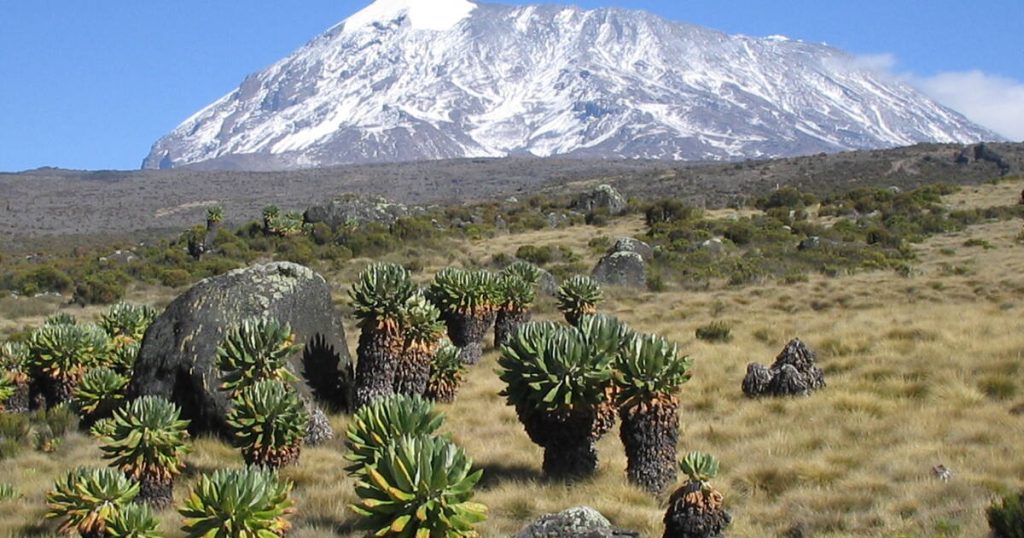
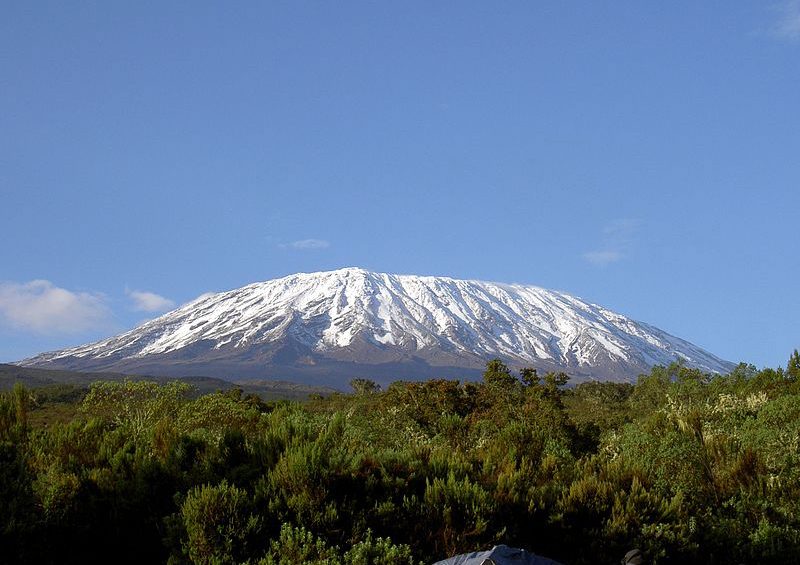
Mount Kilimanjaro is the highest mountain in Africa and the tallest freestanding mountain in the world. It rises to 5,895 meters (19,341 feet) above sea level and stands in Kilimanjaro National Park in northeastern Tanzania, near the Kenyan border.
As Africa’s tallest peak, Mount Kilimanjaro ranks first among the continent’s highest mountains. It is also the highest volcanic mountain in Africa and one of the Seven Summits, making it one of the world’s most sought-after climbing destinations.
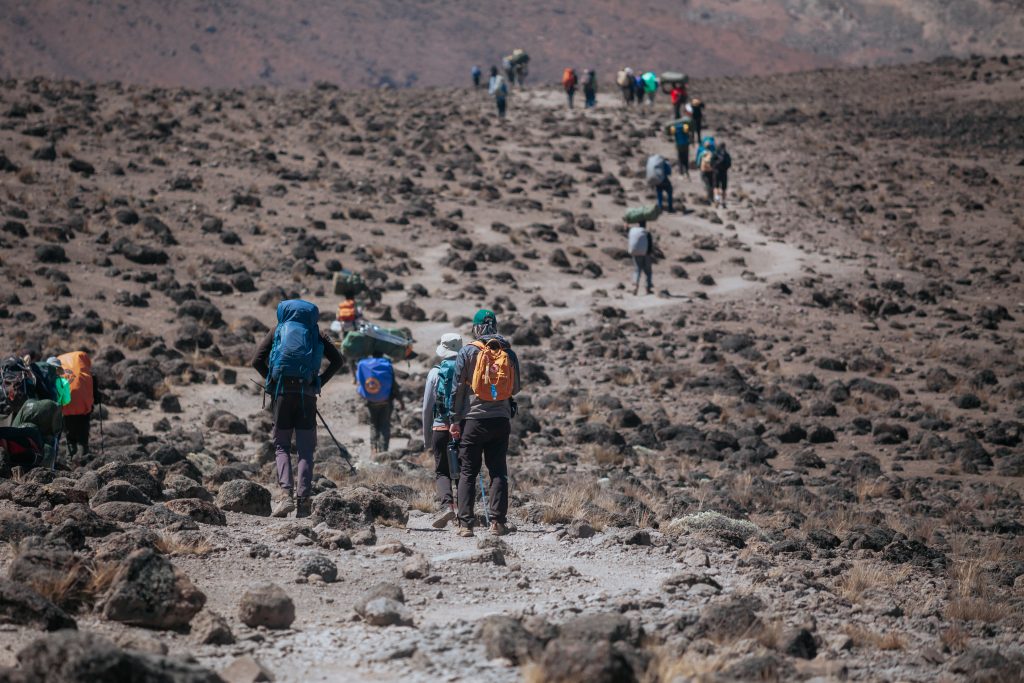
Unlike many mountains above 5,000 meters, climbing Mount Kilimanjaro does not require technical mountaineering skills. Most climbers reach the summit by hiking established trekking routes such as the Lemosho, Machame, Marangu, Rongai, Northern Circuit, Shira, and Umbwe routes. However, the high altitude makes the climb physically demanding, and proper acclimatization plays a key role in summit success.
Mount Kilimanjaro is a dormant stratovolcano with three volcanic cones: Kibo, Mawenzi, and Shira. Uhuru Peak, located on Kibo’s crater rim, marks the highest point in Africa.
Although Kilimanjaro sits just south of the equator, its summit still supports glaciers and permanent ice fields. These glaciers have shrunk significantly over the past century because of climate change, making them one of the mountain’s most remarkable yet vulnerable features.
For beginners, Mount Kilimanjaro is often the best choice among Africa’s highest mountains. While the altitude presents a serious challenge, the standard routes require trekking rather than rock climbing. Choosing a longer itinerary, such as the 8-day Lemosho Route or 9-day Northern Circuit Route, improves acclimatization and increases the chances of reaching Uhuru Peak safely.
Quick Facts
| Feature | Details |
|---|---|
| Rank | 1 Highest Mountain in Africa |
| Elevation | 5,895 m (19,341 ft) |
| Country | Tanzania |
| Mountain Type | Dormant stratovolcano |
| Highest Peak | Uhuru Peak |
| Difficulty | Moderate to challenging (due to altitude) |
| Technical Climbing | No |
| Glaciers | Yes (rapidly shrinking) |
| Best for Beginners | Yes (with proper preparation) |
2. Mount Kenya
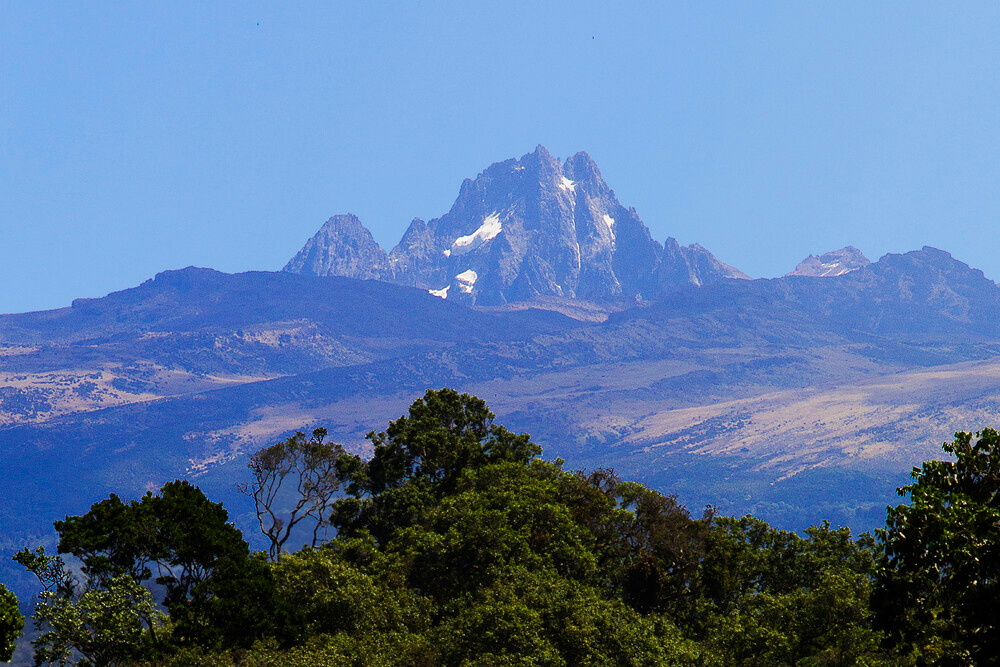
Mount Kenya is the second-highest mountain in Africa, rising to 5,199 meters (17,057 feet) at Batian Peak. Located in central Kenya, it is an extinct volcano famous for its rugged peaks, alpine scenery, and diverse ecosystems. While it is lower than Mount Kilimanjaro, its highest summits require technical climbing skills, making it one of Africa’s most challenging mountains.
Location and Elevation
Mount Kenya stands inside Mount Kenya National Park, about 150 kilometers (93 miles) northeast of Nairobi. Batian is the highest summit at 5,199 meters (17,057 feet), followed by Nelion at 5,188 meters (17,021 feet). Point Lenana, at 4,985 meters (16,355 feet), is the most popular trekking summit.
Climbing Difficulty
Mount Kenya offers both trekking and technical climbing routes. Point Lenana is suitable for hikers with good fitness and does not require climbing equipment. However, reaching Batian or Nelion demands rock-climbing experience, ropes, and proper mountaineering gear.
Glaciers and Landscape
Mount Kenya still has several glaciers near its highest peaks, although they continue to shrink because of climate change. The mountain features glaciers, alpine meadows, forests, lakes, and rocky ridges, creating one of Africa’s most diverse mountain environments.
Volcanic History
Mount Kenya formed about three million years ago as a stratovolcano during volcanic activity associated with the East African Rift System. Over millions of years, glaciers and erosion shaped its steep valleys and jagged peaks.
Is Mount Kenya Good for Beginners?
Yes, but only if beginners choose Point Lenana. This trekking peak does not require technical climbing and offers an excellent introduction to high-altitude hiking. Climbers aiming for Batian or Nelion should have previous alpine climbing experience or hire a qualified mountain guide.
Quick Facts
| Feature | Details |
| Rank | #2 Highest Mountain in Africa |
| Elevation | 5,199 m (17,057 ft) |
| Country | Kenya |
| Mountain Type | Extinct stratovolcano |
| Highest Peak | Batian Peak |
| Difficulty | Moderate (trekking) to very difficult (technical peaks) |
| Technical Climbing | Yes (Batian and Nelion) |
| Glaciers | Yes (small remaining glaciers) |
| Best for Beginners | Point Lenana only |
3. Mount Stanley
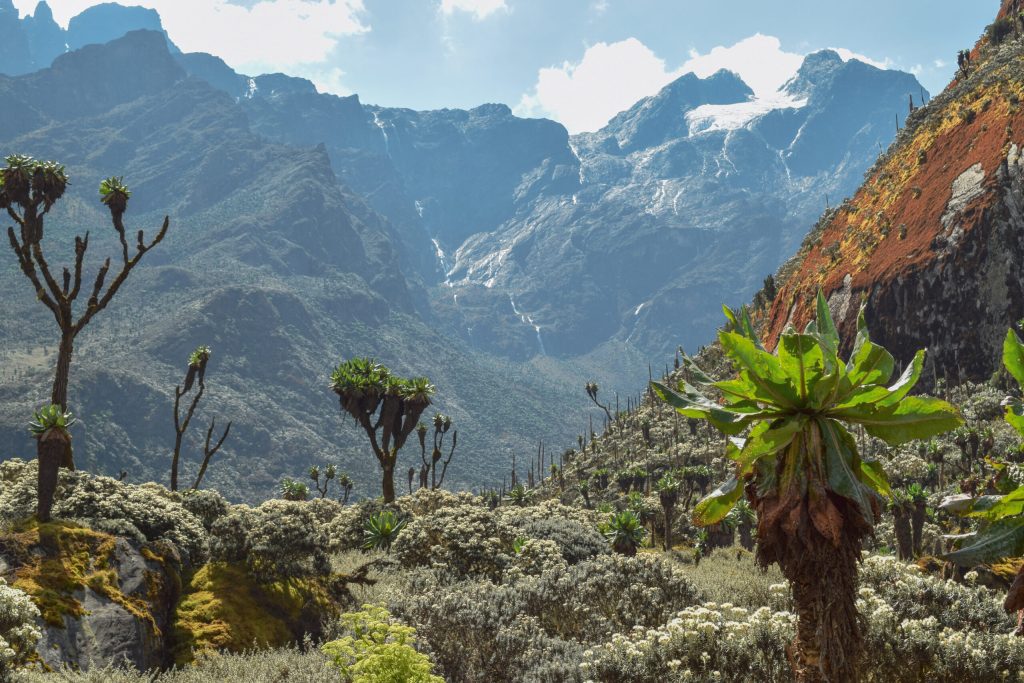
Mount Stanley is the third-highest mountain in Africa, reaching 5,109 meters (16,762 feet) at Margherita Peak. It lies in the Rwenzori Mountains on the border between Uganda and the Democratic Republic of the Congo. Unlike Mount Kilimanjaro and Mount Kenya, Mount Stanley is not a volcano. It formed through tectonic uplift, making it one of Africa’s most unique mountain ranges.
Location and Elevation
Mount Stanley is the highest peak in the Rwenzori Mountains and the tallest mountain in both Uganda and the Democratic Republic of the Congo. Its highest summit, Margherita Peak, stands at 5,109 meters (16,762 feet) above sea level.
Climbing Difficulty
Mount Stanley is one of the most difficult mountains in Africa to climb. Reaching Margherita Peak requires glacier travel, scrambling over steep rocks, and using ropes, crampons, and ice axes. Most expeditions take 7-9 days and demand excellent fitness and previous mountaineering experience.
Glaciers and Landscape
Mount Stanley contains some of the largest remaining glaciers in Africa. Its landscape features snowfields, glaciers, alpine lakes, giant lobelias, moss-covered valleys, and dense montane forests. However, rising temperatures continue to reduce the size of its glaciers.
Geological History
Unlike many of Africa’s highest peaks, Mount Stanley did not form through volcanic activity. Tectonic forces uplifted the Rwenzori Mountains between the western and eastern branches of the East African Rift System, creating a rugged mountain range with dramatic peaks.
Is Mount Stanley Good for Beginners?
No. Mount Stanley is not suitable for beginners because the climb involves technical mountaineering, glacier crossings, and unpredictable weather. Climbers should have previous alpine experience and travel with qualified guides.
Quick Facts
| Feature | Details |
| Rank | 3 Highest Mountain in Africa |
| Elevation | 5,109 m (16,762 ft) |
| Countries | Uganda / Democratic Republic of the Congo |
| Mountain Type | Tectonic uplift mountain |
| Highest Peak | Margherita Peak |
| Difficulty | Very challenging |
| Technical Climbing | Yes (glacier + rope climbing required) |
| Glaciers | Yes |
| Best for Beginners | No |
4. Mount Speke
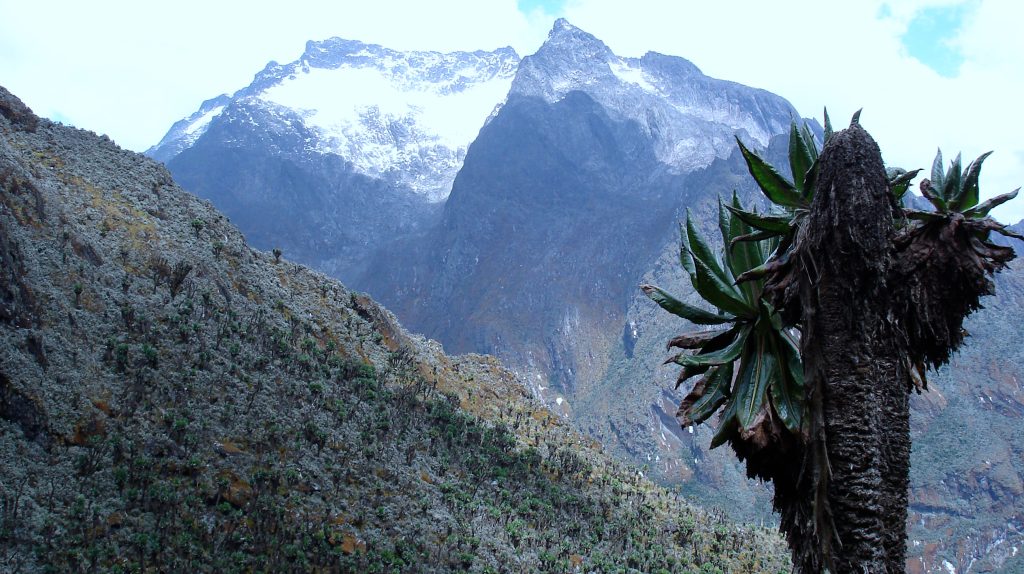
Mount Speke is the fourth-highest mountain in Africa, rising to 4,890 meters (16,043 feet) above sea level. It forms part of the Rwenzori Mountains in western Uganda, close to the border with the Democratic Republic of the Congo. Like Mount Stanley, it is a non-volcanic mountain created by tectonic uplift.
Location and Elevation
Mount Speke lies within Rwenzori Mountains National Park, a UNESCO World Heritage Site. Its highest point, Vittorio Emanuele Peak, reaches 4,890 meters (16,043 feet), making it one of the highest mountains on the continent.
Climbing Difficulty
Climbing Mount Speke is physically demanding because of its high altitude, steep terrain, and remote location. Although it is generally less technical than Mount Stanley, climbers still need strong hiking experience and may encounter snow, ice, and rocky sections near the summit.
Glaciers and Landscape
Mount Speke supports small glaciers and permanent ice in its highest areas. The mountain features spectacular alpine vegetation, glacial valleys, mountain lakes, and unique plant species found only in the Rwenzori Mountains.
Geological History
Mount Speke formed through tectonic uplift rather than volcanic eruptions. The same geological forces that created the Rwenzori Mountains also lifted Mount Speke to nearly 5,000 meters above sea level.
Is Mount Speke Good for Beginners?
No. Although it is less technical than Mount Stanley, Mount Speke remains a demanding high-altitude climb. Beginners should first gain experience on easier trekking mountains such as Mount Kilimanjaro, Mount Meru, or Point Lenana on Mount Kenya.
Quick Facts
| Feature | Details |
| Rank | 4 Highest Mountain in Africa |
| Elevation | 4,890 m (16,043 ft) |
| Country | Uganda |
| Mountain Type | Tectonic uplift mountain |
| Highest Peak | Vittorio Emanuele Peak |
| Difficulty | Challenging |
| Technical Climbing | Limited technical sections |
| Glaciers | Yes (small remaining) |
| Best for Beginners | No |
5. Mount Baker
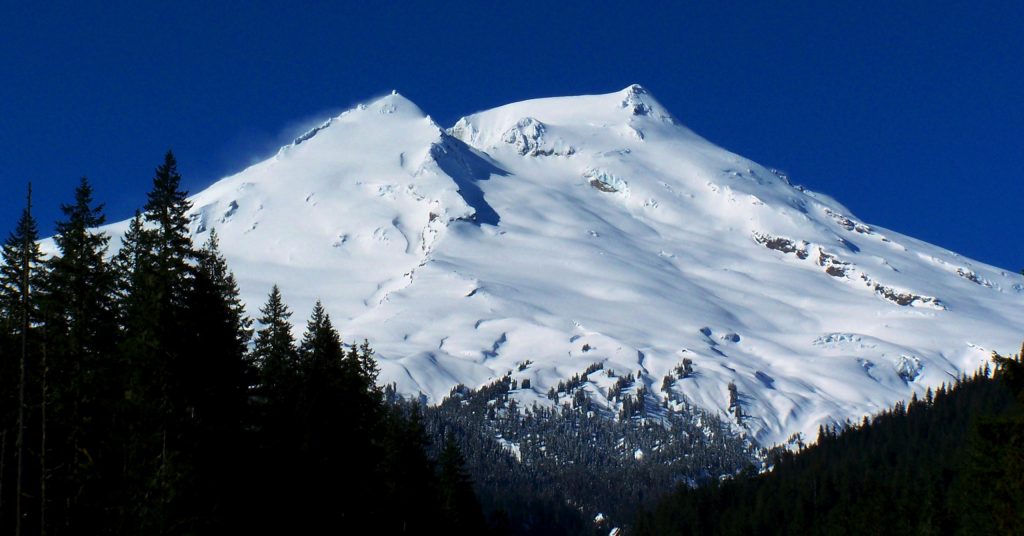
Mount Baker is the fifth-highest mountain in Africa, rising to 4,844 meters (15,892 feet) above sea level. It forms part of the Rwenzori Mountains in western Uganda near the border with the Democratic Republic of the Congo. Although it is one of Africa’s tallest peaks, it remains far less visited than Mount Kilimanjaro or Mount Kenya.
Location and Elevation
Mount Baker lies within Rwenzori Mountains National Park, a UNESCO World Heritage Site. Its highest summit, Edward Peak, reaches 4,844 meters (15,892 feet) and stands between Mount Stanley and Mount Speke in the central Rwenzori range.
Climbing Difficulty
Mount Baker offers a demanding high-altitude climb that requires excellent physical fitness. Climbers navigate steep ridges, rocky trails, muddy sections, and alpine terrain. Some routes include scrambling and glacier travel, so previous mountain experience is highly recommended.
Glaciers and Landscape
Mount Baker still supports small glaciers near its highest elevations, although they continue to shrink because of climate change. The mountain features glacier-fed streams, alpine meadows, giant lobelias, dense bamboo forests, and dramatic valleys that make the Rwenzori Mountains one of Africa’s most spectacular landscapes.
Geological History
Unlike Mount Kilimanjaro and Mount Kenya, Mount Baker did not form through volcanic eruptions. Tectonic uplift raised the Rwenzori Mountains between two branches of the East African Rift System, creating one of the continent’s highest non-volcanic mountain ranges.
Is Mount Baker Good for Beginners?
Mount Baker is not an ideal mountain for beginners. The combination of high altitude, unpredictable weather, and challenging terrain makes it better suited to experienced trekkers and mountaineers. Beginners should first consider less technical peaks such as Mount Kilimanjaro or Mount Meru.
Quick Facts
| Feature | Details |
|---|---|
| Rank | 5 Highest Mountain in Africa |
| Elevation | 4,844 m (15,892 ft) |
| Country | Uganda |
| Mountain Type | Tectonic uplift mountain |
| Highest Peak | Edward Peak |
| Difficulty | Challenging |
| Technical Climbing | Some sections may require scrambling and glacier travel |
| Glaciers | Yes, small glaciers remain |
| Best for Beginners | No |
| UNESCO Site | Yes, Rwenzori Mountains National Park |
6. Mount Emin
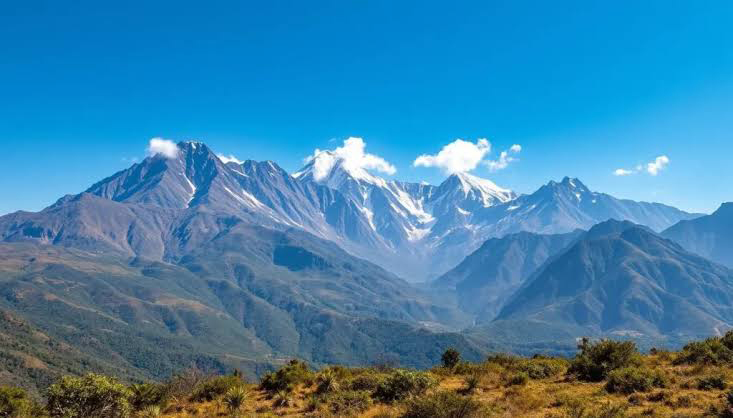
Mount Emin is the sixth-highest mountain in Africa, reaching 4,798 meters (15,741 feet) above sea level. It is another major peak in the Rwenzori Mountains, located along the border between Uganda and the Democratic Republic of the Congo. Although it receives fewer visitors than other Rwenzori peaks, it offers an equally impressive alpine environment.
Location and Elevation
Mount Emin rises on the western side of the Rwenzori range. Its highest point, Umberto Peak, stands at 4,798 meters (15,741 feet), making it one of the highest mountains in both Uganda and Central Africa.
Climbing Difficulty
Climbing Mount Emin requires strong endurance because the routes pass through dense forests, steep valleys, rocky ridges, and high-altitude terrain. While the ascent is generally less technical than Mount Stanley, climbers should still prepare for difficult conditions and rapidly changing mountain weather.
Glaciers and Landscape
Mount Emin has limited glacier coverage compared with Mount Stanley, but its upper slopes still contain alpine vegetation, rocky cliffs, and high-altitude habitats. The surrounding landscape supports rare wildlife, unique plant species, and spectacular mountain scenery.
Geological History
Mount Emin formed through tectonic uplift rather than volcanic activity. The movement of the Earth’s crust gradually lifted the Rwenzori Mountains, creating a rugged mountain chain that includes several of Africa’s highest peaks.
Is Mount Emin Good for Beginners?
Mount Emin is not recommended for beginners. Its remote location, high altitude, and demanding trekking conditions require good fitness and previous mountain experience. Climbers who are new to high-altitude trekking should first build experience on more accessible mountains before attempting the Rwenzori range.
Quick Facts
| Feature | Details |
| Rank | 6 Highest Mountain in Africa |
| Elevation | 4,798 m (15,741 ft) |
| Country | Uganda / Democratic Republic of the Congo |
| Mountain Type | Tectonic uplift mountain |
| Highest Peak | Umberto Peak |
| Difficulty | Challenging |
| Technical Climbing | Moderate to difficult |
| Glaciers | Limited glacier coverage |
| Best for Beginners | No |
| UNESCO Site | Yes, Rwenzori Mountains National Park |
7. Mount Gessi
Mount Gessi is the seventh-highest mountain in Africa, rising to 4,715 meters (15,469 feet) above sea level. It is part of the Rwenzori Mountains in western Uganda, close to the border with the Democratic Republic of the Congo. Although it is one of Africa’s tallest peaks, it attracts relatively few climbers because of its remote location and challenging terrain.
Location and Elevation
Mount Gessi lies within Rwenzori Mountains National Park, a UNESCO World Heritage Site. Its highest summit, Iolanda Peak, reaches 4,715 meters (15,469 feet) and forms part of the spectacular Rwenzori mountain range.
Climbing Difficulty
Mount Gessi offers a strenuous climb that requires excellent fitness and previous trekking experience. Climbers pass through dense forests, steep valleys, rocky ridges, and high-altitude terrain. The route is demanding even though it involves less technical climbing than Mount Stanley.
Glaciers and Landscape
Mount Gessi once supported glaciers, but most of its permanent ice has disappeared because of climate change. Today, the mountain is known for its alpine vegetation, giant groundsels, mountain streams, and dramatic valleys that create one of Africa’s most distinctive high-altitude landscapes.
Geological History
Mount Gessi formed through tectonic uplift rather than volcanic activity. The same geological forces that created the Rwenzori Mountains also raised Mount Gessi thousands of meters above the surrounding plains.
Is Mount Gessi Good for Beginners?
No. Mount Gessi is best suited to experienced trekkers because of its remote location, long hiking days, and challenging mountain conditions. Beginners should first gain experience on more accessible trekking peaks before attempting the Rwenzori Mountains.
Quick Facts
| Feature | Details |
|---|---|
| Rank | 7 Highest Mountain in Africa |
| Elevation | 4,715 m (15,469 ft) |
| Country | Uganda |
| Mountain Type | Tectonic uplift mountain |
| Highest Peak | Iolanda Peak |
| Difficulty | Challenging |
| Technical Climbing | Limited technical sections |
| Glaciers | No permanent glaciers today |
| Best for Beginners | No |
| UNESCO Site | Yes, Rwenzori Mountains National Park |
8. Mount Meru
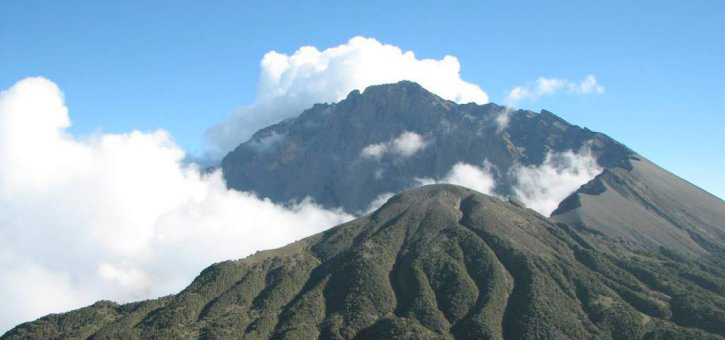
Mount Meru is the eighth-highest mountain in Africa, reaching 4,566 meters (14,980 feet) above sea level. Located in Arusha National Park in northern Tanzania, it is the country’s second-highest mountain after Mount Kilimanjaro. Mount Meru is widely regarded as one of the best trekking mountains in Africa and serves as excellent preparation for climbing Kilimanjaro.
Location and Elevation
Mount Meru stands about 70 kilometers (43 miles) west of Mount Kilimanjaro in northern Tanzania. Its highest point, Socialist Peak, rises to 4,566 meters (14,980 feet) and offers panoramic views of Kilimanjaro on clear mornings.
Climbing Difficulty
Mount Meru is a challenging trek because of its steep trails and high altitude. Most climbers complete the ascent in 3 to 4 days, making it shorter than Kilimanjaro. Although the standard route does not require technical climbing, hikers need good fitness and proper acclimatization.
Glaciers and Landscape
Unlike Mount Kilimanjaro and Mount Kenya, Mount Meru no longer has permanent glaciers. However, it features lush rainforests, open grasslands, alpine deserts, volcanic ash slopes, and a spectacular horseshoe-shaped crater. Wildlife such as giraffes, buffaloes, zebras, and colobus monkeys often appear along the lower slopes.
Volcanic History
Mount Meru is an active stratovolcano formed by volcanic activity within the East African Rift System. Thousands of years ago, a massive eruption destroyed part of the summit, creating the large crater visible today. Although the volcano remains active, it has not experienced a major eruption in recent history.
Is Mount Meru Good for Beginners?
Yes. Mount Meru is one of the best high-altitude mountains for beginners who want to prepare for Mount Kilimanjaro. The climb helps hikers adapt to altitude while providing a rewarding trekking experience with fewer crowds and abundant wildlife.
Quick Facts
| Feature | Details |
|---|---|
| Rank | 8 Highest Mountain in Africa |
| Elevation | 4,566 m (14,980 ft) |
| Country | Tanzania |
| Mountain Type | Active stratovolcano |
| Highest Peak | Socialist Peak |
| Difficulty | Moderate to challenging |
| Technical Climbing | No |
| Glaciers | No |
| Best for Beginners | Yes |
| National Park | Arusha National Park |
9. Ras Dashen
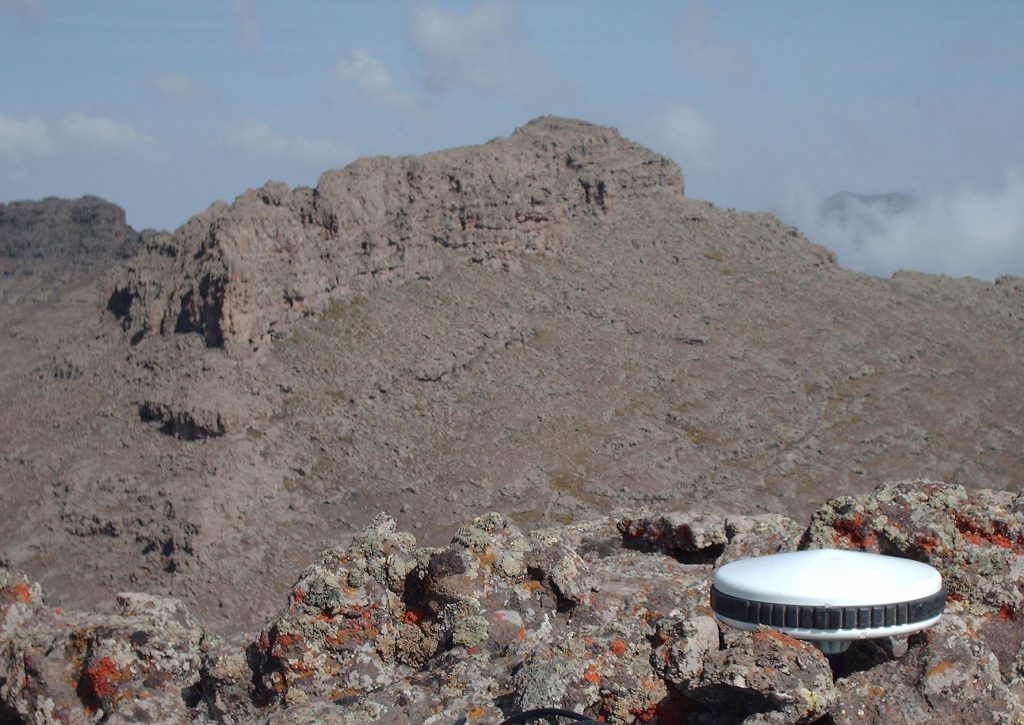
Ras Dashen is the ninth-highest mountain in Africa, rising to 4,550 meters (14,928 feet) above sea level. It is the highest peak in Ethiopia and the tallest mountain in the Simien Mountains, located in Simien Mountains National Park, a UNESCO World Heritage Site.
Location and Elevation
Ras Dashen stands in northern Ethiopia within the dramatic Simien Mountains range. Its summit reaches 4,550 meters (14,928 feet), making it the highest point in Ethiopia and one of the most prominent peaks in North Africa.
Climbing Difficulty
Climbing Ras Dashen is a demanding high-altitude trek. The route involves long hiking days, steep ascents, and cold nighttime temperatures. While it does not require technical climbing equipment, the altitude and distance make it physically challenging.
Glaciers and Landscape
Ras Dashen does not have glaciers, but it features dramatic plateaus, deep valleys, sharp cliffs, and alpine grasslands. The Simien Mountains are also known for unique wildlife such as gelada monkeys, Ethiopian wolves, and Walia ibex.
Geological History
Ras Dashen formed through volcanic activity millions of years ago, followed by erosion that shaped the current rugged landscape. The Simien Mountains are part of the Ethiopian Highlands, one of Africa’s most ancient geological regions.
Is Ras Dashen Good for Beginners?
Ras Dashen is not ideal for beginners because of its long trekking routes and high altitude. However, experienced hikers can complete the climb without technical mountaineering skills if they are well acclimatized.
Quick Facts
| Feature | Details |
|---|---|
| Rank | 9 Highest Mountain in Africa |
| Elevation | 4,550 m (14,928 ft) |
| Country | Ethiopia |
| Mountain Type | Eroded volcanic highland peak |
| Highest Peak | Ras Dashen summit |
| Difficulty | Challenging |
| Technical Climbing | No |
| Glaciers | No |
| Best for Beginners | No |
| National Park | Simien Mountains National Park |
10. Mount Karisimbi
Mount Karisimbi is the tenth-highest mountain in Africa, rising to 4,507 meters (14,787 feet) above sea level. It is the highest volcano in the Virunga Mountains, located on the border between Rwanda and the Democratic Republic of the Congo. Mount Karisimbi sits within the Volcanoes National Park region, one of Africa’s most famous conservation areas.
Location and Elevation
Mount Karisimbi stands in the Virunga volcanic chain, between Mount Bisoke and Mount Mikeno. Its summit reaches 4,507 meters (14,787 feet), making it the highest peak in Rwanda.
Climbing Difficulty
Climbing Mount Karisimbi is a multi-day trek that requires good fitness and endurance. The ascent includes steep volcanic slopes, muddy forest trails, and cold temperatures at higher elevations. Most climbers complete the hike in about two days with an overnight camp near the summit.
Glaciers and Landscape
Mount Karisimbi does not have glaciers, but it features dense rainforest, bamboo zones, volcanic rock, and alpine vegetation. The lower slopes are home to rich biodiversity, including mountain gorillas in the surrounding Virunga region.
Volcanic History
Mount Karisimbi is a dormant stratovolcano formed by volcanic activity along the East African Rift System. It last erupted thousands of years ago and now stands as part of a chain of extinct and dormant volcanoes in the Virunga range.
Is Mount Karisimbi Good for Beginners?
Mount Karisimbi is not recommended for beginners due to its steep trails, altitude, and multi-day trekking requirements. It is better suited for experienced hikers or those with prior high-altitude trekking experience.
Quick Facts
| Feature | Details |
|---|---|
| Rank | 10 Highest Mountain in Africa |
| Elevation | 4,507 m (14,787 ft) |
| Countries | Rwanda / Democratic Republic of the Congo |
| Mountain Type | Dormant stratovolcano |
| Highest Peak | Karisimbi summit |
| Difficulty | Challenging |
| Technical Climbing | No |
| Glaciers | No |
| Best for Beginners | No |
| National Park | Volcanoes National Park region |
11-20. Other Major Peaks
Africa’s remaining highest mountains (ranked 11 to 20) are spread across East, Central, and North Africa. These peaks are generally lower than 5,000 meters but still offer important geological, ecological, and climbing significance. Many of them are volcanic mountains, while others form part of ancient highland systems.
Mount Elgon (11th)
Mount Elgon rises to 4,321 meters (14,177 feet) on the border of Uganda and Kenya. It is an extinct shield volcano known for its massive caldera, caves, and rich biodiversity. The mountain offers non-technical trekking routes, making it suitable for beginners.
Mount Mawenzi (12th)
Mount Mawenzi reaches 5,149 meters (16,893 feet) and is part of the Kilimanjaro massif in Tanzania. It is a rugged volcanic cone with sharp peaks and steep ridges. Although it is technically part of Kilimanjaro, it is often listed separately in geological discussions.
Mount Sabyinyo (13th)
Mount Sabyinyo rises to 3,669 meters (12,037 feet) in the Virunga Mountains shared by Rwanda, Uganda, and the Democratic Republic of the Congo. Its summit marks the meeting point of the three countries. The climb is steep but short, making it accessible for fit hikers.
Mount Muhabura (14th)
Mount Muhabura stands at 4,127 meters (13,540 feet) on the border of Rwanda and Uganda. It is a dormant volcano with a steep ascent and a crater lake near the summit. The climb is physically demanding but does not require technical skills.
Mount Mgahinga (15th)
Mount Mgahinga reaches 3,474 meters (11,398 feet) in Uganda, forming part of the Virunga volcanic chain. It is the smallest of the Virunga volcanoes in Uganda and offers relatively short but steep hikes.
Mount Bisoke (16th)
Mount Bisoke rises to 3,711 meters (12,175 feet) between Rwanda and the Democratic Republic of the Congo. It is a dormant volcano famous for its beautiful crater lake at the summit. The climb is popular and can be completed in a single day.
Mount Nyiragongo (17th)
Mount Nyiragongo stands at 3,470 meters (11,385 feet) in the Democratic Republic of the Congo. It is one of the most active volcanoes in the world, known for its persistent lava lake. Although not extremely high, it is one of Africa’s most dangerous and fascinating peaks.
Mount Nyamuragira (18th)
Mount Nyamuragira reaches 3,058 meters (10,033 feet) in the Democratic Republic of the Congo. It is one of Africa’s most active shield volcanoes, frequently erupting and reshaping the surrounding landscape.
Mount Cameroon (19th)
Mount Cameroon rises to 4,040 meters (13,255 feet) in Cameroon. It is the highest mountain in West Africa and one of the few active volcanoes on the continent. The climb is challenging but does not require technical equipment.
Mount Toubkal (20th)
Mount Toubkal reaches 4,167 meters (13,671 feet) in the Atlas Mountains of Morocco. It is the highest peak in North Africa and one of the most accessible high mountains on the continent. The ascent is a popular trek from the village of Imlil.
Summary Insight
These mountains show the full diversity of Africa’s high peaks, from active volcanoes like Nyiragongo to trekking-friendly summits like Mount Toubkal. While they are lower than the top ten, they remain important for climbers, geologists, and travelers exploring Africa’s mountain landscapes.
Highest Mountains in Africa Comparison Table
This section helps you quickly compare Africa’s highest mountains based on height, difficulty, location, and glacier presence. It makes it easier to understand how each peak differs and which mountains are best for trekking, technical climbing, or general exploration.
Height Comparison
| Rank | Mountain | Height (m) |
|---|---|---|
| 1 | Mount Kilimanjaro | 5,895 |
| 2 | Mount Kenya (Batian) | 5,199 |
| 3 | Mount Stanley (Margherita Peak) | 5,109 |
| 4 | Mount Speke | 4,890 |
| 5 | Mount Baker | 4,844 |
| 6 | Mount Emin | 4,798 |
| 7 | Mount Gessi | 4,715 |
| 8 | Mount Meru | 4,566 |
| 9 | Ras Dashen | 4,550 |
| 10 | Mount Karisimbi | 4,507 |
Difficulty Comparison
- Moderate (Beginner-friendly with preparation): Mount Kilimanjaro, Mount Meru, Mount Toubkal
- Challenging (Good fitness required): Ras Dashen, Mount Karisimbi, Mount Elgon, Mount Speke, Mount Baker
- Very challenging / Technical: Mount Kenya (Batian & Nelion), Mount Stanley, Mount Emin, Mount Gessi
Countries and Locations
- Tanzania: Mount Kilimanjaro, Mount Meru
- Kenya: Mount Kenya
- Uganda / DR Congo: Rwenzori Mountains (Stanley, Speke, Baker, Emin, Gessi)
- Ethiopia: Ras Dashen
- Rwanda / DR Congo: Mount Karisimbi and Virunga peaks
- Cameroon: Mount Cameroon
- Morocco: Mount Toubkal
Most of Africa’s highest mountains are concentrated in East Africa, especially around the East African Rift System.
Glaciers and Snow Coverage
- Permanent glaciers (shrinking): Mount Kilimanjaro, Mount Kenya, Mount Stanley
- Seasonal snow or ice: Some Rwenzori peaks (Speke, Baker, Emin, Gessi)
- No glaciers today: Mount Meru, Ras Dashen, Karisimbi, Elgon, Toubkal, Cameroon
Glaciers in Africa are disappearing rapidly due to climate change, especially on Kilimanjaro and Mount Kenya, where ice cover has reduced significantly over the past century.
Which Is the Highest Mountain in Africa?
Mount Kilimanjaro is the highest mountain in Africa. It rises to 5,895 meters (19,341 feet) above sea level and stands in northern Tanzania near the border with Kenya. It is also the highest freestanding mountain in the world, meaning it is not part of a mountain range.
Mount Kilimanjaro Overview
Mount Kilimanjaro is a dormant stratovolcano made up of three volcanic cones: Kibo, Mawenzi, and Shira. The highest point is Uhuru Peak, located on Kibo’s crater rim. Unlike many high mountains in the world, Kilimanjaro does not require technical climbing skills, so it can be climbed by trekkers with good fitness and proper preparation.
The mountain rises through several ecological zones, starting from farmland and rainforest at the base, moving through moorland and alpine desert, and ending at a cold, icy summit. This makes it one of the most diverse mountains in Africa.
Why Kilimanjaro Is Famous Worldwide
Kilimanjaro is famous because it is the highest mountain in Africa and one of the Seven Summits of the world. It attracts thousands of climbers every year from different countries.
It is also unique because it sits near the equator but still has snow and glaciers at its peak, although these ice fields are shrinking due to climate change. Its combination of accessibility, height, and natural beauty makes it one of the most iconic trekking mountains on Earth.
Climbing Kilimanjaro Today
Climbing Mount Kilimanjaro today is possible without ropes or advanced mountaineering skills, but it still requires strong physical fitness and proper acclimatization to altitude. Most climbers take between 5 to 9 days depending on the route.
Longer routes give the body more time to adjust to high altitude, increasing the chances of reaching the summit safely. The main challenge is not technical difficulty but altitude sickness, which affects many climbers who ascend too quickly.
Despite the challenge, Kilimanjaro remains one of the most achievable high-altitude summits in the world for beginners who prepare well and choose the right route.
Which African Mountains Have Glaciers?
Only a few mountains in Africa still have glaciers today. These glaciers exist mainly on the continent’s highest peaks in East Africa, where elevation is high enough to maintain permanent ice despite being near the equator.
Kilimanjaro Glaciers
Mount Kilimanjaro in Tanzania still has small glaciers near its summit, especially around Kibo Peak. These ice fields sit at nearly 6,000 meters above sea level, where temperatures remain cold enough to preserve ice year-round.
However, Kilimanjaro’s glaciers have shrunk dramatically over the past century. They are now thin, fragmented, and expected to continue disappearing if current warming trends continue.
Mount Kenya Glaciers
Mount Kenya also has remaining glaciers near its highest peaks, particularly around Batian and Nelion. These glaciers are smaller than those on Kilimanjaro but still form part of the mountain’s high-altitude ice environment.
Like Kilimanjaro, Mount Kenya’s glaciers are retreating. Many areas that were once covered in ice are now exposed rock, showing clear evidence of long-term ice loss.
Rwenzori Glaciers
The Rwenzori Mountains between Uganda and the Democratic Republic of the Congo contain some of Africa’s most important remaining glaciers. Peaks such as Mount Stanley still support permanent ice and snow.
These glaciers are more extensive than those on Kilimanjaro and Mount Kenya in some areas, but they are also shrinking. The Rwenzori range is one of the few places in Africa where multiple peaks still show glacial features.
Climate Change and Glacier Loss
Africa’s glaciers are disappearing mainly because temperatures are rising and long-term snow accumulation is no longer enough to sustain permanent ice. Since these mountains are located near the equator, their glaciers are extremely sensitive to even small climate changes.
As a result, all of Africa’s remaining glaciers are shrinking rapidly. Scientists expect that some may disappear completely within decades if warming continues. This makes Africa’s high mountain glaciers not only rare but also highly vulnerable natural features.
Which African Mountain Is Hardest to Climb?
The hardest mountains to climb in Africa are not always the tallest ones. Difficulty depends on technical skills, glacier travel, weather conditions, and remoteness. Some peaks require ropes and ice axes, while others challenge climbers mainly through altitude and long trekking days.
Technical Climbing Peaks
The most difficult mountains in Africa are the ones that require technical mountaineering skills. Mount Stanley (Margherita Peak) in the Rwenzori Mountains is one of the hardest because climbers must cross glaciers, navigate steep rock sections, and use ropes and crampons in unpredictable conditions.
Mount Kenya (Batian and Nelion) also ranks among the most technical climbs. Reaching these summits requires rock climbing experience, rope systems, and multi-pitch ascents. Weather changes quickly, and the high altitude makes climbing even more demanding.
Other challenging technical peaks include parts of the Rwenzori range, such as Mount Speke and Mount Baker, where glacier travel and exposed terrain increase difficulty.
Trekking Peaks
Some African mountains are difficult even without technical climbing because of altitude, steep trails, and long hiking routes. Mount Kilimanjaro is the best example. It does not require ropes, but the extreme altitude of 5,895 meters makes summit day physically demanding.
Ras Dashen in Ethiopia and Mount Karisimbi in Rwanda are also challenging trekking peaks. Climbers face long ascents, cold nights, and high-altitude conditions that require endurance and proper acclimatization rather than technical skills.
Best Mountain for Experienced Climbers
The best mountains for experienced climbers in Africa are those that combine technical difficulty with high altitude. Mount Stanley is often considered the ultimate challenge because it includes glacier crossings, steep alpine routes, and remote terrain.
Mount Kenya’s Batian Peak is another top choice for experienced climbers who want a technical rock-climbing experience at high altitude. The Rwenzori Mountains overall offer some of the most complex and demanding climbs on the continent.
In summary, the hardest African mountains are not defined only by height but by the combination of technical climbing, weather conditions, and isolation that tests even experienced mountaineers.
Which African Mountain Is Best for Beginners?
The best African mountains for beginners are those that do not require technical climbing skills and offer well-established trekking routes. These mountains still reach high altitudes, so proper fitness and acclimatization are important, but they remain accessible to first-time climbers.
Mount Kilimanjaro
Mount Kilimanjaro is the most popular beginner-friendly high mountain in Africa. It does not require ropes or technical climbing skills, and climbers follow established trekking routes to reach Uhuru Peak (5,895 m). The main challenge is altitude, not technical difficulty, which makes preparation and slow ascent very important for success.
Mount Meru
Mount Meru is another excellent option for beginners. Located in Tanzania, it offers a shorter climb compared to Kilimanjaro and helps hikers adjust to high altitude before attempting bigger peaks. The route passes through forests and volcanic landscapes, and climbers can reach Socialist Peak (4,566 m) without technical equipment.
Ras Dashen
Ras Dashen in Ethiopia is more challenging than Kilimanjaro and Mount Meru, but it is still possible for determined beginners with good fitness. The climb involves long trekking days, cold temperatures, and high-altitude hiking, but no technical climbing is required. It is better suited for beginners with prior trekking experience.
Beginner-Friendly Comparison
Mount Kilimanjaro offers the easiest access to very high altitude without technical climbing, making it the top choice for beginners. Mount Meru provides a shorter and less crowded experience that helps build altitude experience. Ras Dashen is more demanding and should only be attempted by beginners who already have strong hiking experience and good endurance.
In general, beginners should choose mountains with established trails, reliable guides, and gradual ascent profiles. These factors matter more than height when deciding which African mountain is suitable for a first high-altitude climb.
Interesting Facts About Africa’s Highest Mountains
Africa’s highest mountains are not only tall peaks; they also hold unique records, rare natural conditions, and important cultural and ecological value. These facts help explain why these mountains stand out globally.
Africa’s Tallest Freestanding Mountain
Mount Kilimanjaro is the tallest freestanding mountain in the world. It rises independently from the surrounding plains in Tanzania without being part of a mountain range. Its massive volcanic base and isolated structure make it visually dominant and geographically unique compared to most other high mountains.
Snow on the Equator
Several of Africa’s highest mountains sit very close to the equator but still support snow and ice at their peaks. Mount Kilimanjaro, Mount Kenya, and parts of the Rwenzori Mountains show this rare phenomenon. The extreme elevation keeps temperatures low enough for ice to form, even in a tropical climate, although this ice is shrinking over time.
Ancient Volcanoes
Many of Africa’s tallest mountains formed through volcanic activity linked to the East African Rift System. Mountains like Kilimanjaro, Mount Kenya, Mount Meru, and Mount Karisimbi began as active volcanoes millions of years ago. Over time, eruptions stopped, and erosion reshaped their slopes into the dramatic peaks seen today.
Unique Wildlife and Ecosystems
Africa’s high mountains support distinct ecosystems that change with altitude. Climbers move from forests filled with monkeys and birds to alpine deserts and icy summits. Mountains such as Kilimanjaro and Mount Kenya also host rare plants adapted to cold, high-altitude conditions, while the Rwenzori range supports dense vegetation and unique wildlife found nowhere else.
UNESCO World Heritage Sites
Several of Africa’s highest mountains are protected as UNESCO World Heritage Sites because of their ecological and geological importance. The Rwenzori Mountains, Mount Kenya, and the Simien Mountains all fall under this protection. These designations help preserve rare species, fragile ecosystems, and important mountain landscapes for future generations.
Why Are Many of Africa’s Highest Mountains Volcanoes?
Many of Africa’s highest mountains are volcanic because they formed along one of the most active tectonic zones on the continent. The movement of Earth’s crust in East Africa created conditions that allowed magma to rise, build volcanoes, and shape some of the tallest peaks in Africa.
The East African Rift System
The East African Rift System is a massive fracture in the Earth’s crust where the African tectonic plate is slowly splitting into two parts. As the crust pulls apart, it becomes thinner and weaker, allowing magma from deep inside the Earth to rise to the surface.
This process creates volcanic activity over millions of years. It is the main reason why many of Africa’s highest mountains are found in East Africa, especially in Tanzania, Kenya, Uganda, and nearby regions.
Formation of Kilimanjaro and Mount Kenya
Mount Kilimanjaro and Mount Kenya formed through repeated volcanic eruptions linked to the East African Rift System. Over time, layers of lava and ash built up large volcanic structures that eventually formed the massive mountains seen today.
Mount Kilimanjaro developed as a complex volcano with three main cones, while Mount Kenya formed as a stratovolcano that later became extinct. Erosion and glacial activity shaped both mountains into their current dramatic forms, with sharp peaks, deep valleys, and high-altitude landscapes.
Active and Dormant Volcanoes
Not all volcanic mountains in Africa behave the same way today. Some, like Mount Kilimanjaro, are dormant, meaning they are not currently erupting but still show signs of past volcanic activity. Others, like Mount Meru and Mount Nyiragongo, are active or potentially active and can erupt again.
Many of Africa’s highest volcanic mountains are now inactive, but they still influence the landscape through their shape, soil, and ecosystems. These volcanic origins explain why so many of Africa’s tallest peaks are concentrated in specific regions rather than spread evenly across the continent.
Frequently Asked Questions
The tallest mountain in Africa is Mount Kilimanjaro in Tanzania. It rises to 5,895 meters (19,341 feet) above sea level and is also the highest freestanding mountain in the world.
Africa has three major mountains above 5,000 meters. These are Mount Kilimanjaro in Tanzania, Mount Kenya in Kenya, and Mount Stanley in the Rwenzori Mountains on the Uganda DR Congo border.
The hardest African mountains to climb are Mount Stanley and the technical peaks of Mount Kenya (Batian and Nelion). These require rock climbing skills, glacier travel, and the use of ropes and mountaineering equipment.
Yes, Mount Kilimanjaro still has snow and small glaciers near its summit, but they are shrinking rapidly due to climate change. The ice cover today is much smaller than it was in the past.
Uganda has the most high mountains in Africa because it contains several of the Rwenzori peaks, including Mount Stanley, Mount Speke, Mount Baker, Mount Emin, and Mount Gessi.
Yes, beginners can climb some of Africa’s highest mountains, especially Mount Kilimanjaro and Mount Meru, because they do not require technical climbing skills. However, proper fitness, preparation, and acclimatization are still necessary to reach the summit safely.
Read more about Africa’s highest mountains
Final Thoughts
Africa highest mountains offer more than just impressive elevations. They represent a mix of volcanic power, tectonic movement, ancient landscapes, and unique ecosystems found nowhere else on Earth. From the snow-covered summit of Mount Kilimanjaro to the rugged glaciers of the Rwenzori Mountains, each peak tells a different geological story.
What makes these mountains truly special is their diversity. Some are beginner-friendly trekking destinations like Mount Kilimanjaro and Mount Meru, while others like Mount Stanley and Mount Kenya challenge even experienced climbers with technical routes and extreme conditions. Together, they create one of the most complete mountain systems in the world.
These peaks also highlight important environmental changes. The shrinking glaciers on Kilimanjaro, Mount Kenya, and the Rwenzori Mountains remind us how climate change is reshaping Africa’s highest landscapes.
Whether you are planning a climb, studying geography, or simply exploring Africa’s natural wonders, these mountains offer a deeper understanding of the continent’s beauty and power. Each summit stands as a reminder of how dynamic and extraordinary Africa’s highlands truly are.