Lemosho Route Kilimanjaro: Complete Guide, Difficulty, Itinerary, Success Rate & Cost
Estimated reading time: 28 minutes
The Lemosho Route Kilimanjaro is a scenic trekking route that approaches Mount Kilimanjaro from the western side before crossing the Shira Plateau and joining the southern circuit. It is known for its varied landscapes, gradual ascent, and quieter trail during the first days. The route takes you from the rainforest through moorland and alpine desert before reaching the high summit zone at Uhuru Peak, 5,895 meters above sea level.
For most climbers, Lemosho is worth considering because it gives you more time to adjust to increasing altitude than shorter itineraries. The route can be completed in different numbers of days, with longer itineraries allowing a more gradual pace and additional time for acclimatization. Along the way, you experience highlights such as the Shira Plateau, Lava Tower, Barranco Wall, Karanga Valley, and the final climb to Uhuru Peak.
This complete Lemosho Route guide covers the itinerary, distance, difficulty, altitude, acclimatization, best time to climb, costs, packing requirements, and what to expect on the mountain. We also explain how the Lemosho Route compares with other Kilimanjaro routes and what you should consider before choosing your itinerary.
Table of contents
- Lemosho Route Kilimanjaro: Complete Guide, Difficulty, Itinerary, Success Rate & Cost
- Lemosho Route Quick Facts
- What Is the Lemosho Route?
- Where Does the Lemosho Route Start and Finish?
- Lemosho Route 8-Day Itinerary
- Lemosho Route Camps and Elevation
- How Difficult Is the Lemosho Route?
- Lemosho Route Distance and Hiking Time
- Lemosho Route Success Rate
- Altitude and Acclimatization on Lemosho
- Lemosho Route Scenery and Wildlife
- Best Time to Climb Lemosho
- Lemosho Route Cost
- What to Pack for Lemosho
- Lemosho vs Machame
- Who Should Choose Lemosho?
- Why Climb Lemosho With WeWild Travel?
- Lemosho Route FAQs
- Conclusion
Lemosho Route Quick Facts
The Lemosho Route approaches Mount Kilimanjaro from the western side and crosses the Shira Plateau before joining the southern circuit. Here are the key facts to know before choosing this route:
- Route: Lemosho Route
- Starting Point: Londorossi Gate on the western side of Kilimanjaro
- Typical Duration: 7 or 8 days, depending on the itinerary
- Total Distance: Approximately 70 to 71 km
- Highest Point: Uhuru Peak at 5,895 meters (19,341 feet)
- Difficulty: Moderate to challenging, with altitude being the main challenge
- Landscape: Rainforest, moorland, Shira Plateau, alpine desert, and the high-altitude summit zone
- Acclimatization: Longer itineraries allow a more gradual ascent and more time to adjust to altitude
- Early Trail: Usually quieter during the first part of the route
- Major Highlights: Shira Plateau, Lava Tower, Barranco Wall, Karanga Valley, and Uhuru Peak
- Accommodation: Mountain camping throughout the trek
- Summit Night: Climbers normally begin the final ascent around midnight
- Finish Point: Mweka Gate after descending from the summit
- Best For: Climbers who want scenic variety, a longer approach, and more time for acclimatization
- Guide Support: WeWild Travel provides experienced local guides and mountain crew throughout the climb
The 8-day Lemosho itinerary gives you an additional day compared with the 7-day option, which can make the trekking pace more gradual. Your choice should depend on your experience, fitness, schedule, and how you want to approach the altitude.
Read More : 8-day Lemosho itinerary
What Is the Lemosho Route?
The Lemosho Route is a western approach to Mount Kilimanjaro that takes climbers through several distinct environments before reaching Uhuru Peak. The trail begins in the rainforest, continues across the open Shira Plateau, and then follows the southern side of the mountain toward the summit.
One reason climbers choose Lemosho is the way the route gradually changes as you gain altitude. You start among dense forest and move into moorland, high-altitude desert, and finally the rocky summit zone. This gives you time to experience different sides of Kilimanjaro instead of reaching the high slopes too quickly.
The route usually takes 7 or 8 days. The longer itinerary provides more time on the mountain and a more gradual trekking schedule. Along the way, you pass important landmarks such as Shira Plateau, Lava Tower, Barranco Wall, Karanga Valley, and Barafu Camp before beginning the final ascent to Uhuru Peak at 5,895 meters.
Lemosho is also known for its quieter beginning. After crossing the western section and Shira Plateau, the route joins the southern trail network, where you meet trekkers using routes such as Machame.
At WeWild Travel, we organize Lemosho climbs with experienced local guides who manage the pace, monitor climbers as altitude increases, and help you stay prepared for each stage of the mountain.
Where Does the Lemosho Route Start and Finish?
The Lemosho Route starts at Londorossi Gate on the western side of Mount Kilimanjaro and finishes at Mweka Gate after the summit descent.
Your climb begins after registration and park entry at Londorossi Gate, which sits on the western side of Kilimanjaro. From there, the trail enters the rainforest and continues toward the first mountain camps. The western approach gives you a quieter start before the route reaches the Shira Plateau.
As you continue, the trail crosses the plateau and eventually connects with the southern section of Kilimanjaro. You then trek through areas such as Lava Tower, Barranco, Karanga, and Barafu before starting your summit attempt.
After reaching Uhuru Peak at 5,895 meters, you descend through the southern side of the mountain. The trek continues toward Mweka Gate, where your Kilimanjaro climb officially ends.
This start-and-finish route gives Lemosho a varied journey across the mountain. You begin in the western rainforest, cross the high Shira landscape, reach the summit zone, and finish through the southern descent.
Lemosho Route 8-Day Itinerary
Day 1: Londorossi Gate to Mti Mkubwa Camp
Your Lemosho trek begins at Londorossi Gate, where you complete park registration before driving to the trailhead. The hike starts through the lush rainforest and continues to Mti Mkubwa Camp, where you spend your first night on the mountain.
- Starting elevation: 2,100 m
- Mti Mkubwa Camp: 2,780 m
- Distance: About 6 km
- Hiking time: 3 to 4 hours
- Habitat: Rainforest
Day 2: Mti Mkubwa Camp to Shira 1 Camp
You leave the rainforest and climb into the moorland zone. The trail becomes more open as you approach the Shira Plateau, with wide views across the mountain landscape. You spend the night at Shira 1 Camp.
- Starting elevation: 2,780 m
- Shira 1 Camp: 3,505 m
- Distance: About 8 km
- Hiking time: 4 to 5 hours
- Habitat: Moorland
Day 3: Shira 1 Camp to Shira 2 Camp via Shira Plateau
Today you cross the Shira Plateau at a steady pace. The open landscape gives you excellent views of Kilimanjaro and helps your body adjust to the increasing altitude. You continue to Shira 2 Camp for the night.
- Starting elevation: 3,505 m
- Shira 2 Camp: About 3,840 m
- Distance: About 8 to 10 km
- Hiking time: 4 to 6 hours
- Habitat: Moorland and high desert
Day 4: Shira 2 Camp to Lava Tower to Barranco Camp
This is an important acclimatization day. You climb toward Lava Tower before descending toward Barranco Camp. The climb high and sleep lower profile helps your body adapt to the altitude.
- Starting elevation: About 3,840 m
- Lava Tower: About 4,630 m
- Barranco Camp: About 3,960 m
- Distance: About 10 to 11 km
- Hiking time: 6 to 8 hours
- Habitat: Alpine desert
Day 5: Barranco Camp to Karanga Camp
The day starts with the famous Barranco Wall. Your guide helps you tackle the rocky section at a steady pace. After the wall, the trail continues through the Karanga Valley before reaching Karanga Camp.
- Starting elevation: About 3,960 m
- Karanga Camp: About 4,035 m
- Distance: About 5 km
- Hiking time: 4 to 5 hours
- Habitat: Alpine desert
Day 6: Karanga Camp to Barafu Camp
You leave Karanga and continue toward Barafu Camp, the main base for the summit attempt. The landscape becomes increasingly rocky and exposed. After arriving at camp, you rest, eat, and prepare your equipment for the summit night.
- Starting elevation: About 4,035 m
- Barafu Camp: About 4,673 m
- Distance: About 4 km
- Hiking time: 3 to 4 hours
- Habitat: Alpine desert
Day 7: Barafu Camp to Uhuru Peak to Mweka Camp
You normally begin the summit climb around midnight. The trail takes you slowly toward Stella Point and then along the crater rim to Uhuru Peak, the highest point in Africa at 5,895 m.
After reaching the summit, you descend to Barafu Camp for a short rest before continuing down to Mweka Camp for the night.
- Starting elevation: 4,673 m
- Uhuru Peak: 5,895 m
- Mweka Camp: About 3,100 m
- Distance: About 15 to 17 km
- Hiking time: 12 to 16 hours
- Habitat: Alpine desert and rainforest
Day 8: Mweka Camp to Mweka Gate
Your final day is a descent through the rainforest to Mweka Gate. After reaching the gate, you complete the park procedures and meet your transport for the journey back to Arusha or Moshi.
- Starting elevation: About 3,100 m
- Mweka Gate: About 1,640 m
- Distance: About 10 km
- Hiking time: 3 to 4 hours
- Habitat: Rainforest
Lemosho Route Camps and Elevation
The Lemosho Route camps increase in elevation as you cross Kilimanjaro toward the summit. Your overnight altitude rises gradually before reaching Barafu Camp, followed by the final ascent to Uhuru Peak at 5,895 meters.
For the 8-day route, common overnight points include:
- Mti Mkubwa Camp: about 2,780 m
- Shira 1 Camp: about 3,500 m
- Shira 2 Camp: about 3,850 m
- Barranco Camp: about 3,960 m
- Karanga Camp: about 4,035 m
- Barafu Camp: about 4,673 m
- Uhuru Peak: 5,895 m
- Mweka Camp: about 3,100 m
The route uses the changing elevation to build toward the summit gradually. The section from Shira toward Lava Tower and Barranco also gives you an important climb-high, sleep-lower pattern before the summit push.
How Difficult Is the Lemosho Route?
The Lemosho Route is moderately difficult. You do not need technical climbing skills, but you need good endurance because you will walk for several hours each day and finish with a long, demanding summit night.
The main difficulty comes from altitude, long trekking days, changing terrain, and the final ascent. The 8-day itinerary gives you more time to adjust to the increasing altitude than a shorter schedule, but it does not remove the risk of altitude-related problems.
What Makes Lemosho Difficult?
- Altitude: You reach 5,895 m at Uhuru Peak, where the air contains much less oxygen than at sea level.
- Long trekking days: Most days involve several hours of walking, while summit day can take much longer.
- Barranco Wall: This section requires careful scrambling over rock. It is not a technical climbing section and normally does not require ropes.
- Summit night: You start the final ascent around midnight, walking in darkness and cold conditions toward Stella Point and Uhuru Peak.
- Terrain: The trail changes from rainforest to moorland, rocky alpine terrain, and the exposed summit zone.
- Weather: Conditions can change quickly as you gain altitude, so proper clothing and preparation matter.
You do not need previous mountaineering experience for Lemosho, but regular walking, hiking, and endurance training will make the climb more manageable. Your guide also controls the pace and can monitor how you are responding as you gain altitude.
For climbers choosing between 7 and 8 days, the 8-day itinerary provides an additional day on the mountain and a more gradual schedule, which is one reason many climbers choose the longer option.
Lemosho Route Distance and Hiking Time
The Lemosho Route covers about 70-71 km, depending on the exact itinerary and trail variations. Most days involve around 4-7 hours of hiking, while summit day is much longer.
The 8-day itinerary spreads the distance across more trekking days, giving you a steadier pace and more time for altitude adjustment.
Typical hiking times are:
- Day 1: 3-4 hours
- Day 2: 4-5 hours
- Day 3: 4-6 hours
- Day 4: 6-8 hours
- Day 5: 4-5 hours
- Day 6: 3-4 hours
- Day 7: 12-16 hours for the summit and descent to Mweka Camp
- Day 8: 3-4 hours to Mweka Gate
The exact distance and hiking time can change with the route itinerary, trail conditions, weather, and the group’s pace. Your guide sets a steady pace and allows regular breaks throughout the climb.
Lemosho Route Success Rate
The Lemosho Route has a strong summit record, particularly on the longer 8-day itinerary, but there is no single official success rate that applies to every operator and every climber.
Many Kilimanjaro operators publish estimated success rates for Lemosho, often reporting higher results on 8-day climbs than on shorter itineraries. These figures can differ because operators use different groups, routes, reporting periods, and definitions of a successful summit.
The main reason the longer Lemosho itinerary can support better acclimatization is simple: you spend more time gaining altitude gradually. The route also includes sections where you climb higher during the day and sleep at a lower elevation, helping your body adjust before summit night.
Your individual result still depends on factors such as:
- How your body responds to altitude
- Your physical preparation
- The pace of the climb
- Your hydration and nutrition
- Rest and sleep
- Weather and trail conditions
- How quickly altitude-related symptoms are recognized and managed
At WeWild Travel, our guides focus on a slow, steady pace and close attention to each climber, especially as the group reaches higher elevations. A longer itinerary can improve the conditions for acclimatization, but no operator can guarantee that every climber will reach Uhuru Peak.
Altitude and Acclimatization on Lemosho
The Lemosho Route gives climbers several days to adjust to increasing altitude before reaching Uhuru Peak at 5,895 meters. The 8-day itinerary provides a more gradual schedule than shorter Lemosho options.
Altitude becomes the main challenge as you move above 3,000 meters. You may experience headache, tiredness, reduced appetite, or difficulty sleeping as your body adjusts.
The route also includes a useful climb-high, sleep-lower pattern. For example, you climb toward Lava Tower at about 4,630 meters before descending to Barranco Camp at about 3,960 meters to sleep.
Good acclimatization depends on more than the number of days. During a WeWild climb, guides maintain a slow pace, encourage regular hydration and rest, and monitor climbers as they gain elevation. If someone develops concerning altitude symptoms, the guide can assess the situation and decide on the appropriate response.
You cannot completely prevent altitude illness, but ascending gradually and allowing enough time to acclimatize can help your body adapt to the mountain environment.
Lemosho Route Scenery and Wildlife
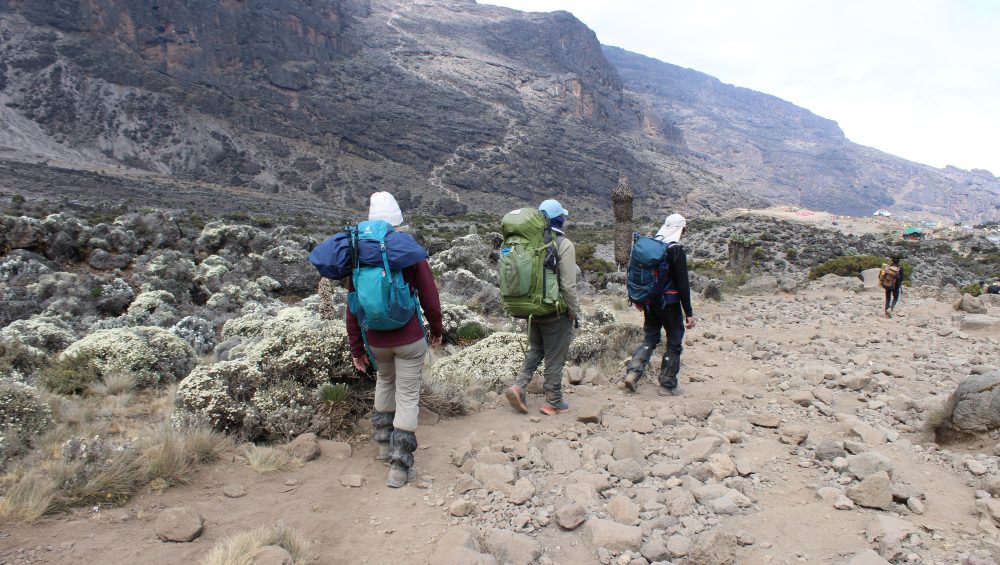
The Lemosho Route is known for its changing landscapes, from dense rainforest to the open Shira Plateau and the rocky high-altitude slopes of Kilimanjaro.
During the first days, the trail passes through montane rainforest, where vegetation is dense and the atmosphere is cool and humid. As you climb higher, the forest gives way to moorland, with open views and distinctive highland plants.
The route then reaches the Shira Plateau, one of the most open sections of the trek. From here, you can see wide mountain landscapes and, depending on weather conditions, views toward Kilimanjaro’s higher slopes.
Further along, the scenery becomes more rugged. You pass Lava Tower, Barranco Wall, Karanga Valley, and Barafu Camp before entering the alpine desert and summit zone.
Wildlife sightings are possible during the lower sections, particularly around the forest. You may see colobus monkeys, blue monkeys, and different bird species, although wildlife sightings are never guaranteed.
The biggest attraction is the changing environment. In one climb, you can move from thick forest to open moorland, volcanic terrain, and the stark landscape around the summit.
Best Time to Climb Lemosho
The best time to climb the Lemosho Route is during Kilimanjaro’s drier months, especially January to early March and June to October. These periods usually bring better trail conditions, clearer mountain views, and more reliable weather for the long approach to Uhuru Peak. However, the best month for you depends on whether you care most about dry trails, fewer climbers, warmer conditions, or avoiding the busiest weeks.
Lemosho can be climbed outside these periods, but the western approach through the rainforest can become wetter and muddier, while clouds can reduce visibility. April and May usually bring the heaviest rains, making the trail more challenging. November also brings a shorter rainy period, although conditions can vary from year to year.
January to Early March
This is one of the most attractive periods for a Lemosho climb. The weather is generally drier than the main rainy seasons, and the mountain can offer clear views, particularly during the morning.
January and February can also give you a different summit experience from the middle of the year. Snow may appear around the summit, creating a striking landscape, while climbing pressure is generally lower than during the busiest July and August period.
For climbers who want a combination of good weather, clear scenery, and fewer people than the main peak season, January and February are worth considering.
June to October
June marks the beginning of Kilimanjaro’s main dry period, which continues through October. Conditions generally become more stable, with drier trails and good visibility on the upper mountain. July and August are particularly popular, so camps and trails can feel busier during these months.
September and October can be useful alternatives if you want the dry-season advantages without choosing the busiest part of the year. Weather can still change quickly on Kilimanjaro, so a dry-season climb does not guarantee clear skies every day.
What About April, May and November?
April and May fall within the long-rain period and usually bring wetter conditions to the Lemosho approach. Expect more mud in the forest, wetter equipment, and a greater chance of cloud and reduced visibility.
November brings the shorter rains. Some climbers still choose this period because there are fewer people on the mountain, but you need to be comfortable with less predictable weather and wet trail sections.
If your travel dates are flexible, the drier periods generally make planning easier.
Lemosho Route: Month-by-Month Guide
| Months | Typical conditions | Crowds | What to consider |
|---|---|---|---|
| January | Generally dry and clear | Moderate | Good balance of weather and quieter trails |
| February | Generally dry | Moderate | Good visibility with possible summit snow |
| Early March | Conditions can still be good | Moderate | Weather becomes less predictable later in March |
| April | Long rains | Low | Wet and muddy conditions |
| May | Long rains | Low | Very wet conditions on lower sections |
| June | Dry season begins | Moderate | Good time as conditions improve |
| July | Dry and clear | High | Excellent conditions but busy |
| August | Dry and clear | High | Popular month with colder high-altitude nights |
| September | Generally dry | Moderate | Good combination of weather and fewer crowds |
| October | Generally dry | Moderate | Good option before the short rains |
| November | Short rains | Low | Wetter and more changeable |
| December | Variable | Low to Moderate | Conditions can improve toward the end of the month |
So, Which Month Should You Choose?
There is no single month that suits every Lemosho climber.
January and February suit climbers who prefer a drier period with generally fewer people than the July and August peak.
For those who value stable dry-season conditions and clear mountain views, June to August can be a good option, although the trails are usually busier.
September and October offer another dry-season window and may appeal to climbers looking for good conditions outside some of the busiest mid-year weeks.
Avoid April and May if your dates are flexible, especially if you want to minimize rain and muddy trail conditions.
Most importantly, don’t choose your climbing month based on weather alone. The number of days you spend on the mountain also matters. A well-planned 7- or 8-day Lemosho itinerary gives you more time for gradual acclimatization than a rushed itinerary, regardless of the month you climb.
For your exact dates, WeWild Travel can help you choose a Lemosho itinerary based on your travel period, available days, and climbing experience.
Lemosho Route Cost
The cost of climbing the Lemosho Route usually falls around $2,500 to $4,000 or more per person, depending on the number of days, group size, operator, level of service, and what the package includes. For an 8-day Lemosho climb, many current 2026 prices sit around $2,700 to $3,300 per person, while premium private trips can cost more. Published 2026 prices from different operators show why you should compare the full package rather than choosing a climb from the headline price alone.
How Much Does an 8-Day Lemosho Route Cost?
For most climbers, the 8-day Lemosho Route is the main price to consider because it gives you more time on the mountain than a shorter itinerary and includes the full western approach before joining the southern circuit.
A realistic 2026 planning budget is:
| Lemosho climb | Typical planning range per person |
|---|---|
| 7-day Lemosho | About $2,500-$3,200 |
| 8-day Lemosho | About $2,700-$3,500 |
| 9-day Lemosho | About $3,000-$4,000+ |
| Private or premium climb | $3,500+ |
These are planning ranges, not fixed government prices. Your final quotation can change according to group size, accommodation, transport, equipment, season, and the services provided by the operator. Current published 2026 examples include $2,700 for an 8-day group Lemosho climb and $3,299 for scheduled 8-day departures.
Why Does Lemosho Cost More Than Some Shorter Routes?
Lemosho takes you through several days of trekking before summit night, so the cost increases with the time spent on the mountain.
Your price helps cover more than the hiking itself. It can include:
- Kilimanjaro National Park fees
- Mountain guides and assistant guides
- Porters and their wages
- Cook and kitchen equipment
- Tents and camping equipment
- Meals throughout the trek
- Drinking water
- Transfers to and from the mountain
- Rescue and other required park charges
- Pre- and post-climb support
Read More : Kilimanjaro National Park fees Cost
Government park charges form a significant part of the final price. TANAPA publishes the official park tariff and states that applicable fees include 18% VAT. Current 2026 calculations from published tariff data put the mandatory park-related charges for an 8-day Lemosho climb at roughly $1,100 per person, depending on the exact fees included in the calculation.
That means a very low advertised price deserves a closer look. Before booking, ask the operator for a clear list of what the quotation includes.
What Is Included in a Lemosho Route Price?
A complete Lemosho package should clearly explain what you receive for your money.
With WeWild Travel, your quotation can include the mountain logistics needed for the trek, such as park fees, professional mountain crew, camping equipment, meals, drinking water, and transfers related to the climb. The exact inclusions should always appear in your quotation so you know what you are paying for before confirming your booking.
What Is Not Usually Included?
Your Lemosho climbing price normally does not cover every expense of your Tanzania trip.
Plan separately for:
- International flights
- Tanzania visa
- Travel insurance
- Personal trekking equipment
- Personal expenses
- Tips for your mountain crew
- Hotel nights outside the climb, unless included in your package
- Safari or Zanzibar arrangements after the trek
Tips deserve special attention. They are normally paid separately from the climbing price and should not be confused with the operator’s service fee.
Does Group Size Change the Lemosho Price?
Yes. Group size can make a noticeable difference to the price per person.
On a private climb, costs for guides, vehicles, transfers, camping equipment and other logistics are shared among fewer people. As the group becomes larger, some costs can be spread across more climbers.
However, a larger group does not automatically mean better value. Ask about the maximum group size, guide-to-climber ratio, porter support, accommodation and equipment before comparing quotations.
Why Are Some Lemosho Prices Much Cheaper?
Two Lemosho packages can have the same number of days but very different prices.
The difference may come from:
- Group size
- Crew numbers
- Type and condition of camping equipment
- Food and meal standards
- Airport or hotel transfers
- Private versus group joining arrangements
- Accommodation before or after the climb
- Whether park fees and VAT are included
- Whether tips and personal equipment are excluded
- The level of support provided before the trek
For this reason, the cheapest quotation is not necessarily the same package as a higher quotation.
Before booking, ask the operator to send you a written breakdown of the total cost and inclusions.
What Should You Budget for an 8-Day Lemosho Climb?
For planning purposes, a climber considering an 8-day Lemosho Route can use around $2,700-$3,500 per person as a starting range for a professionally organized climb, then check exactly what each quotation includes.
If you want a private climb, have a very small group, request premium services, or add accommodation and other Tanzania arrangements, your total budget can be higher. Current published 2026 prices demonstrate this variation, with scheduled 8-day Lemosho departures listed at about $2,700 by one operator and $3,299 by another.
The best way to get an accurate price is to give the operator your preferred dates, number of climbers, and whether you want a private or group climb. WeWild Travel can then prepare a quotation based on your actual trip rather than giving you a price that may not match your needs.
What to Pack for Lemosho
Packing for the Lemosho Route is about preparing for several different climates in one trek. You can start the route in warm, humid rainforest and finish in freezing conditions near Uhuru Peak. The best approach is to pack light, use layers, protect your gear from rain, and keep the things you need during the day in your own daypack.
You do not need to bring your entire travel bag onto the mountain. Your main trekking gear can go into a duffel bag carried by the mountain crew, while you carry a smaller daypack with water, clothing layers, snacks, sunscreen, and other items you may need while hiking.
Clothing for the Lemosho Route
Layers work better than one very heavy jacket because temperatures change as you gain altitude.
Bring:
- 2-3 moisture-wicking T-shirts or long-sleeve hiking shirts
- 1-2 warm fleece or mid-layer jackets
- 1 warm insulated jacket for summit night
- 2 pairs of comfortable hiking trousers
- Thermal base layers for your upper body and legs
- Waterproof jacket with a hood
- Waterproof trousers
- Warm beanie
- Sun hat or cap
- Lightweight gloves
- Warm waterproof gloves or mittens for summit night
- Neck gaiter or buff
- 4-5 pairs of hiking socks
Avoid packing cotton as your main hiking layer. Cotton holds moisture against your skin and can make you feel cold when temperatures drop.
Footwear
Your hiking boots are among the most important items you will bring.
Choose comfortable, well-broken-in hiking boots with good grip. Do not arrive in Tanzania with brand-new boots and expect to break them in on Kilimanjaro.
Also pack:
- Lightweight camp shoes or sandals
- Spare socks
- Gaiters if you prefer extra protection from mud, dust and small stones
Your boots should feel comfortable before the trek begins. A painful pair of boots can turn a manageable hiking day into an unnecessary problem.
What to Carry in Your Daypack
You will not need to carry everything you pack. Keep your daypack focused on the things you may need while walking.
A useful daypack can contain:
- Water
- Rain jacket
- Fleece or warm layer
- Snacks
- Sunscreen
- Sunglasses
- Camera or phone
- Personal medication
- Small first-aid items
- Headlamp
- Extra gloves or a warm hat when temperatures fall
Keep waterproof protection inside your daypack as well. Rain can arrive quickly on Kilimanjaro, particularly in the lower sections of the route.
Sleeping and Camping Equipment
For an 8-day Lemosho trek, you should prepare for several nights in mountain camps.
Depending on what your operator provides, you may need:
- Warm sleeping bag
- Sleeping bag liner
- Headlamp with spare batteries
- Trekking poles
- Small travel pillow or inflatable pillow
- Duffel bag for your mountain equipment
- Small dry bags or waterproof bags
Ask your operator what camping equipment is already included before buying or bringing large items. This can save space and reduce unnecessary luggage.
Water and Hydration
Staying hydrated matters throughout the climb.
Bring a system that allows you to carry enough water comfortably, such as a hydration bladder and/or reusable water bottles. Some climbers prefer bottles at higher elevations because very cold temperatures can affect hydration systems.
Your guide or operator should explain how water is supplied and treated during the trek.
Personal Health and Toiletries
Keep your personal items simple. You do not need a full bathroom bag on Kilimanjaro.
Pack:
- Toothbrush and toothpaste
- Biodegradable or suitable wet wipes
- Hand sanitizer
- Small quick-drying towel
- Toilet paper
- Lip balm
- High-SPF sunscreen
- Personal medication
- Blister treatment
- Basic personal first-aid supplies
If you take prescription medication, bring enough for the entire trip and keep it accessible.
For altitude medication such as acetazolamide (Diamox), speak with a qualified medical professional before your trek rather than treating it as standard packing equipment.
Sun and Cold Protection
Kilimanjaro can expose you to strong sunlight and very cold temperatures on the same trip.
A good pair of sunglasses protects your eyes from intense sunlight and glare. Sunscreen and lip balm help protect exposed skin from strong UV exposure.
At high altitude, especially during the summit attempt, your priorities change. Warm layers, gloves, head protection and a reliable outer shell become much more important.
Snacks and Energy
Bring a few personal snacks that you genuinely enjoy eating while hiking.
Good options include:
- Energy bars
- Nuts
- Dried fruit
- Chocolate
- Biscuits
- Electrolyte tablets or powder
Your mountain crew provides meals during the trek, so personal snacks should supplement your meals rather than replace them.
Choose snacks that you can eat easily while walking and that still appeal to you when your appetite is low.
Documents and Electronics
Keep important personal items protected and easy to access.
Bring:
- Passport
- Travel insurance information
- Copies of important travel documents
- Phone
- Camera if needed
- Power bank
- Charging cables
- Small waterproof pouch for electronics
There is no need to bring large electronics onto the mountain. Keep your trekking equipment simple and focus on what helps you walk comfortably and safely.
Lemosho Packing: What Goes in Your Daypack?
| Item | Daypack | Duffel |
|---|---|---|
| Water | yes | |
| Rain jacket | yes | |
| Snacks | yes | |
| Sunscreen | yes | |
| Phone/camera | yes | |
| Personal medication | yes | |
| Warm layer | yes | |
| Sleeping bag | yes | |
| Extra clothes | yes | |
| Toiletries | yes | |
| Camp shoes | yes | |
| Spare clothing | yes |
The exact arrangement can vary depending on your operator and the way your mountain crew handles luggage.
Do You Need to Buy Everything?
No. You do not necessarily need to purchase every piece of Kilimanjaro equipment.
Some climbers already own suitable hiking clothing and boots, while others prefer to rent selected items in Tanzania. Large or expensive items such as warm sleeping bags and summit jackets may be worth renting if you do not expect to use them regularly after the climb.
Before buying anything, ask your operator what equipment they provide and what rental options they have.
A Simple Rule for Packing Lemosho
Pack for the mountain you will experience, not just the weather you see when you arrive in Tanzania.
Lemosho changes dramatically as you climb. You need breathable clothing for the lower slopes, reliable rain protection through wet conditions, warm layers for the higher camps, and proper cold-weather equipment for summit night.
The goal is not to carry the most equipment. The goal is to carry the right equipment.
If you are climbing Lemosho with WeWild Travel, we can provide a detailed packing checklist based on your itinerary, season and the equipment included in your trek.
Lemosho vs Machame
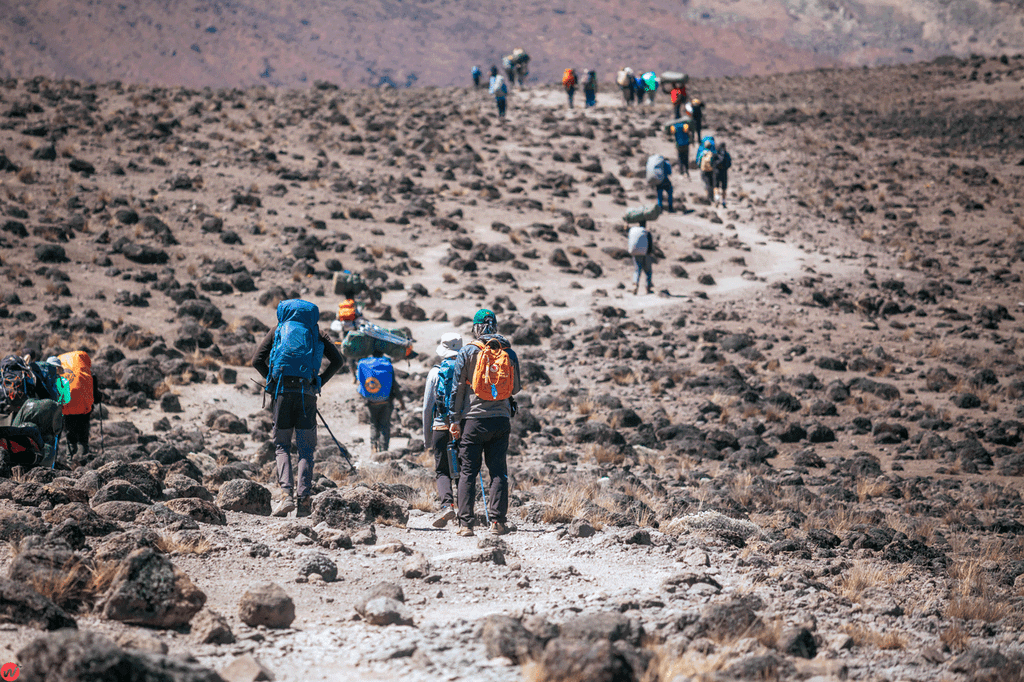
The Lemosho Route and Machame Route are two of the most popular ways to climb Mount Kilimanjaro. Lemosho takes a longer approach from the western side and gives climbers more time to gain altitude gradually, while Machame follows a more direct southern approach with steeper sections. Both routes offer impressive scenery and can lead to Uhuru Peak, but they suit different trekking preferences.
| Feature | Lemosho Route | Machame Route |
|---|---|---|
| Starting side | Western Kilimanjaro | Southern Kilimanjaro |
| Common duration | 7-8 days | 6-7 days |
| Early terrain | Rainforest and remote trails | Rainforest |
| Scenery | Forest, Shira Plateau, alpine zones and southern slopes | Forest, Shira Plateau, Barranco and southern slopes |
| Trekking style | Longer and more gradual | More direct with steeper sections |
| Acclimatization | More time on longer itineraries | Good acclimatization profile on longer itineraries |
| Traffic | Generally quieter in the early section | Often busier |
| Best for | Climbers wanting a longer approach | Climbers wanting a shorter, more direct trek |
Lemosho Route
Lemosho begins on the western side of Kilimanjaro, giving you a quieter start through the rainforest before the route reaches the Shira Plateau. From there, it crosses the high plateau and eventually joins the southern circuit.
The longer 7- or 8-day itineraries give you more hiking days before summit night. This can make Lemosho appealing if you prefer a slower pace and more time for acclimatization.
The route also gives you a varied experience, from forest to open highland landscapes and volcanic terrain near the summit.
Machame Route
Machame starts from the southern side of the mountain and reaches the higher sections more directly. The route passes through rainforest before continuing toward Shira, Barranco, Karanga and Barafu.
Machame is often selected by climbers who want a shorter itinerary with a more direct trekking style. It includes steep sections, particularly around Barranco, so daily hiking can feel demanding even when the overall distance is manageable.
Because Machame attracts many climbers, some camps and trail sections can feel busier, especially during popular climbing periods.
Which Route Fits Your Trip?
Lemosho may suit you if you want more time on the mountain, a quieter beginning, varied scenery and a gradual approach.
Machame may suit you if you prefer a shorter itinerary, a more direct route and a classic southern-side Kilimanjaro experience.
The number of days matters as much as the route itself. A longer itinerary can give you more time to adjust to altitude and settle into the rhythm of mountain life.
For either route, your preparation, pacing, guide support and response to altitude remain important parts of the climb. There is no route that guarantees reaching Uhuru Peak.
If you are deciding between the two, WeWild Travel can help you compare the 7- or 8-day Lemosho options with our Machame itineraries based on your available days, budget and trekking preferences.
Who Should Choose Lemosho?
Lemosho is a good choice for climbers who want a longer, more gradual Kilimanjaro trek with varied scenery and more time to acclimatize. It suits first-time climbers, experienced trekkers, and travelers who prefer a quieter start to the mountain.
The 7- or 8-day Lemosho itinerary works well if you have enough time for a slower pace and want to enjoy the journey rather than rush toward the summit.
If your priority is a shorter and more direct climb, another Kilimanjaro route may suit you better.
Why Climb Lemosho With WeWild Travel?
WeWild Travel combines local Kilimanjaro experience, professional mountain guides, careful trip planning, and personal support throughout your Lemosho climb. We focus on safe trekking, good preparation, responsible crew treatment, and a comfortable experience from your arrival to the summit and back.
You also get clear communication before the trek, practical advice on preparation and packing, and support from a team that knows the mountain.
Lemosho Route FAQs
Most climbers choose 7 or 8 days. An 8-day itinerary gives you more time for gradual acclimatization and a less rushed climb.
Lemosho is challenging because of the altitude, long hiking days, and summit night. You do not need technical climbing skills, but good preparation and steady pacing help.
The main dry periods are January to early March and June to October. Weather can change quickly on Kilimanjaro, so no month guarantees perfect conditions.
An 8-day Lemosho climb commonly costs around $2,700-$3,500 per person, depending on group size, operator, services, and inclusions. Always check what your quotation covers.
Success rates vary between operators and depend on factors such as itinerary length, weather, acclimatization, and individual response to altitude. Be careful with claims of guaranteed or universal success rates.
Yes. Beginners can climb Lemosho with proper preparation. The longer itinerary can provide more time to adjust to the altitude and settle into the trekking pace.
Bring comfortable hiking boots, layered clothing, waterproof protection, warm summit clothing, gloves, a sleeping bag, trekking poles, a headlamp, water bottles or a hydration system, sunscreen, personal medication, and other essential trekking items.
The routes offer different experiences. Lemosho has a longer western approach, while Machame provides a more direct southern approach. Your available days, preferred pace, and trekking style should guide your choice.
Conclusion
The Lemosho Route offers a longer, scenic, and gradual way to climb Mount Kilimanjaro, making it a strong option for climbers who want more time on the mountain. From the rainforest and Shira Plateau to the high alpine slopes and Uhuru Peak, the route gives you a varied experience from start to finish.
Choosing the right number of days, preparing properly, packing suitable gear, and allowing enough time for acclimatization can make your trek more comfortable and enjoyable. Whether you choose a 7-day or 8-day itinerary, good planning matters more than rushing to the summit.
If you are ready to climb Kilimanjaro via Lemosho, WeWild Travel can help you plan your trek, choose the right itinerary, and prepare for the mountain from your first question to your return from Uhuru Peak.