Can You Climb Kilimanjaro Without a Guide
Can You Climb Kilimanjaro Wirthout a Guide? Rules, Safety & Your Options
Estimated reading time: 34 minutes
No, you cannot legally climb Mount Kilimanjaro without a licensed guide. Tanzania National Parks (TANAPA) requires Kilimanjaro climbs to be guided, so an independent, unguided ascent is not an option. The current Kilimanjaro National Park visitor guidance specifically states that all climbs must be guided through a licensed operator and that solo trekking is not permitted.
That rule applies whether you are an experienced hiker, a first-time trekker, or someone who simply wants to keep the climb as independent as possible. However, needing a guide does not mean you have to join a large group or give up the freedom of a private trek. You can still choose a private Kilimanjaro climb, select the route and number of days that suit you, and travel with a dedicated mountain team.
There is also a practical reason why guided trekking matters. Kilimanjaro rises to 5,895 metres (19,341 feet) and takes you through several distinct ecological and climatic zones. The challenge is not technical mountaineering alone; altitude, changing weather, long trekking days, route conditions, and the need to make sensible decisions at high elevation all make experienced mountain leadership valuable. TANAPA also advises climbers to use reputable local operators with trained guides who understand current mountain conditions.
In this guide, we explain why you need a guide to climb Kilimanjaro, what the rules mean for independent travellers, whether you can climb privately without joining a group, what guides and porters actually do, and how to choose the right trekking arrangement for your climb.
Table of contents
- Can You Climb Kilimanjaro Wirthout a Guide? Rules, Safety & Your Options
- Can You Climb Kilimanjaro Without a Guide?
- Why Does Kilimanjaro Require a Guide?
- Do You Need a Tour Operator to Climb Kilimanjaro?
- Can You Climb Kilimanjaro Alone?
- Can You Climb Kilimanjaro Without Porters?
- What Does a Kilimanjaro Guide Do?
- What Do Porters and Cooks Do?
- Private vs Group Kilimanjaro Climbing
- Does Your Experience Matter?
- Which Kilimanjaro Routes Can You Climb?
- How Much Does a Guided Kilimanjaro Climb Cost?
- How to Choose a Responsible Kilimanjaro Tour Operator
- Is Climbing Kilimanjaro With a Guide Worth It?
- Frequently Asked Questions
- Conclusion: Can You Climb Kilimanjaro Without a Guide?
- Read Also
Can You Climb Kilimanjaro Without a Guide?
No, you cannot legally climb Mount Kilimanjaro without a licensed guide. Kilimanjaro National Park requires climbing groups to be guided, and solo trekking is not permitted under the park’s current regulations. Climbers should arrange their trek through a licensed tour operator, which provides the required guiding and helps organize the necessary park arrangements.
This requirement applies even if you have extensive hiking or mountaineering experience. Kilimanjaro is managed as a national park, so reaching the summit is not simply a matter of arriving at the trailhead and starting to walk. Climbers must follow the park’s access, route, safety, and guiding requirements throughout the trek.
TANAPA also advises people planning to climb Kilimanjaro to use a reputable, registered local tour operator with trained guides who understand the mountain and current trail conditions.
What Does the Guide Requirement Mean?
The guide requirement does not mean you have to join a large group. You can still choose a private Kilimanjaro climb with your own guide and mountain crew. This gives you more flexibility while keeping your trek within the park’s rules.
It also does not mean your guide simply walks in front of you. A good Kilimanjaro guide helps manage the pace of the trek, explains the route, monitors how the group is coping with altitude, communicates with the mountain crew, and helps make sensible decisions when conditions change.
In other words, you can climb Kilimanjaro privately, but you cannot climb it independently without the required guide.
For anyone dreaming of reaching Uhuru Peak on their own terms, the better question is therefore not “Can I avoid having a guide?” but “What type of guided Kilimanjaro climb is right for me?”
Why Does Kilimanjaro Require a Guide?
Kilimanjaro requires a guide because climbing the mountain involves more than following a trail. The mountain is inside a protected national park, reaches 5,895 meters (19,341 feet), and has changing conditions, challenging terrain, and high altitude. Tanzania National Parks (TANAPA) requires climbs to be guided by a licensed operator, and solo trekking is not permitted.
A professional guide provides local knowledge and helps the climbing team make safer decisions throughout the trek. Here are the main reasons guides are required on Kilimanjaro.
1. Mountain Safety
A Kilimanjaro guide helps manage the group safely from the trailhead to the summit and back down. Conditions can change as you gain altitude, and the guide can adjust the pace, route decisions, and daily plan when necessary.
TANAPA also advises climbers to follow designated paths, avoid hiking alone, and follow the instructions of their guide while on the mountain.
2. Route Knowledge
Kilimanjaro has several established routes, and each has different terrain, camps, distances, and altitude profiles. A local guide knows the route and understands how the trail normally changes between different sections of the mountain.
This knowledge becomes especially useful when visibility is poor, weather changes, or the trail becomes difficult to follow. Instead of relying entirely on a map or GPS, climbers have an experienced person who knows the mountain environment.
3. Altitude Awareness
Altitude is one of the most important factors on Kilimanjaro. The mountain rises from lowland surroundings to 5,895 meters at Uhuru Peak, so the body needs time to adjust as the elevation increases.
A good guide watches the group throughout the climb, encourages an appropriate pace, and pays attention to changes in a climber’s condition. TANAPA specifically advises climbers to choose an itinerary that allows acclimatization, ascend slowly, and report symptoms to their guide.
4. Emergency Support
A guide also provides an important link between climbers and the support system on the mountain. If a serious problem occurs, the guide can recognize that something is wrong, communicate with the climbing team, and coordinate the appropriate response according to park procedures.
This matters because climbers may be far from the park gates and other services. Having someone who understands the mountain and knows how to communicate with the crew and park authorities adds an important layer of support.
5. Park Regulations
The guide requirement is also part of Kilimanjaro National Park’s operating rules. TANAPA states that all climbs must be guided by a licensed operator and that solo trekking is not permitted. Climbers must also remain on designated routes and follow park regulations during their trek.
Therefore, hiring a guide is not simply a recommendation for inexperienced hikers. It is a requirement for climbing Kilimanjaro legally and within the park’s regulations.
In short: a Kilimanjaro guide combines mountain knowledge, group management, altitude awareness, emergency coordination, and knowledge of park regulations. You can still choose a private climb and enjoy a more personal experience, but the climb must include the required licensed guiding service.
Do You Need a Tour Operator to Climb Kilimanjaro?
Yes, you need to arrange your Kilimanjaro climb through a licensed tour operator. The operator organizes the official park arrangements and provides the required guiding service, while the guide leads and supports you on the mountain.
In simple terms, the tour operator organizes the climb, the park authorizes access, and the guide leads the trek. These roles work together rather than replacing one another.
How the Tour Operator, Permits and Guide Work Together
1. The Tour Operator Organizes Your Climb
Your tour operator is responsible for putting the different parts of your trek together. This normally includes your itinerary, park arrangements, mountain crew, transportation connected to the climb, accommodation where included, meals, and other services included in your package.
Instead of trying to arrange each part separately, you have one company coordinating the trek from preparation to the mountain and back.
2. Park Permits and Fees Provide Legal Access
Kilimanjaro National Park controls access to the mountain. Park entry and other applicable fees must be paid through the official park system, and TANAPA provides official tariff and reservation information for visitors.
Your tour operator helps handle these arrangements so that your climb is properly registered and organized before you enter the park.
3. The Guide Leads You on the Mountain
The guide is the person who works directly with you during the trek. They lead the group along the designated route, help manage the pace, monitor the group, and communicate with the mountain crew.
TANAPA specifically identifies Kilimanjaro routes as activities that require guiding.
This means booking a tour operator is not simply a convenient way to arrange a holiday. It connects you with the guiding service required to climb Kilimanjaro legally.
Can You Arrange Everything Yourself?
For an ordinary Kilimanjaro climb, you should not think of the mountain as a self-guided trekking destination where you simply pay an entrance fee and start walking.
TANAPA’s current guidance requires Kilimanjaro climbs to be guided. Therefore, the practical route for visitors is to book through a licensed operator that can arrange the required guiding and park procedures.
You can still choose a private Kilimanjaro climb rather than joining strangers in a large group. The difference is that your experience can be private while still following the park’s guiding requirements.
The key point: you do not need to give up independence in how you experience the mountain, but you do need to follow Kilimanjaro’s official access and guiding requirements.
Can You Climb Kilimanjaro Alone?
Yes, you can climb Kilimanjaro on a private trek with a guide, but you cannot legally climb the mountain completely alone without a guide. TANAPA states that all Kilimanjaro climbs must be guided by a licensed operator and that solo trekking is not permitted.
The important distinction is between climbing alone as a visitor and booking a private Kilimanjaro climb.
| Climbing option | Allowed? | What it means |
|---|---|---|
| Alone without a guide | No | You cannot enter the mountain and trek independently without the required guiding service. |
| Private trek with a guide | Yes | You can have your own guide and climb without joining a larger group. |
| Group trek with a guide | Yes | You share the climb with other trekkers and travel with a guided mountain crew. |
Alone Without a Guide
If by “alone” you mean arriving at Kilimanjaro and hiking to the summit without a guide or licensed operator, no. That is not the way Kilimanjaro National Park operates.
The requirement applies even if you are an experienced hiker or have climbed other mountains before. Kilimanjaro is a regulated national park, and visitors must follow its guiding and access requirements. TANAPA also advises climbers to follow designated routes and guide instructions while on the mountain.
So bringing your own map, GPS device, or previous mountain experience does not turn a Kilimanjaro climb into a self-guided trek.
Solo or Private Trek With a Guide
If you want a more independent and personal experience, a private Kilimanjaro trek is the better option.
With a private climb, you do not have to join a large group of strangers. Your trek can be arranged around your own group, while a qualified guide leads you on the mountain and the climb follows the park’s requirements.
This option works particularly well for travelers who want:
- A private experience with family or friends
- More flexibility within the planned itinerary
- A guide focused on their own group
- A quieter trekking experience
- The freedom to choose a suitable route and number of climbing days
In other words, you can climb Kilimanjaro without joining a group, but you cannot climb it without the required guide.
What About a “Solo Climb”?
The word solo can cause confusion when people research Kilimanjaro.
On some mountains, “solo climbing” means reaching the summit independently without a guide or support crew. On Kilimanjaro, that interpretation does not apply because the park requires guided climbs.
For Kilimanjaro, it is more accurate to describe your options as either a private guided trek or a group guided trek.
The simplest answer: If you want the mountain to yourself, book a private guided climb. If you want to climb completely without a guide, Kilimanjaro is not an option.
Can You Climb Kilimanjaro Without Porters?
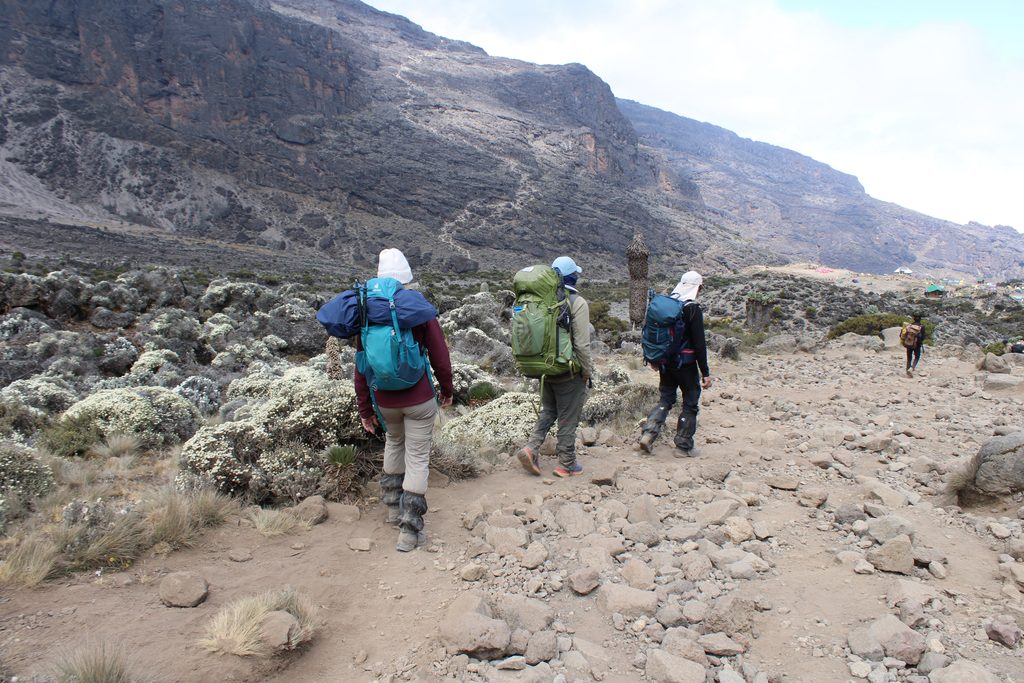
Yes, porter support is different from the guide requirement. Kilimanjaro regulations require guided climbs, but the role of a porter is mainly to help carry equipment, food, water, and other supplies during the trek. Your tour operator can explain which crew arrangement is available for your chosen route and itinerary.
For a climber, this distinction matters. You cannot replace the required guide with your own hiking experience, but porter support is a separate part of the trekking setup.
What Do Porters Do on Kilimanjaro?
Porters help move the equipment and supplies needed to operate a mountain trek. Depending on the trip arrangement, this can include tents, camping equipment, food, cooking equipment, and other group supplies.
Their support allows the guide to focus on leading the trek while the rest of the mountain team handles camp and logistical tasks.
TANAPA regulations also place limits and responsibilities on porter work, including rules concerning the weight they carry. This is one reason responsible operators should organize porter arrangements carefully rather than treating porters simply as extra luggage carriers.
What Happens If You Do Not Use Porter Support?
A climb without porter support would mean taking greater responsibility for carrying and managing your own equipment and supplies. However, the exact arrangement depends on the operator, route, park requirements, and the services included in your climb.
It is therefore better to ask your tour operator exactly what is included before booking rather than assuming that every Kilimanjaro climb uses the same crew structure.
For most organized treks, the mountain team may include a guide, porters, and a cook, with each person having a different role. The guide leads the trek and manages the group, while porters help with mountain logistics and the cook prepares meals where cooking services are included.
Guide vs Porter: What Is the Difference?
| Role | Main responsibility |
|---|---|
| Guide | Leads the trek, manages the route and group, and provides mountain guidance |
| Porter | Carries equipment and supplies and supports camp logistics |
| Cook | Prepares meals when cooking service is included |
The important point is simple: a porter does not replace a guide, and a guide does not perform exactly the same role as a porter.
If you want a more independent-feeling experience, discuss the crew arrangement with your licensed tour operator before booking. A responsible operator should clearly explain who will accompany you, what each crew member does, and what services are included in your package.
What Does a Kilimanjaro Guide Do?
A Kilimanjaro guide is responsible for much more than showing climbers which trail to follow. The guide leads the group, helps manage the pace, watches for changes in a climber’s condition, supports mountain safety, and coordinates communication throughout the trek.
Because Kilimanjaro climbs take place inside a regulated national park, guides also help climbers follow park rules and stay on the designated route. TANAPA requires Kilimanjaro climbs to be guided and advises visitors to follow their guide’s instructions while on the mountain.
Route and Pace Management
Your guide leads you along the planned Kilimanjaro route and helps set a pace that the group can maintain.
A good guide does not simply focus on reaching the next camp as quickly as possible. Instead, the guide considers the terrain, elevation, weather, and condition of the group when deciding how the day should progress.
The guide also helps the group stay on the designated trail and manages changes when mountain conditions affect the planned itinerary.
This becomes especially useful on longer routes, where daily distances and elevation gains vary. Your guide can explain what to expect during the day and help keep the trek organized from one camp to the next.
Altitude Monitoring
Altitude is one of the most important considerations on Kilimanjaro. As the elevation increases, the body has less available oxygen, so climbers need time to adjust.
A guide watches the group for noticeable changes in how climbers are coping with the altitude. They can ask how you are feeling, observe your pace and behavior, and encourage you to communicate any symptoms or concerns.
This does not mean a guide can guarantee that nobody will experience altitude-related problems. Instead, the guide provides an important layer of observation and communication while the group is on the mountain.
TANAPA advises climbers to choose an itinerary that allows acclimatization, ascend slowly, and report symptoms to their guide.
Mountain Safety and Emergencies
Safety is another major part of a guide’s job. The guide helps the group follow park regulations, use designated paths, and make sensible decisions when conditions change.
If a climber becomes unwell or an unexpected problem occurs, the guide is an important link between the climber, the mountain crew, and the relevant support systems. The guide can communicate the situation and help coordinate the appropriate response.
A guide is not a replacement for professional medical or rescue services. Their role is to recognize concerns, communicate them promptly, and follow the established procedures.
For this reason, choosing an experienced and properly licensed guiding team is an important part of planning a Kilimanjaro climb.
Communication and Daily Logistics
Your guide is also the main point of communication between you and the rest of the mountain team.
Each day involves more than walking. The team needs to coordinate departure times, camps, meals, equipment, water arrangements, weather considerations, and other practical details.
The guide helps keep these moving parts organized so climbers can concentrate on the trek.
A guide can also explain the environment, route, local culture, and landmarks along the way. This can turn the climb from simply reaching the summit into a more meaningful experience of Kilimanjaro.
In short, a Kilimanjaro guide combines route leadership, pace management, altitude awareness, safety support, communication, and daily coordination. That is why the guide requirement is about more than having someone walk ahead of you it provides structured leadership throughout the climb.
What Do Porters and Cooks Do?
A Kilimanjaro climbing team can include more than just the guide. Porters and cooks support the practical side of the trek, helping move supplies and prepare meals while the guide focuses on leading and managing the climb.
Their roles can vary depending on the route, itinerary, group size, and services included in the trekking package. Therefore, it is useful to understand what each member of the mountain crew actually does before booking.
What Do Kilimanjaro Porters Do?
Porters help transport the equipment and supplies needed during the climb. This can include tents, cooking equipment, food, and other group gear.
Their work reduces the amount of communal equipment that climbers need to carry themselves. Porters may also help with setting up and organizing camp as part of the overall mountain operation.
Porter work is regulated. TANAPA’s mountain regulations include rules governing porter duties and the weight they are permitted to carry. A responsible tour operator should therefore have a clear system for assigning and managing porter loads.
It is also important to remember that porters are not guides. They do not replace the person responsible for leading the trek, managing the route, and coordinating the climbing group.
What Does a Kilimanjaro Cook Do?
On treks that include a cook, the cook is responsible for preparing meals for the climbing team.
Meals need to be planned around several days in a mountain environment, with food supplies transported as part of the expedition logistics. The cook prepares breakfast, lunch, and dinner according to the services included in the trekking package.
Having a dedicated cook means climbers do not have to prepare the group’s meals themselves after a day on the trail. Instead, the cooking team handles this part of the daily camp routine.
How the Mountain Crew Works Together
The guide, porters, and cook have different responsibilities, but they work as one team.
| Crew member | Main role |
|---|---|
| Guide | Leads the trek, manages the route and group, and supports mountain safety |
| Porters | Transport equipment, supplies, and group gear |
| Cook | Prepares meals when cooking service is included |
This team structure allows each person to concentrate on a specific part of the expedition. The guide focuses on the climb itself, porters support transportation and camp logistics, and the cook manages meal preparation.
When comparing Kilimanjaro operators, do not look only at the number of crew members. Ask what services are included, how porter loads are managed, who prepares your meals, and how the company treats its mountain crew.
A well-organized climb should be transparent about these arrangements from the beginning.
Private vs Group Kilimanjaro Climbing
Once you know that an unsupported solo climb is not permitted, the next choice is usually between a private Kilimanjaro climb and a group climb.
Both options require a guide. The main difference is who you share the trek with and how the climbing team is organized. TANAPA states that all Kilimanjaro climbs must be guided by a licensed operator, while guide and porter services are arranged through licensed tour operators.
| Option | Guide | Porters/Crew | Best For |
|---|---|---|---|
| Private climb | Yes | Based on package and trek arrangements | Privacy and flexibility |
| Group climb | Yes | Based on group and package arrangements | Social experience and shared costs |
| Unsupported solo climb | Not permitted | – | Not an option |
Private Kilimanjaro Climb
A private climb means you trek with your own climbing group rather than joining other unrelated travelers.
You still have a guide, but the experience can feel more personal. You can discuss your preferred pace, route, number of trekking days, and other practical arrangements with your operator before the climb.
Private trips can work well for couples, families, friends, or individual travelers who want a more personal experience on the mountain.
However, private does not mean completely independent. A private Kilimanjaro climb is still a guided climb and must follow park regulations.
Group Kilimanjaro Climb
A group climb brings together travelers who are taking the same route and itinerary.
You share the mountain experience with other climbers and travel with a guided crew. For many travelers, this adds a social element to the adventure.
Group climbs can also be attractive to people who enjoy meeting other trekkers while keeping the structure and support of an organized expedition.
The size and exact composition of the group can vary, so check with your tour operator before booking.
Unsupported Solo Climb
An unsupported solo climb means attempting to trek Kilimanjaro independently without the required guiding arrangement.
This is not permitted. TANAPA’s current Kilimanjaro Visitor Guide states that all climbs must be guided by a licensed operator and that solo trekking is not permitted.
This means carrying your own equipment, having previous hiking experience, or using GPS navigation does not turn a Kilimanjaro climb into a permitted self-guided trek.
Which Option Should You Choose?
The right choice depends on the experience you want.
Choose a private climb if you value privacy, want to travel with people you already know, or prefer a more personalized trekking experience.
Choose a group climb if you enjoy meeting other travelers and sharing the experience with a wider group.
If your goal is to climb without a guide or organized guiding arrangement, Kilimanjaro is not suitable for that type of trip because of the park’s guiding requirements.
In simple terms: private and group climbs are both guided options; unsupported solo climbing is not.
Does Your Experience Matter?
Yes, previous hiking or mountaineering experience can be valuable on Kilimanjaro. An experienced climber may already understand long trekking days, changing weather, uneven terrain, and the importance of managing effort.
However, experience does not remove the requirement to climb with a licensed guide.
This is an important distinction for experienced mountaineers who may be used to climbing independently in other parts of the world. Kilimanjaro is located inside a protected national park with its own access and guiding regulations. TANAPA requires Kilimanjaro climbs to be guided, so previous experience does not turn the trek into a self-guided climb.
Experienced Climbers Still Need a Guide
Imagine a climber who has already completed several high-altitude treks. They may be comfortable navigating trails, carrying equipment, and managing long days in the mountains.
That experience can certainly be useful.
However, the question is not whether the climber can navigate the mountain. The question is whether they are permitted to climb Kilimanjaro without the required guiding arrangement.
The answer remains no.
The guide requirement applies to experienced and first-time climbers alike. Your previous achievements do not create an exemption from the park’s regulations.
What Experience Can Help With
Previous mountain experience can still make the overall trekking experience more familiar.
An experienced hiker may already understand:
- How to manage effort during a long trekking day
- How to prepare for changing mountain conditions
- How to organize personal trekking equipment
- What it feels like to spend several days on a mountain
- How to follow a structured itinerary
Even so, Kilimanjaro presents its own combination of altitude, terrain, weather, and park regulations. A guide remains part of the required climbing arrangement.
Experience Does Not Replace Local Knowledge
There is also a difference between general mountaineering experience and knowledge of Kilimanjaro.
A climber may have extensive experience elsewhere but still be unfamiliar with Kilimanjaro’s routes, camps, park procedures, and local mountain conditions.
A local guide brings knowledge specific to the mountain and works within the established park system.
Therefore, the best way to think about experience is simple:
Your experience can make you a more prepared climber, but it does not make a guide optional.
Whether you are climbing Kilimanjaro for the first time or have already climbed other mountains, you still need to follow the same park requirements and use the required guiding arrangement.
Which Kilimanjaro Routes Can You Climb?
You can climb Kilimanjaro through several permitted routes, including Machame, Lemosho, Marangu, Rongai, Umbwe, and Londorosi. TANAPA identifies these as the mountain’s established ascending routes. Each route approaches the mountain differently and has its own scenery, terrain, camps, and itinerary options.
However, the route you choose does not change the guiding requirement. Whether you choose Machame, Lemosho, Marangu, Rongai, Umbwe, or another permitted route, the climb must follow the applicable park regulations and guiding arrangements.
Machame Route
The Machame Route approaches Kilimanjaro from the south. It is known for varied scenery and a trekking profile that includes several changes in elevation.
It can suit climbers who want a scenic route with a more traditional camping experience.
Read More :Machame Route
Lemosho Route
The Lemosho Route begins on the western side of Kilimanjaro and crosses the mountain’s western landscapes before joining the southern circuit.
Its longer itineraries give climbers more time on the mountain and can provide a gradual approach toward the summit.
Read More : Lemosho Route
Marangu Route
The Marangu Route approaches Kilimanjaro from the southeast. It is different from most other routes because accommodation is provided in mountain huts rather than tents.
Marangu is also used for both ascending and descending the mountain.
Read More : Marangu Route
Rongai Route
The Rongai Route approaches Kilimanjaro from the northern side, close to the Tanzania–Kenya border.
Its northern approach gives climbers a different perspective of the mountain compared with routes beginning on the southern and western sides.
Read More : Rongai Route
Umbwe Route
The Umbwe Route begins from the southern side and takes a direct approach toward the mountain’s higher slopes.
Because of its route profile, climbers should understand the itinerary and elevation changes before choosing it.
Read More : Umbwe Route
Londorosi Route
Londorosi is another permitted ascending route identified by TANAPA. It is less commonly discussed in commercial route comparisons, but it forms part of the park’s established access routes.
Does the Route Change the Guide Requirement?
No.
This is particularly important for anyone searching for a route that might allow an independent climb. There is no permitted Kilimanjaro route where you can simply avoid the required guiding arrangement because of your experience or because the route is quieter.
The better question is which route and itinerary fit your interests, available time, and approach to the mountain.
Whether you choose Machame, Lemosho, Marangu, Rongai, Umbwe, or Londorosi, you still need to follow the applicable Kilimanjaro National Park regulations and climb with the required guiding support.
For travelers who want privacy, a private guided climb provides a better alternative to attempting an unsupported solo trek. You can have your own climbing group and guide while still following the rules of the national park.
How Much Does a Guided Kilimanjaro Climb Cost?
There is no single price for a guided Kilimanjaro climb. The final cost depends on the route, number of days, type of trek, park fees, mountain crew, accommodation, transfers, and the services included in your package.
This is why two Kilimanjaro operators can quote different prices for what may appear to be a similar climb. A lower price does not necessarily mean a better deal, and a higher price does not automatically mean a better experience.
TANAPA confirms that Kilimanjaro fees can vary according to the visitor category, route, and number of days. Conservation, camping or hut, and rescue fees may also apply.
Route
The route you choose affects the overall price. Different routes require different logistics, camp arrangements, transfers, and numbers of trekking days.
For example, a longer Lemosho or Northern Circuit itinerary generally involves more days of park access, meals, crew support, and accommodation than a shorter itinerary.
Number of Days
The number of days on the mountain is one of the most obvious factors affecting cost.
A longer itinerary usually means additional:
- Park fees
- Camping or hut charges
- Meals
- Crew services
- Accommodation nights
- Transfers and logistics
However, choosing a climb only because it has fewer days can overlook the value of having more time on the mountain. The right itinerary should balance your budget with the route and overall trekking experience.
Private or Group Climb
A private Kilimanjaro climb and a group climb can have different prices.
With a private trek, the costs of the guiding team and other operational services are arranged around your own group. A group climb allows travelers to share the experience and, depending on the package, some costs across multiple climbers.
Ask the operator whether the quoted price is per person and whether it applies to a private or group departure.
Park Fees
Park charges form an important part of a Kilimanjaro package. Depending on the applicable tariff and itinerary, costs can include conservation fees, camping or hut fees, and rescue-related charges.
TANAPA publishes the official park tariff information, so travelers should check the current fees rather than relying on an old blog or outdated quotation.
Mountain Crew
Your package may include a guide, porters, and a cook, depending on the trek arrangement.
These crew members have different responsibilities. The guide leads the climb and manages the group, porters support transportation and camp logistics, and a cook prepares meals when cooking services are included.
The size and organization of the crew can vary according to the group and package, so ask exactly what is included before comparing prices.
Accommodation
Accommodation can include different parts of the trip.
On Kilimanjaro, Marangu uses mountain huts, while other routes generally use designated tented camps. Before or after the trek, your package may also include a hotel or lodge in the Moshi or Arusha area.
Therefore, check whether your quotation includes pre- or post-climb accommodation or only the mountain portion of the trip.
Transfers
Transfers are another cost to consider.
Depending on the package, these may include airport pickup, transport between your hotel and the mountain gate, and transportation after the trek.
A quotation that looks cheaper may simply exclude transfers that another operator has already included.
Equipment and Trekking Support
Some operators provide or arrange certain trekking equipment and support services, while others expect climbers to bring everything themselves.
Before booking, ask whether the package includes any equipment rental, dining or camping equipment, luggage handling, water arrangements, or other mountain support.
What Should Be Included in the Price?
Before comparing Kilimanjaro packages, ask for a clear breakdown of the quotation.
| Cost factor | What to check |
|---|---|
| Route | Which route and itinerary are included? |
| Number of days | How many mountain days and nights? |
| Private/group | Is the climb private or shared? |
| Park fees | Which official park charges are included? |
| Crew | Guide, porters, cook, and other support |
| Accommodation | Mountain accommodation and hotel nights |
| Transfers | Airport, hotel, and mountain-gate transportation |
| Equipment/support | Rental equipment and other included services |
The best comparison is therefore not simply “Which company is cheapest?” Instead, compare what each operator includes for the price.
A transparent Kilimanjaro quotation should make it easy to understand what you are paying for, what is included, and which personal expenses remain outside the package.
How to Choose a Responsible Kilimanjaro Tour Operator
Choosing the right tour operator is one of the most important decisions you will make before climbing Kilimanjaro. The company you choose arranges your mountain crew, guides your trek, handles park arrangements, and helps manage the practical side of your climb.
Do not choose an operator based only on the lowest price. Instead, look at licensing, guide experience, safety practices, porter welfare, route knowledge, and pricing transparency. TANAPA states that Kilimanjaro climbs must be guided by a licensed operator, so the company you book should be properly established and able to explain how your climb will be organized.
1. Check That the Operator Is Legitimate
Start by checking whether the company is properly registered and operates within Tanzania’s national park requirements. A professional operator should be comfortable explaining its registration, mountain operations, and the guides who will lead your trek.
Be cautious if a company avoids basic questions about who will operate your climb or gives unclear information about park arrangements.
2. Ask About Your Kilimanjaro Guides
Your guide is the person who will lead you on the mountain, so experience matters. Ask how long the guides have worked on Kilimanjaro, which routes they regularly lead, and what first-aid or wilderness training they have.
A good guide should also be able to communicate clearly with you throughout the trek. This is particularly important when discussing how you are feeling, changing conditions, your walking pace, and decisions on the mountain.
3. Understand the Company’s Safety Approach
Do not settle for a website that simply says “safety is our priority.” Ask what that means in practice.
For example, ask how the company monitors climbers during the trek, how guides respond when someone becomes unwell, and what communication and emergency procedures are available. TANAPA advises climbers to choose itineraries that allow acclimatization, ascend slowly, report symptoms to their guide, and stay on designated paths.
The important question is not whether an operator promises that nothing will go wrong. It is whether the company has a clear process for responding when conditions change.
4. Look at How Porters Are Treated
Responsible trekking also means responsible treatment of the people who support your climb.
Ask how porters are paid, what equipment they receive, how their loads are managed, where they sleep, and how the company handles tips. These questions can tell you much more about an operator’s standards than a statement about being “eco-friendly.”
TANAPA confirms that guide and porter services are arranged through licensed tour operators, while responsible trekking organizations also emphasize transparency around porter welfare and load limits.
5. Check Exactly What Your Price Includes
Two operators can advertise the same route and number of days while offering very different packages.
Before paying a deposit, ask whether your quotation includes:
- Kilimanjaro National Park fees
- Mountain guide and crew
- Porters and cooking services, where applicable
- Meals during the trek
- Mountain accommodation or camping
- Airport or hotel transfers
- Pre- and post-climb accommodation
- Equipment provided by the operator
- Any additional charges you may need to pay
TANAPA notes that park fees vary according to visitor category, route, and number of days, with conservation, camping or hut, and rescue fees potentially applying.
A transparent quotation makes it easier to compare operators fairly.
6. Check Independent Reviews
Reviews can help you understand what an operator is actually like once the trek begins.
Look beyond comments about beautiful scenery or friendly staff. Pay attention to reviews that mention:
- Guide professionalism
- Communication
- Food and camp organization
- How the company handled difficult situations
- Porter treatment
- Whether the advertised itinerary matched the actual trek
- Whether the final price matched the original quotation
No operator will have perfect reviews. What matters is whether the overall feedback shows consistent service and responsible mountain operations.
7. Choose an Operator With Real Local Knowledge
Kilimanjaro is not simply a destination that can be managed from behind a computer. Local knowledge matters because the people running the climb understand the routes, mountain environment, park procedures, camps, and day-to-day realities of trekking in Tanzania.
This is one reason to consider a Tanzanian-based Kilimanjaro operator that directly manages its mountain climbs rather than treating the trek as a booking passed between different companies.
Why WeWild Travel Takes This Approach
At WeWild Travel, our focus is specifically on Kilimanjaro trekking. As a local Tanzanian operator, we believe choosing an operator should be about more than finding the cheapest quotation.
Our approach is built around experienced local guides, responsible mountain operations, clear communication, and giving climbers an honest understanding of what their package includes. We also believe that the people supporting your climb deserve to be treated with respect.
Most importantly, we want travelers to understand why they need a guided climb and what a responsible operator should provide before they decide to book.
That means you do not have to choose WeWild Travel simply because we say we are responsible. Use the same questions above to evaluate us—and any other Kilimanjaro company you are considering.
A Simple Checklist Before You Book
| What to check | Question to ask |
|---|---|
| Legitimacy | Is the operator properly registered and authorized to organize Kilimanjaro climbs? |
| Guides | Who will guide my climb, and what experience do they have? |
| Safety | What procedures do you follow if a climber becomes unwell? |
| Porters | How are porters paid, equipped, and managed? |
| Price | What is included and excluded from my quotation? |
| Reviews | What do previous climbers say about the guides and service? |
| Local expertise | Does the company directly manage climbs on Kilimanjaro? |
| Communication | Can I speak with the operator before booking? |
A responsible operator should be willing to answer these questions clearly. If you receive vague answers, pressure to pay quickly, or a quotation that leaves important costs unexplained, take a step back and investigate further.
Is Climbing Kilimanjaro With a Guide Worth It?
Yes. Climbing Kilimanjaro with a guide is worth it, and it is also required under current Kilimanjaro National Park regulations. TANAPA states that all climbs must be guided by a licensed operator and that solo trekking is not permitted.
However, the value of a guide goes beyond simply meeting a park requirement. A good guide brings local mountain knowledge, helps manage the pace of the trek, monitors how the group is coping with altitude, and helps coordinate the practical details of each day.
A Guide Adds More Than Route Directions
You might think a guide is only there to show you which trail to follow. In reality, the role is much broader.
Kilimanjaro reaches 5,895 meters (19,341 feet), and the experience changes significantly as you move through different elevations and environments. TANAPA recommends ascending slowly, allowing time for acclimatization, following guide instructions, and reporting symptoms promptly.
Your guide can therefore help you understand the rhythm of the mountain rather than simply lead you from one camp to another.
Guides Help You Manage the Trek
Kilimanjaro is not a race to the summit. The way you walk each day matters.
An experienced guide can help establish a sustainable pace, adjust the day’s progress when necessary, and keep the group together. They also understand the terrain and the normal rhythm of different sections of the route.
That support can make the trek feel more organized, especially when you are tired or dealing with changing mountain conditions.
Local Knowledge Makes a Difference
Maps and online information can help you prepare, but they cannot replace someone who regularly works on the mountain.
Local guides understand the routes, camps, weather patterns, park procedures, and practical realities of a Kilimanjaro trek. TANAPA itself advises climbers to use reputable registered local tour operators employing trained guides with strong experience and knowledge of current mountain conditions.
That local knowledge becomes particularly valuable when conditions change or a planned day does not go exactly as expected.
A Guide Also Connects You With the Mountain Crew
Your guide is usually the main point of communication between you and the wider trekking team.
Depending on your package, that team may include assistant guides, porters, and a cook. The guide helps coordinate the group’s movement and communicates important information between climbers and the crew.
This allows you to concentrate more on the experience instead of trying to manage every logistical detail yourself.
Is a Private Guided Climb Worth It?
If you want more privacy, you do not have to join a large group.
A private Kilimanjaro climb still includes the required guide, but your trekking group can consist only of your own travelers and mountain crew. This can give you a more personal experience while keeping the benefits of professional guidance.
It can be a good option if you prefer:
- A private trekking experience
- More personal attention from your guide
- A pace suited to your group
- Greater flexibility within the planned itinerary
- Traveling with family or friends
What About the Extra Cost?
A guided climb costs more than simply arriving at the mountain and walking by yourself but on Kilimanjaro, that comparison is misleading because unsupported solo trekking is not permitted.
Instead, compare operators based on what their price actually provides. Park fees, guides, porters, meals, camping or hut arrangements, transfers, and other services can all affect the final cost. TANAPA confirms that fees vary according to factors such as visitor category, route, and number of days, with applicable conservation, camping/hut, and rescue fees.
The better question is not simply, “Can I find a cheaper climb?”
It is:
“Am I getting a well-organized, responsible and properly guided Kilimanjaro experience for the price I am paying?”
So, Is a Kilimanjaro Guide Worth It?
For Kilimanjaro, the answer is yes.
A guide is not just someone who walks at the front of the group. The right guide combines route knowledge, mountain experience, group management, communication, and practical support throughout the trek.
And because TANAPA requires guided climbs, there is no genuine option to save money by turning Kilimanjaro into an unsupported solo hike.
If you value privacy, choose a private guided climb. If you enjoy meeting other travelers and sharing the experience, choose a group guided climb. Either way, the important thing is choosing a responsible operator with experienced local guides.
Frequently Asked Questions
No. Kilimanjaro climbs must be guided by a licensed operator, and solo trekking is not permitted.
You cannot climb completely alone without a guide. However, you can book a private trek with your own guide.
Yes. A licensed guide is required for Kilimanjaro climbs.
Yes. You should arrange your climb through a licensed tour operator that provides the required guiding service.
The climb must be organized through a licensed operator. Ask the operator whether they can arrange a guiding-only service alongside the required park arrangements.
Porters and guides have different roles. Porter arrangements depend on your trekking package and how your equipment and supplies are handled.
No. Hiking or mountaineering experience does not remove the guide requirement.
Yes. A private climb gives you your own trekking group and guide without requiring you to join a large group.
Professional operators should use experienced, trained mountain guides. Ask about your guide’s experience and training before booking.
A guide leads the route, manages the pace, monitors the group, communicates with the crew, and helps handle changing mountain conditions.
There is no single private-group size. You can discuss the number of travelers with your chosen operator.
Several routes can be done privately. Your choice should depend on scenery, difficulty, duration, and your trekking preferences.
Conclusion: Can You Climb Kilimanjaro Without a Guide?
So, can you climb Kilimanjaro without a guide? No. Kilimanjaro National Park requires climbs to be guided by a licensed operator, and solo trekking is not permitted.
That does not mean you have to join a large group. You can choose a private Kilimanjaro climb with your own guide, or join a group trek and share the experience with other travelers.
A good guide does more than lead the way. They bring local route knowledge, help manage the pace, monitor the group, communicate with the mountain crew, and help you respond appropriately when conditions change. TANAPA also advises climbers to ascend slowly, allow time for acclimatization, and report symptoms to their guide.
Therefore, the better question is not whether you can avoid a guide. It is which guided Kilimanjaro experience is right for you.
Whether you choose Machame, Lemosho, Marangu, Rongai, Umbwe, or another permitted route, take time to compare operators, understand what your package includes, and choose a company that values safety, experienced guides, responsible trekking, and clear communication.
At WeWild Travel, we focus specifically on Kilimanjaro climbs and help travelers plan guided treks with experienced local mountain teams. If you are ready to start planning your climb, contact us to discuss your preferred route, dates, group size, and trekking style.