
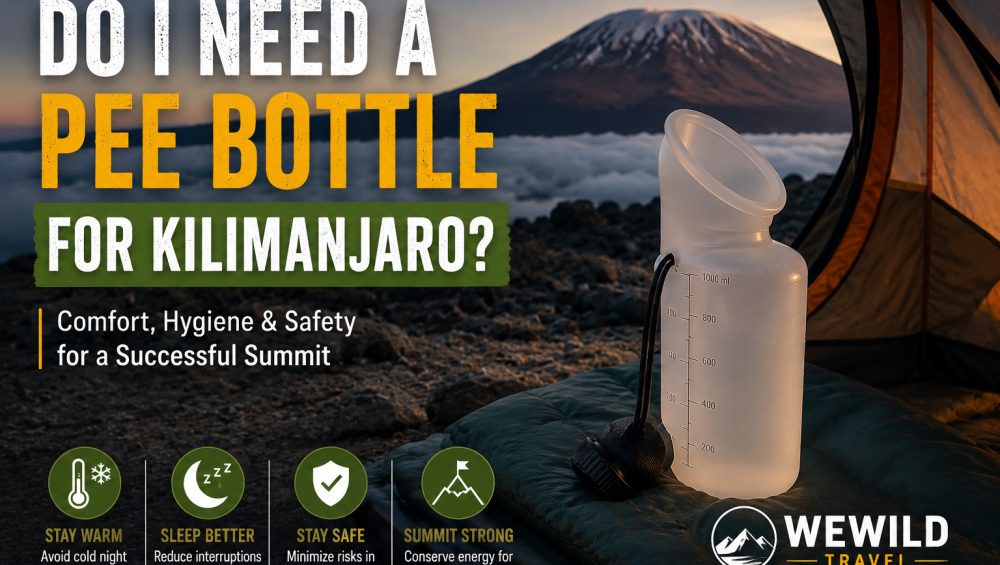
Do I Need a Portable Urinal Bottle for Climbing Kilimanjaro? Advice from Climbers & How to Choose One
Estimated reading time: 19 minutes
Do I need a pee bottle for Kilimanjaro? A pee bottle is not essential, but many climbers find it useful, especially during cold nights at high-altitude camps. Instead of leaving your tent and walking to the toilet in freezing temperatures, you can use a pee bottle safely and comfortably inside your tent. While not every climber chooses to bring one, it can make your Kilimanjaro experience more convenient.
Mount Kilimanjaro involves several nights of camping on most routes, and temperatures often drop below freezing near the summit. During the night, many climbers need to use the toilet at least once. Walking outside in the dark, cold weather can feel uncomfortable, particularly when you are tired after a long day of hiking. For this reason, some trekkers pack a pee bottle as part of their Kilimanjaro gear.
Whether you should bring a pee bottle depends on your personal preference, comfort level, and climbing style. Some climbers prefer to use the camp toilets, while others appreciate the convenience of staying inside their tent during the night. Women may also choose specialized devices designed for easier use during outdoor adventures.
This guide explains the advantages and disadvantages of bringing a pee bottle, how to use one responsibly on Mount Kilimanjaro, and alternative options available during the trek. By the end, you will know whether a pee bottle is a useful addition to your Kilimanjaro packing list.
Table of contents
- Do I Need a Portable Urinal Bottle for Climbing Kilimanjaro? Advice from Climbers & How to Choose One
- Do You Really Need a Pee Bottle for Kilimanjaro?
- What Is the Best Pee Bottle for Kilimanjaro?
- Advantages of Using a Portable Urinal on Kilimanjaro
- Disadvantages of Portable Urinals
- Hygiene on Kilimanjaro (Very Important Section)
- How to Use a Pee Bottle on Kilimanjaro
- What Happens If You Don’t Bring One?
- Female vs Male Pee Bottle Options
- Choosing the right design for comfort
- Expert Tips for Kilimanjaro Hygiene Gear
- FAQ – Pee Bottle for Kilimanjaro
- Final Thought
- Read Also:
Do You Really Need a Pee Bottle for Kilimanjaro?
Yes, most climbers strongly recommend using a pee bottle when climbing Mount Kilimanjaro, especially during summit night. While it may seem like a small item, it becomes very important in high-altitude conditions where comfort, safety, and rest are limited. Many experienced trekkers say it is one of those items you do not fully appreciate until you are actually on the mountain.
The reason this question comes up so often is because first-time climbers are usually unsure whether it is necessary or just optional. In reality, it is a practical solution that helps manage basic needs during extreme trekking conditions.
Yes, especially for summit night
A pee bottle is especially useful during summit night on Mount Kilimanjaro because this is the coldest, longest, and most exhausting part of the climb. Climbers usually wake up around midnight and trek for several hours in freezing temperatures with strong winds and very low oxygen levels.
At this stage, even small tasks like leaving the tent can feel extremely difficult. Many trekkers prefer to stay inside their sleeping bags to conserve body heat and energy. A pee bottle allows them to avoid unnecessary exposure to cold conditions while still managing basic needs comfortably and safely.
No toilet access at high camps
As you ascend higher on Mount Kilimanjaro, toilet facilities become very limited, especially during nighttime hours. While some camps have basic shared toilets, they are often far from tents and not convenient to use in the middle of the night.
On summit night, there are no toilet breaks along the route because climbers are moving continuously toward the peak in darkness. This makes a portable urinal bottle a very practical solution, helping climbers avoid leaving the tent and struggling in cold, unsafe conditions.
Safety and comfort reasons
Using a pee bottle on Mount Kilimanjaro is not just about convenience it is also about safety and comfort. Going outside at night in freezing temperatures increases the risk of losing body heat, getting disoriented, or wasting valuable rest time.
Inside the tent, climbers are warmer, more secure, and able to rest better for the next stage of the climb. Good rest is extremely important for energy recovery and summit success. For this reason, many guides consider a pee bottle part of essential trekking gear rather than an optional item.
What Is the Best Pee Bottle for Kilimanjaro?
The best pee bottle for climbing Mount Kilimanjaro is a simple, durable, and leak-proof portable urinal designed for camping or high-altitude trekking. Most experienced climbers recommend choosing a bottle that is easy to use inside a tent, safe to seal tightly, and strong enough to handle cold mountain conditions without cracking or leaking.
A good bottle is not about luxury but about practicality. Since summit night is long, cold, and physically demanding, the right bottle can make a big difference in comfort and rest quality during the climb.
Recommended size (1 liter or more)
Most climbers prefer a bottle that is at least one liter in size because it provides enough capacity for use during long nights, especially summit night on Mount Kilimanjaro. A larger size reduces the need for multiple trips or worrying about overflow in cold conditions.
At the same time, it should not be too large or bulky, because it must fit comfortably inside a backpack or next to your sleeping area. The goal is to balance capacity with portability so it remains easy to handle inside a small tent.
Leak-proof and wide-mouth design
A leak-proof design is extremely important when trekking on Mount Kilimanjaro because temperatures drop significantly at higher altitudes. A tightly sealed screw cap or secure locking lid prevents spills inside the tent, which can be uncomfortable and unhygienic.
A wide-mouth opening also makes the bottle easier to use in low-light conditions, especially at night when climbers may be tired or half-asleep. This design reduces mistakes and makes the experience more practical during summit night when conditions are difficult.
Plastic vs camping-grade materials
Most climbers choose strong plastic bottles because they are lightweight and easy to carry throughout the trek on Mount Kilimanjaro. However, not all plastic is the same. Camping-grade bottles are preferred because they are designed to withstand cold temperatures and repeated use without cracking.
Cheaper plastic bottles may become brittle in freezing conditions, especially near the summit zone. For this reason, experienced trekkers recommend investing in a durable, purpose-built camping urinal instead of using random household bottles.
Male and female options
There are different designs available depending on the climber’s needs on Mount Kilimanjaro. Male climbers usually use standard portable bottles, while female climbers may prefer specially designed unisex bottles or funnel attachments for easier use.
These designs help improve comfort and hygiene inside the tent, especially during summit night when movement is limited. Choosing the right style ensures that the bottle is practical, easy to use, and suitable for individual needs during the expedition.
Advantages of Using a Portable Urinal on Kilimanjaro
Climbing Mount Kilimanjaro involves long trekking days, cold nights, and very limited facilities at higher camps. Because of these conditions, using a portable urinal becomes a very practical solution that improves comfort, safety, and overall trekking experience. Many experienced climbers say it is one of the simplest items that makes a big difference during summit night.
Comfort during cold nights
One of the biggest advantages of a portable urinal on Mount Kilimanjaro is comfort during extremely cold nights. Temperatures can drop significantly at higher camps, especially near the summit zone. Having to leave the tent in the middle of the night can feel uncomfortable, tiring, and stressful due to the freezing conditions.
A portable urinal allows climbers to manage basic needs inside the sleeping bag, keeping the body warm and reducing unnecessary exposure to cold air. This helps maintain comfort and reduces sleep interruptions during important rest periods.
No need to leave the tent
Another major advantage on Mount Kilimanjaro is that climbers do not need to leave the tent during the night. At high altitude, walking outside in darkness can be difficult because of fatigue, low oxygen levels, and freezing temperatures.
Staying inside the tent improves safety and convenience. It also reduces the risk of slipping, getting cold, or losing energy before summit push. This makes the overall trekking experience smoother, especially during summit night when every bit of energy matters.
Saves energy during summit push
Energy conservation is extremely important when climbing Mount Kilimanjaro. Summit night is long and physically demanding, and even small movements can affect your stamina. Using a portable urinal helps save energy by eliminating the need to get dressed, leave the tent, and walk outside in harsh conditions.
This saved energy can then be used for the actual climb toward Uhuru Peak. Many climbers find that small conveniences like this make a noticeable difference in their endurance during the final push.
Improves sleep quality
Good sleep is essential before and during a climb on Mount Kilimanjaro, but interruptions during the night are common at high altitude. Cold temperatures and frequent wake-ups can reduce rest quality, affecting performance the next day.
A portable urinal helps reduce these interruptions by allowing climbers to stay warm and comfortable inside the tent. Better sleep leads to improved recovery, higher energy levels, and a stronger chance of successfully reaching the summit.
Disadvantages of Portable Urinals
While a portable urinal can be very useful during a climb on Mount Kilimanjaro, especially on summit night, it is not a perfect solution for everyone. Like any piece of trekking gear, it also comes with some disadvantages that climbers should understand before deciding to bring one. Knowing these drawbacks helps you choose the right quality product and use it more confidently during the expedition.
Risk of leakage if low quality
One of the main disadvantages is the risk of leakage, especially if the bottle is low quality or not properly sealed. On Mount Kilimanjaro, temperatures can drop below freezing at higher camps, and weak plastic or poorly designed caps may fail under pressure.
A leaking bottle inside a small tent can create discomfort, odor, and hygiene problems. This is why experienced climbers strongly recommend choosing a high-quality, leak-proof design rather than cheap alternatives.
Hygiene requires careful handling
Another challenge is hygiene. Using a portable urinal on Mount Kilimanjaro requires careful handling, especially in cold and low-light conditions. If not managed properly, it can lead to unpleasant smells or contamination inside the tent.
Climbers must ensure the bottle is properly sealed after each use and cleaned when possible. Good hygiene habits are essential to avoid discomfort and maintain a clean sleeping environment throughout the trek.
Extra item to carry and manage
A portable urinal is an additional item in your trekking gear, which means more weight and responsibility to manage during the climb on Mount Kilimanjaro. Although it is not very heavy, every item counts when packing for a multi-day trek.
Climbers must also remember to keep it accessible at night, store it safely during the day, and avoid mixing it with other bottles. This extra management can be slightly inconvenient for some trekkers, especially beginners.
Psychological discomfort for beginners
For many first-time climbers on Mount Kilimanjaro, the idea of using a portable urinal inside a tent can feel uncomfortable or awkward at first. It is not something most people are used to in daily life.
This psychological barrier can make some climbers hesitant to use it properly, especially during the first nights. However, most trekkers quickly adapt once they realize how practical it is during cold summit conditions, and it becomes a normal part of the trekking routine.
Hygiene on Kilimanjaro (Very Important Section)
Hygiene is one of the most important but often overlooked parts of trekking on Mount Kilimanjaro. Because climbers spend several days in remote mountain environments with limited facilities, maintaining cleanliness becomes essential for comfort, health, and overall success on the mountain. Good hygiene habits help prevent infections, reduce discomfort, and make the experience more manageable, especially during cold nights and summit push.
How climbers manage hygiene in camps
On Mount Kilimanjaro, climbers manage hygiene using basic but effective routines at camp. Since there are no full bathroom facilities, most camps have simple toilet tents provided by the trekking company. These are shared and used carefully to maintain cleanliness.
Climbers also follow strict personal routines such as washing hands before meals, keeping sleeping areas clean, and changing clothes when necessary. Because conditions are basic, discipline is important. Good hygiene habits help reduce illness risk and improve overall comfort during the trek.
Cleaning and storing bottles safely
If using a portable urinal on Mount Kilimanjaro, proper cleaning and storage is very important. After use, the bottle should be tightly sealed to prevent spills or odor inside the tent. Climbers usually store it in a stable position near their sleeping area so it is easy to access during the night.
Whenever possible, it should be cleaned during daylight hours using safe water and basic hygiene practices. Keeping the bottle separate from drinking water bottles is also essential to avoid confusion and maintain cleanliness throughout the climb.
Use of wet wipes and sanitizer
Wet wipes and hand sanitizer are essential hygiene tools on Mount Kilimanjaro. Since showers are not available during the trek, wet wipes help climbers stay clean, especially after long hiking days or before meals.
Hand sanitizer is equally important for preventing germs, especially before eating or handling food. Many climbers also use biodegradable wipes to reduce environmental impact. These simple items make a big difference in maintaining personal hygiene in a remote mountain environment.
Waste management rules on the mountain
Waste management is strictly controlled on Mount Kilimanjaro to protect the environment. Climbers are expected to follow Leave No Trace principles, meaning all waste must be handled responsibly and removed from the mountain by the trekking team.
Human waste is managed using designated toilet systems provided at camps. For portable items like urinals, proper sealing and disposal procedures are followed by guides and porters. These rules help preserve the natural beauty of Kilimanjaro and ensure that future climbers can enjoy a clean and safe environment.
How to Use a Pee Bottle on Kilimanjaro
Using a pee bottle on Mount Kilimanjaro may feel unusual at first, especially for beginner trekkers, but most climbers quickly realize how practical it becomes during cold nights and summit push. The key is to use it carefully, hygienically, and in a way that keeps your tent environment safe and comfortable.
Experienced climbers often prepare before sleeping so they can use the bottle easily during the night without stress or confusion. Proper handling makes the process simple and helps avoid accidents inside the tent.
Using it inside your sleeping bag safely
During cold nights on Mount Kilimanjaro, many trekkers prefer using the bottle while remaining partially inside the sleeping bag to preserve body heat. This reduces exposure to freezing temperatures and helps maintain comfort before summit night.
The safest approach is to position the bottle carefully before use and make sure the cap is immediately secured afterward. Climbers usually keep a headlamp nearby for visibility during nighttime use. Slow and careful handling is important because tents are small and movement is limited at high camps.
Labeling bottles to avoid mistakes
One of the most important tips on Mount Kilimanjaro is clearly labeling the pee bottle. Since climbers also carry drinking bottles inside the tent, confusion in darkness can happen if containers look similar.
Many trekkers use bright tape, permanent markers, or different bottle shapes to make identification easy at night. Keeping the urinal bottle stored separately from drinking water is also strongly recommended for hygiene and safety reasons.
Best time to use it during the night
Most climbers on Mount Kilimanjaro use the bottle during late-night hours when temperatures are coldest and leaving the tent becomes uncomfortable. Summit night is the most common time because climbers try to conserve as much energy and warmth as possible before the final ascent.
Experienced trekkers also recommend using the toilet before sleeping to reduce interruptions during the night. However, because hydration is very important at altitude, many people still wake up needing to urinate. In these situations, having the bottle nearby makes the night much easier and more comfortable.
What Happens If You Don’t Bring One?
Some climbers successfully complete Mount Kilimanjaro without carrying a pee bottle, but many later say they wish they had brought one. At lower camps it may not seem necessary, but conditions become much harder at higher altitude, especially during summit night when temperatures are extremely cold and energy levels are low.
Without a portable urinal, climbers must leave the tent whenever they need to use the toilet during the night. This can create discomfort, interrupt sleep, and make the summit experience more difficult than expected.
Leaving the tent is risky in cold weather
One of the biggest problems on Mount Kilimanjaro is having to leave the tent during freezing nighttime conditions. At high camps near the summit, temperatures can drop well below freezing, and even short exposure to cold air can feel very uncomfortable.
Climbers often need to put on extra layers, boots, and headlamps before stepping outside in darkness. At altitude, this process feels much harder because the body is already tired and oxygen levels are lower. Although it may not sound serious before the climb, many trekkers realize on the mountain that repeated exposure to cold conditions drains both comfort and energy.
Loss of sleep and energy
Sleep is extremely important during a climb on Mount Kilimanjaro because the body is constantly recovering from long trekking days and altitude stress. Without a pee bottle, getting out of the tent during the night can interrupt sleep repeatedly.
Each interruption forces climbers to wake fully, leave the warmth of the sleeping bag, and spend extra energy moving around camp in cold conditions. Over several nights, this loss of rest can affect recovery, mood, and overall trekking performance.
More difficult summit night experience
Summit night on Mount Kilimanjaro is already one of the hardest parts of the climb. Climbers face freezing temperatures, darkness, strong winds, and physical exhaustion while hiking toward Uhuru Peak.
Without a portable urinal, nighttime toilet trips become another challenge added to an already demanding experience. Many trekkers who skip bringing one later say summit night felt harder because they lost warmth, sleep, and comfort before the final ascent. Even though a pee bottle is a simple item, it can make a surprisingly big difference during the toughest stage of the climb.
Female vs Male Pee Bottle Options
When preparing for a climb on Mount Kilimanjaro, many trekkers wonder whether portable urinals are designed differently for different body types and comfort needs. The good news is that there are several practical options available today, including unisex designs that work well in cold mountain conditions.
Choosing the right style is important because comfort and ease of use become much more valuable during summit night when temperatures are freezing and leaving the tent is difficult. The best option is usually the one that feels simple, secure, and easy to manage inside a small tent.
Unisex portable urinals explained
Unisex portable urinals are designed to work for both male and female climbers on Mount Kilimanjaro. These products usually have a wider opening and ergonomic shape that allows easier use in confined spaces such as mountain tents.
Many climbers prefer unisex models because they are versatile, leak-resistant, and specifically made for camping or trekking environments. They are also practical for beginners who want a simple solution without carrying multiple accessories during the climb.
Funnel attachments for women
Female climbers on Mount Kilimanjaro often use funnel-style attachments designed to make urination easier while standing or using a bottle inside the tent. These lightweight devices are especially useful during cold nights or summit push when movement outside the tent is uncomfortable.
Most funnel attachments are made from flexible silicone or soft plastic, making them easy to clean and pack. Many experienced female trekkers say these devices improve convenience and reduce stress during high-altitude nights on the mountain.
Choosing the right design for comfort
Comfort is one of the most important factors when selecting a pee bottle for Mount Kilimanjaro. A good design should feel stable, easy to handle, and secure enough to prevent leakage inside the tent.
Some climbers prioritize larger capacity, while others focus on portability or ease of cleaning. Wide openings, strong caps, and durable materials usually provide the best overall experience during summit night. Choosing the right design before the trek helps climbers feel more confident and comfortable using it in real mountain conditions.
Expert Tips for Kilimanjaro Hygiene Gear
Good hygiene gear is an important part of preparing for Mount Kilimanjaro. While many trekkers focus mainly on clothing and boots, experienced climbers know that small hygiene items can greatly improve comfort during the expedition. Because facilities on the mountain are basic, carrying the right hygiene equipment helps climbers stay clean, healthy, and comfortable throughout the trek.
Simple preparation also reduces stress during summit night and makes camp life much easier in cold, high-altitude conditions.
Always carry toilet paper + wipes
Toilet paper and wet wipes are essential items when climbing Mount Kilimanjaro. Camps may not always provide enough supplies, so climbers should carry their own throughout the trek.
Wet wipes are especially useful because there are no showers on the mountain. They help clean hands, face, and body after long trekking days and before sleeping. Many trekkers also use biodegradable wipes to reduce environmental impact while maintaining hygiene in remote camp conditions.
Keep bottles separate from drinking water
One of the most important hygiene rules on Mount Kilimanjaro is keeping urinal bottles completely separate from drinking bottles. At high camps, tents are dark and climbers are often tired, making confusion possible if containers look similar.
Experienced trekkers usually label bottles clearly using tape, stickers, or different colors. Many also store urinal bottles in a separate area inside the tent to avoid mistakes and maintain safe hygiene practices throughout the climb.
Choose durable, tested equipment
Mountain conditions on Mount Kilimanjaro can be harsh, especially near the summit where temperatures become extremely cold. This is why experienced climbers recommend choosing durable and tested hygiene equipment rather than cheap or low-quality products.
Strong camping-grade bottles, reliable caps, and leak-proof designs help prevent accidents inside the tent. Good equipment also lasts longer and performs better in freezing conditions, making the overall trekking experience safer and more comfortable.
FAQ – Pee Bottle for Kilimanjaro
A pee bottle is not officially required for climbing Mount Kilimanjaro, but most experienced trekkers highly recommend bringing one, especially for summit night. Cold temperatures, darkness, and limited toilet access at high camps make it a very practical item for comfort and safety during the climb.
Yes, women can absolutely use portable urinals on Mount Kilimanjaro. There are specially designed female urination devices and unisex portable urinals that make the process easier and more comfortable during cold nights or summit push.
Climbers on Mount Kilimanjaro usually clean portable urinals during the daytime using safe water and basic hygiene practices. The bottle should always be tightly sealed after use and stored separately from drinking bottles inside the tent.
Most trekkers mainly use a pee bottle during summit night on Mount Kilimanjaro because this is when temperatures are coldest and leaving the tent becomes most difficult.
Yes, portable urinals and camping pee bottles can sometimes be found in trekking shops in towns near Moshi and Arusha. However, availability and quality may vary depending on the season and store.
Final Thought
Yes, bringing a portable urinal bottle for climbing Mount Kilimanjaro is highly recommended, especially for summit night and higher camps where cold temperatures and limited toilet access make nighttime conditions more difficult. While it may seem like a small piece of gear, many experienced climbers consider it one of the most practical items for improving comfort during the trek.
A good pee bottle helps climbers stay warm inside the tent, conserve energy, and reduce unnecessary exposure to freezing nighttime conditions. Better rest and comfort can also improve overall trekking performance, especially during the challenging summit push toward Uhuru Peak.
Most importantly, preparing properly for hygiene and camp life makes the entire Kilimanjaro experience smoother and less stressful. Small details often make a big difference at high altitude.
If you are planning your climb, experienced operators like WeWild Travel can also help guide you on essential packing advice, summit preparation, and practical mountain gear for a safer and more comfortable trekking experience.