World’s 10 Oldest Mountains: Peaks With Timeless Stories
Estimated reading time: 21 minutes
The world’s 10 oldest mountains include the Barberton Makhonjwa Mountains, Hamersley Range, Waterberg Mountains, Magaliesberg, Guiana Shield, Black Hills, St. Francois Mountains, Stirling Range, Blue Ridge Mountains, and Laurentian Mountains. These ancient mountain ranges formed between 1 billion and 3.6 billion years ago and preserve some of the oldest geological records on Earth.
Unlike young mountain ranges with sharp peaks, these ancient mountains have experienced billions of years of erosion, giving them lower and more rounded landscapes. Despite their age, they remain valuable to scientists because they reveal how Earth’s crust, continents, and early atmosphere developed. In this guide, you’ll discover the world’s 10 oldest mountains, learn where they are located, how old they are, and why they continue to matter today.
Table of contents
- World’s 10 Oldest Mountains: Peaks With Timeless Stories
- What Are the Oldest Mountains in the World?
- World’s 10 Oldest Mountains at a Glance
- How Do Mountains Become So Old?
- The World’s 10 Oldest Mountains
- Oldest Mountains vs Youngest Major Mountain Ranges
- Which Is the Oldest Mountain in the World?
- Why Ancient Mountains Still Matter Today?
- Frequently Asked Questions
- Final Thoughts
- Read Also:
What Are the Oldest Mountains in the World?
The oldest mountains in the world include the Barberton Makhonjwa Mountains, Hamersley Range, Waterberg Mountains, and Magaliesberg. These ancient ranges formed between 2.3 and 3.6 billion years ago, making them far older than famous peaks like Mount Everest. Most of these mountains have been heavily shaped by erosion over billions of years, but they still preserve valuable clues about Earth’s early history, ancient environments, and the origins of life.
World’s 10 Oldest Mountains at a Glance
Oldest Mountains Comparison Table
| Rank | Mountain | Country | Estimated Age |
|---|---|---|---|
| 1 | Barberton Makhonjwa Mountains | South Africa & Eswatini | 3.6 Billion Years |
| 2 | Hamersley Range | Australia | 3.4 Billion Years |
| 3 | Waterberg Mountains | South Africa | 2.8 Billion Years |
| 4 | Magaliesberg | South Africa | 2.3 Billion Years |
| 5 | Guiana Shield | Venezuela, Guyana, Suriname, French Guiana & Brazil | 1.7–2.1 Billion Years |
| 6 | Black Hills | United States | 1.8 Billion Years |
| 7 | St. Francois Mountains | United States | Over 1.5 Billion Years |
| 8 | Stirling Range | Australia | 1.3 Billion Years |
| 9 | Blue Ridge Mountains | United States | 1.2 Billion Years |
| 10 | Laurentian Mountains | Canada | 1 Billion Years |
How Do Mountains Become So Old?
Some mountains survive for billions of years because the rocks that form them are incredibly stable and resistant to complete destruction. Over time, wind, rain, ice, and shifting continents reshape these mountains, but their ancient foundations remain. As a result, geologists can still study some of Earth’s oldest mountain ranges and uncover clues about the planet’s early history.
Mountain Formation Explained
Most mountains form when tectonic plates move and interact. When two plates collide, the Earth’s crust folds and rises, creating mountain ranges. Other mountains form through volcanic activity, where layers of lava and ash build up over time. Once formed, mountains continue to change as natural forces shape their landscapes over millions or even billions of years.
Why Ancient Mountains Are Usually Lower
Ancient mountains are usually much lower than younger mountain ranges because erosion has worn them down over vast periods of time. Wind, rain, rivers, glaciers, and temperature changes gradually break rocks apart and carry them away. While young ranges such as the Himalayas still rise due to active tectonic forces, older mountains have had billions of years to lose much of their original height.
How Scientists Determine a Mountain’s Age
Scientists determine a mountain’s age by studying the rocks that make up the range. They often use radiometric dating, a method that measures the decay of radioactive elements within minerals. By analyzing rock samples and geological formations, researchers can estimate when the rocks formed and reconstruct the mountain’s geological history. This process helps identify some of the oldest mountain ranges on Earth, including those that formed more than 3 billion years ago.
The World’s 10 Oldest Mountains
The world’s oldest mountains formed billions of years ago during early Earth tectonic activity. These ranges no longer rise like young mountains. Instead, erosion has shaped them into lower, rounded landscapes. The oldest known mountains include ranges in Africa, Australia, and North America. Examples include the Barberton Makhonjwa Mountains, Hamersley Range, and Blue Ridge Mountains. Scientists study these ancient formations to understand Earth’s early crust and geological history. These mountains still exist today, but time has worn them down, revealing their incredible age and long geological story.
10. Laurentian Mountains
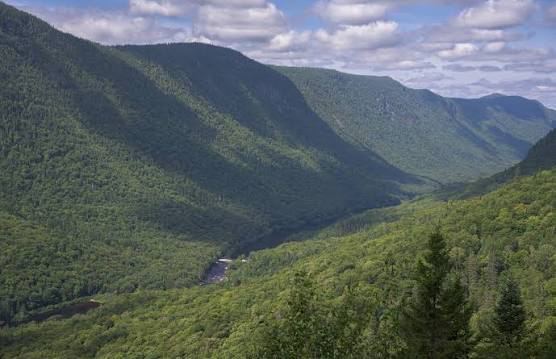
Location: Quebec, Canada
Age: Approximately 1 billion years
Highest Peak: Mount Raoul Blanchard (1,166 m / 3,825 ft)
Why It Matters:
The Laurentian Mountains rank among the oldest mountain ranges in the world and form part of the ancient Canadian Shield, one of Earth’s oldest geological regions. These mountains began forming around one billion years ago, making them significantly older than famous mountain ranges such as the Himalayas and the Andes. Over millions of years, erosion gradually reduced their height, leaving behind the rolling landscapes seen today.
The Laurentians have also played an important role in Canada’s history and culture. Indigenous communities lived in the region long before European explorers arrived, using its forests, rivers, and wildlife for survival. Today, the mountains remain an important natural area that supports diverse ecosystems and provides habitat for animals such as black bears, moose, deer, and numerous bird species.
Modern visitors know the Laurentian Mountains for their outdoor recreation opportunities. The region attracts tourists throughout the year with hiking trails, scenic lakes, skiing resorts, cycling routes, and wildlife viewing experiences. Mont-Tremblant, one of Canada’s most famous resort towns, sits within the range and welcomes visitors from around the world.
Interesting Fact:
The Laurentian Mountains are older than the Atlantic Ocean itself. Their ancient rocks existed hundreds of millions of years before the continents separated into their present-day positions, making them one of North America’s most remarkable geological treasures.
9. Blue Ridge Mountains
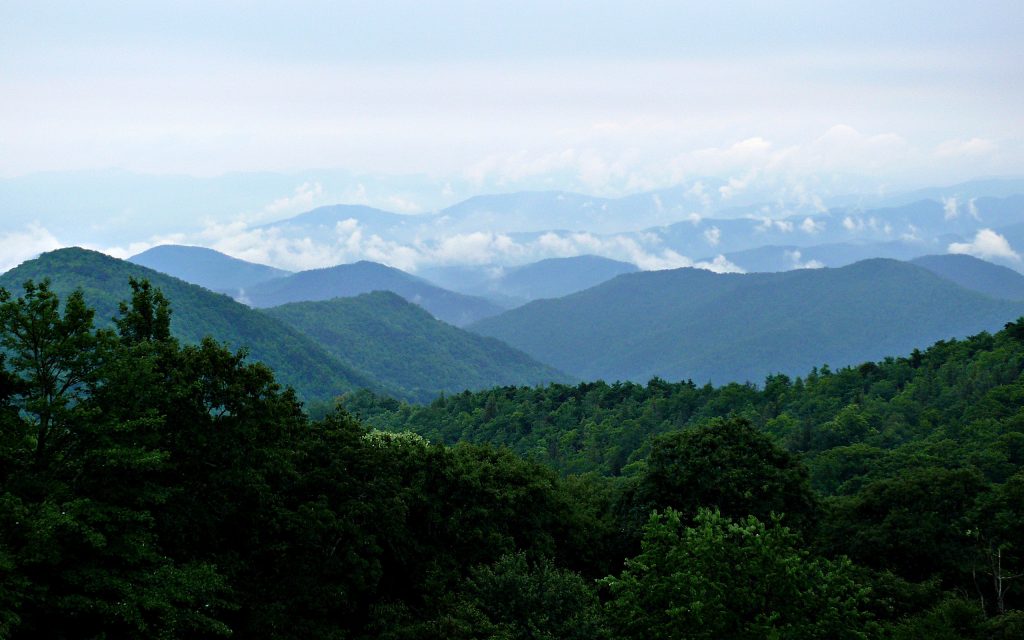
Location: Eastern United States
Age: Around 1.2 billion years
Highest Peak: Mount Mitchell (2,037 m / 6,684 ft)
Why It Matters:
The Blue Ridge Mountains are among the oldest mountain ranges in the world and one of the most iconic natural landmarks in the United States. Stretching across several states, including Virginia, North Carolina, Tennessee, and Georgia, they form a major section of the Appalachian Mountains. Although these mountains once rivaled some of the tallest ranges on Earth, billions of years of erosion have gradually worn them down into the rounded peaks and ridges seen today.
The Blue Ridge Mountains hold immense geological importance because their ancient rocks provide evidence of Earth’s early continental development. Scientists believe parts of the range date back approximately 1.2 billion years, making them far older than relatively young mountain systems such as the Himalayas. Their long geological history helps researchers understand how continents collided, separated, and evolved over time.
Beyond their scientific value, the Blue Ridge Mountains have shaped the culture and history of the Appalachian region. Indigenous peoples lived in and around these mountains for thousands of years before European settlers arrived. Later, Scots-Irish immigrants brought traditions, music, crafts, and farming practices that became central to Appalachian culture.
Today, the Blue Ridge Mountains attract millions of visitors every year. Travelers come to explore scenic drives such as the Blue Ridge Parkway, hike famous trails, admire waterfalls, and experience the region’s rich biodiversity. The mountains support diverse wildlife, including black bears, white-tailed deer, wild turkeys, and hundreds of bird species.
Interesting Fact:
The Blue Ridge Mountains get their distinctive blue appearance from isoprene, a natural compound released by trees. When sunlight interacts with this substance, it creates a bluish haze that blankets the mountains and gives the range its famous name.
8. Stirling Range
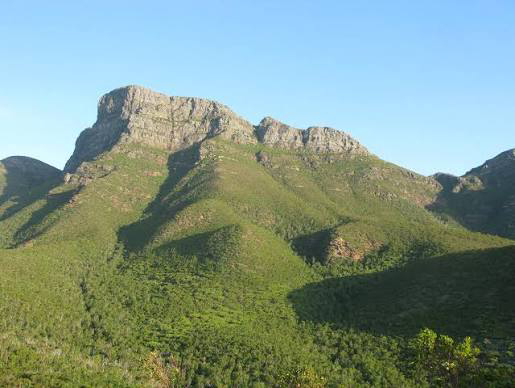
- Location: Western Australia
- Age: Over 1 billion years old
- Highest Peak: Bluff Knoll (1,095 meters)
- Why it matters: It helps scientists study some of the earliest mountain-building events in Australia and reveals how ancient Earth’s crust evolved
The Stirling Range formed during ancient tectonic activity when Earth’s crust collided, folded, and lifted upward. Over billions of years, erosion slowly broke down the once much taller mountains, shaping them into the lower but still rugged range we see today. These long processes make the Stirling Range one of the oldest surviving mountain systems in Australia.
The landscape features steep ridges, sharp peaks, and deep valleys that show how natural forces like wind, rain, and temperature changes gradually reshape mountains over time. Scientists study this range to understand how continents formed and how early geological structures changed across Earth’s history.
The Stirling Range also supports unique plant and animal life. Many species grow only in this region because the isolated environment created special ecological conditions over millions of years. This makes the range important not only for geology but also for biodiversity research.
Interesting fact: The Stirling Range is one of the few places in Western Australia where snowfall can occasionally occur on Bluff Knoll during winter, attracting hikers and nature lovers from around the country.
7. St. Francois Mountains
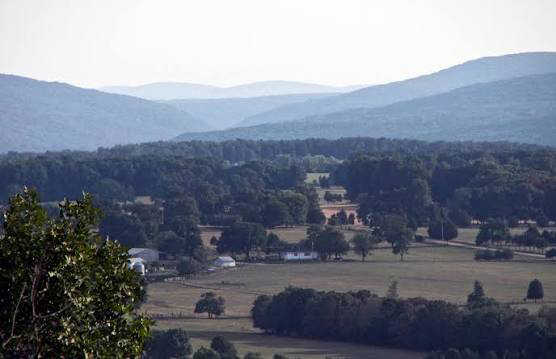
- Location: Missouri, United States
- Age: Around 1.4 billion years old
- Highest Peak: Taum Sauk Mountain (540 meters)
- Why it matters: It represents some of the oldest exposed igneous rock formations in North America and helps scientists study early continental crust formation
The St. Francois Mountains formed through volcanic activity during the Precambrian era. Ancient magma pushed upward through Earth’s crust and cooled slowly, creating hard igneous rocks. Over time, erosion removed the surrounding softer rock layers, exposing the old volcanic core that we see today.
Unlike younger mountain ranges that still rise due to tectonic collisions, these mountains have already gone through billions of years of erosion. That process lowered their height and softened their shape, but it also revealed some of the oldest rocks on the continent. Geologists use this area to study how early Earth developed stable landmasses.
The region now features rolling hills, rocky outcrops, and forested landscapes, but it once stood much taller and more dramatic in its early formation stage.
Interesting fact: Taum Sauk Mountain, the highest point in Missouri, is so old that its rocks predate most life on Earth as we know it today.
6. Black Hills
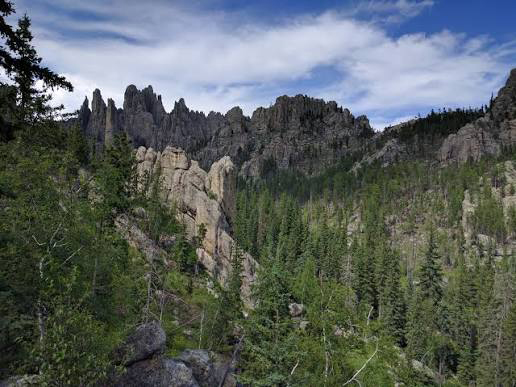
- Location: South Dakota and Wyoming, United States
- Age: Around 1.8 to 2.5 billion years old
- Highest Peak: Black Elk Peak (2,207 meters)
- Why it matters: It exposes some of the oldest Precambrian rocks in North America and helps scientists understand the early formation of continental crust
The Black Hills formed through a long and complex geological history that includes ancient volcanic activity, deep underground magma intrusion, and repeated uplift. Over billions of years, erosion removed the surrounding softer rocks and gradually revealed the hard crystalline core that makes up the modern Black Hills today.
Unlike younger mountain ranges that still grow due to tectonic collisions, the Black Hills no longer rise. Instead, erosion continues to shape them, creating rounded peaks, forested slopes, and deep valleys. This slow transformation gives scientists a clear view of Earth’s ancient interior rocks that normally stay hidden beneath the surface.
Geologists study the Black Hills to understand how stable continental crust formed during Earth’s early history. The region also contains important mineral deposits, including gold, which formed through long geological processes tied to ancient heat and pressure.
Interesting fact: Black Elk Peak, the highest point in the Black Hills, once served as a fire lookout tower location because its high elevation offers one of the widest views in the central United States.
5. Guiana Shield
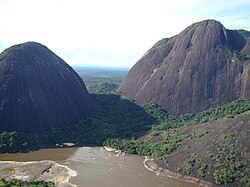
- Location: Northern South America (mainly Venezuela, Guyana, Suriname, French Guiana, and parts of Brazil and Colombia)
- Age: Around 1.7 to 2.3 billion years old
- Highest Peak: Pico da Neblina (2,995 meters, Brazil)
- Why it matters: It represents one of the oldest geological formations on Earth and preserves ancient rock that helps scientists study early continental development
The Guiana Shield formed during the Precambrian era when Earth’s early crust stabilized and large landmasses began to take shape. Over billions of years, erosion and weathering shaped the region into plateaus, mountains, and steep cliffs. Unlike younger mountain ranges formed by active tectonic collisions, this shield remains a stable part of the South American continent.
The region contains vast ancient rock formations, dense rainforests, and unique ecosystems that developed over millions of years in isolation. Scientists study the Guiana Shield to understand how continents formed and how early Earth conditions supported long-term geological stability.
Rivers, waterfalls, and high plateaus dominate the landscape, including some of the tallest and most powerful waterfalls in the world. These features formed as erosion cut through the hard ancient rock over long geological time periods.
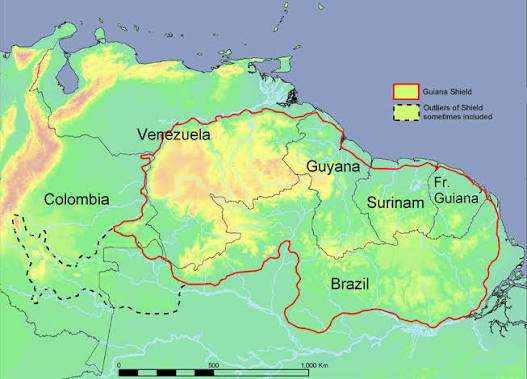
Interesting fact: The Guiana Shield includes the famous tabletop mountains called “tepuis,” which inspired the landscape in the movie Up and host many species found nowhere else on Earth.
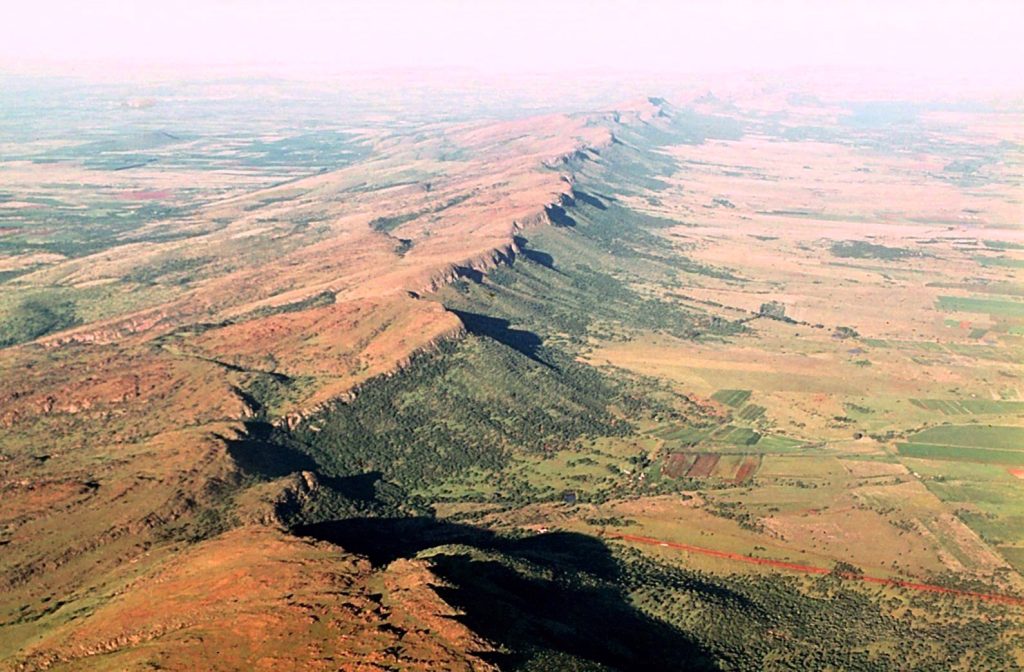
4. Magaliesberg
- Location: South Africa (Gauteng and North West provinces)
- Age: Around 2.3 billion years old
- Highest Peak: No official single highest peak; part of the range reaches about 1,852 meters (Lansers Peak area)
- Why it matters: It is one of the oldest mountain ranges on Earth and preserves some of the earliest sedimentary and volcanic rock formations in Africa
The Magaliesberg formed during the Precambrian era when volcanic activity and sediment deposition built layers of rock that later hardened over time. Tectonic forces uplifted these formations, and millions of years of erosion shaped the range into long ridges and valleys.
Unlike young mountain ranges with sharp, high peaks, Magaliesberg shows smooth contours and deeply weathered rock surfaces. This reflects its extreme age and long exposure to erosion. The range now forms part of a stable geological region known as the Kaapvaal Craton, one of the oldest pieces of Earth’s continental crust.
Scientists study the Magaliesberg to understand how early Earth’s landmasses formed and how stable continents developed over billions of years. The region also provides important fossil evidence and mineral deposits that help researchers trace ancient environmental conditions.
Interesting fact: The Magaliesberg is older than complex life on Earth and has existed since long before dinosaurs appeared.
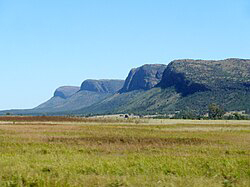
3. Waterberg Mountains
- Location: Limpopo Province, South Africa
- Age: Around 2.6 billion years old
- Highest Peak: Varies across the plateau; the highest elevations reach about 2,000 meters in parts of the Waterberg Massif
- Why it matters: It preserves one of the oldest large sandstone formations in Africa and helps scientists study early continental environments
The Waterberg Mountains formed through a long geological process that began with ancient sediment deposits. Over time, pressure and heat hardened these sediments into sandstone. Later, tectonic uplift raised the region, and millions of years of erosion carved the landscape into cliffs, valleys, and flat-topped hills.
Unlike sharp young mountain ranges, the Waterberg shows wide plateaus and deeply eroded rock structures. This shape reflects billions of years of weathering by wind, rain, and temperature changes. The area now sits on a stable part of the African continent, meaning it no longer experiences major mountain-building activity.
Scientists study the Waterberg region to understand how early landscapes formed and how erosion shapes ancient rock over extreme time periods. The region also holds important fossil sites and mineral evidence that help researchers reconstruct Earth’s early environmental conditions.
Interesting fact: The Waterberg is part of a UNESCO Biosphere Reserve and supports rich wildlife, including many species that thrive in its rugged and ancient terrain.
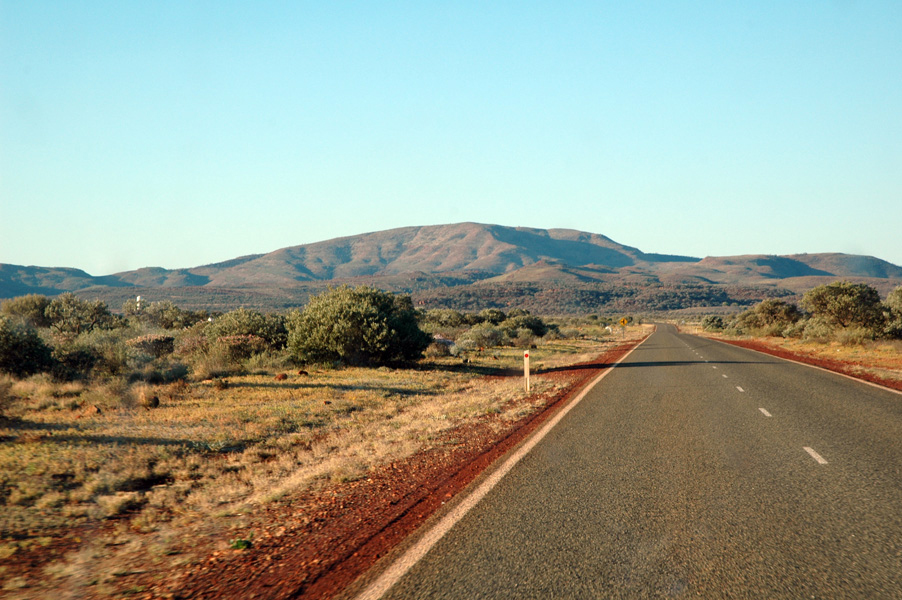
2. Hamersley Range
- Location: Western Australia
- Age: Around 2.5 to 3.0 billion years old
- Highest Peak: Mount Meharry (1,249 meters)
- Why it matters: It contains some of the oldest exposed rocks on Earth and plays a key role in studying early continental crust and banded iron formations
The Hamersley Range formed during the Archean Eon when Earth’s crust was still developing. Intense volcanic activity and sediment deposition created thick layers of iron-rich rock. Over billions of years, tectonic stability and long-term erosion shaped the range into flat-topped plateaus, gorges, and rugged ridges.
This region stands out because it preserves banded iron formations, which scientists use to understand how oxygen first appeared in Earth’s atmosphere. The rocks here record some of the earliest environmental changes on the planet, making the Hamersley Range extremely important for geological research.
Unlike younger mountain systems, the Hamersley Range no longer grows through tectonic movement. Instead, erosion slowly breaks it down, revealing deep layers of ancient rock. This process gives geologists direct access to Earth’s early history.
Interesting fact: The Hamersley Range sits in the Pilbara region, one of the most ancient and geologically stable parts of Earth’s crust, and it contains some of the oldest known rocks in the world.
1. Barberton Makhonjwa Mountains
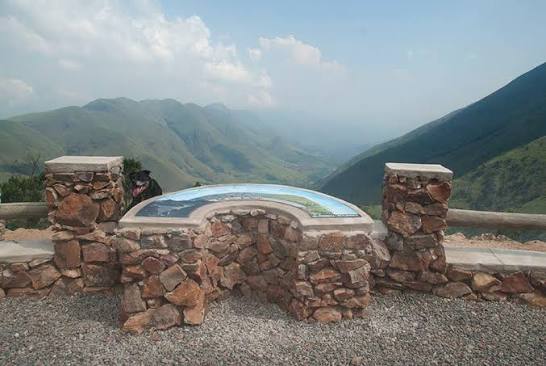
- Location: Mpumalanga, South Africa (near the Eswatini border)
- Age: Around 3.5 to 3.6 billion years old
- Highest Peak: No single dominant peak; the range includes peaks reaching about 1,800 meters
- Why it matters: It contains some of the oldest exposed rocks on Earth and gives scientists direct evidence of early Earth’s crust and atmosphere
The Barberton Makhonjwa Mountains formed during the Archean Eon, when Earth was still a young and highly active planet. Intense volcanic activity, asteroid impacts, and rapid crust formation shaped this region. Over billions of years, erosion exposed these ancient rock layers, allowing scientists to study them directly.
This mountain range plays a key role in understanding how early Earth developed life-supporting conditions. The rocks preserve evidence of ancient oceans, volcanic activity, and early microbial life. Scientists use this area to study how continents formed and how Earth’s surface changed during its earliest history.
Unlike younger mountains, Barberton does not rise through tectonic collision today. Instead, it stands as a stable geological archive, slowly shaped by erosion but still preserving its original ancient structure.
Interesting fact: Some rocks in the Barberton Makhonjwa Mountains are so well preserved that they contain chemical traces that may represent some of the earliest signs of life on Earth.
Oldest Mountains vs Youngest Major Mountain Ranges
Oldest mountains and youngest mountain ranges show very different shapes, heights, and geological activity. Old mountains have faced billions of years of erosion, so they look lower and smoother. Young mountains still rise due to active tectonic forces, so they appear taller, sharper, and more dramatic.
Himalayas
- Location: Asia (Nepal, India, Bhutan, China, Pakistan)
- Age: Around 50 million years
- Highest Peak: Mount Everest (8,849 meters)
The Himalayas formed when the Indian Plate collided with the Eurasian Plate. This collision still continues today, so the mountains keep rising. Strong tectonic pressure created the highest peaks on Earth.
Andes
- Location: South America (along the western coast)
- Age: Around 30-50 million years
- Highest Peak: Aconcagua (6,961 meters)
The Andes formed as the Nazca Plate subducted under the South American Plate. This process continues, so the range remains active and keeps building height over time.
Kilimanjaro
- Location: Tanzania, East Africa
- Age: Around 3 million years
- Highest Peak: Uhuru Peak (5,895 meters)
Kilimanjaro formed through volcanic activity rather than plate collision. Magma pushed upward and created a large volcanic mountain. Although not as old as ancient ranges, it still stands tall due to its volcanic origin.
Why Younger Mountains Are Taller
Younger mountains rise higher because tectonic forces still push the Earth’s upward. These forces include plate collisions, subduction zones, and volcanic eruptions. Older mountains stop growing long ago, so erosion slowly wears them down. Wind, rain, ice, and rivers break down rock over millions of years, making ancient ranges lower and smoother. In contrast, young mountains keep gaining height faster than erosion can reduce them, which keeps them tall and sharp.
Which Is the Oldest Mountain in the World?
The Barberton Makhonjwa Mountains in South Africa hold the title of the oldest mountain range in the world. Scientists estimate their rocks formed around 3.5 to 3.6 billion years ago during the Archean Eon, when Earth’s crust first began to stabilize.
These mountains do not look like tall, sharp peaks today because billions of years of erosion have worn them down. Instead, they appear as rolling hills and exposed rock formations. Even so, they preserve some of the most ancient geological evidence on Earth.
Geologists study this region to understand how the early Earth formed continents, oceans, and possibly the first life forms. The preserved rocks provide direct clues about Earth’s earliest atmosphere and surface conditions.
In short: the Barberton Makhonjwa Mountains represent the oldest known exposed mountain rocks on Earth, making them the clearest answer to the question of the world’s oldest mountains.
Why Ancient Mountains Still Matter Today?
Ancient mountains still matter today because they preserve Earth’s earliest geological history, support unique ecosystems, and influence human culture and scientific research. Even though erosion has reduced their height over billions of years, these mountain systems continue to provide valuable information about how the planet formed and evolved.
Scientific Importance
Ancient mountains play a critical role in geology because they expose some of the oldest rocks on Earth. These rocks formed during the early stages of the planet’s development, long before complex life existed. Scientists study them to understand how Earth’s crust formed, how continents separated, and how volcanic and tectonic processes shaped the planet over billions of years. These mountains also help researchers study early atmospheric conditions and the chemical processes that made life possible. Without ancient mountains, much of Earth’s early history would remain hidden beneath younger rock layers.
Biodiversity
Ancient mountain regions support highly specialized ecosystems because they have remained stable for extremely long periods. This long-term stability allows plants and animals to evolve independently, often leading to species that exist nowhere else on Earth. These ecosystems include unique forests, endemic plant species, and wildlife adapted to specific climates and soil conditions. Many ancient mountain areas also act as natural refuges during climate changes, allowing species to survive in isolated environments while surrounding regions transform over time.
Cultural Heritage
Ancient mountains hold deep cultural and historical importance for many human societies. Communities living near these landscapes often build traditions, spiritual beliefs, and local identities around them. These mountains appear in folklore, indigenous knowledge systems, and historical narratives that connect people to the land. In many regions, ancient mountains are considered sacred or symbolic, representing stability, origin stories, and cultural continuity across generations.
Tourism Value
Ancient mountains attract researchers, hikers, and tourists because they offer rare geological landscapes and unique natural environments. Visitors travel to these regions to experience ancient rock formations, diverse ecosystems, and dramatic scenery shaped by billions of years of natural processes. This tourism supports local economies by creating jobs and generating income for nearby communities. At the same time, it encourages conservation efforts because protecting these landscapes ensures they remain intact for scientific study and future generations.
Frequently Asked Questions
The Appalachian Mountains are around 480 million years old. They formed when ancient continental plates collided and created a massive mountain range. Over time, erosion reduced their height significantly, which is why they now appear as rolling hills and rounded peaks instead of tall, sharp mountains.
No, Mount Everest is much younger than the Barberton Mountains. Everest formed around 50 million years ago as the Indian Plate collided with the Eurasian Plate, while the Barberton Makhonjwa Mountains formed more than 3 billion years ago. This makes Barberton significantly older in geological terms.
Older mountains are shorter because erosion gradually wears them down over millions and billions of years. Wind, rain, ice, and rivers break down rock and carry it away. At the same time, most ancient mountains no longer experience strong tectonic uplift, so they do not grow back. Over time, erosion reduces height and smooths sharp features.
Yes, some rock formations within ancient shields, such as parts of the Barberton Makhonjwa Mountains and the Pilbara Craton in Australia, contain rocks older than 3 billion years. However, identifying a full “mountain” older than this is difficult because erosion has heavily reshaped and reduced most original structures over time.
Africa contains some of the oldest known mountain regions, including the Barberton Makhonjwa Mountains and the Kaapvaal Craton. These formations preserve some of the earliest continental crust on Earth, making Africa one of the most important continents for studying ancient geological history.
Final Thoughts
The world’s oldest mountains show how powerful and slow Earth’s natural processes can be. These ancient ranges formed billions of years ago and still exist today, even though erosion has reduced their height and reshaped their appearance over time. They no longer rise like young mountain ranges, but they preserve valuable records of Earth’s earliest history.
These mountains help scientists understand how continents formed, how the atmosphere changed, and how early geological activity shaped the planet. At the same time, they support unique ecosystems, protect rare species, and hold cultural meaning for many communities around the world.
By studying and protecting ancient mountains, we gain a clearer picture of Earth’s past and ensure that these natural archives remain available for future generations.