Climb Mount Meru: Complete Guide to Tanzania’s Second Highest Mountain
Estimated reading time: 32 minutes
Climb Mount Meru for one of Tanzania’s most rewarding trekking adventures. Rising to 4,566 meters (14,980 feet), Mount Meru is Tanzania’s second-highest mountain and the fifth-highest peak in Africa. The climb combines spectacular volcanic scenery, abundant wildlife in Arusha National Park, and breathtaking views of Mount Kilimanjaro. Whether you are preparing for Kilimanjaro or looking for a quieter mountain experience, this complete guide covers everything you need to know, including routes, difficulty, costs, the best time to climb, packing tips, and safety advice.
In this guide, you’ll learn everything you need to know about climbing Mount Meru, including its height, difficulty, routes, itinerary, wildlife, costs, best time to visit, and how it compares to Kilimanjaro.
Table of contents
- Climb Mount Meru: Complete Guide to Tanzania’s Second Highest Mountain
- Why Climb Mount Meru?
- Where Is Mount Meru Located?
- How High Is Mount Meru?
- Why Climb Mount Meru?
- How Difficult Is Mount Meru?
- Mount Meru Route Overview
- Mount Meru Climbing Itinerary
- Best Time to Climb Mount Meru
- Wildlife You May See on Mount Meru
- Mount Meru Cost
- Mount Meru vs Kilimanjaro
- Essential Packing List for Mount Meru
- Safety Tips for Climbing Mount Meru
- Frequently Asked Questions
- Final Thoughts: Is Mount Meru Worth Climbing?
- Read Also:
Why Climb Mount Meru?
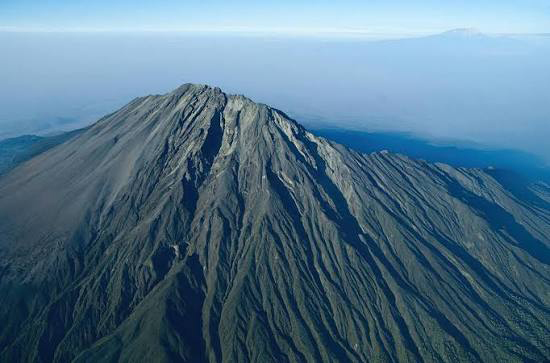
Mount Meru is a 4,566-meter (14,980-foot) dormant volcano located in Arusha National Park in northern Tanzania. It is the second-highest mountain in Tanzania and the fifth-highest mountain in Africa. Climbers choose Mount Meru for its spectacular scenery, rich wildlife, fewer crowds, and excellent acclimatization benefits before climbing Kilimanjaro. The standard trek takes 3 to 4 days and rewards hikers with stunning sunrise views from Socialist Peak and panoramic views of Mount Kilimanjaro.
Mount Meru at a Glance
Before planning your adventure, it helps to understand the key facts about Mount Meru. Located in northern Tanzania, this impressive volcano combines wildlife, dramatic landscapes, and high-altitude trekking into one unforgettable experience. Although it often stands in the shadow of nearby Kilimanjaro, Mount Meru is a major destination in its own right and attracts climbers from around the world.
Key Facts About Mount Meru
Mount Meru is a dormant stratovolcano situated within Arusha National Park, approximately 70 kilometers (43 miles) west of Mount Kilimanjaro. Standing at 4,566 meters (14,980 feet), it is the second-highest mountain in Tanzania and the fifth-highest mountain in Africa. The mountain’s highest point is known as Socialist Peak, which offers spectacular views of the surrounding plains, volcanic crater, and Mount Kilimanjaro on clear mornings.
One of Mount Meru’s most unique features is its rich wildlife. Unlike most mountain treks, the climb begins in a national park where hikers may encounter giraffes, zebras, buffaloes, warthogs, colobus monkeys, and numerous bird species. The mountain also serves as an excellent acclimatization climb for those planning to summit Kilimanjaro.
Mount Meru Statistics Table
| Feature | Details |
|---|---|
| Mountain Name | Mount Meru |
| Elevation | 4,566 m (14,980 ft) |
| Location | Arusha National Park, Tanzania |
| Mountain Type | Dormant Stratovolcano |
| Highest Point | Socialist Peak |
| Tanzania Ranking | 2nd Highest Mountain |
| Africa Ranking | 5th Highest Mountain |
| Typical Trek Duration | 3-4 Days |
| Main Route | Momella Route |
| Accommodation | Mountain Huts |
| Wildlife Viewing | Excellent |
| Best For | Trekking, Acclimatization, Wildlife |
| Nearest City | Arusha |
| Best Climbing Seasons | January to March, June to October |
This combination of high-altitude trekking, diverse ecosystems, and incredible wildlife makes Mount Meru one of the most underrated climbing destinations in Africa.
Where Is Mount Meru Located?
Mount Meru is located in northern Tanzania within Arusha National Park, one of the country’s most beautiful protected areas. The mountain lies in the Great Rift Valley region and serves as a dramatic backdrop to the city of Arusha. Its location makes it easily accessible for travelers visiting Tanzania for trekking, wildlife safaris, or a Kilimanjaro expedition.
The mountain’s fertile slopes support diverse ecosystems ranging from dense rainforest to alpine desert, creating ideal habitats for wildlife and unique plant species. Thanks to its proximity to both Arusha and Kilimanjaro, Mount Meru is often included in northern Tanzania travel itineraries.
Mount Meru in Arusha National Park
Mount Meru stands at the heart of Arusha National Park, a protected area covering approximately 552 square kilometers (213 square miles). The park is famous for its rich biodiversity, scenic landscapes, and excellent wildlife viewing opportunities.
Unlike many mountain treks around the world, climbing Mount Meru begins in a wildlife-rich environment where hikers may encounter giraffes, zebras, buffaloes, warthogs, antelopes, and black-and-white colobus monkeys. Because of the presence of large wildlife, an armed park ranger accompanies all climbing groups during the lower sections of the trek.
Arusha National Park is also home to beautiful attractions such as Momella Lakes, Ngurdoto Crater, waterfalls, and dense montane forests, making it one of Tanzania’s most underrated natural destinations.
Distance from Arusha
Mount Meru is located approximately 15 kilometers (9 miles) northeast of Arusha City, Tanzania’s main gateway for northern safari and trekking adventures.
The drive from Arusha to Momella Gate, the starting point of the climb, typically takes between 45 minutes and 1.5 hours depending on traffic and road conditions. This short travel distance makes Mount Meru one of the most accessible trekking destinations in East Africa.
Most climbers spend at least one night in Arusha before beginning their trek, allowing time to rest, organize equipment, and prepare for the adventure ahead.
Distance from Kilimanjaro
Mount Meru is located about 70 kilometers (43 miles) west of Mount Kilimanjaro. On clear days, climbers can enjoy spectacular views of Kilimanjaro’s snow-capped summit from various points along the Mount Meru trail, especially from Socialist Peak.
The close proximity between these two iconic mountains makes Mount Meru an excellent acclimatization climb before attempting Kilimanjaro. Many trekkers choose to summit Meru first, spend a day or two recovering, and then continue to Kilimanjaro with improved altitude adaptation and trekking confidence.
Because of their location in northern Tanzania, both mountains can easily be combined into a single trekking itinerary, offering one of Africa’s most memorable mountain adventures.
How High Is Mount Meru?
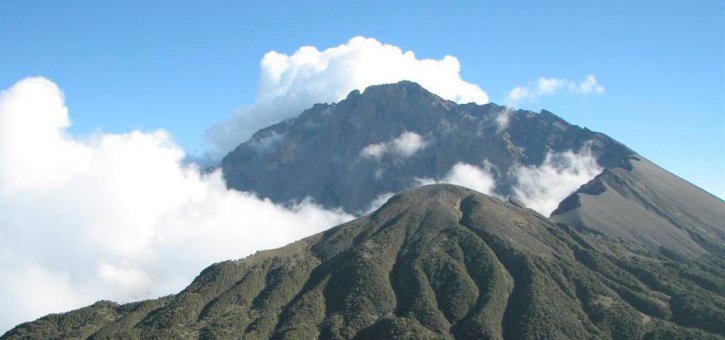
Mount Meru rises to an elevation of 4,566 meters (14,980 feet), making it one of Africa’s most impressive mountains. Although it is often overshadowed by nearby Mount Kilimanjaro, Meru remains a significant peak in its own right. Its dramatic volcanic crater, steep summit ridge, and high altitude provide a challenging and rewarding trekking experience for climbers from around the world.
The mountain’s highest point, known as Socialist Peak, offers breathtaking views of Arusha National Park, the Great Rift Valley, and Mount Kilimanjaro on clear days.
Mount Meru Height in Meters and Feet
Mount Meru stands at an official elevation of 4,566 meters (14,980 feet) above sea level. This height places it well above many famous trekking mountains worldwide and makes it Tanzania’s second-highest peak after Kilimanjaro.
The summit, Socialist Peak, sits on the rim of a massive volcanic crater created by a historic eruption and collapse. Climbers reach the summit after ascending through several ecological zones, including rainforest, moorland, alpine desert, and rocky volcanic terrain.
Because of its altitude, trekkers may experience the effects of high elevation, making proper acclimatization and a gradual pace important for a successful climb.
Mount Meru’s Rank in Africa
Mount Meru is the second-highest mountain in Tanzania and is widely recognized as the fifth-highest mountain in Africa.
While it does not reach the extreme height of Kilimanjaro, Meru remains one of the continent’s most prominent volcanic mountains. Its impressive elevation, combined with its dramatic crater and wildlife-rich surroundings, makes it one of East Africa’s most unique trekking destinations.
Among Tanzania’s mountains, only Mount Kilimanjaro rises higher than Mount Meru.
Height Comparison Table
| Mountain | Country | Height (Meters) | Height (Feet) |
|---|---|---|---|
| Mount Kilimanjaro | Tanzania | 5,895 m | 19,341 ft |
| Mount Kenya | Kenya | 5,199 m | 17,057 ft |
| Mount Stanley | Uganda/DR Congo | 5,109 m | 16,762 ft |
| Mount Speke | Uganda | 4,890 m | 16,043 ft |
| Mount Meru | Tanzania | 4,566 m | 14,980 ft |
Although Mount Meru is lower than Africa’s highest peaks, its stunning scenery, challenging summit ridge, and excellent wildlife viewing make it one of the continent’s most rewarding mountain climbs.
Why Climb Mount Meru?
Mount Meru offers one of the most rewarding trekking experiences in Africa. While many travelers focus on Mount Kilimanjaro, those who climb Mount Meru often discover a mountain that combines wildlife, diverse landscapes, fewer crowds, and stunning summit views. Whether you are preparing for Kilimanjaro or seeking a standalone adventure, Mount Meru delivers an unforgettable journey from start to finish.
Incredible Wildlife Encounters
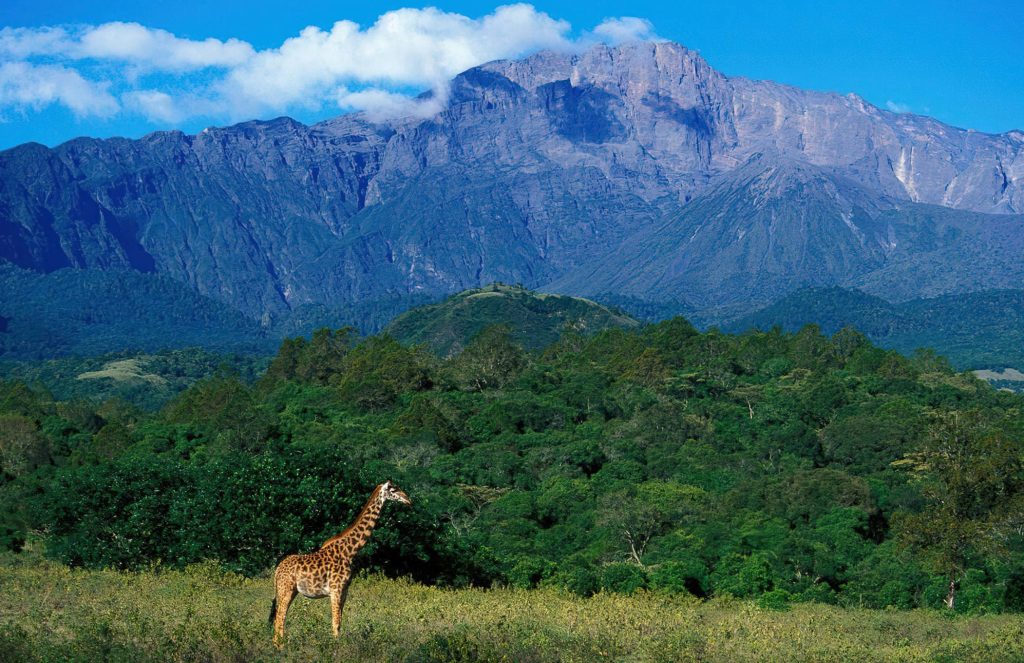
One of the biggest reasons to climb Mount Meru is the opportunity to see wildlife during the trek. Unlike most mountain climbs, the journey begins inside Arusha National Park, where animals roam freely across the lower slopes.
Hikers commonly spot giraffes, zebras, buffaloes, warthogs, antelopes, and black-and-white colobus monkeys along the trail. Bird enthusiasts can also enjoy sightings of numerous colorful bird species found throughout the park.
Because of the presence of wildlife, all climbing groups are accompanied by an armed ranger during the early stages of the trek. This unique combination of trekking and safari experiences makes Mount Meru unlike any other mountain in Africa.
Spectacular Views of Kilimanjaro
Mount Meru offers some of the best views of Mount Kilimanjaro in Tanzania. As climbers gain elevation, Kilimanjaro gradually appears above the clouds, creating incredible photo opportunities.
The most breathtaking views occur near Socialist Peak at sunrise. On clear mornings, climbers can watch the sun illuminate Kilimanjaro’s snow-capped summit while standing on Mount Meru’s dramatic crater rim. This unforgettable sight is often considered one of the highlights of the entire climb.
In addition to Kilimanjaro, the summit provides panoramic views of Arusha National Park, the Great Rift Valley, volcanic landscapes, and the surrounding plains of northern Tanzania.
Fewer Crowds Than Kilimanjaro
Unlike Kilimanjaro, which attracts tens of thousands of climbers each year, Mount Meru remains relatively quiet. The trails are less crowded, allowing visitors to enjoy a more peaceful and immersive mountain experience.
The smaller number of trekkers creates a stronger connection with nature and provides more opportunities to appreciate the scenery without busy campsites or crowded viewpoints. Many climbers prefer Mount Meru because it feels more remote and authentic compared to some of the busier routes on Kilimanjaro.
For travelers seeking solitude and natural beauty, Mount Meru offers a refreshing alternative.
Excellent Acclimatization Trek
Many climbers choose Mount Meru as preparation for Mount Kilimanjaro because it provides valuable altitude acclimatization. Spending several days trekking above 3,000 meters helps the body adapt to lower oxygen levels before attempting Africa’s highest mountain.
The gradual ascent profile of Mount Meru allows climbers to gain experience with high-altitude hiking while improving their fitness and confidence. As a result, many trekkers who climb Mount Meru before Kilimanjaro increase their chances of reaching Uhuru Peak successfully.
Even for those who do not plan to climb Kilimanjaro, Mount Meru offers an excellent introduction to high-altitude trekking in East Africa.
How Difficult Is Mount Meru?
Mount Meru offers a challenging but achievable climb for people with good fitness and proper preparation. The trek combines long hiking days, steep trails, and high altitude, making it more demanding than many first-time hikers expect. Unlike technical mountain climbs, you do not need ropes or climbing experience. However, you need stamina, determination, and the ability to walk for several hours each day.
Most climbers complete the trek in 3 or 4 days. The route climbs from Momella Gate (1,500 meters / 4,921 feet) to Socialist Peak (4,566 meters / 14,980 feet), gaining more than 3,000 eters (9,800 feet) in elevation. The final summit ascent starts before midnight and includes steep volcanic ridges, rocky sections, and exposed viewpoints.
Many climbers consider Mount Meru a moderate to strenuous trek. People who train before the climb, pace themselves, and follow their guide’s advice usually have a much better experience.
Fitness Requirements
You do not need to be an elite athlete to climb Mount Meru, but you should have a good level of physical fitness. Expect to hike between 4 and 8 hours on most days, with the summit day lasting 10 to 14 hours from Saddle Hut to Socialist Peak and back.
Before your trip, prepare your body with regular exercise for at least 6 to 8 weeks. Focus on activities that improve endurance and leg strength, including:
- Long-distance hiking
- Hill walking or stair climbing
- Running or jogging
- Cycling
- Swimming
- Strength training for your legs and core
If you can comfortably complete a full-day hike while carrying a light backpack, you will likely handle Mount Meru much better. Good fitness also helps you recover faster each day and enjoy the experience instead of struggling with fatigue.
Altitude Challenges
Altitude presents the biggest challenge on Mount Meru. As you climb higher, the air contains less oxygen, making every step feel more demanding. Even very fit climbers can develop symptoms of altitude sickness because fitness does not prevent the body’s reaction to high elevation.
Some climbers experience:
- Headaches
- Shortness of breath
- Loss of appetite
- Mild nausea
- Difficulty sleeping
- Tiredness
Most symptoms remain mild when climbers ascend gradually, drink plenty of water, eat regular meals, and maintain a slow, steady pace. Guides monitor each climber throughout the trek and encourage a comfortable walking speed to improve acclimatization.
If severe symptoms develop, the safest decision is to descend immediately. Early recognition and quick action greatly reduce the risk of serious altitude illness.
Summit Night Difficulty
Summit night is the most demanding part of the Mount Meru climb. Climbers usually leave Saddle Hut around midnight or 1:00 a.m. to reach Socialist Peak at sunrise.
The trail becomes steeper as it follows the crater rim. Loose volcanic ash, rocky paths, and narrow ridges require careful footing and steady concentration. Cold temperatures, darkness, wind, and high altitude make the climb even more challenging.
Most climbers reach the summit after 4 to 6 hours of uphill hiking. After enjoying the sunrise and panoramic views, they descend back to Saddle Hut for a short rest before continuing down the mountain.
A slow, consistent pace works much better than rushing. Taking regular breaks, staying hydrated, and keeping warm all improve your chances of reaching the summit safely.
Is Mount Meru Suitable for Beginners?
Yes, beginners can climb Mount Meru if they prepare properly. You do not need previous mountaineering experience or technical climbing skills. However, beginners should understand that this is not an easy walk. The combination of steep trails, long hiking days, and high altitude requires both physical preparation and mental determination.
Many first-time mountain climbers choose Mount Meru because it offers excellent acclimatization before climbing Kilimanjaro. The route also provides comfortable mountain huts instead of camping, making the experience more manageable.
Beginners have the best chance of success when they:
- Train for several weeks before the climb.
- Choose the 4-day itinerary for better acclimatization.
- Follow their guide’s pace.
- Drink enough water throughout the trek.
- Listen to their body and report any altitude symptoms early.
With realistic expectations, proper training, and an experienced guide, many beginners successfully reach Socialist Peak and enjoy one of Tanzania’s most rewarding mountain adventures.
Mount Meru Route Overview
The Mount Meru route follows a well-established trail through forests, open heathland, alpine desert, and the volcanic crater rim before reaching Socialist Peak, the mountain’s highest point. Unlike many other trekking destinations, all climbers stay in mountain huts instead of tents, making the climb more comfortable.
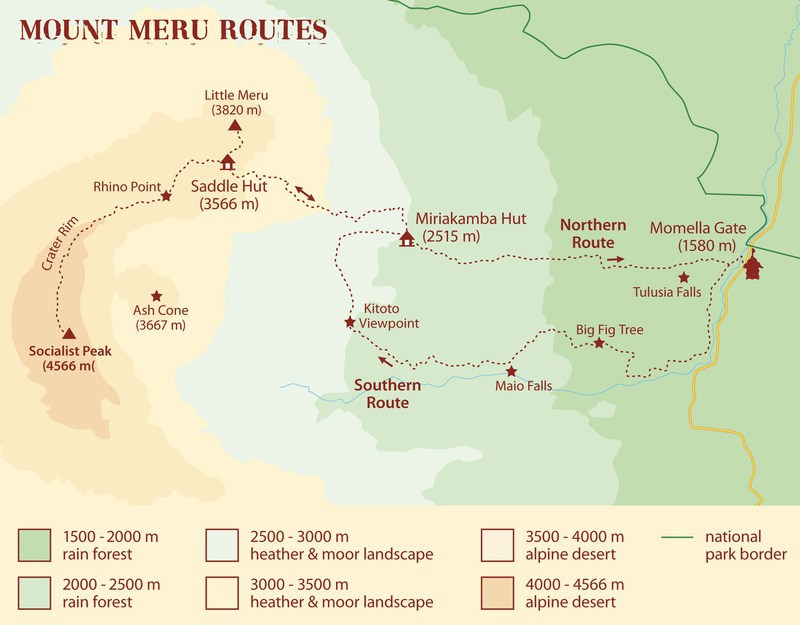
Every climb begins at Momella Gate inside Arusha National Park and follows the same main route. Along the way, you pass several important landmarks, including Miriakamba Hut, Saddle Hut, Rhino Point, and finally Socialist Peak. Each section offers different scenery, wildlife, and hiking conditions.
Momella Gate
Momella Gate sits at an elevation of approximately 1,500 meters (4,921 feet) and serves as the official starting point for every Mount Meru climb. Located inside Arusha National Park, the gate lies about 70 kilometers (43 miles) from Arusha, and the drive usually takes around 1.5 to 2 hours.
Before starting the trek, climbers complete park registration and meet their mountain guide, porters, and an armed park ranger. The ranger accompanies every group because the lower slopes of Mount Meru are home to large wildlife, including buffaloes, elephants, and giraffes.
The trail begins through open grasslands before entering a dense montane forest filled with birds, monkeys, and towering trees. This section provides one of the few mountain hikes in Africa where wildlife viewing forms part of the trekking experience.
Miriakamba Hut
Miriakamba Hut stands at approximately 2,514 meters (8,248 feet) and serves as the first overnight stop for most climbers. The hike from Momella Gate usually takes 4 to 6 hours, depending on the group’s pace.
The route climbs steadily through lush rainforest, where hikers often see giraffes, buffaloes, zebras, bushbucks, warthogs, blue monkeys, and black-and-white colobus monkeys. The forest also supports hundreds of bird species, making this one of the most scenic sections of the climb.
The hut offers shared dormitory-style accommodation, dining facilities, toilets, and nearby water supplies. After arriving, climbers have time to rest, enjoy dinner, and prepare for the next day’s ascent.
Saddle Hut
Saddle Hut sits at approximately 3,570 meters (11,713 feet) and marks the final overnight stop before the summit attempt. The hike from Miriakamba Hut usually takes 3 to 5 hours as the trail leaves the forest and enters open heathland and alpine terrain.
As the vegetation becomes smaller, the landscape opens to impressive views of Mount Meru’s volcanic crater, ash cone, and the surrounding plains. On clear days, climbers may also catch their first distant views of Mount Kilimanjaro.
After reaching Saddle Hut, many climbers complete a short acclimatization hike to Little Meru (3,820 meters / 12,533 feet) before returning for dinner and several hours of rest. Guides usually wake climbers around midnight to prepare for summit day.
Rhino Point
Rhino Point rises to approximately 3,800 meters (12,467 feet) along the crater rim and represents one of the first major landmarks during the summit ascent.
Climbers reach Rhino Point after several hours of hiking in darkness from Saddle Hut. The trail becomes steeper and rockier, requiring careful footing and steady pacing. Strong winds and colder temperatures often make this section feel more demanding than the lower slopes.
After passing Rhino Point, the route continues along the narrow crater ridge toward Cobra Point before making the final climb to Socialist Peak. As dawn approaches, climbers enjoy spectacular views across Meru’s crater and, on clear mornings, Mount Kilimanjaro rising above the clouds.
Socialist Peak
Socialist Peak stands at 4,566 meters (14,980 feet) and forms the highest point on Mount Meru. Reaching the summit rewards climbers with one of the most breathtaking sunrise views in Tanzania.
From the summit, you can see the dramatic volcanic crater, the ash cone below, Arusha National Park, the Great Rift Valley, and, in good weather, the snow-capped summit of Mount Kilimanjaro in the distance.
Most climbers spend a short time taking photographs and enjoying the scenery before beginning the descent. The route returns to Saddle Hut for a rest and meal before continuing down the mountain. Although reaching Socialist Peak requires determination and careful pacing, many climbers describe the sunrise and panoramic views as the highlight of the entire Mount Meru adventure.
Mount Meru Climbing Itinerary
Most climbers complete Mount Meru in either 3 days or 4 days. Both itineraries follow the same route and reach Socialist Peak (4,566 meters / 14,980 feet), but the pace and acclimatization time differ.
The 3-day itinerary suits experienced hikers with limited time, while the 4-day itinerary provides a slower ascent and a better chance to adjust to the altitude. Choosing the right itinerary depends on your fitness level, hiking experience, and future climbing plans.
3-Day Mount Meru Itinerary
The 3-day Mount Meru itinerary follows a faster schedule and requires longer hiking days. It works best for climbers with good fitness and previous high-altitude trekking experience.
Day 1: Momella Gate to Miriakamba Hut
- Distance: Approximately 10 km (6.2 miles)
- Hiking time: 4-6 hours
- Elevation: 1,500 m (4,921 ft) to 2,514 m (8,248 ft)
After registering at Momella Gate, you begin the trek through Arusha National Park with an armed ranger. The trail passes grasslands, dense rainforest, and abundant wildlife before reaching Miriakamba Hut for the night.
Day 2: Miriakamba Hut – Saddle Hut -Socialist Peak -Miriakamba Hut
- Distance: Approximately 19 km (11.8 miles)
- Hiking time: 10-14 hours
- Highest elevation: 4,566 m (14,980 ft)
You hike to Saddle Hut during the afternoon, rest briefly, and begin the summit climb around midnight. After watching the sunrise from Socialist Peak, you descend past Saddle Hut and continue to Miriakamba Hut for your second overnight stay.
Day 3: Miriakamba Hut to Momella Gate
- Distance: Approximately 10 km (6.2 miles)
- Hiking time: 2-4 hours
The final day follows the forest trail back to Momella Gate, where your Mount Meru adventure comes to an end.
4-Day Mount Meru Itinerary
The 4-day Mount Meru itinerary allows more time for acclimatization and recovery. Many guides recommend this option because the slower pace improves comfort and increases the likelihood of reaching the summit successfully.
Day 1: Momella Gate to Miriakamba Hut
- Distance: Approximately 10 km (6.2 miles)
- Hiking time: 4-6 hours
- Elevation: 1,500 m (4,921 ft) to 2,514 m (8,248 ft)
The first day follows the same scenic route through Arusha National Park, where climbers often see giraffes, buffaloes, zebras, monkeys, and many bird species.
Day 2: Miriakamba Hut to Saddle Hut
- Distance: Approximately 8 km (5 miles)
- Hiking time: 3-5 hours
- Elevation: 2,514 m (8,248 ft) to 3,570 m (11,713 ft)
The trail climbs above the rainforest into open heathland with impressive views of Mount Meru’s crater. After arriving at Saddle Hut, many climbers take an optional acclimatization hike to Little Meru before returning to rest.
Day 3: Saddle Hut – Socialist Peak – Miriakamba Hut
- Distance: Approximately 14 km (8.7 miles)
- Hiking time: 10-12 hours
- Highest elevation: 4,566 m (14,980 ft)
You leave Saddle Hut around midnight for the summit climb. After reaching Socialist Peak at sunrise, you descend to Saddle Hut for a short break before continuing to Miriakamba Hut for the night.
Day 4: Miriakamba Hut to Momella Gate
- Distance: Approximately 10 km (6.2 miles)
- Hiking time: 2-4 hours
After breakfast, you complete the final descent through the forest and return to Momella Gate.
Which Itinerary Is Better?
For most climbers, the 4-day Mount Meru itinerary offers the better experience. The additional day reduces physical strain, allows more time to adapt to the altitude, and makes the climb more enjoyable.
Choose the 3-day itinerary if you:
- Have excellent fitness.
- Have previous high-altitude trekking experience.
- Need to fit the climb into a shorter travel schedule.
Choose the 4-day itinerary if you:
- Are climbing your first high mountain.
- Want a better acclimatization schedule.
- Plan to climb Mount Kilimanjaro after Mount Meru.
- Prefer shorter hiking days and more time to enjoy the scenery.
If your goal is to maximize your chances of reaching the summit while enjoying the journey, the 4-day itinerary is the recommended choice for most hikers.
Best Time to Climb Mount Meru
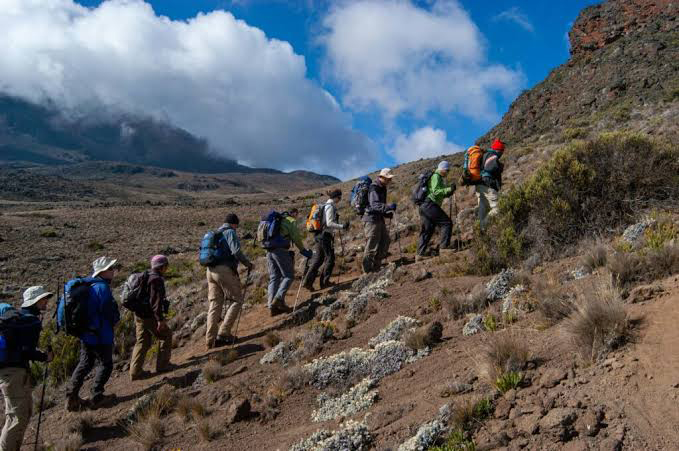
You can climb Mount Meru throughout the year, but some months provide better weather, clearer views, and safer trail conditions. The best seasons combine dry weather with comfortable temperatures, making the trek more enjoyable from the lower forest to the summit.
Most climbers choose January to March or June to October because these periods usually offer stable weather, better visibility, and drier trails. Although climbing during the rainy season remains possible, wet conditions can make the hike more challenging.
January to March
January to March ranks among the best times to climb Mount Meru. The weather stays relatively warm, rainfall remains low, and the mountain often offers clear morning skies with excellent views.
During this season, you can expect:
- Mild daytime temperatures.
- Cooler nights at higher elevations.
- Good visibility for sunrise at Socialist Peak.
- Green forests and healthy vegetation.
- Excellent wildlife viewing in Arusha National Park.
February often provides some of the most stable weather of the year, making it a popular month for climbers who want clear views of Mount Kilimanjaro from the summit.
June to October
The June to October dry season is the most popular time to climb Mount Meru. Rainfall remains low, trails stay dry, and the cooler temperatures create comfortable hiking conditions.
During these months, climbers benefit from:
- Dry and firm hiking trails.
- Excellent visibility from higher elevations.
- Comfortable daytime hiking temperatures.
- Lower humidity.
- Beautiful sunrise views from Socialist Peak.
July, August, and September attract many visitors because they coincide with international holiday periods. Even during these busy months, Mount Meru remains much quieter than Kilimanjaro.
Climbing During the Rainy Season
Mount Meru remains open during the rainy seasons, but wet weather creates more demanding hiking conditions. Tanzania experiences two rainy periods:
- Long rains: March to May
- Short rains: November to December
Heavy rain can make forest trails muddy and slippery, while clouds often reduce visibility near the summit. Afternoon showers also become more common, especially during the long rainy season.
However, climbing during these months also offers several advantages:
- Fewer climbers on the mountain.
- Lush green landscapes.
- Excellent birdwatching opportunities.
- A quieter trekking experience.
If you plan to climb during the rainy season, pack waterproof clothing, gaiters, a rain cover for your backpack, and extra dry clothing for the evenings.
Month-by-Month Conditions Table
| Month | Weather | Trail Conditions | Visibility | Recommendation |
|---|---|---|---|---|
| January | Warm and mostly dry | Good | Excellent | Excellent |
| February | Warm and dry | Excellent | Excellent | Best month |
| March | Increasing rainfall | Fair | Good | Good |
| April | Heavy rain | Muddy | Limited | Challenging |
| May | Heavy rain | Muddy | Limited | Challenging |
| June | Cool and dry | Excellent | Excellent | Excellent |
| July | Dry and cool | Excellent | Excellent | Excellent |
| August | Dry and cool | Excellent | Excellent | Excellent |
| September | Dry and pleasant | Excellent | Excellent | Excellent |
| October | Mostly dry | Very good | Very good | Very good |
| November | Short rains | Fair | Moderate | Fair |
| December | Mixed weather | Good | Good | Good |
Overall, January to March and June to October offer the best combination of dry weather, clear views, and comfortable trekking conditions. If your schedule allows, choosing one of these seasons will give you the highest chance of enjoying a safe and memorable Mount Meru climb.
Wildlife You May See on Mount Meru
One of the features that makes Mount Meru different from many other mountain climbs is the opportunity to see wildlife during the trek. Because the mountain lies within Arusha National Park, the lower slopes support a wide variety of animals and birds. It is common to begin your climb while watching wildlife before entering the mountain forest.
An armed park ranger accompanies every climbing group to ensure safety, especially in areas where large mammals roam freely. Most wildlife sightings occur on the first and last days of the trek, although monkeys and birds can appear throughout the route.
Giraffes
Giraffes are among the first animals many climbers see after leaving Momella Gate. They often feed on acacia trees across the open grasslands surrounding the lower slopes of Mount Meru.
These gentle animals usually remain calm around people and often continue feeding while climbers pass at a safe distance. Their long necks make them easy to spot, providing excellent opportunities for wildlife photography before the trail enters the forest.
Early morning offers the best chance to see giraffes actively feeding across the plains.
Buffaloes
African buffaloes live throughout Arusha National Park and frequently graze near the lower sections of the Mount Meru trail. Although they may appear calm, buffaloes are strong, unpredictable wild animals that deserve plenty of space.
Your armed ranger monitors the surroundings throughout the trek and decides when it is safe to continue walking. Always follow your guide’s instructions and never approach or attempt to photograph buffaloes from close range.
Most encounters happen from a safe distance, allowing climbers to observe these impressive animals in their natural habitat.
Zebras
Large groups of zebras often graze in the open plains near Momella Gate. Their distinctive black-and-white stripes make them one of the easiest animals to recognize during the climb.
Zebras frequently share grazing areas with giraffes, warthogs, antelopes, and buffaloes, creating a classic East African safari scene before the mountain ascent begins.
The open landscape provides excellent visibility, making zebras one of the most commonly photographed animals on the Mount Meru route.
Colobus Monkeys
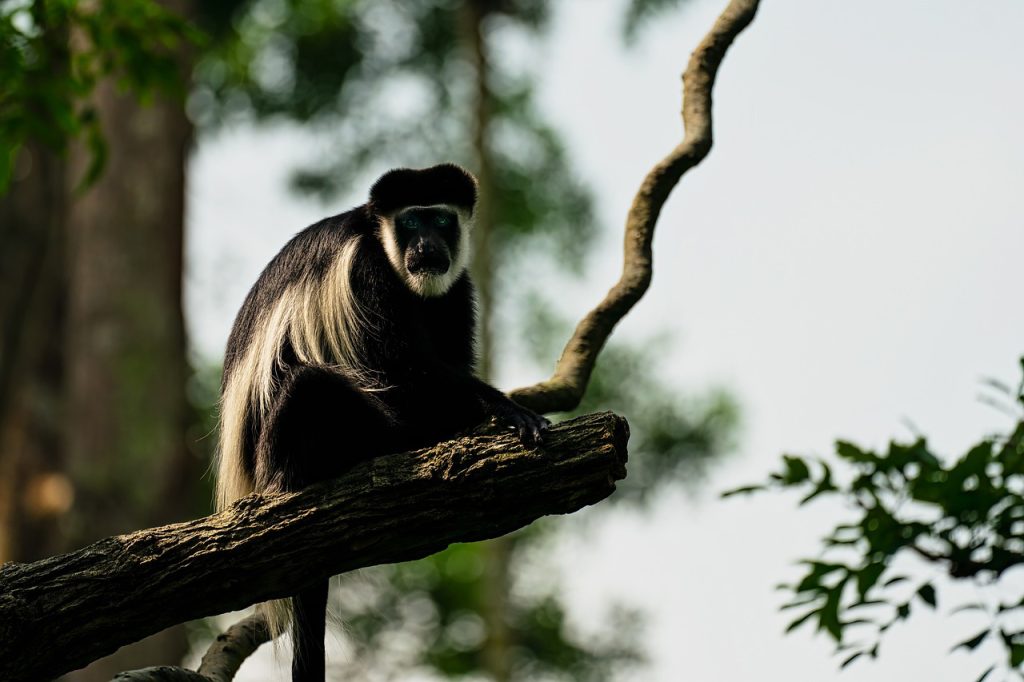
Black-and-white colobus monkeys live in the montane forests along the lower slopes of Mount Meru. These beautiful primates have long white tails, soft black fur, and graceful movements through the forest canopy.
Climbers often hear them before seeing them as they leap quietly between tall trees. Unlike some monkey species, colobus monkeys rarely approach people and usually remain high above the trail.
The dense rainforest between Momella Gate and Miriakamba Hut offers the best opportunity to spot these unique monkeys.
Birdlife
Mount Meru ranks among Tanzania’s best destinations for birdwatching. Arusha National Park supports more than 400 recorded bird species, making the mountain a paradise for bird enthusiasts.
Depending on the season, you may see:
- Hartlaub’s turaco
- Silvery-cheeked hornbill
- Crowned eagle
- Augur buzzard
- White-necked raven
- Scarlet-tufted malachite sunbird
- Various weavers, barbets, and woodpeckers
The greatest bird diversity appears in the lower forests, while larger birds of prey often soar above the cliffs and crater rim. Bringing a pair of binoculars can greatly enhance your wildlife experience.
The combination of mountain trekking and outstanding wildlife viewing makes Mount Meru one of the few climbs in Africa where hikers enjoy a genuine safari experience before reaching the summit.
Mount Meru Cost
The cost of climbing Mount Meru depends on the length of your itinerary, the size of your group, and the tour operator you choose. Most climbers book an all-inclusive package that covers park fees, guides, accommodation, meals, and transportation.
For most travelers, a 3-day or 4-day Mount Meru climb typically costs between USD 700 and USD 1,300 per person. Private climbs usually cost more than group departures because the expenses are shared among fewer people.
Before booking, always confirm exactly what your package includes to avoid unexpected costs.
Park Fees
Every climber must pay Arusha National Park fees set by the Tanzania National Parks Authority (TANAPA). These mandatory fees make up a significant part of the total climbing cost.
Park fees generally cover:
- Park entrance fees
- Conservation fees
- Hut accommodation fees
- Rescue fees
- Armed ranger fees
- Value Added Tax (VAT), where applicable
TANAPA reviews park fees from time to time, so check the latest rates before booking your trip.
Guide and Porter Costs
You must climb Mount Meru with a licensed guide, and every group also travels with an armed park ranger for wildlife safety. Most climbers hire porters to carry camping equipment, food, and personal bags, allowing them to hike with only a small daypack.
The cost of guides and porters usually forms part of a climbing package. However, climbers should also budget for staff tips at the end of the trek.
Typical mountain staff include:
- Licensed mountain guide
- Assistant guide (for larger groups)
- Armed park ranger
- Cook
- Porters
Tipping is not mandatory, but it is a long-standing tradition on Tanzania’s mountains and helps support the hardworking climbing crew.
What Is Included in a Climb Package?
Most reputable Mount Meru operators offer all-inclusive climbing packages. While services vary slightly between companies, a standard package usually includes:
- All national park fees
- Licensed mountain guide
- Armed park ranger
- Porters and cook
- Mountain hut accommodation
- All meals during the climb
- Drinking water
- Rescue fees
- Transportation between Arusha and Momella Gate
Most packages do not include:
- International flights
- Tanzania visa fees
- Travel insurance
- Personal hiking gear
- Sleeping bag rental (if required)
- Staff tips
- Accommodation before or after the climb unless stated
Reading the package details carefully helps you understand exactly what you are paying for before your trip.
Mount Meru vs Kilimanjaro
Mount Meru and Mount Kilimanjaro are Tanzania’s two most famous mountains, but they offer very different climbing experiences. While Mount Meru provides excellent wildlife viewing, quieter trails, and a shorter trek, Mount Kilimanjaro attracts climbers who want to stand on Africa’s highest peak.
For this reason, many travelers choose to climb Mount Meru first. The gradual ascent helps the body adapt to higher altitudes before taking on the greater challenge of Kilimanjaro, making it an excellent acclimatization trek.
Which Mountain Is Harder?
Mount Kilimanjaro is harder than Mount Meru.
Although Mount Meru includes steep sections and an exposed crater rim, Kilimanjaro reaches a much higher altitude of 5,895 meters (19,341 feet). The thinner air on Kilimanjaro creates a greater risk of altitude sickness, especially during the final summit push.
Mount Meru reaches 4,566 meters (14,980 feet) and usually takes 3 to 4 days to complete. Kilimanjaro requires 5 to 9 days, depending on the route.
For many climbers, Mount Meru serves as excellent preparation because it builds endurance and improves acclimatization before climbing Africa’s highest mountain.
Which Mountain Has Better Wildlife?
Mount Meru offers far better wildlife viewing than Kilimanjaro.
Because Mount Meru lies inside Arusha National Park, climbers regularly see giraffes, buffaloes, zebras, warthogs, antelopes, monkeys, and hundreds of bird species during the trek. Every climbing group also travels with an armed ranger because wildlife moves freely through the park.
Kilimanjaro supports forest wildlife on its lower slopes, but animal sightings remain much less common. Most climbers focus on reaching the summit rather than observing wildlife.
If you want to combine mountain trekking with a safari experience, Mount Meru provides the better choice.
Comparison Table
| Feature | Mount Meru | Mount Kilimanjaro |
|---|---|---|
| Elevation | 4,566 m (14,980 ft) | 5,895 m (19,341 ft) |
| Ranking in Africa | 5th highest | Highest |
| Climbing Duration | 3-4 days | 5-9 days |
| Difficulty | Moderate to strenuous | Strenuous |
| Technical Climbing | No | No |
| Wildlife Viewing | Excellent | Limited |
| Accommodation | Mountain huts | Camping on most routes |
| Crowds | Fewer climbers | Much busier |
| Best For | Wildlife, acclimatization, first high-altitude trek | Reaching Africa’s highest summit |
| Success Rate | Generally high with proper preparation | Higher on longer routes with good acclimatization |
If you have enough time, climbing Mount Meru before Kilimanjaro offers one of the best mountain adventures in Tanzania. You gain valuable altitude experience, improve your fitness, and enjoy outstanding wildlife viewing before taking on Africa’s highest peak.
Essential Packing List for Mount Meru
Packing the right equipment can make your Mount Meru climb safer, warmer, and more comfortable. The trek begins in warm rainforest but finishes in cold alpine conditions, so you need clothing that works in a wide range of temperatures.
The best approach is to pack lightweight layers that you can add or remove as the weather changes. Avoid bringing unnecessary items because porters carry your main duffel bag, but weight limits usually apply. Keep important items such as water, snacks, rain gear, and extra clothing in your daypack.
Clothing
Mount Meru’s weather changes with altitude, so dressing in layers helps you stay comfortable throughout the climb.
Pack the following clothing:
- Moisture-wicking base layers
- Lightweight hiking shirts
- Fleece or insulated mid-layer
- Waterproof and windproof jacket
- Waterproof hiking trousers
- Comfortable trekking trousers
- Thermal top and thermal leggings for summit night
- Warm hat or beanie
- Sun hat or cap
- Lightweight gloves
- Insulated gloves for the summit
- Several pairs of hiking socks
- Gaiters for muddy or dusty trails
- Comfortable clothing for relaxing at the huts
Choose quick-drying fabrics instead of cotton because they keep you warmer and dry faster after rain or heavy sweating.
Footwear
Your boots play one of the most important roles in a successful Mount Meru climb. The trail includes forest paths, rocky slopes, loose volcanic ash, and steep sections near the summit.
Bring:
- Waterproof hiking boots with good ankle support
- Comfortable camp shoes or sandals for the huts
- High-quality hiking socks
- Spare socks to change into after hiking
Wear your hiking boots several times before your trip to break them in. New boots often cause blisters, especially during long hiking days.
Personal Gear
A well-packed daypack helps you stay comfortable and prepared throughout each day’s hike.
Essential personal gear includes:
- Daypack (20-35 liters)
- Duffel bag for porter transport
- Reusable water bottles or hydration bladder (at least 2-3 liters)
- Trekking poles
- Headlamp with spare batteries
- Sunglasses with UV protection
- Sunscreen (SPF 30 or higher)
- Lip balm with sun protection
- Personal first-aid kit
- Prescription medications
- Toiletries
- Wet wipes and hand sanitizer
- Quick-drying towel
- Camera or smartphone
- Power bank and charging cables
- Passport and travel documents
- Cash for staff tips
If you climb during the rainy season, also pack a waterproof backpack cover and dry bags to keep your clothing and electronics protected.
A complete packing list helps you stay comfortable in changing mountain conditions and allows you to focus on enjoying the climb instead of worrying about missing equipment.
Safety Tips for Climbing Mount Meru
Climbing Mount Meru is generally safe when you prepare well and follow your guide’s instructions. The mountain does not require technical climbing skills, but high altitude, changing weather, and long hiking days create real challenges. Good preparation and smart decisions greatly improve your chances of reaching the summit safely.
Every climbing group travels with a licensed mountain guide and an armed park ranger. The guide monitors your pace, checks your health, and helps you adapt to the mountain conditions throughout the trek.
Preventing Altitude Sickness
Altitude sickness is the most common health concern on Mount Meru. As you climb higher, the amount of oxygen in the air decreases, making it harder for your body to function normally.
You can reduce your risk by:
- Walking at a slow, steady pace.
- Drinking plenty of water throughout the day.
- Eating regular meals, even if your appetite decreases.
- Avoiding alcohol before and during the climb.
- Getting enough rest each night.
- Choosing the 4-day itinerary if possible for better acclimatization.
Watch for early symptoms of altitude sickness, including:
- Headache
- Nausea
- Dizziness
- Unusual tiredness
- Loss of appetite
- Difficulty sleeping
Tell your guide immediately if you develop any symptoms. Early action helps prevent more serious altitude-related illnesses.
Staying Hydrated
Proper hydration plays a key role in a successful Mount Meru climb. Hiking for several hours at high altitude causes your body to lose water through breathing and sweating, even when the weather feels cold.
Aim to drink at least 3 to 4 liters of water each day during the trek. Many climbers find it easier to drink small amounts regularly instead of waiting until they feel thirsty.
You can stay well hydrated by:
- Carrying at least 2 to 3 liters of water while hiking.
- Drinking water during every rest stop.
- Refilling your bottles whenever water is available.
- Using electrolyte tablets or hydration powders if needed.
- Limiting excessive caffeine, which may contribute to dehydration in some people.
Clear or light-colored urine usually indicates good hydration, while dark urine often signals that you need to drink more water.
Following Your Guide’s Advice
Your mountain guide has extensive experience on Mount Meru and understands how to manage changing weather, altitude, and trail conditions. Following their instructions is one of the most important ways to stay safe.
During the climb, your guide will:
- Set a safe hiking pace.
- Monitor your physical condition.
- Check for signs of altitude sickness.
- Decide when to rest.
- Adjust the schedule if weather conditions change.
- Respond quickly if an emergency occurs.
Never leave your group or continue hiking without informing your guide. If you feel unwell, report your symptoms immediately instead of trying to push through them.
Successful climbers understand that reaching the summit depends on patience, teamwork, and good judgment. By listening to your guide, staying hydrated, and respecting the effects of altitude, you can enjoy a safer and more rewarding Mount Meru adventure.
Frequently Asked Questions
Most climbers complete Mount Meru in 3 or 4 days. The 3-day itinerary follows a faster pace and suits experienced hikers with good fitness. The 4-day itinerary allows more time for acclimatization, reduces fatigue, and gives most climbers a better chance of reaching Socialist Peak (4,566 meters / 14,980 feet). For first-time high-altitude trekkers, the 4-day option is usually the better choice.
No. Mount Kilimanjaro is harder than Mount Meru because it is much higher, reaching 5,895 meters (19,341 feet). The greater altitude increases the risk of altitude sickness and makes the summit climb more demanding. Mount Meru still requires good fitness because of its steep trails and long summit day, but most climbers find it less challenging than Kilimanjaro.
Yes. Beginners can climb Mount Meru if they prepare properly before the trek. You do not need technical climbing experience, but you should have good physical fitness and train for several weeks before your trip. Choosing the 4-day itinerary, walking at a steady pace, staying hydrated, and following your guide’s advice all improve your chances of reaching the summit successfully.
Yes. Every climber must climb Mount Meru with a licensed guide. Tanzania’s park regulations do not allow independent climbing on Mount Meru. In addition, every group travels with an armed park ranger because the lower slopes of the mountain are home to wildlife such as buffaloes and elephants. Your guide also monitors your health, manages the itinerary, and helps you stay safe throughout the climb.
Mount Meru offers some of the best wildlife viewing of any mountain trek in Africa because it lies inside Arusha National Park. During the climb, you may see
Giraffes
Buffaloes
Zebras
Warthogs
Bushbucks
Black-and-white colobus monkeys
Blue monkeys
Final Thoughts: Is Mount Meru Worth Climbing?
Yes, Mount Meru is absolutely worth climbing. It offers an unforgettable combination of mountain adventure, incredible wildlife, breathtaking scenery, and a rewarding summit experience. Few mountains allow you to hike through forests filled with giraffes, buffaloes, zebras, and monkeys before standing on the rim of a spectacular volcanic crater at sunrise.
At 4,566 meters (14,980 feet), Mount Meru provides a challenging but achievable climb for hikers with good preparation. The mountain also serves as one of the best acclimatization treks for anyone planning to climb Mount Kilimanjaro, helping your body adjust to higher altitudes while building confidence for a bigger expedition.
Whether you are looking for your first high-altitude adventure or an alternative to the busier Kilimanjaro routes, Mount Meru delivers an experience that is both exciting and memorable. With fewer crowds, comfortable mountain huts, diverse wildlife, and panoramic views that stretch across northern Tanzania to Mount Kilimanjaro, it remains one of East Africa’s most underrated trekking destinations.