Deals of The Year: Join a trekking group Adventure 2025! Up to 15% OFF
d
h
m
s
Deals of The Year: Join a trekking group Adventure 2025! Up to 15% OFF
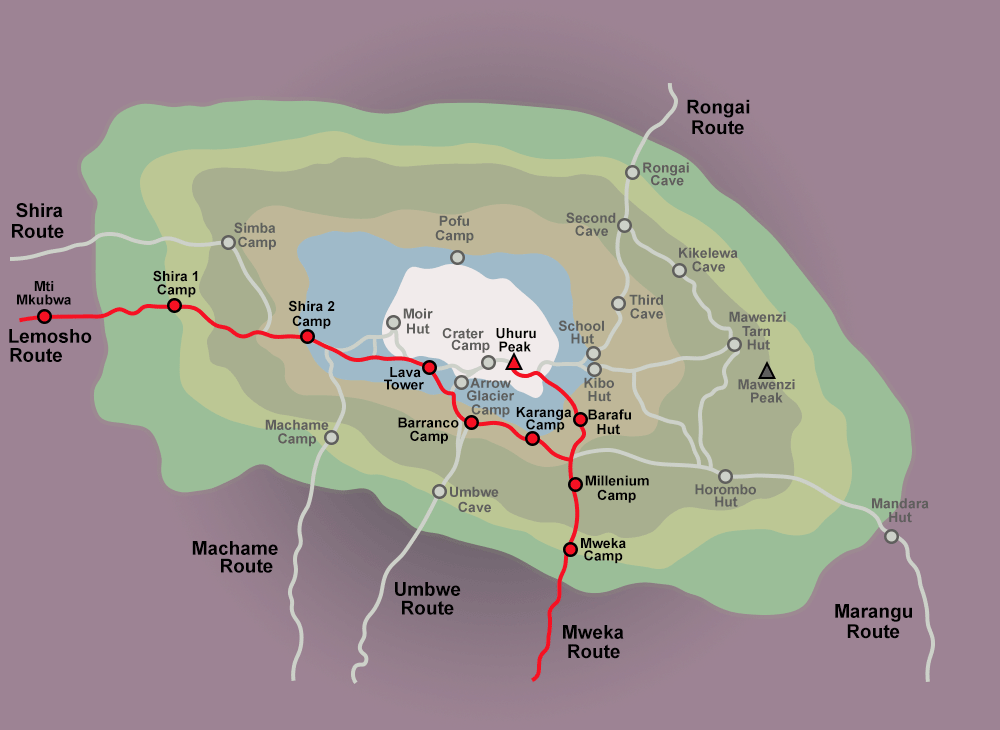
The 6-Day Lemosho Route is a challenging Mount Kilimanjaro trekking itinerary that approaches the summit from the western side of the mountain. The route crosses the montane rainforest and Shira Plateau, passes Lava Tower and Barranco, and continues to Barafu Camp before the summit attempt at Uhuru Peak (5,895 m).
This is the shortest Lemosho itinerary offered by WeWild Travel. It combines the Barranco Wall, Karanga Valley and ascent to Barafu Camp into one demanding trekking day, leaving less time for acclimatization than the 7-day and 8-day options. It is best suited to fit, well-prepared trekkers who understand the challenges of high altitude and the importance of following their guide’s advice.
At a glance: 6 trekking days, 5 nights on the mountain, camping accommodation, a western approach, and a summit attempt at Uhuru Peak. Arrival and departure days are additional.
WeWild Travel provides experienced local mountain guides, organized camp support and pre-climb preparation to help you understand the route and prepare for the conditions. Our team can advise you on equipment, fitness preparation and the demands of this shorter itinerary.
If you prefer more time to acclimatize and a less compressed schedule, compare our 7-day and 8-day Lemosho Route options before booking. If you have only six trekking days available, contact our local team to discuss whether this itinerary is suitable for your experience and preparation.
| Detail | Information |
|---|---|
| Route | Lemosho Route |
| Trek duration | 6 days / 5 nights on the mountain |
| Route approach | Western side of Mount Kilimanjaro |
| Starting point | Lemosho trailhead, accessed through Londorossi Gate |
| Finish point | Mweka Gate |
| Summit | Uhuru Peak, 5,895 m / 19,341 ft |
| Overnight camps | Mti Mkubwa, Shira 2, Barranco, Barafu and Mweka |
| Key landmarks | Shira Plateau, Lava Tower, Barranco Wall and Uhuru Peak |
| Accommodation | Camping at designated mountain camps |
| Meals | Breakfast, lunch and dinner during the trek, according to package inclusions |
| Difficulty | Challenging due to high altitude and the compressed itinerary |
| Best for | Fit, well-prepared trekkers with limited time |
| Route style | Guided camping trek |
| Highest overnight camp | Barafu Camp, approximately 4,600 to 4,673 m; confirm the exact elevation used in your itinerary |
| Common climbing seasons | January to March and June to October, depending on weather conditions |
The 6-Day Lemosho Route is a challenging Mount Kilimanjaro trek that crosses the Shira Plateau, passes Lava Tower and the Barranco Wall, and reaches Barafu Camp before the summit attempt. After reaching Uhuru Peak (5,895 m), you descend to Mweka Camp and finish the trek at Mweka Gate.
This compressed itinerary combines the Barranco-to-Karanga and Karanga-to-Barafu sections into one demanding day. Review the hiking times and acclimatization requirements carefully before choosing this six-day option.
| Day | Route | Elevation | Hiking Time | Overnight |
|---|---|---|---|---|
| Day 1 | Londorossi Gate to Mti Mkubwa Camp | 2,100 m to 2,780 m | 3 to 4 hours | Mti Mkubwa Camp |
| Day 2 | Mti Mkubwa Camp to Shira 2 Camp | 2,780 m to 3,850 m | 5 to 7 hours | Shira 2 Camp |
| Day 3 | Shira 2 Camp via Lava Tower to Barranco Camp | 3,850 m to 4,630 m (Lava Tower), then down to approximately 3,960 m | 6 to 8 hours | Barranco Camp |
| Day 4 | Barranco Camp via Karanga Camp to Barafu Camp | Approximately 3,960 m to 4,673 m | 7 to 9 hours; confirm with your guide team | Barafu Camp |
| Day 5 | Barafu Camp to Uhuru Peak, then via Barafu to Mweka Camp | 4,673 m to 5,895 m, then down to approximately 3,100 m | 12 to 15 hours | Mweka Camp |
| Day 6 | Mweka Camp to Mweka Gate | Approximately 3,100 m to 1,640 m | 3 to 4 hours | No mountain overnight |
Important: Elevations and hiking times are approximate. Confirm them against your actual trekking itinerary before publishing. Day 4 is especially demanding because it combines two trekking stages, while Day 5 includes both the summit attempt and a long descent.
The 6-Day Lemosho Route offers a scenic approach to Mount Kilimanjaro for trekkers with limited time. Starting on the western side of the mountain, the route passes through rainforest, crosses the Shira Plateau, and continues through the alpine desert toward Uhuru Peak (5,895 m).
One of the main attractions is the changing landscape. You will trek through the rainforest near Mti Mkubwa Camp, explore the open Shira Plateau, climb toward Lava Tower, and cross the famous Barranco Wall. These varied environments make the Lemosho Route a memorable way to experience Kilimanjaro.
The six-day schedule suits travelers who cannot spend longer on the mountain. However, it is a demanding option because it allows less time for acclimatization than the 7-day and 8-day itineraries. The long trekking stages and summit attempt require good physical preparation, a steady pace, and close attention to your mountain guide’s advice.
With WeWild Travel, you climb with experienced local Tanzanian guides and a dedicated mountain crew. Our team provides organized camp support, meals according to your package, and guidance throughout the trek. We help you prepare for the route, understand the challenges of altitude, and know what to expect each day.
Is the 6-Day Lemosho Route right for you? Choose it if you have limited time, are well prepared for a demanding trek, and understand the acclimatization trade-offs. If you prefer a less compressed schedule with more time to adjust to altitude, compare our 7-day and 8-day Lemosho Route options before booking.
The best time to climb the 6-Day Lemosho Route is generally during Kilimanjaro’s drier seasons, from June to October and January to February. These months often bring better trail conditions and clearer mountain views. However, weather can change quickly at high altitude, and no season guarantees favorable conditions.
June to October is one of the most popular periods for climbing Mount Kilimanjaro. Trails are often drier, and clear conditions can provide excellent views across the Shira Plateau and Barranco Valley. July, August, and September are particularly busy, so booking early is advisable.
January and February often offer relatively dry conditions and good visibility. These months can suit climbers who prefer to trek outside the busiest mid-year period. Weather and crowd levels still vary, so check conditions when planning your departure.
The long rains usually occur from March to May. Wet trails, cloud cover, and muddy sections can make trekking more difficult. Climbs may still operate, but conditions can be less predictable.
November usually brings the short rains, although their timing and intensity vary. December can offer suitable climbing conditions, but rainfall remains possible. Check the forecast and discuss current trail conditions with your local operator before choosing your dates.
At WeWild Travel, we can help you compare departure dates and prepare for the expected conditions. Because the 6-Day Lemosho Route has a demanding schedule and limited acclimatization time, choosing a favorable season does not replace proper preparation or careful altitude monitoring.
For a broader seasonal comparison, read our guide to the best time to climb Kilimanjaro.
Choosing the right operator for your climb on Mount Kilimanjaro directly impacts your safety, comfort, and summit success. At WeWild Travel, every expedition is structured to prioritize controlled pacing, proper acclimatization, and strong on-mountain support all the way to Uhuru Peak.
This approach ensures every climber has the best possible balance between safety, support, and summit success.
If you are planning to climb Mount Kilimanjaro, the most important step is choosing a trusted local operator. Booking with an experienced company ensures proper safety support, reliable logistics, and a well-organized expedition from start to summit.
For trekkers who want a safe and professionally guided experience, it is strongly recommended to book with a licensed local operator such as WeWild Travel, which provides structured support throughout the entire journey to Uhuru Peak.
Your 6-Day Lemosho Route itinerary begins with your arrival at Kilimanjaro International Airport (JRO), the main international gateway for climbing Mount Kilimanjaro. A WeWild Travel representative will welcome you at the airport and transfer you to Mount Meru Hotel in Arusha, according to your package arrangements.
The drive from Kilimanjaro International Airport to Arusha usually takes around 1 to 1.5 hours, depending on traffic and road conditions. Along the way, you may see local villages, farmland, and views of Mount Meru when the weather is clear.
After checking in at Mount Meru Hotel, take time to rest after your international flight. Drink water, eat well, and avoid strenuous activities before your trek. A good night’s rest can help you prepare for the journey, although it does not replace the time needed to acclimatize to high altitude.
Depending on your arrival time and arrangements, your mountain guide may conduct a pre-climb briefing. You can review the trekking schedule, mountain safety procedures, equipment checklist, and other preparations for your Lemosho Route climb. Use this opportunity to ask questions and check that you have everything required for the trek.
Spend the rest of the day relaxing and preparing your daypack for the following morning. Your team will confirm the pickup time and departure arrangements before the climb begins.
Your 6-Day Lemosho Route trek begins at Londorossi Gate on the western side of Mount Kilimanjaro. After park registration and meeting your mountain crew, you will travel to the trailhead and begin hiking through the montane rainforest toward Mti Mkubwa Camp.
The trail winds beneath tall trees and moss-covered branches, surrounded by thick vegetation and the cool, shaded atmosphere of Kilimanjaro’s lower slopes. Your guide can introduce you to the forest’s distinctive plants and explain how this ecosystem changes as you climb higher.
Keep an eye out for wildlife along the way. You may spot black-and-white colobus monkeys, blue monkeys, or forest birds in the trees. Sightings are not guaranteed, but the rainforest offers an excellent introduction to Kilimanjaro’s natural environment.
After approximately 3 to 4 hours of hiking, you will reach Mti Mkubwa Camp, whose name means “Big Tree” in Swahili. Your crew will help set up camp and prepare your meals. Spend the evening relaxing, drinking water, and preparing for the next day’s trek.
Although this is a relatively short hiking day, you will gain elevation as you enter the mountain environment. Walk at a steady pace, drink water regularly, and follow your guide’s instructions. Take time to adjust to the climb rather than using too much energy on the first day.
On Day 2 of your 6-Day Lemosho Route, you leave the montane rainforest behind and climb through the heath and moorland zones toward Shira 2 Camp. This is a longer trekking day, with a steady ascent across the western slopes of Mount Kilimanjaro and onto the Shira Plateau.
As the trail climbs, the dense forest gives way to giant heathers, grasses, volcanic rocks, and high-altitude plants. The landscape becomes more open, offering wider views across the plateau and toward Kibo Peak when the weather is clear.
The Shira Plateau is one of the distinctive landscapes on the Lemosho Route. Its broad, elevated terrain reflects Kilimanjaro’s volcanic history, and the changing vegetation shows how the mountain environment shifts with altitude. You may also see birds along the trail, although wildlife sightings are never guaranteed.
The hike to Shira 2 Camp requires steady effort because you gain considerable elevation in a single day. Your guide will set a suitable pace and arrange breaks along the way. Walk slowly, drink water regularly, and tell your guide if you develop a headache, nausea, dizziness, or other symptoms of altitude illness.
After reaching Shira 2 Camp, settle into camp, enjoy your prepared meals, and rest before the next stage. Tomorrow, you will trek toward Lava Tower before descending to Barranco Camp.
Day 2 route details
Day 3 of your 6-Day Lemosho Route itinerary takes you from Shira 2 Camp toward Lava Tower before descending to Barranco Camp. This stage follows the “climb high, sleep lower” principle, allowing you to reach a higher elevation during the day before spending the night lower down. However, altitude sickness remains possible, so follow your guide’s instructions and report any symptoms promptly.
You will begin by crossing the open Shira Plateau, with expansive views of Kilimanjaro’s volcanic landscape. As you climb toward Lava Tower, the vegetation becomes sparse and the terrain increasingly rocky. You enter the alpine desert zone, where colder temperatures, thinner air and exposed trails make the trek more demanding.
At approximately 4,630 m, Lava Tower is one of the major landmarks on this section of the route. Your guide will arrange a suitable break, usually including lunch around this area. Weather permitting, you may enjoy views of the surrounding valleys and Kibo’s upper slopes before beginning the descent.
From Lava Tower, the trail descends into the Barranco Valley. As the elevation decreases, the landscape changes again, with giant senecios and lobelias visible in suitable areas near Barranco. The imposing Barranco Wall rises above the valley, giving you a preview of the following day’s climb.
You will reach Barranco Camp at approximately 3,960 m, beneath Kilimanjaro’s southern slopes. After arriving, enjoy your evening meal, rest and prepare for the next stage, when you will climb the Barranco Wall and continue toward Karanga and Barafu Camp.
Day 3 route details
Day 4 of your 6-Day Lemosho Route itinerary takes you from Barranco Camp, over the famous Barranco Wall, and onward through Karanga Valley to Barafu Camp. This is a demanding trekking day because you must cover both sections before preparing for your summit attempt.
After breakfast, you will begin climbing the Barranco Wall. The trail rises steeply above camp, with some sections requiring careful footing and the use of your hands for balance. Your mountain guide will lead the group at a steady pace and help you navigate the steeper sections safely. From the top, you can look back across Barranco Valley and enjoy views of Kilimanjaro’s dramatic southern slopes when the weather is clear.
You will then continue across rocky ridges and valleys toward Karanga Camp. The route includes ups and downs, so progress may feel slower than the distance suggests. After the scheduled break, you will continue toward Barafu Camp, climbing into the exposed alpine desert where vegetation becomes sparse and conditions are colder.
At approximately 4,673 m, Barafu Camp serves as the base for your summit attempt. The camp is exposed to wind and cold, so keep your warm clothing accessible and follow your guide’s instructions. When conditions allow, you may see Kibo and Mawenzi Peak from the surrounding area.
After reaching camp, eat, drink water and organize your summit clothing and equipment. Your guide will explain the planned departure time, route and safety procedures for the summit attempt. Try to rest as much as possible, although sleeping can be difficult at this altitude.
Day 4 route details
This is a long day followed by a demanding summit attempt. Keep a steady pace, follow your guide’s instructions and report any symptoms of altitude illness immediately. At Barafu Camp, prioritize food, hydration, equipment preparation and rest. Your guide will confirm the summit schedule and assess the group’s condition before the ascent.
Day 5 is summit day on your 6-Day Lemosho Route itinerary and one of the most demanding stages of the climb. You will leave Barafu Camp during the night and begin the ascent toward Uhuru Peak, Mount Kilimanjaro’s highest point at 5,895 m. The climb is slow and strenuous because of the steep terrain, cold temperatures and low oxygen levels at this altitude.
Your ascent begins across rocky slopes as you make your way toward Stella Point, located on the crater rim at approximately 5,756 m. Your guide will set a careful pace and arrange breaks according to the group’s condition. Keep your warm layers on, take small steps and report any symptoms of altitude illness immediately.
If the weather is clear, the early morning may bring beautiful views of the sunrise, the surrounding landscape and Kilimanjaro’s upper slopes. From Stella Point, you will continue along the crater rim toward Uhuru Peak.
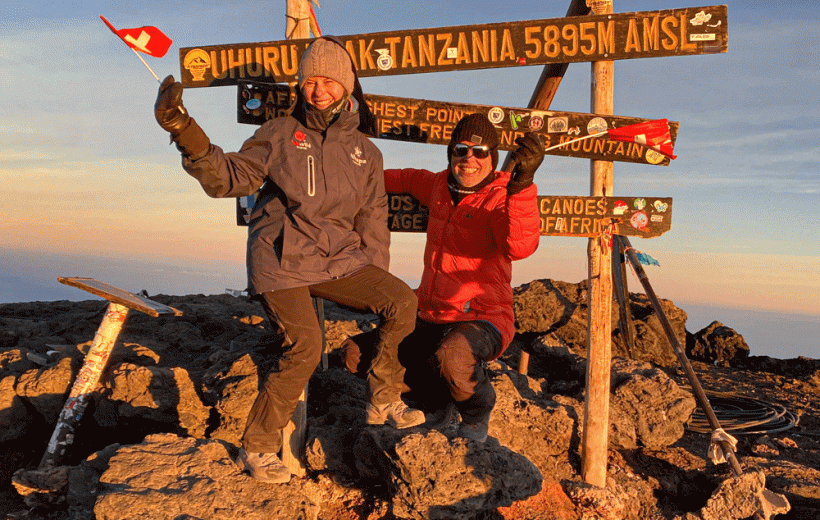
Reaching Uhuru Peak (5,895 m) is the highlight of your Kilimanjaro climb. You will have an opportunity to take photographs and enjoy the achievement, depending on weather conditions, your physical condition and the guide’s safety assessment. Afterward, you will begin the descent toward Barafu Camp.
At Barafu, take a short rest and have food and fluids as directed by your crew before continuing downhill toward Mweka Camp. This second part of the descent is important because the day is not finished when you leave the summit. The trail passes through the alpine desert and into higher moorland as you lose elevation.
You will arrive at Mweka Camp at approximately 3,100 m, where your crew will prepare dinner and you can rest after a long day on the mountain. Your guide may adjust the pace or itinerary if weather, fatigue or altitude-related symptoms make it necessary.
Day 5 route details
Summit day requires patience, careful pacing and close communication with your guide. Follow your crew’s instructions, keep warm, drink fluids regularly as advised, and report headaches, nausea, dizziness, unusual weakness or breathing difficulties promptly. Your guide’s safety assessment takes priority over reaching the summit.
After breakfast at Mweka Camp, you will begin the final descent of your 6-Day Lemosho Route trek. The trail leads downhill through Kilimanjaro’s montane rainforest toward Mweka Gate, where you will complete the park exit procedures.
After the demanding summit day, the forest offers a welcome change from the exposed alpine desert and rocky slopes higher on the mountain. The trail passes beneath tall trees and thick vegetation, and you may hear forest birds or spot black-and-white colobus monkeys and blue monkeys along the way. Wildlife sightings depend on conditions and are never guaranteed.
As you descend, the air becomes warmer, and the vegetation grows denser. Your guide and mountain crew will accompany you to Mweka Gate, where your climb officially concludes. Climbers who reach the required point under Kilimanjaro National Park’s certificate rules can receive their applicable summit certificate.
After completing the exit formalities, you will say goodbye to your mountain crew and transfer to Arusha with WeWild Travel, according to your package arrangements. If Mount Meru Hotel is included in your booking, you can check in, shower, and relax after completing your Kilimanjaro adventure.
You have now completed the six-day mountain itinerary, from the western rainforest to Uhuru Peak at 5,895 m and back down through the forest.
Day 6 route details
Take care on the descent, especially on damp or slippery forest trails. Follow your guide’s instructions, use your trekking poles if needed, and allow enough time for the walk to the gate. After six days on the mountain, prioritize food, hydration, and recovery.
After breakfast at Mount Meru Hotel in Arusha, you will prepare for your journey home. Depending on your flight schedule, you can spend some time relaxing, organizing your luggage, and checking out before your scheduled transfer to Kilimanjaro International Airport (JRO).
The drive from Arusha to the airport usually takes approximately 1 to 1.5 hours, depending on traffic and road conditions. Allow extra time for your transfer and airport check-in, especially if you have an international flight.
If your flight departs later in the day, you may have time to relax at the hotel or explore Arusha, subject to your checkout time and transfer arrangements. WeWild Travel will confirm your pickup time and airport transfer details according to your package.
Your journey has taken you from Kilimanjaro’s montane rainforest across the Shira Plateau and Barranco Valley to Uhuru Peak at 5,895 m, followed by the descent to Mweka Gate. We hope your climb has given you lasting memories of Mount Kilimanjaro and Tanzania.
Departure day details
Thank you for choosing WeWild Travel for your Kilimanjaro climb. We wish you a safe journey home and hope to welcome you back to Tanzania for another adventure.
| Number of People | Cost Per Person in Mid-Range | Cost Per Person in VIP |
|---|---|---|
| 1 person | $3,114 | $7,400 |
| 2 people | $2,224 | $6,900 |
| 3 people | $1,927 | $6,400 |
| 4 people | $1,779 | $6,200 |
| 5 people | $1,690 | $6,000 |
| 6 people | $1,630 | $5,800 |
| 7 people | $1,588 | $5,600 |
| 8 people | $1,557 | $5,400 |
| 9 people | $1,558 | $5,200 |
| 10 people + | $1,512 | $5,000 |
| Mid-Range Package | VIP (Luxury) Package |
|---|---|
| Two Nights Accommodations on BB at either of the following Ameg Lodge or Arusha Palanet Lodge | Two Nights Accommodations at Mount Meru Hotel on FB or at Gran Melia Hotel |

Scan Qr to Add as a friend
We are a team of seasoned African travel experts with over a decade of combined experience in the safari industry designing the best affordable safari adventures in Tanzania, without compromising on quality.
Meru Spring Plaza,
Box 13287, Arusha Tanzania,
Plot 690 Block D, 23106 Sakina.