Deals of The Year: Join a trekking group Adventure 2025! Up to 15% OFF
d
h
m
s
Deals of The Year: Join a trekking group Adventure 2025! Up to 15% OFF
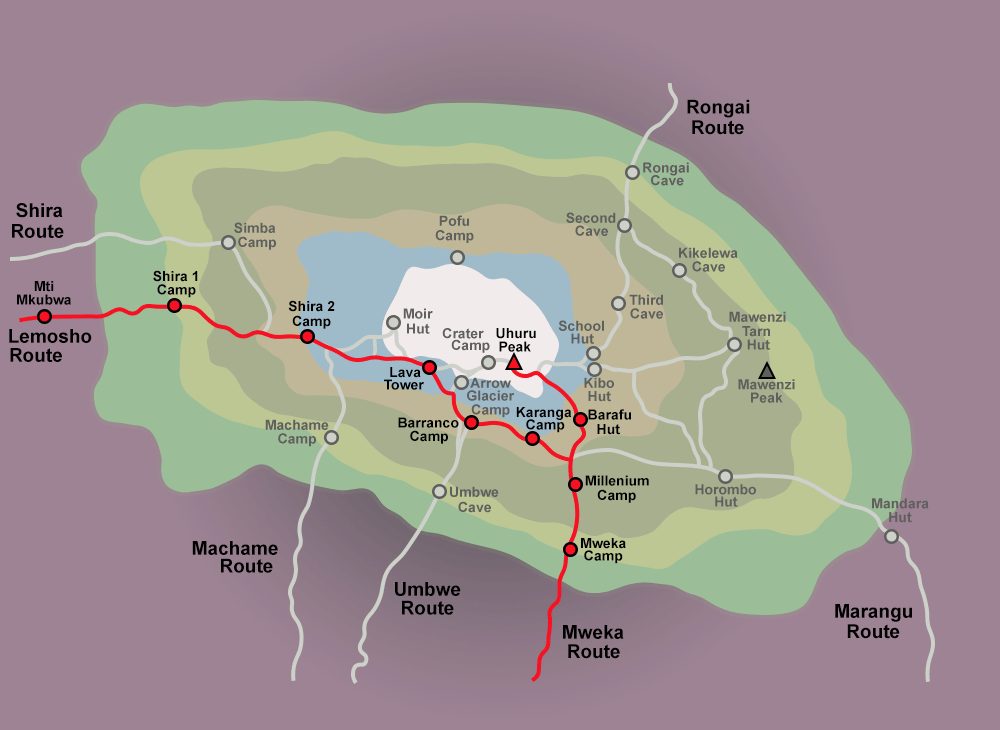
The 9-Day Lemosho Route with Crater Camp is a guided Mount Kilimanjaro trek that approaches from the western side and includes an overnight stay inside Kibo Crater, near Uhuru Peak (5,895 m). The route crosses the Shira Plateau, passes Lava Tower and the Barranco Wall, and follows the southern circuit toward Barafu Camp before the summit attempt.
Unlike a standard Lemosho itinerary that descends after reaching Uhuru Peak, this nine-day route includes a night at Crater Camp, at approximately 5,700 to 5,800 m. This high-altitude overnight offers a rare opportunity to experience Kilimanjaro’s crater landscape. However, the extreme elevation, cold temperatures, and limited oxygen make it demanding and require careful preparation and close monitoring by experienced mountain guides.
The itinerary includes nine trekking days and eight nights on the mountain, according to the planned schedule. You should also allow additional time in Tanzania for arrival, the pre-climb briefing, recovery after the trek, and departure. Confirm the full trip duration and accommodation arrangements with WeWild Travel before booking.
The 9-Day Lemosho Route with Crater Camp is a very challenging Mount Kilimanjaro trek that combines the western approach with an overnight stay inside Kibo Crater. Review these key details, including the duration, summit altitude, accommodation, and booking requirements, before choosing this itinerary.
| Quick fact | Details |
|---|---|
| Trek duration | 9 trekking days |
| Mountain accommodation | 8 nights, if confirmed by the final itinerary |
| Total trip planning | Allow at least 11 days for arrival, the trek, and departure |
| Route | Lemosho Route, western approach |
| Starting point | Londorossi Gate and the Lemosho trailhead; confirm the transfer and registration arrangements |
| Finish point | Mweka Gate |
| Summit | Uhuru Peak, 5,895 m |
| Highest overnight | Crater Camp, approximately 5,700 to 5,800 m; verify the planned camp elevation |
| Accommodation | Tents at designated mountain camps |
| Difficulty | Very challenging due to extreme altitude, cold, and the demanding summit itinerary |
| Best suited to | Well-prepared trekkers who understand the risks of extreme altitude |
| Starting price | From US$3,833 per person, subject to confirmation of the current package price |
| Crater Camp arrangements | Subject to park rules, availability, weather, and the guide’s safety assessment |
Crater Camp requires specific arrangements and may involve additional park fees or operational costs. Contact WeWild Travel to confirm the current price, availability, inclusions, and suitability of this itinerary before booking. Summit success and permission to continue to Crater Camp cannot be guaranteed.
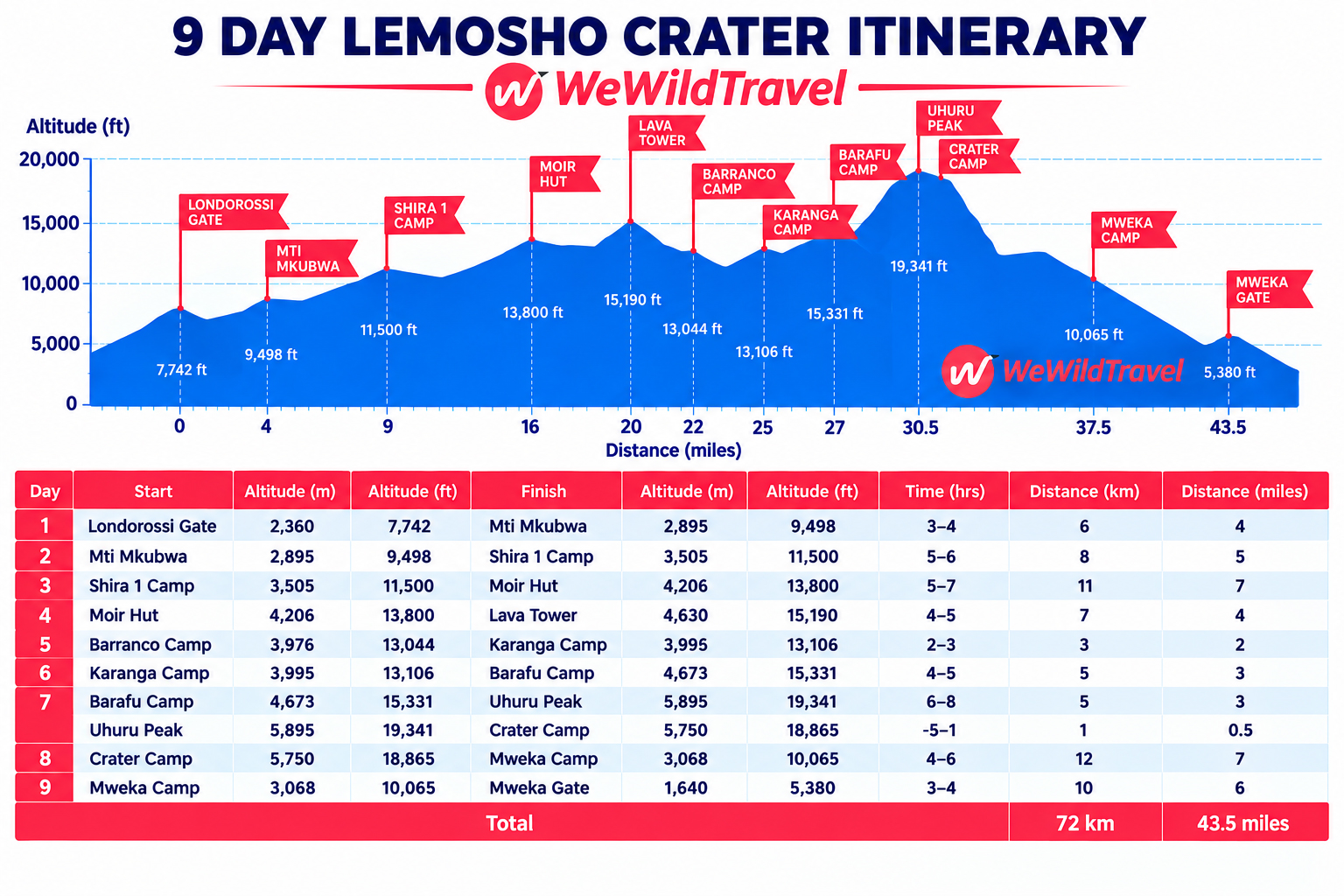
The 9-Day Lemosho Route with Crater Camp crosses Kilimanjaro’s western slopes, the Shira Plateau, and the southern circuit before reaching the high-altitude Crater Camp. This overview shows the planned daily stages, approximate hiking times, and overnight elevations. Times and elevations can vary with conditions and the final route plan.
| Day | Route | Approx. hiking time | Overnight / sleeping altitude |
|---|---|---|---|
| Arrival day | Kilimanjaro International Airport (JRO) to hotel in Arusha; briefing | No trekking | Hotel in Mount Meru Arusha |
| Day 1 | Londorossi Gate / Lemosho trailhead to Mti Mkubwa Camp | 3 to 4 hours | Approximately 2,650 to 2,895 m |
| Day 2 | Mti Mkubwa Camp to Shira 1 Camp | 5 to 6 hours | Approximately 3,500 to 3,610 m |
| Day 3 | Shira 1 Camp to Shira 2 Camp | 3 to 4 hours | Approximately 3,840 to 3,850 m |
| Day 4 | Shira 2 Camp via Lava Tower to Barranco Camp | 6 to 8 hours | Approximately 3,900 to 3,976 m |
| Day 5 | Barranco Camp to Karanga Camp | 4 to 5 hours | Approximately 3,995 to 4,035 m |
| Day 6 | Karanga Camp to Barafu Camp | 3 to 4 hours | Approximately 4,600 to 4,673 m |
| Day 7 | Barafu Camp to Crater Camp | Confirm with the operations team | Approximately 5,700 to 5,800 m |
| Day 8 | Crater Camp to Uhuru Peak, then descend via Barafu toward Mweka Camp | Confirm the full summit-and-descent duration | Approximately 3,100 m at Mweka Camp |
| Day 9 | Mweka Camp to Mweka Gate; transfer to Hotel in Mount Meru Arusha | 3 to 4 hours | Hotel in Mount Meru Arusha |
| Departure day | Hotel in Moshi to Kilimanjaro International Airport | No trekking | No overnight included |
Important: The Crater Camp stage involves extreme altitude. The itinerary, overnight arrangements, and summit attempt depend on park requirements, conditions, and the guides’ assessment of each climber’s health and safety. Confirm the full route and timings with WeWild Travel before booking.
The 9-Day Lemosho Route with Crater Camp offers a distinctive way to climb Mount Kilimanjaro, combining the scenic western approach with an overnight stay inside Kibo Crater. The itinerary passes through several ecological zones and includes well-known landmarks such as the Shira Plateau, Lava Tower, and Barranco Wall before the summit attempt at Uhuru Peak (5,895 m).
The best time to climb the 9-Day Lemosho Route with Crater Camp is generally during Kilimanjaro’s drier seasons, particularly from June to October and January to February. These periods often offer better trail conditions and clearer views across the mountain. However, weather changes quickly at high altitude, and conditions near Crater Camp can be cold and severe throughout the year.
June to October: Main dry season
June to October is a popular period for climbing Mount Kilimanjaro. Lower forest trails are often drier, and clearer skies can provide views across the Shira Plateau and surrounding landscapes. July, August, and September are busy months, so arranging your preferred departure early can help with planning. Temperatures drop significantly at higher elevations, especially around Barafu Camp and Crater Camp.
January to February: Another good climbing window
January and February are also popular months for Kilimanjaro climbs. Conditions are often relatively dry, and visibility can be good across the mountain. These months may suit trekkers who prefer to avoid the busiest part of the mid-year climbing season. Nevertheless, rain, wind, and low temperatures remain possible, particularly near the summit.
March to May: Long rainy season
Rainfall generally increases from March and can continue through May. Forest trails may become muddy, clouds can limit visibility, and wet conditions can make trekking more difficult. Climbs may still operate, depending on weather and route conditions, but you should bring suitable waterproof clothing and prepare for changing conditions.
November to December: Short rains and variable weather
November often brings short rains, although their timing and intensity vary. December can offer suitable climbing conditions, but rain and cloud cover are still possible. If you choose this period, prepare for both wet lower slopes and cold, exposed terrain at higher elevations.
Read More: The best time to climb the 9-Day Lemosho Route
For the 9-Day Lemosho Route with Crater Camp, choosing a relatively dry period can improve the trekking experience, but season alone does not determine whether the climb is suitable or successful. Crater Camp lies at extreme altitude, where cold, wind, and reduced oxygen create additional challenges. Your preparation, health, guide’s assessment, and current mountain conditions are all important.
WeWild Travel can help you compare available departure dates and prepare for the expected conditions. Before booking, confirm the itinerary, Crater Camp arrangements, and any weather-related changes that may affect your climb.
Choosing a reliable local operator is an important part of preparing for the 9-Day Lemosho Route with Crater Camp. WeWild Travel is based in Arusha, Tanzania, and focuses on guided Kilimanjaro climbs supported by experienced local mountain crews. Our approach emphasizes careful preparation, responsible trekking, and attention to climbers’ health throughout the expedition.
For the 9-Day Lemosho Route with Crater Camp, safety must take priority over reaching the summit or completing the planned itinerary. WeWild Travel can explain the arrangements included in your package so you can make an informed decision before booking.
Booking the 9-Day Lemosho Route with Crater Camp starts with choosing a reliable local Kilimanjaro operator and confirming that the itinerary suits your experience, fitness, and altitude preparation. Because Crater Camp is at extreme altitude, your booking should include clear information about the route, safety arrangements, permits, and any additional costs.
WeWild Travel is a local Kilimanjaro tour operator based in Arusha, Tanzania. Our team can help you review the itinerary, understand what the package includes, and plan your climb.
Before booking, confirm these details:
Your 9-Day Lemosho Route with Crater Camp begins with your arrival at Kilimanjaro International Airport (JRO). A WeWild Travel representative will meet you at the airport and arrange your transfer to your hotel in Arusha, where you can relax before your Kilimanjaro climb.
The drive from JRO to Arusha usually takes around 1 to 1.5 hours, depending on traffic and your hotel’s location. Along the way, you may see local villages, farmland, and the landscapes of northern Tanzania. On a clear day, Mount Meru may also come into view.
After checking in, take time to rest after your flight and organize your trekking equipment. Your guide will arrange a pre-climb briefing and equipment check according to your arrival schedule. This meeting gives you an opportunity to review the route, understand the daily trekking plan, and ask questions about altitude, mountain conditions, and safety.
Your guide will also explain what to carry in your daypack and how the mountain crew will support you during the trek. Before going to bed, prepare your clothes and essential items for the following morning. A good night’s rest will help you start the journey feeling prepared.
Tomorrow, you will travel to the Lemosho trailhead and begin trekking through Kilimanjaro’s lower forest toward Mti Mkubwa Camp.
Arrival Day Details
Before settling in for the night, check that you have everything ready for the next morning.
Your first trekking day on the 9-Day Lemosho Route with Crater Camp takes you into the rainforest on Mount Kilimanjaro’s western slopes. After breakfast, your WeWild Travel team will transfer you from Arusha to the Lemosho entrance area. Once the park registration and trekking preparations are complete, you will begin walking toward Mti Mkubwa Camp.
The trail passes beneath a thick canopy of trees, with ferns, moss, and other plants growing along the forest floor. The air is often cool and humid, making this a very different environment from the open mountain terrain you will encounter higher up. Take your time on the trail and follow your guide’s pace as you begin gaining altitude.
Look and listen for wildlife as you walk. Black-and-white colobus monkeys, blue monkeys, and forest birds may be seen in this area, although sightings depend on natural conditions. Your guide can help you recognize local wildlife and explain the rainforest environment. Keep your distance from animals and avoid feeding them.
After several hours on the trail, you will reach Mti Mkubwa Camp, also known as Big Tree Camp. Your mountain crew will help set up camp, and your cook will prepare your meal. Take time to rest, drink fluids regularly, and let your guide know if you feel unwell.
In the evening, your guide will discuss the next day’s walk toward Shira 1 Camp. You will leave the dense rainforest behind gradually as the route climbs toward higher ground and more open vegetation.
The first day introduces you to Kilimanjaro’s forest environment and gives you time to settle into the rhythm of mountain trekking. Walk steadily, follow your guide’s instructions, and avoid rushing to reach camp. Wildlife sightings are possible but never guaranteed.
On the second day of the 9-Day Lemosho Route with Crater Camp, you climb out of the rainforest and into Kilimanjaro’s open moorland. After breakfast at Mti Mkubwa Camp, you will follow the trail uphill as the landscape gradually changes with the increasing altitude.
At first, the path winds through the upper forest, where trees become shorter and more widely spaced. As you climb, the vegetation opens up to reveal giant heathers, grasses, and hardy plants adapted to the mountain environment. You may also find opportunities to look back toward the lower slopes when the weather allows.
The trail continues toward the western side of the Shira Plateau, an elevated landscape shaped by Kilimanjaro’s volcanic history. Here, the thick forest gives way to open ground, rolling highland terrain, and scattered rocky features. Kibo Peak may become more visible as you progress, although clouds can cover the mountain at any time.
Today involves a longer climb than the previous day, so keep a steady pace and take breaks when needed. Your guide will monitor how you are responding to the increasing altitude. Drink water regularly and report symptoms such as a persistent headache, nausea, dizziness, or unusual fatigue rather than trying to push through them.
After several hours of trekking, you will reach Shira 1 Camp, your overnight stop on the plateau. Once you arrive, settle into your tent, enjoy the meal prepared by your mountain crew, and rest. If conditions are clear, you can appreciate the wide-open surroundings before temperatures drop in the evening.
Tomorrow, the route continues across the Shira Plateau toward Shira 2 Camp, giving you more time to explore this highland landscape as the trek progresses.
This is the day you begin to leave Kilimanjaro’s forest behind. The trail opens into high moorland, with broader views and a more exposed mountain environment. Reaching Shira 1 Camp also brings you farther into the landscape that makes the Lemosho Route distinctive.
The steady climb is an important part of your overall ascent, but reaching a particular camp does not guarantee that your body has acclimatized. Follow your guide’s pace, communicate any symptoms, and allow your team to make safety decisions based on your condition.
Day 3 of the 9-Day Lemosho Route with Crater Camp takes you farther across the Shira Plateau. After breakfast at Shira 1 Camp, you continue through open highland terrain toward Shira 2 Camp. Compared with the forest trails of the first day, this section feels wider and more exposed, with volcanic ground, scattered grasses, and hardy plants adapted to the mountain climate.
As you cross the plateau, you may enjoy views toward Kibo, Kilimanjaro’s highest volcanic cone. The weather can change quickly at this elevation, so the summit may appear clearly one moment and disappear behind clouds the next. Your guide can point out features of the surrounding landscape and explain how Kilimanjaro’s volcanic past shaped this area.
The walk is generally shorter than the previous day, giving you more time to settle into the mountain routine. Maintain a comfortable pace, drink fluids regularly, and tell your guide if you experience symptoms such as a headache, nausea, dizziness, or unusual fatigue. The extra time at camp provides an opportunity to rest, but your response to altitude still needs careful monitoring.
After reaching Shira 2 Camp, you can enjoy your meal, relax in camp, and take in the highland surroundings if the weather is clear. Your guide will explain the next day’s route, which crosses higher ground near Lava Tower before descending toward Barranco Camp. This climb-high, sleep-lower profile is intended to support acclimatization, although it cannot eliminate the risk of altitude illness.
The Shira Plateau offers a different perspective of Kilimanjaro, with open terrain and expansive views instead of dense forest. This shorter walking day also gives you more time to rest before the longer route toward Lava Tower and Barranco Camp on Day 4.
Day 4 of the 9-Day Lemosho Route with Crater Camp takes you to higher ground before descending to Barranco Camp. After breakfast at Shira 2 Camp, you leave the Shira Plateau and trek across a rocky landscape toward Lava Tower, which stands at approximately 4,600 m (15,090 ft). You then descend to Barranco Camp for the night.
As you climb, the vegetation becomes sparse and the terrain increasingly rocky. The open slopes offer broad views when the weather is clear, but temperatures and conditions can change quickly at this elevation. Keep a steady pace and follow your guide’s instructions as the trail gains height.
Lava Tower is a prominent volcanic rock formation and a key landmark on this section of the Lemosho Route. Reaching approximately 4,600 m gives you a chance to experience a higher elevation before descending to your overnight camp.
Your team may stop here for lunch and a rest, depending on the day’s conditions and schedule. Pay attention to how you feel. Headaches, nausea, dizziness, or unusual weakness can indicate altitude illness, so tell your guide promptly if symptoms develop. Your guide should assess your condition before deciding whether it is safe to continue.
After Lava Tower, the trail descends toward Barranco Camp through the mountain’s rugged alpine terrain. As you lose elevation, you may notice changes in the landscape, including giant senecios and other plants adapted to Kilimanjaro’s high-altitude environment.
Barranco Camp sits beneath the imposing Barranco Wall, which you will climb the following morning. When clouds clear, Kibo’s steep slopes provide a dramatic backdrop to the camp. After arrival, settle into your tent, eat, and rest while your guide explains the next day’s route.
The day’s climb-high, sleep-lower profile is commonly used on Kilimanjaro to support acclimatization. However, it does not remove the risk of altitude illness, and your symptoms and overall condition should guide safety decisions.
This day takes you to one of the trek’s highest points so far before you descend to sleep at a lower elevation. The contrast between Lava Tower’s exposed volcanic terrain and the distinctive vegetation around Barranco Camp makes it a memorable part of the route. It also prepares you for the next morning’s climb up the Barranco Wall.
Day 5 of the 9-Day Lemosho Route with Crater Camp begins with the climb up the famous Barranco Wall. After breakfast, you leave Barranco Camp and follow your guide up the rocky wall before continuing across ridges and valleys toward Karanga Camp.
The Barranco Wall may look steep from the campsite, but the route follows a trekking trail rather than a technical climbing pitch. In some places, you may need to use your hands for balance as you move over rocks. Your guide will show you where to place your feet and help the group move safely. Take your time, follow instructions, and avoid rushing other trekkers.
At the top, you can look back across Barranco Valley and see the rugged terrain surrounding the camp. The views depend on the weather, but this section often provides memorable perspectives of Kilimanjaro’s steep slopes and nearby ridges.
The trail then continues through a series of ups and downs as you cross the mountain’s southern slopes toward Karanga Valley. Although the distance is relatively short, the uneven terrain and repeated climbs can make the walk feel demanding. Keep a steady pace and take breaks when needed.
As you approach Karanga Camp, the landscape becomes increasingly rocky, with less vegetation than the forest and moorland lower on the mountain. Once you arrive, your crew will prepare your meal and help you settle into camp. Use the remaining time to rest, drink fluids, and tell your guide if you notice any symptoms of altitude illness.
Your guide will review the following day’s route to Barafu Camp, where you will prepare for the next stages of your climb. The planned overnight sequence toward Crater Camp and Uhuru Peak should be confirmed with your operator before departure.
The Barranco Wall is the defining feature of this day. The climb involves careful foot placement and some use of your hands for balance, followed by a trek across the rugged southern slopes toward Karanga Camp.
Reaching camp marks another stage of your ascent, but the summit is not yet guaranteed. Rest well, follow your guide’s advice, and prepare for the next day’s climb toward Barafu Camp.
Day 6 of the 9-Day Lemosho Route with Crater Camp takes you higher along Kilimanjaro’s southern slopes to Barafu Camp. After breakfast at Karanga Camp, you continue uphill through rocky terrain toward the high-altitude camp where you will prepare for the next stage of your climb.
The vegetation becomes increasingly sparse as the trail crosses the alpine desert. You will see exposed rock, dry ground, and steep mountain slopes rather than the forests and moorland of the lower route. When the weather is clear, the views across the southern side of Kilimanjaro reveal the valleys and ridges you have crossed during the previous days.
The walk is relatively short, but the altitude makes it important to maintain a steady pace. Follow your guide’s instructions and let the team know if you develop a headache, nausea, dizziness, or unusual weakness. Reaching camp safely is more important than finishing quickly.
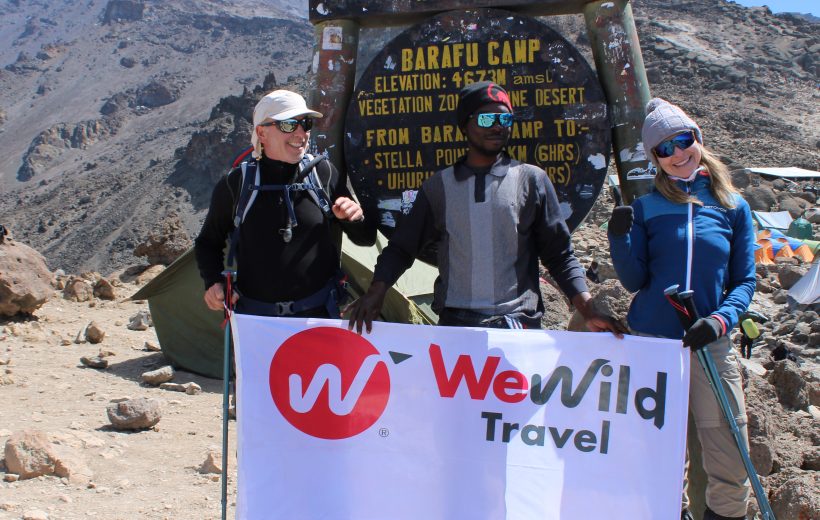
After approximately three to four hours of trekking, depending on conditions and pace, you may reach Barafu Camp, commonly located at around 4,600–4,673 m. The camp sits on exposed, rocky ground where temperatures can drop sharply and winds can make conditions uncomfortable. Your crew will help you settle in and provide your scheduled meals.
Use the afternoon to rest and check your clothing, headlamp, gloves, and other equipment needed for the next stage. Your guide will explain the planned route, departure time, expected conditions, and safety procedures. Because this itinerary includes Crater Camp, confirm the following day’s destination and overnight arrangements with your guide.
Reaching Barafu Camp marks an important milestone on your Kilimanjaro climb. You have crossed several different mountain environments and reached a high, exposed camp where preparation and rest become especially important.
The summit stages still lie ahead. Follow your guide’s advice, report any symptoms promptly, and make sure you understand the confirmed plan for reaching Crater Camp and Uhuru Peak.
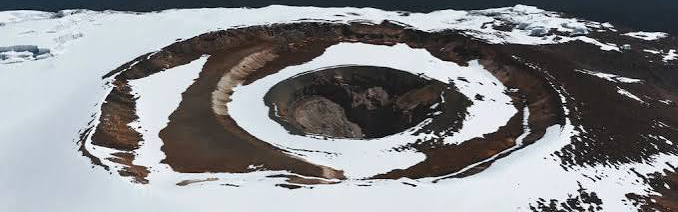
Day 7 of the 9-Day Lemosho Route with Crater Camp takes you from Barafu Camp into Kilimanjaro’s high-altitude summit zone. The trail climbs across exposed, rocky terrain toward Crater Camp, located near the summit crater at an elevation of approximately 5,700–5,800 m. Although the walking distance is relatively short, the steep ascent and very low oxygen levels make this a demanding stage of the trek.
As you leave Barafu Camp, follow your guide’s pace and instructions. The route crosses rugged volcanic ground with little vegetation, and temperatures can drop sharply as you gain elevation. Walking slowly and taking breaks can help you manage the physical effort, but they do not remove the risk of altitude illness.
Your guide and mountain crew will assess conditions and your wellbeing throughout the ascent. Report any headache, nausea, dizziness, unusual weakness, confusion, or breathing difficulty immediately. The decision to continue must prioritize your health and safety; reaching Crater Camp should never take precedence over responding to symptoms of altitude illness.
If the ascent proceeds as planned, you will arrive at Crater Camp, one of the highest overnight locations on Kilimanjaro. Your crew will organize the camp and provide your scheduled meal. Keep your warm clothing, gloves, headlamp, water, and sleeping equipment accessible. Rest as much as possible and follow your guide’s instructions about the next stage toward Uhuru Peak.
Sleeping at this elevation places significant demands on the body. Your guide should explain the overnight arrangements, monitor your condition, and review the summit plan before you attempt the next stage.
This stage takes you into the extreme-altitude environment near Kilimanjaro’s summit crater. The landscape is stark and rocky, and the thin air makes even slow walking strenuous. Reaching Crater Camp is a major milestone, but your health and the guide’s assessment must determine whether you continue toward Uhuru Peak.
Day 8 of the 9-Day Lemosho Route with Crater Camp is your planned summit day on Mount Kilimanjaro. After leaving Crater Camp at approximately 5,700 to 5,800 m, you climb toward Uhuru Peak (5,895 m), the highest point in Africa. Although the remaining ascent is relatively short, the extreme altitude, cold, and rocky terrain make this a physically demanding stage of the trek.
Your guide sets a careful pace and assesses the group’s condition as you approach the summit. If conditions and your health allow, you will reach Uhuru Peak, where you can take photographs and celebrate your achievement. Keep your summit stop brief, as cold temperatures and the effects of altitude make it important to begin the descent promptly.
After the summit, you descend through the upper mountain and continue down Kilimanjaro’s southern slopes toward Mweka Camp. The long descent can be tiring, particularly after several days of trekking at high altitude. Follow your guide’s instructions, take care on loose or rocky ground, and drink fluids regularly when possible.
On arrival at Mweka Camp, at approximately 3,100 m, you can rest and recover after the summit attempt. Your mountain crew will provide your scheduled meal and help you settle in for the night. Tell your guide if you feel unwell during the descent or after reaching camp.
Reaching Uhuru Peak is never guaranteed. Your progress depends on your health, weather, trail conditions, and your guide’s safety assessment. If continuing would put you at risk, your guide may advise you to stop ascending or descend.
This is the planned summit day of the 9-Day Lemosho Route with Crater Camp. Reaching Uhuru Peak is a major achievement, followed by a substantial descent to Mweka Camp. Careful pacing, guide supervision, and attention to altitude-related symptoms remain essential throughout the day.
Day 9 of the 9-Day Lemosho Route with Crater Camp marks the end of your Kilimanjaro trek. After breakfast at Mweka Camp, you begin the final descent through the montane rainforest toward Mweka Gate. The trail passes through damp forest, with dense vegetation and a warmer climate as you lose altitude.
The descent usually takes around 3 to 4 hours, depending on trail conditions and your walking pace. Take care on muddy or slippery sections, especially after rain, and follow your guide’s instructions as you make your way down.
At Mweka Gate, you will complete the park exit procedures and say goodbye to your mountain crew. Climbers who meet the official requirements can receive their Kilimanjaro summit certificates. Take time to celebrate the journey and capture photos with the guides and porters who supported your climb.
After leaving the park, meet your driver for the transfer to Arusha. Once you arrive, check in at Arusha Mount Meru Hotel, if this accommodation is included in your confirmed package. You can then shower, relax, and recover after your trek.
Your Kilimanjaro adventure ends with the journey from the mountain back to town. If you have an onward flight or other travel plans, allow enough time for the descent, park procedures, and road transfer.
The final descent brings you back into Kilimanjaro’s rainforest before you leave the national park. After completing the park formalities, you return to Arusha to rest after your climb. Your guide and crew will help bring the mountain experience to a close.
After breakfast at Arusha Mount Meru Hotel, enjoy your final morning in Tanzania before your journey home. Depending on your flight schedule, your WeWild Travel driver will pick you up at the hotel and transfer you to Kilimanjaro International Airport (JRO).
Before departure, WeWild Travel will present you with a small summit congratulations gift to celebrate your Kilimanjaro adventure, if this is included in your package. It is a simple reminder of the effort, determination, and memories behind your climb.
Before leaving the hotel, check that you have your passport, flight details, luggage, and personal belongings. Your driver will arrange the airport transfer according to your departure time. Allow enough time for the drive, airport check-in, and international departure procedures.
Thank you for choosing WeWild Travel for your 9-Day Lemosho Route with Crater Camp. We hope you leave Tanzania with lasting memories of Kilimanjaro, the mountain crew who supported you, and your time in the country.
| Number of People | Cost Per Person in Mid-Range | Cost Per Person in VIP |
|---|---|---|
| 1 person | $3,700 | $7,400 |
| 2 people | $2,800 | $6,900 |
| 3 people | $2,700 | $6,400 |
| 4 people | $2,650 | $6,200 |
| 5 people | $2,600 | $6,000 |
| 6 people | $2,550 | $5,800 |
| 7 people | $2,500 | $5,600 |
| 8 people | $2,450 | $5,400 |
| 9 people | $2,400 | $5,200 |
| 10 people + | $2,350 | $5,000 |
| Mid-Range Package | VIP (Luxury) Package |
|---|---|
| Two Nights Accommodations on BB at either of the following Ameg Lodge or Arusha Palanet Lodge | Two Nights Accommodations at Mount Meru Hotel on FB or at Gran Melia Hotel |
Scan Qr to Add as a friend



We are a team of seasoned African travel experts with over a decade of combined experience in the safari industry designing the best affordable safari adventures in Tanzania, without compromising on quality.
Meru Spring Plaza,
Box 13287, Arusha Tanzania,
Plot 690 Block D, 23106 Sakina.