Complete Trekking Guide 2026: Everything You Need to Know
A Kilimanjaro trek is a 5 to 9 day high-altitude hike to 5,895m (19,341ft) that does not require technical climbing skills but demands good fitness and preparation. Success depends on choosing the right route, with longer options like Lemosho or Machame improving acclimatization and summit chances.
Trekkers should train for 2 to 3 months, prepare for long hiking days, and pack for changing climates from rainforest to freezing summit conditions. The main challenge is altitude, which can cause fatigue and sickness, so a slow pace, hydration, and guide support are essential for a safe and successful climb.
This guide is created specifically for beginners and first-time trekkers who want to understand everything about climbing Kilimanjaro in a simple and practical way. Whether you are planning your first trekking adventure or comparing different tour options, this guide will help you make the right decisions before you begin your journey. It is designed to remove confusion and give you clear, step-by-step knowledge about what to expect on the mountain.
In this you will learn all the essential details needed to prepare for a successful climb. We will explore the best routes available, including which ones are most suitable for beginners and which offer the highest success rates. You will also understand the real cost of climbing Kilimanjaro, including what is included in the price such as park fees, guides, porters, food, and equipment. This helps you plan your budget properly and avoid unrealistic expectations when booking your trip.
In addition, this guide will cover important tips that significantly increase your chances of reaching the summit, such as how to walk at the right pace, how to deal with altitude, and how to stay strong throughout the journey. You will also discover the best time to climb Kilimanjaro, helping you choose the ideal months for weather, visibility, and overall trekking conditions.
By the end of this guide, you will have a complete understanding of how to prepare, what to expect, and how to successfully climb Mount Kilimanjaro with confidence.
What Is Mount Kilimanjaro?
Mount Kilimanjaro is the highest mountain in Africa and one of the most famous trekking destinations in the world. It is a free-standing volcanic mountain that rises dramatically from the surrounding plains, making it visible from far distances. Unlike many other high mountains that are part of long ranges, Kilimanjaro stands alone, which gives it a unique and powerful presence that attracts thousands of trekkers every year.
Location and Geography
Mount Kilimanjaro is located in northern Tanzania, close to the border with Kenya. It sits within the protected Kilimanjaro National Park, a UNESCO World Heritage Site known for its rich biodiversity and stunning landscapes. The mountain is easily accessed from Arusha, which is the main gateway city for climbers and safari travelers.
Because of its location near the equator, Kilimanjaro features multiple climate zones, ranging from tropical rainforest at the base to icy conditions at the summit. This makes the climb feel like passing through several different worlds in a single journey.
Height and Climbing Challenge
In terms of height, Mount Kilimanjaro stands at an impressive 5,895 meters (19,341 feet) above sea level. This makes it not only the tallest mountain in Africa but also the highest free-standing mountain in the world.
Its height creates a significant challenge due to the decrease in oxygen levels as you ascend. However, despite its altitude, Kilimanjaro does not require technical climbing skills, which makes it accessible to many first-time trekkers who are physically prepared and properly guided.
Why Mount Kilimanjaro Is Famous
Mount Kilimanjaro is famous because it is the highest mountain in Africa and the tallest free-standing mountain in the world. It attracts climbers due to its unique mix of accessible trekking without technical climbing skills, stunning scenery, and diverse climate zones from rainforest to glaciers. It is also part of the Seven Summits challenge, making it a top global adventure destination.
Best Time to Climb Mount Kilimanjaro
The best time to climb Kilimanjaro is during January to March and June to October. These months are known for having less rain, clearer skies, and more comfortable trekking conditions. January to March is slightly colder, especially at higher altitudes, but it offers fewer crowds and beautiful snow-capped summit views. June to October is the most popular climbing season because it is warmer, drier, and provides the most stable weather conditions, making it ideal for first-time trekkers and beginners.
The main reason the dry season is considered the best time to climb Kilimanjaro is because it reduces the challenges caused by rain and slippery trails. During the rainy seasons, which occur in April to May and November, the paths become muddy and more difficult to navigate. Visibility is also lower due to clouds and mist, which can reduce the overall trekking experience. In contrast, dry conditions make walking safer, camps more comfortable, and mountain views more enjoyable.
Choosing the right time to climb Mount Kilimanjaro is very important for a successful and enjoyable trekking experience. Weather conditions on the mountain change throughout the year, and selecting the right season can greatly improve visibility, trail conditions, and your overall summit success rate. Most trekkers prefer to climb during the dry seasons because the weather is more stable and the views are much clearer.
Overall, choosing the dry season significantly increases your chances of a successful summit. It provides better trail conditions, improved safety, and a more rewarding experience as you ascend through the different climate zones of Kilimanjaro.
Best Kilimanjaro Routes
The best Kilimanjaro routes are Lemosho, Machame, and Rongai. Lemosho offers the best scenery and high success rates, Machame is popular and well-balanced for acclimatization, and Rongai is quieter with a gentler ascent. Longer routes (7 to 8 days) give the highest chance of reaching the summit safely.
Choosing the right route on Mount Kilimanjaro is one of the most important decisions for a successful climb. Each route offers a different experience in terms of scenery, difficulty, acclimatization, and summit success rate. Some routes are more scenic and longer, while others are shorter and more direct. Understanding each option helps trekkers select the best path based on their fitness level, time, and experience.
Machame Route
The Machame Route is one of the most popular routes on Kilimanjaro, often called the “Whiskey Route.” It is known for its beautiful scenery and challenging but rewarding trekking experience. The route usually takes 6 to 7 days, which allows good acclimatization and increases summit success rates. It passes through diverse landscapes including rainforest, moorland, and alpine desert, making it one of the most scenic options on the mountain. However, it includes steep sections, so it requires moderate fitness and determination.
Lemosho Route
The Lemosho Route is widely considered one of the best routes for both scenery and success rate. It starts on the western side of Kilimanjaro and offers a quieter, more remote experience in the early days. This route takes 7 to 8 days, giving climbers more time to adjust to altitude changes. Because of its gradual ascent, it has one of the highest summit success rates, making it an excellent choice for beginners who want a safer and more enjoyable climb.
Marangu Route
The Marangu Route is the oldest and most established route on Kilimanjaro and is often known as the “Coca-Cola Route.” It is the only route that offers hut accommodation instead of camping, which makes it more comfortable for some trekkers. However, it is shorter, usually taking 5 to 6 days, which reduces acclimatization time. Because of this, it has a lower summit success rate compared to longer routes. It is easier in terms of terrain but more challenging in terms of altitude adaptation.
Rongai Route
The Rongai Route approaches Kilimanjaro from the northern side near the Kenyan border. It is quieter and less crowded, offering a more peaceful trekking experience. The route is drier and less affected by rain, making it a good option during wet seasons. It takes about 6 to 7 days and has a gradual ascent, which makes it physically easier for many trekkers. While the scenery is less dramatic at the beginning, it provides a unique and calm climbing experience.
Which Route is Best for Beginners?
For first-time trekkers, the Lemosho Route is generally considered the best option because it offers a gradual ascent, excellent acclimatization, and a high summit success rate. The Machame Route is also a strong choice for beginners who want a slightly more adventurous and scenic experience. Both routes provide enough time for the body to adjust to altitude, which is the key factor for success on Kilimanjaro.
Cost of Climbing Mount Kilimanjaro
The cost of climbing Mount Kilimanjaro varies depending on the route, number of days, level of service, and type of tour operator you choose. On average, the total price ranges from $1,500 to $4,000+ per person. This cost reflects a full mountain expedition that includes safety support, accommodation on the mountain, food, equipment, and a professional crew. Understanding this breakdown helps trekkers plan properly and avoid extremely cheap offers that may compromise safety and success.
Budget Range ($1,500 – $4,000+)
Kilimanjaro climbs are generally divided into budget, mid-range, and luxury options. Budget climbs start from around $1,500 to $2,000 and usually involve group tours with basic services. Mid-range climbs range from $2,000 to $3,000 and offer better equipment, more experienced guides, and improved comfort. Luxury climbs can go above $4,000 and include private guides, upgraded tents, better meals, and a more personalized experience. The price increases with better service, longer routes, and higher comfort levels.
Park Fees
Park fees are a mandatory part of every Kilimanjaro climb and are paid directly to Kilimanjaro National Park. These fees include entry fees, camping or hut fees, rescue fees, and conservation charges. They are essential for maintaining the park, protecting the environment, and funding emergency rescue services. Because Kilimanjaro is a protected national park, these fees are fixed and make up a significant portion of the total cost.
Guides & Porters
Every climb requires a professional mountain crew, including guides, assistant guides, cooks, and porters. Guides are responsible for navigation, safety, and monitoring your health throughout the trek. Porters carry tents, food, and equipment, making the climb possible for trekkers. Their wages, insurance, and working support are included in the total cost. This system ensures safety, organization, and proper support during the entire journey.
Food & Logistics
Food and logistics are also a major part of the climbing cost. Climbers are provided with three meals per day, including breakfast, lunch, and dinner, prepared by the mountain cook. Meals are designed to provide enough energy for long trekking days at high altitude. Logistics also include transportation to and from the mountain, camping equipment, cooking supplies, and daily operational support. Everything must be carefully organized and carried up the mountain by the support team.
Budget vs Luxury Climbs
Budget climbs focus on affordability, offering group tours, basic camping, and standard services. They are ideal for travelers who want a lower-cost adventure while still reaching the summit. Luxury climbs, on the other hand, provide more comfort, including private guides, upgraded tents, better food, and smaller group sizes. While both options follow the same mountain routes, the difference lies in comfort level, personalization, and overall experience quality.
Kilimanjaro Packing List
Packing correctly for climbing Mount Kilimanjaro is extremely important because you will experience multiple climate zones from hot rainforest at the base to freezing temperatures near the summit. Having the right gear keeps you warm, safe, and comfortable throughout the trek, and it can significantly improve your chances of reaching the top successfully.
Warm Clothes (Layered Clothing System)
Warm clothing is one of the most important parts of your packing list. Temperatures on Kilimanjaro can drop below freezing, especially at night and near the summit. You need a proper layering system, including thermal base layers, fleece jackets, and a heavy insulated jacket for extreme cold.
Layering is important because it allows you to adjust your clothing depending on changing weather conditions. You may feel warm while hiking through lower zones, but freezing conditions can appear quickly as you climb higher. Good warm clothing protects you from hypothermia and keeps your body energy stable.
Hiking Boots (Strong and Comfortable)
High-quality hiking boots are essential for a successful climb. The terrain on Kilimanjaro includes rocky paths, muddy trails, and steep sections, so your boots must provide strong ankle support, good grip, and waterproof protection.
Wearing uncomfortable or new boots can cause blisters and pain, which can slow you down or even stop your climb. It is highly recommended to break in your boots before the trek to ensure comfort and avoid injuries during long walking days.
Sleeping Bag (Cold Weather Rated)
A proper sleeping bag is necessary because nights on Kilimanjaro are very cold, especially at higher camps. You should use a sleeping bag rated for low temperatures (at least -10°C to -20°C).
A good sleeping bag helps your body recover after long trekking days by keeping you warm and comfortable. Without proper insulation, you may struggle to rest, which affects your energy levels for the next day’s climb.
Trekking Poles (Balance and Support)
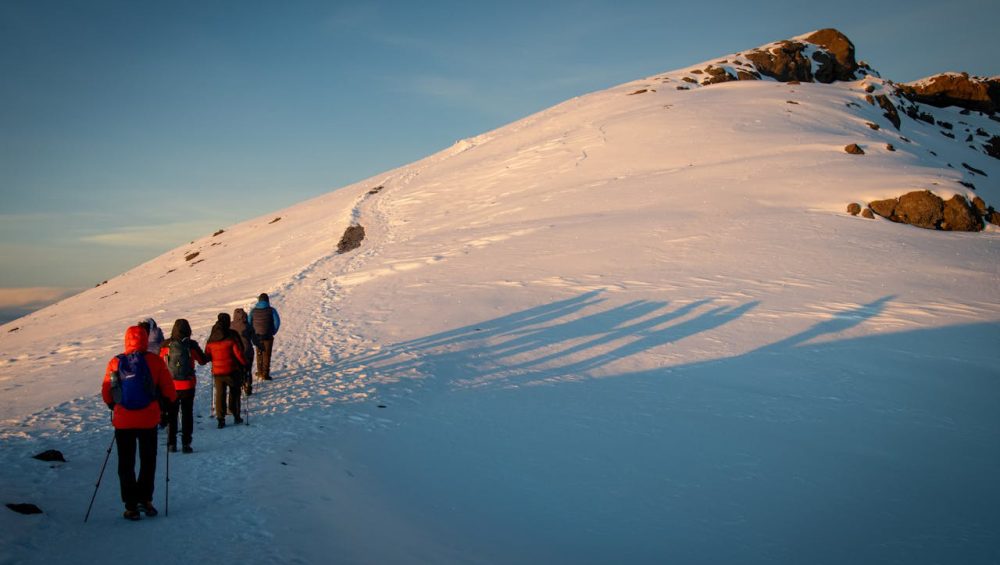
Trekking poles are highly recommended for Kilimanjaro climbs because they provide stability and reduce pressure on your knees. The terrain includes steep ascents and descents, especially on summit night, where fatigue is high.
Using trekking poles helps distribute weight evenly and improves balance on uneven surfaces. Many experienced climbers consider them essential for reducing strain and increasing endurance during long hiking hours.
Backpack (Daypack for Essentials)
A good backpack is needed to carry your daily essentials such as water, snacks, extra clothing, sunscreen, and personal items. Most trekkers use a small daypack (20 to 30 liters) during the climb while porters carry the heavier luggage.
Your backpack should be lightweight, comfortable, and water-resistant. Proper packing helps you stay organized and ensures that important items are easily accessible during the trek, especially when weather conditions change quickly.
Tips for a Successful Climb
Climbing Mount Kilimanjaro successfully requires more than just physical strength. It is a combination of real pacing, mental discipline, hydration, preparation, and listening to experienced guides. Many trekkers underestimate how much altitude affects the body, and this is the main reason some people fail to reach the summit. By following the correct strategies below, you greatly improve your chances of reaching Uhuru Peak safely and enjoying the full experience of the mountain.
Go Slowly (“Pole Pole”)
“Pole pole” meaning slowly, slowly in Swahili, is the most important rule on Kilimanjaro and is repeated constantly by guides for a reason. The biggest mistake climbers make is walking too fast at the beginning when they still feel strong. However, Kilimanjaro is not a race it is a long endurance challenge where energy management is more important than speed.
Walking slowly allows your body to adapt gradually to lower oxygen levels as you gain altitude. Even if you feel capable of moving faster, you should maintain a steady, controlled pace. This helps reduce fatigue, prevents early exhaustion, and significantly lowers the risk of altitude sickness. Successful climbers often say that slow walking is what ultimately got them to the summit, not physical strength alone. The key is consistency small, steady steps taken over long hours are what lead to success.
Drink Enough Water
Hydration plays a critical role in your performance on Kilimanjaro. At higher altitudes, the air is dry, and your body loses moisture faster through breathing and physical effort. If you do not drink enough water, you may experience headaches, dizziness, fatigue, and reduced performance, all of which can affect your climb.
Climbers are advised to drink at least 3 to 4 liters of water per day, even when they do not feel thirsty. This is because thirst is not always a reliable indicator at high altitude. Drinking regularly throughout the day helps your body adjust better to oxygen changes and improves circulation. Proper hydration also supports digestion and energy levels, which are essential for long trekking days. Staying well-hydrated is one of the simplest but most effective ways to increase your chances of reaching the summit.
Train Before Climbing
Physical preparation is essential for a successful Kilimanjaro climb, even though technical climbing skills are not required. The trek involves long walking days, often on steep and uneven terrain, which can last several hours per day. Without proper training, fatigue can build up quickly and make the journey more difficult than expected.
Effective training should focus on endurance rather than speed. Activities such as hiking on hills, jogging, cycling, swimming, and stair climbing are highly recommended. One of the best training methods is walking long distances with a backpack, as this simulates real mountain conditions. Training should ideally begin at least 6 to 8 weeks before your trip. The better your fitness level, the more enjoyable and manageable your climb will be, especially during the final summit push.
Choose a Longer Route
Selecting a longer route is one of the smartest decisions you can make when planning your climb. Routes that take more days on the mountain allow your body more time to adjust to altitude changes. This process, known as acclimatization, is the key factor in reaching the summit successfully.
Shorter routes may seem attractive because they save time or money, but they significantly increase the risk of altitude sickness. Longer routes such as Lemosho or Machame give your body a gradual ascent, which improves oxygen adaptation and reduces stress on your system. Climbers who choose longer routes generally have higher success rates because their bodies are better prepared for the final push to the summit. In simple terms, more days on the mountain means a safer and more successful climb.
Follow Guide Instructions
Professional mountain guides are one of the most valuable parts of your Kilimanjaro experience. They have years of experience dealing with different weather conditions, altitude effects, and terrain challenges. Listening to and following their instructions is critical for both safety and success.
Guides carefully monitor your health throughout the climb and can identify early signs of altitude sickness before they become serious. They also control the group’s pace, ensure proper rest stops, and make important decisions based on weather and trail conditions. Ignoring their advice can put your climb at risk, while trusting their guidance greatly increases your chances of reaching the summit. Communication is also important if you feel unwell or tired, always inform your guide immediately. Their support is designed to help you succeed safely.
How to Prepare for Kilimanjaro
Preparing properly for climbing Mount Kilimanjaro is one of the most important steps for a successful summit. Many first-time trekkers think the climb is only about fitness, but in reality, success depends on a combination of physical readiness, mental strength, proper equipment, and understanding how your body reacts to high altitude. Good preparation increases your chances of reaching the summit safely and enjoying the journey instead of struggling on the mountain.
Physical Training
Physical training is essential before attempting Kilimanjaro because the trek involves long walking days on steep and uneven terrain. You do not need to be an athlete, but you must have good endurance. Training should focus on building stamina rather than speed.
Activities such as hiking, jogging, cycling, swimming, and stair climbing are highly recommended. Hiking on hills or mountains is especially useful because it simulates real trekking conditions. One of the best ways to prepare is to walk long distances with a backpack, which helps your body get used to carrying weight over time. Training should ideally start at least 6 to 8 weeks before your climb. The stronger your fitness level, the easier it will be to handle long trekking days and the final summit push.
Mental Preparation
Mental preparation is just as important as physical fitness. Kilimanjaro is not a technical climb, but it is a mental challenge because of long hours of walking, cold temperatures, and altitude effects. Many trekkers struggle not because they are unfit, but because they lose motivation during difficult moments.
You need patience, determination, and a positive mindset. The climb is slow, and progress may feel difficult at times. Understanding that discomfort is normal helps you stay focused. You should prepare yourself mentally for cold nights, tired legs, and slow walking. Staying positive and breaking the journey into small steps makes the climb more manageable and increases your chances of success.
Acclimatization
Acclimatization is one of the most important factors for reaching the summit successfully. As you climb higher on Mount Kilimanjaro, oxygen levels decrease, and your body needs time to adjust. Without proper acclimatization, you may experience altitude sickness, which can stop your climb.
Choosing longer routes helps your body adapt gradually. Good operators also follow the “climb high, sleep low” method, which improves oxygen adaptation. Walking slowly, drinking enough water, and taking rest days when needed also support acclimatization. This process cannot be rushed, and patience is key to reaching the summit safely.
Gear Preparation
Proper gear preparation is essential for comfort and safety on Kilimanjaro. The mountain has different climate zones, so you must be ready for both warm and freezing conditions. Essential gear includes layered clothing, waterproof jackets, hiking boots, gloves, hats, and sunglasses.
A warm sleeping bag rated for low temperatures is very important because nights can be extremely cold, especially at higher camps. Trekking poles are also highly recommended because they reduce pressure on your knees and improve balance on steep terrain. A comfortable daypack is needed to carry water, snacks, and personal items during daily hikes. Proper gear ensures you stay warm, dry, and comfortable throughout the entire climb.
Frequently Asked Questions (FAQ)
Here are the most common questions about climbing Mount Kilimanjaro, answered in a simple and clear way to help first-time trekkers prepare better for their journey.
Do I need climbing experience to climb Kilimanjaro?
No, you do not need technical climbing experience to climb Kilimanjaro. It is a trekking mountain, which means you walk on established trails without ropes or special climbing equipment. However, you should be physically fit and well prepared for long walking days and high altitude conditions.
How long does it take to climb Kilimanjaro?
Most climbs take between 5 and 9 days depending on the route you choose. Longer routes such as Lemosho and Machame are recommended because they give your body more time to adjust to altitude, which increases your chances of reaching the summit successfully.
What is the success rate of climbing Kilimanjaro?
The success rate depends mainly on the route and number of days spent on the mountain. Longer routes with better acclimatization have higher success rates, while shorter routes have lower success rates because the body has less time to adjust to altitude.
How difficult is climbing Kilimanjaro?
Climbing Kilimanjaro is physically challenging but not technically difficult. The main difficulty is altitude, not climbing skills. As you go higher, oxygen levels decrease, which can make walking more tiring. With proper pacing, hydration, and preparation, many beginners successfully reach the summit.
What is included in the cost of climbing Kilimanjaro?
The cost usually includes park fees, professional guides, porters, food, camping equipment, and transportation. These services are essential for safety, comfort, and logistics during the climb. The price reflects a full mountain expedition, not just a hiking trip.
What should I pack for Kilimanjaro?
You should pack warm layered clothing, waterproof jackets, hiking boots, gloves, hats, sunglasses, a sleeping bag, and a daypack. Proper gear is important because the mountain has different climate zones, including cold summit conditions.
What is the best time to climb Kilimanjaro?
The best time to climb is during the dry seasons: January to March and June to October. These months offer better weather, clearer views, and safer trekking conditions compared to the rainy seasons.
Do I need a guide to climb Kilimanjaro?
Yes, a licensed guide is required to climb Kilimanjaro. Independent climbing is not allowed. Guides ensure your safety, help with navigation, and monitor your health throughout the trek.
Final Thoughts
Climbing Mount Kilimanjaro is one of the most rewarding adventure experiences in the world. It is not just about reaching the summit, but about the journey itself passing through different climate zones, testing your limits, and discovering how strong you really are. For many first-time trekkers, this climb becomes a life-changing experience that builds confidence, patience, and a deep sense of achievement.
Throughout this guide, you have learned everything needed to prepare for a successful trek. From understanding the best routes and their difficulty levels, to knowing the real cost of climbing, packing the right gear, and training your body properly, each step plays an important role in your success. You also now understand how important altitude is, and why slow pacing, hydration, and acclimatization are key factors for reaching the summit safely.
One of the most important lessons is that climbing Kilimanjaro is not a race. Success comes from preparation, consistency, and following your guide’s instructions. Choosing the right route, especially longer ones like Lemosho or Machame, greatly increases your chances of reaching Uhuru Peak. Mental strength is just as important as physical fitness, because the climb will test your patience and determination at every stage.
In the end, standing at the Roof of Africa is a moment few people in the world experience. It is a powerful achievement that stays with you forever. With the right preparation and mindset, your dream of climbing Kilimanjaro can become a reality and one of the greatest adventures of your life.