How Many People Have Climbed Mount Kilimanjaro? Complete Guide
Estimated reading time: 18 minutes
More than 500,000 people are estimated to have climbed Mount Kilimanjaro, making it one of the most climbed high mountains in the world. Today, around 35,000 to 50,000 people attempt to climb Kilimanjaro each year, and thousands successfully reach Uhuru Peak, the highest point in Africa.
No one knows the exact number of people who have climbed Mount Kilimanjaro. Kilimanjaro National Park records annual visitor numbers, but historical records do not provide a complete count of every climber who has reached the summit. In addition, many local guides and porters have climbed the mountain hundreds of times, making it even harder to calculate a precise total.
Despite the lack of an official figure, Kilimanjaro remains Africa’s most popular trekking destination. Its non-technical routes, stunning landscapes, and status as one of the Seven Summits attract climbers from around the world every year.
In this guide, you’ll learn how many people climb Kilimanjaro annually, how many reach the summit, the mountain’s success rates, and how climbing numbers have changed over time.
Table of contents
- How Many People Have Climbed Mount Kilimanjaro? Complete Guide
- How Many People Have Climed Mount Kilimanjaro?
- Mount Kilimanjaro Climbing Statistics at a Glance
- How Many People Climb Kilimanjaro Each Year?
- How Many People Reach the Summit of Kilimanjaro?
- The History of Climbing Mount Kilimanjaro
- Why Do Some Climbers Fail to Reach the Summit?
- Which Kilimanjaro Routes Have the Highest Success Rates?
- Who Climbs Mount Kilimanjaro?
- How Many Guides and Porters Work on Kilimanjaro?
- Kilimanjaro Climbing Records and Interesting Facts
- Final Thoughts: How Many People Have Climbed Mount Kilimanjaro?
- Read Also:
How Many People Have Climed Mount Kilimanjaro?
Millions of people dream of standing on the roof of Africa, but only a fraction make the journey each year. While no official record tracks every climber in history, experts estimate that more than 500,000 people have climbed Mount Kilimanjaro since organized trekking began. Today, the mountain attracts tens of thousands of hikers from around the world and remains Africa’s most popular trekking destination.
Estimated Total Number of Climbers
More than 500,000 people are believed to have climbed Mount Kilimanjaro. This estimate comes from annual visitor records, summit statistics, and tourism data collected over several decades. The actual number may be even higher because thousands of local guides and porters climb the mountain repeatedly throughout their careers.
Kilimanjaro’s popularity has grown significantly since the 1990s. Improved tourism infrastructure, better international access to Tanzania, and the mountain’s reputation as one of the Seven Summits have encouraged more people to attempt the climb each year.
How Many People Reach the Summit Each Year?
Around 35,000 to 50,000 people attempt to climb Mount Kilimanjaro every year. Of those, an estimated 60% to 75% reach Uhuru Peak, depending on the route and the number of days spent on the mountain.
Longer routes such as the Northern Circuit and Lemosho Route generally achieve higher summit success rates because they give climbers more time to acclimatize. As a result, tens of thousands of people stand on Africa’s highest point each year.
Why No Exact Number Exists
No organization keeps a complete historical record of every person who has climbed Mount Kilimanjaro. While Kilimanjaro National Park tracks annual visitors, older records remain incomplete, and climbing data from earlier decades is limited.
The mountain also employs thousands of guides and porters who climb Kilimanjaro many times each year. Some experienced guides have reached the summit hundreds of times. Because of these repeated ascents and gaps in historical data, experts can only estimate the total number of people who have climbed Mount Kilimanjaro.
Mount Kilimanjaro Climbing Statistics at a Glance
Mount Kilimanjaro attracts thousands of climbers every year and remains one of the world’s most popular trekking mountains. While exact figures vary from year to year, available tourism and park data provide a good picture of how many people attempt the climb, reach the summit, and support the mountain’s tourism industry.
Kilimanjaro Statistics Table
| Statistic | Estimated Figure |
|---|---|
| Elevation | 5,895 m (19,341 ft) |
| Annual Climbers | 35,000-50,000 |
| Estimated Total Climbers | 500,000+ |
| Summit Success Rate | 60%-75% |
| Highest Point | Uhuru Peak |
| Number of Routes | 7 Main Routes |
| Guides and Porters Employed Annually | 20,000+ |
| National Park Established | 1973 |
Annual Climbers
Around 35,000 to 50,000 people attempt to climb Mount Kilimanjaro each year. The mountain attracts hikers from more than 100 countries, including the United States, the United Kingdom, Germany, Australia, and Canada.
Kilimanjaro’s popularity continues to grow because climbers do not need technical mountaineering skills to reach the summit. Many people choose the mountain as their first high-altitude trekking adventure and a chance to stand on the highest peak in Africa.
Summit Success Rates
The average summit success rate on Mount Kilimanjaro ranges from 60% to 75%. Success rates vary depending on the route, the number of climbing days, and how well climbers acclimatize to the altitude.
Longer routes such as the Lemosho Route and Northern Circuit Route often achieve the highest success rates because they allow more time for the body to adjust. Shorter itineraries usually record lower success rates because climbers gain altitude too quickly.
Number of Guides and Porters
Kilimanjaro’s tourism industry supports thousands of local jobs. More than 20,000 guides, porters, cooks, and mountain crew members work on Kilimanjaro each year.
Every climber must travel with a licensed guide, and most expeditions also employ several porters to carry equipment, food, and camping gear. These mountain teams play a vital role in climber safety and help make Kilimanjaro one of Tanzania’s most important tourism destinations.
How Many People Climb Kilimanjaro Each Year?
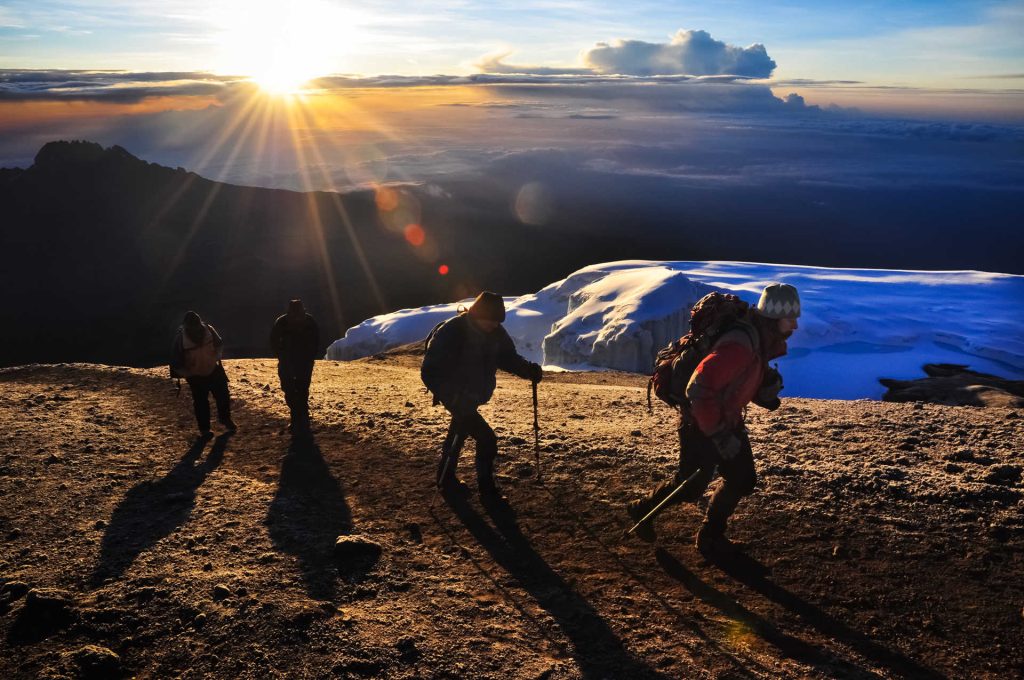
Mount Kilimanjaro attracts between 35,000 and 50,000 climbers each year, making it one of the most popular trekking mountains in the world. The mountain draws adventurers from every continent who want to experience Africa’s highest peak and one of the famous Seven Summits.
Average Annual Visitor Numbers
Most years, Kilimanjaro receives around 35,000 to 50,000 climbing permits. These visitors include first-time trekkers, experienced hikers, charity groups, and adventure travelers from around the world.
The number of climbers can vary from year to year depending on travel trends, economic conditions, and tourism demand. However, Kilimanjaro consistently ranks among the most visited high-altitude trekking destinations on Earth.
Growth in Kilimanjaro Tourism
Kilimanjaro tourism has grown significantly over the last few decades. Improved international flights, better trekking services, and increased global interest in adventure travel have encouraged more people to attempt the climb.
The mountain’s reputation as the highest peak in Africa also attracts climbers who want to complete one of the Seven Summits. As awareness of Kilimanjaro continues to grow, annual visitor numbers have generally increased over time.
Impact of Global Events on Climbing Numbers
Global events can have a major effect on Kilimanjaro tourism. Travel restrictions, economic downturns, and international emergencies often reduce the number of visitors arriving in Tanzania.
For example, the COVID-19 pandemic caused a sharp decline in climbing numbers as international travel slowed worldwide. Once restrictions eased, visitor numbers began to recover as travelers returned to outdoor and adventure-focused experiences.
Despite occasional challenges, Mount Kilimanjaro remains one of Africa’s most popular tourist attractions and continues to welcome thousands of climbers every year.
How Many People Reach the Summit of Kilimanjaro?
Every year, many people climb Mount Kilimanjaro, but not everyone reaches the summit. On average, about 60% to 70% of climbers successfully reach Uhuru Peak. This means most climbers complete the journey, but a significant number still turn back before the top. Success depends on preparation, fitness, route choice, and how well the body adapts to high altitude. Climbers who take longer routes and move slowly have a better chance of reaching the summit. Short routes increase the difficulty because the body does not get enough time to adjust to thin air. Weather conditions, altitude sickness, and physical strength also play a major role in the final outcome.
Overall Summit Success Rate
The summit success rate on Kilimanjaro ranges between 60% and 85%. This variation happens because each route offers different climbing conditions. Routes like Lemosho and Northern Circuit give climbers more time for acclimatization, so they record higher success rates. On the other hand, shorter routes like Marangu have lower success because climbers ascend too quickly.
Estimated Number of Successful Climbers
Each year, about 35,000 to 50,000 people attempt to climb Mount Kilimanjaro. From this number, around 20,000 to 35,000 climbers reach the summit successfully. The exact number changes every year depending on weather, tourism demand, and global travel situations. Most successful climbers follow well-planned itineraries with enough days for acclimatization.
What Percentage Fail to Reach the Top?
Around 15% to 40% of climbers fail to reach Uhuru Peak. The main reason is altitude sickness, which affects the body as oxygen levels drop. Some climbers also fail due to exhaustion, poor preparation, or rushing the climb. Others turn back during the final ascent because of extreme cold, strong winds, and physical pressure near the summit. Proper training and choosing the right route greatly improve success chances.
The History of Climbing Mount Kilimanjaro
The history of climbing Mount Kilimanjaro shows how this mountain changed from a mysterious peak into one of the most popular trekking destinations in the world. Early explorers viewed Kilimanjaro as a distant snow-covered mountain in Africa, and many did not believe people could reach its summit. Over time, exploration, mapping, and scientific interest opened the way for climbers from different parts of the world.
Discovery of Kilimanjaro by Europeans
European explorers first recorded Mount Kilimanjaro in the 19th century. German missionaries Johannes Rebmann and Johann Ludwig Krapf reported the existence of a snow-covered mountain near the equator in the 1840s. At first, many European scientists did not believe their reports because they thought snow could not exist so close to the equator. Later, confirmed expeditions proved the mountain’s existence and attracted global attention.
The First Successful Ascent in 1889
The first recorded successful ascent of Mount Kilimanjaro happened in 1889. German geographer Hans Meyer and Austrian climber Ludwig Purtscheller reached the summit after several attempts. They climbed slowly and carefully because they had no modern equipment or proper climbing gear. Their success marked the beginning of Kilimanjaro as a serious mountaineering destination and inspired future climbers.
How Climbing Numbers Have Changed Over Time
Climbing activity on Mount Kilimanjaro has increased dramatically over the years. In the early 20th century, only a small number of explorers attempted the climb each year. After Tanzania gained independence and tourism developed, more international visitors started climbing the mountain. Today, tens of thousands of climbers attempt Kilimanjaro every year, making it one of the most climbed high mountains in the world. Improved guides, better routes, and tourism infrastructure have made the climb more accessible, but it still remains a serious physical challenge.
Why Do Some Climbers Fail to Reach the Summit?
Not all climbers who attempt Mount Kilimanjaro reach the summit. Many turn back before Uhuru Peak because the climb becomes physically and mentally challenging at high altitude. The mountain tests the body as oxygen levels drop, and even well-prepared climbers can struggle. Success depends on fitness, preparation, route choice, and how the body responds to altitude.
Altitude Sickness
Altitude sickness is the main reason climbers fail to reach the summit. As climbers go higher, oxygen levels decrease and the body struggles to adapt. Symptoms like headaches, nausea, dizziness, and extreme fatigue can become severe. In many cases, climbers must stop or descend immediately to protect their health. Even experienced hikers can suffer from altitude sickness if they ascend too quickly.
Poor Acclimatization
Poor acclimatization happens when climbers do not give their bodies enough time to adjust to high altitude. Fast ascents increase the risk of oxygen deprivation and exhaustion. Climbers who skip rest days or choose short routes often face this problem. Proper acclimatization through slow climbing and longer itineraries greatly improves the chance of reaching the summit.
Inadequate Physical Preparation
Some climbers underestimate the physical demand of Mount Kilimanjaro. Weak fitness levels, lack of endurance training, and poor preparation lead to early exhaustion. The climb requires long hiking days, steep sections, and cold conditions. Without proper training before the trip, many climbers struggle to continue before reaching the summit zone.
Choosing Short Routes
Short routes reduce the time needed for acclimatization, which lowers the chance of success. Climbers on short itineraries move too quickly from low altitude to high altitude. This increases fatigue and altitude-related problems. Longer routes give the body more time to adjust, which is why they consistently show higher summit success rates.
Which Kilimanjaro Routes Have the Highest Success Rates?
Different Kilimanjaro routes offer different success rates because they vary in length, altitude gain, and acclimatization time. Longer routes give climbers more time to adjust to high altitude, which increases the chance of reaching the summit. Shorter routes are faster but more difficult, and they often result in lower success rates. Choosing the right route is one of the most important decisions for climbers who want to reach Uhuru Peak.
Northern Circuit Route
The Northern Circuit Route has the highest success rate on Mount Kilimanjaro. It is the longest route and gives climbers the most time to acclimatize. Because of its slow ascent and gradual elevation gain, many climbers successfully reach the summit. This route is ideal for people who want the highest chance of success and a less rushed climbing experience.
Lemosho Route
The Lemosho Route also has a very high success rate. It starts from the western side of the mountain and offers a quiet, scenic, and gradual climb. Climbers benefit from excellent acclimatization, which increases summit success. Many trekking companies recommend this route for beginners and first-time climbers because it balances beauty, difficulty, and success rate.
Machame Route
The Machame Route is one of the most popular routes on Kilimanjaro. It has a strong success rate because it follows a “climb high, sleep low” strategy, which helps the body adjust to altitude. Although it is more physically demanding than Lemosho or Northern Circuit, many climbers still reach the summit successfully due to good acclimatization patterns.
Marangu Route
The Marangu route is known as the “Coca-Cola Route” and is the only route with hut accommodation. However, it has a lower success rate compared to longer routes because climbers spend fewer days on the mountain. The fast ascent increases the risk of altitude sickness, which reduces the number of successful summits.
Route Success Rate Comparison Table
In general, the Northern Circuit and Lemosho routes have the highest success rates, followed by Machame, while Marangu has the lowest. The main factor affecting success is the number of days spent climbing. More days mean better acclimatization, which directly improves the chance of reaching Uhuru Peak.
| Route | Duration | Difficulty | Success Rate | Key Advantage |
|---|---|---|---|---|
| Northern Circuit | 8-9 days | Moderate | 85%-95% | Best acclimatization |
| Lemosho | 7-8 days | Moderate | 85% | Scenic and gradual climb |
| Machame | 6-7 days | Hard | 75%-85% | Good acclimatization strategy |
| Marangu | 5-6 days | Moderate | 60%-70% | Hut accommodation, faster route |
Who Climbs Mount Kilimanjaro?
Mount Kilimanjaro attracts a wide range of climbers from different backgrounds, ages, and fitness levels. People climb it not only for adventure but also for personal achievement, charity challenges, and tourism experience. The mountain does not require technical climbing skills, which makes it accessible to many types of hikers.
First-Time Trekkers
Many climbers on Kilimanjaro are first-time trekkers who have never climbed a high mountain before. They choose Kilimanjaro because it is a non-technical climb, meaning no ropes or climbing equipment are needed. With proper preparation and guidance, beginners can successfully reach the summit despite the physical challenge.
Experienced Mountaineers
Experienced mountaineers also climb Kilimanjaro as part of their global trekking goals. Some use it for training, while others include it in their list of famous mountain summits. Even for experienced climbers, Kilimanjaro remains challenging due to altitude, cold temperatures, and long hiking days.
Families and Older Climbers
Kilimanjaro is one of the few high mountains that attracts families and older climbers. Many people in their 50s, 60s, and even 70s successfully reach the summit. Families also climb together as a shared adventure. Success depends more on endurance, slow pacing, and acclimatization than age or strength.
Climbers From Around the World
Climbers come to Kilimanjaro from all over the world, including Europe, the United States, Asia, and Africa. It is one of the most international trekking destinations on the planet. This global interest makes Kilimanjaro an important tourism attraction for Tanzania and a symbol of African adventure travel.
How Many Guides and Porters Work on Kilimanjaro?
Thousands of guides and porters work on Mount Kilimanjaro every year to support climbers. For almost every climbing group, guides and porters are required because they ensure safety, carry equipment, and manage logistics on the mountain. Without them, most climbers would not be able to complete the trek successfully.
Why Guides Are Required
Guides are required by Tanzanian park regulations for all Kilimanjaro climbs. A certified guide leads every expedition and makes decisions about route, pace, and safety. They monitor climbers for altitude sickness and adjust the climb when needed. Their experience helps reduce risks and increases the chance of reaching the summit safely.
The Role of Porters
Porters carry most of the climbing equipment, including tents, food, cooking supplies, and clothing. This support allows climbers to focus on walking instead of carrying heavy loads. Porters also help set up camps and assist guides in maintaining the trekking schedule. Their work is essential for the success and comfort of every expedition.
Kilimanjaro’s Importance to Tanzania’s Economy
Kilimanjaro plays a major role in Tanzania’s economy through tourism. Thousands of guides, porters, cooks, and support staff earn income from climbing expeditions. The mountain also supports hotels, transport services, and local businesses. This makes Kilimanjaro one of the most important sources of employment and foreign income in the country.
Kilimanjaro Climbing Records and Interesting Facts
Mount Kilimanjaro holds many impressive records that show how different people from around the world challenge the mountain in unique ways. Some climbers focus on speed, others on age achievements, and some guides build lifelong records through repeated summits. These facts highlight both the difficulty and the global popularity of Kilimanjaro.
Fastest Ascent and Descent
The fastest ascent and descent of Mount Kilimanjaro shows how extreme endurance and fitness can push human limits. The record for the fastest known round trip is held by elite mountain runners who complete the climb in just a few hours instead of several days. Unlike normal climbers who take 5 to 9 days, these athletes run up and down the mountain without long rest periods. This achievement requires strong acclimatization, speed training, and excellent physical conditioning, and it is not typical for regular tourists.
Youngest Person to Climb Kilimanjaro
The youngest climbers to reach the summit of Kilimanjaro are usually children who climb with family support and guided teams. These young climbers succeed because they follow slow, well-planned routes that allow enough time for rest and acclimatization. Guides closely monitor their health throughout the journey. This record shows that Kilimanjaro is not only for adults but also possible for younger climbers when safety and preparation come first.
Oldest Person to Reach the Summit
Some of the most inspiring Kilimanjaro records come from older climbers who reach Uhuru Peak in their 60s, 70s, and even beyond. These climbers succeed by moving slowly, choosing longer routes, and focusing on steady acclimatization. Their achievements prove that age is not the main barrier on Kilimanjaro. Instead, determination, preparation, and medical fitness play a bigger role in summit success.
Most Kilimanjaro Summits by a Guide
Kilimanjaro guides often climb the mountain many times each year, and some have reached the summit hundreds of times in their careers. These guides build their records through daily expedition work, supporting different groups of climbers. Their experience makes them highly skilled in handling altitude challenges, weather changes, and emergency situations. This record highlights the importance of local expertise in making Kilimanjaro climbs safe and successful.
This section answers the most common questions people ask about climbing Mount Kilimanjaro. These answers help new climbers understand the difficulty, success rates, and basic planning needed before attempting the mountain.
Around 35,000 to 50,000 people climb Mount Kilimanjaro every year. The number changes depending on tourism trends, weather conditions, and global travel situations. Kilimanjaro remains one of the most popular trekking mountains in the world because it does not require technical climbing skills.
On average, about 60% to 70% of climbers reach Uhuru Peak. The success rate depends on the route, number of days spent on the mountain, and how well climbers adjust to altitude. Longer routes usually produce higher success rates because they allow better acclimatization.
Kilimanjaro is generally considered more physically demanding than Everest Base Camp because it is a faster and steeper climb. However, Everest Base Camp is longer in duration and also challenges endurance. Kilimanjaro is a summit climb, while Everest Base Camp is a trekking route, so they feel different in difficulty.
It usually takes between 5 and 9 days to climb Mount Kilimanjaro depending on the route. Short routes take less time but have lower success rates. Longer routes take more days but give climbers better acclimatization and higher chances of reaching the summit.
The best routes for summit success are the Northern Circuit and Lemosho Route. These routes give climbers more time to adjust to altitude, which increases the chance of reaching Uhuru Peak. Machame is also a strong option, while Marangu has a lower success rate due to its shorter itinerary.
Yes, beginners can climb Kilimanjaro successfully. The mountain does not require technical climbing skills, so physical fitness, preparation, and proper guidance matter more than experience. Many first-time trekkers reach the summit when they choose the right route and take enough days for acclimatization.
Final Thoughts: How Many People Have Climbed Mount Kilimanjaro?
Mount Kilimanjaro stands as one of the most climbed high mountains in the world, attracting tens of thousands of people every year. Although exact lifetime numbers are difficult to confirm, the total number of climbers continues to grow as tourism increases and more people choose adventure travel in Tanzania. Most climbers do not only aim to reach the summit but also to experience the journey, landscapes, and personal challenge that the mountain offers.
Key Statistics Recap
Each year, around 35,000 to 50,000 people attempt to climb Kilimanjaro, and about 60% to 85% reach the summit depending on the route. These numbers show that Kilimanjaro is challenging but achievable for well-prepared climbers. Success mainly depends on acclimatization, route selection, and physical preparation.
Why Kilimanjaro Remains Africa’s Most Popular Trek
Kilimanjaro remains popular because it is a non-technical climb, meaning no ropes or climbing experience are required. It also offers multiple routes, stunning landscapes, and a unique experience of moving from rainforest to alpine desert to glacier. This combination makes it one of the most accessible high-altitude adventures in the world.
Planning Your Own Kilimanjaro Climb
Climbing Kilimanjaro requires careful planning, patience, and the right mindset. Choosing a longer route, training before the trip, and following guide instructions greatly improve success chances. With proper preparation, many first-time climbers successfully reach Uhuru Peak and achieve one of the most memorable experiences of their lives.