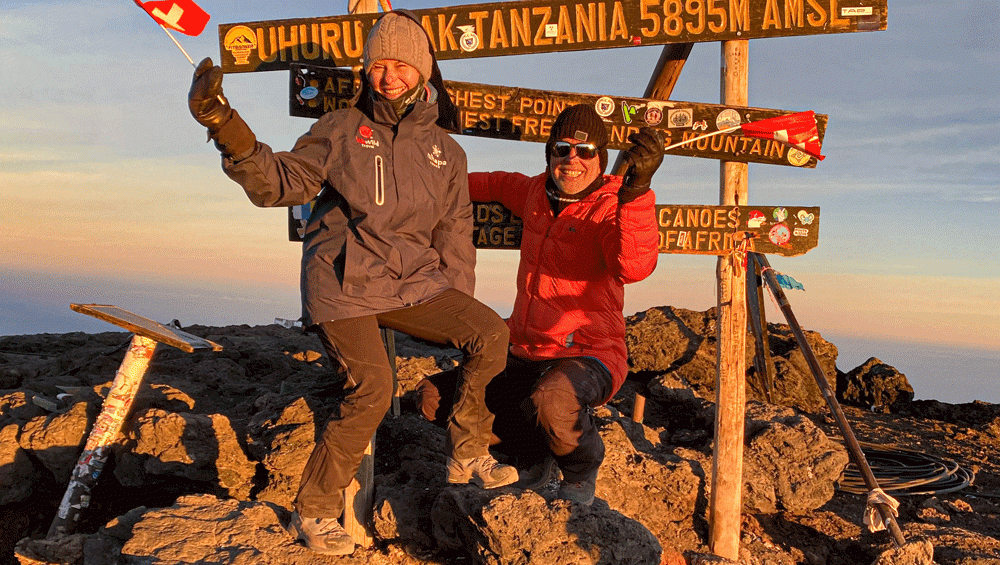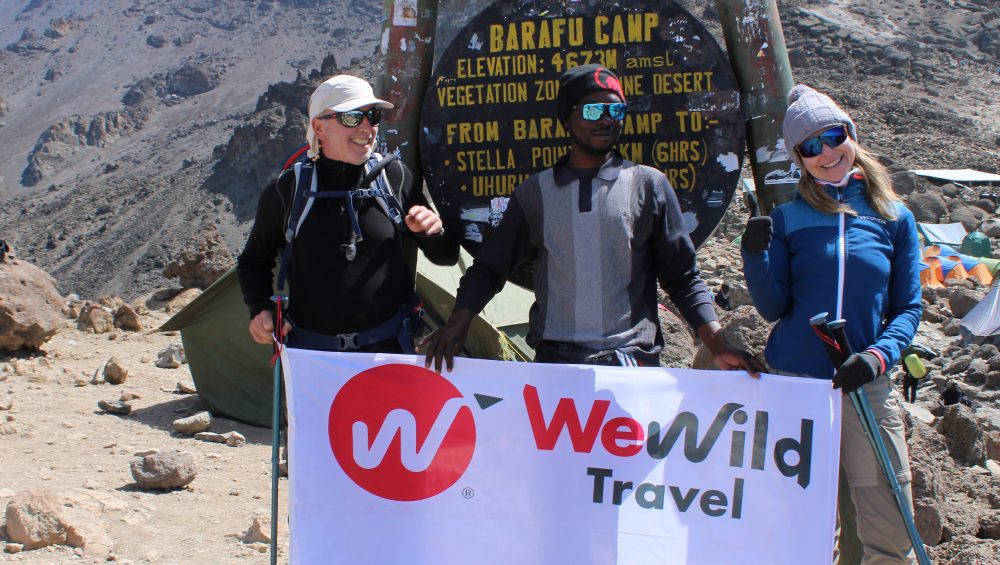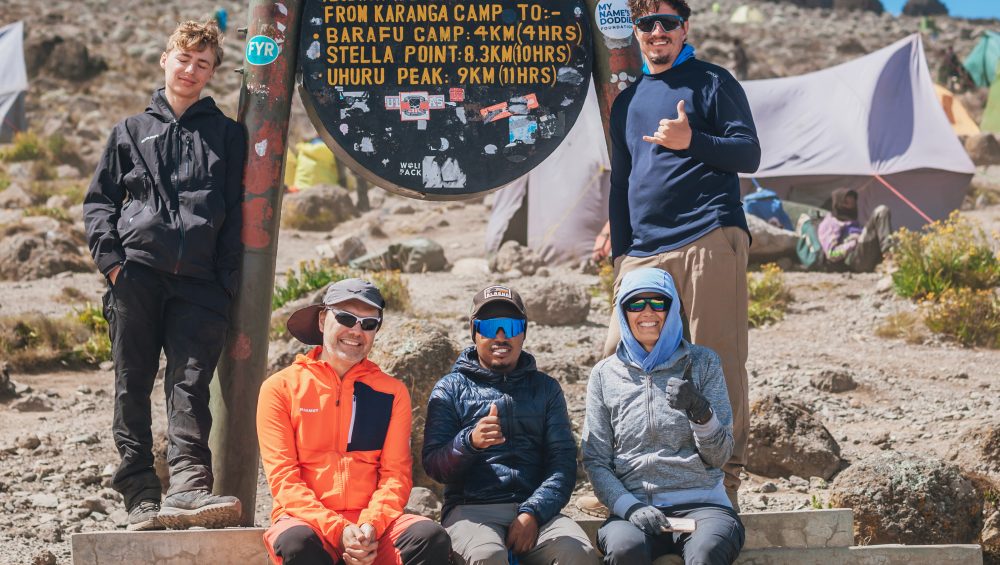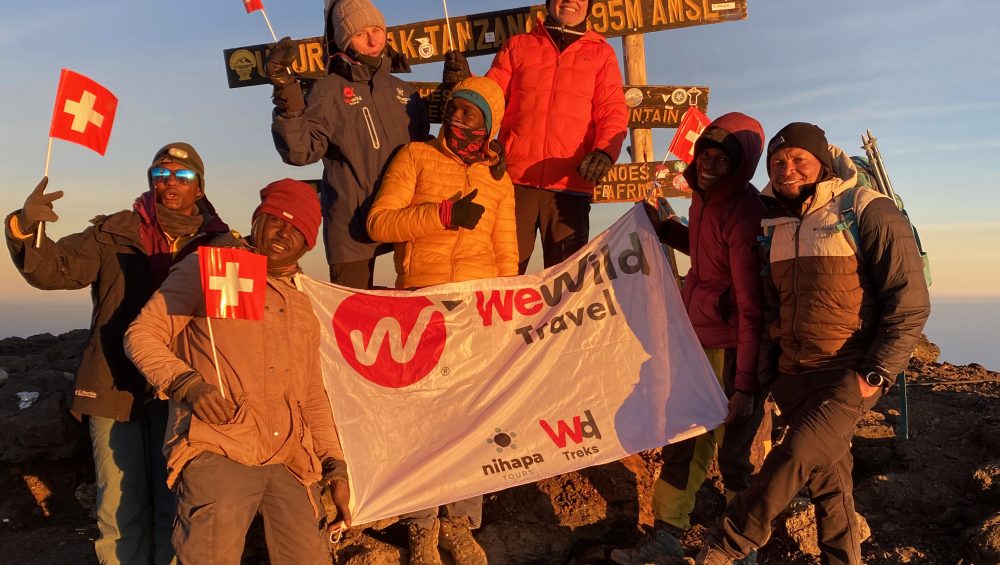
Hikers reaching the summit after trekking the Machame Route on Mount Kilimanjaro

6-Day Machame Route: Itinerary, Cost and Success Rate

The 6-Day Machame Route is a challenging camping trek to Uhuru Peak (5,895 m) on Mount Kilimanjaro. Known as the “Whiskey Route,” it passes through the Shira Plateau, Lava Tower, Barranco Wall, Karanga, and Barafu Camp before the summit attempt. This six-day itinerary suits fit trekkers with limited time who want a scenic climb.

The route includes the “climb high, sleep low” approach, with an ascent to Lava Tower followed by a descent to Barranco Camp. This helps provide valuable acclimatization, but the six-day schedule allows less time to adjust to altitude than the 7-Day Machame Route.

The climb is physically demanding, especially during summit night, when trekkers ascend towards Uhuru Peak before descending to a lower camp. Good fitness, steady pacing, and careful altitude monitoring are important. Fit beginners with suitable preparation and experienced hikers may consider this itinerary, although no level of fitness guarantees successful acclimatization or reaching the summit.

Before booking, compare the 6-Day and 7-Day Machame Route itineraries, prices, and acclimatization schedules to choose the option that best matches your fitness, available time, and comfort with high-altitude trekking.

Quick Facts About the 6-Day Machame Route

Detail 6-Day Machame Route
Trek duration 6 days / 5 camping nights
Total trip duration Allow at least 8 days, including arrival and departure
Route type Camping trek
Starting point Machame Gate
Finishing point Mweka Gate
Summit Uhuru Peak, 5,895 m
Total trekking distance Approximately 62 km
Difficulty Challenging; no technical climbing required
Best for Fit trekkers with good physical preparation
Price From US$2,806 per person; varies by group size and package
Acclimatization The 7-Day Machame Route provides an additional day to adjust to altitude

6-Day Machame Route Highlights

  • Departure and Return: Depart from Moshi to Machame Gate on the first trekking day. After the climb, transfer from Mweka Gate to Moshi or Kilimanjaro International Airport, according to your travel arrangements.
  • Departure Time: Be ready by 8:00 AM for the planned 9:00 AM departure. Confirm your pickup time before the climb.
  • Return Time: Arrival in Moshi or at the airport depends on your descent time and transfer arrangements.
  • What to Wear: Bring comfortable hiking boots, layered clothing, a warm jacket, gloves, a warm hat, waterproof outerwear and suitable summit-night clothing.
  • Mountain Accommodation: Stay in camping tents throughout the six-day trek, with meals and mountain support provided according to your package.
  • Hotel Accommodation: Kibo Palace Hotel is the designated hotel accommodation for your pre- and post-climb stay. Confirm the number of nights included in your package and any additional charges.
  • Customizations: Ask about private departures, additional hotel nights and transfer arrangements to suit your schedule.
  • Extensions: Safari trips and Zanzibar holidays can be arranged after your Kilimanjaro climb.
  • Best Season: January to March and June to October are popular periods for climbing Kilimanjaro, although weather conditions vary throughout the year.
  • Who Should Choose This Route: Fit beginners with appropriate preparation and experienced hikers who can manage long trekking days and high-altitude conditions.
  • Pros: The route offers varied scenery, including the Shira Plateau, Lava Tower and Barranco Wall. The ascent to Lava Tower followed by a descent to Barranco Camp provides a climb-high, sleep-low opportunity.
  • Cons: The six-day schedule involves long hiking days, steep sections and a demanding summit night. It also provides less time for acclimatization than the seven-day Machame itinerary.

Typical 6-Day Machame Route Itinerary at a Glance

The 6-Day Machame Route itinerary includes six trekking days on Mount Kilimanjaro, following the southern circuit through varied landscapes before reaching Uhuru Peak.

Day Route Distance Hiking time Elevation Habitat
1 Machame Gate to Machame Camp Approx. 11 km 5 to 7 hours 1,800 m to 3,010 m Rainforest
2 Machame Camp to Shira Camp Approx. 5 to 6 km 4 to 6 hours 3,010 m to 3,850 m Heath and moorland
3 Shira Camp via Lava Tower to Barranco Camp Approx. 10 to 11 km 6 to 8 hours 3,850 m to 4,630 m to 3,960 m Moorland and alpine desert
4 Barranco Camp via Karanga to Barafu Camp Approx. 9 km 7 to 10 hours 3,960 m to 3,995 m (Karanga area) to 4,673 m Alpine desert
5 Barafu Camp via Stella Point to Uhuru Peak, then Mweka Camp Approx. 17 km 12 to 16 hours 4,673 m to 5,756 m to 5,895 m to 3,100 m Alpine desert and arctic summit zone
6 Mweka Camp to Mweka Gate Approx. 10 km 3 to 4 hours 3,100 m to 1,640 m Rainforest

Why Choose the 6-Day Machame Route Kilimanjaro Hiking Tour?

The 6-Day Machame Route is a scenic but challenging way to climb Mount Kilimanjaro and reach Uhuru Peak (5,895 m). It suits fit trekkers who have limited time and want to experience the mountain’s varied landscapes on a camping trek. However, its shorter schedule requires careful preparation and a realistic understanding of high-altitude trekking.

Diverse mountain scenery: The Machame Route passes through rainforest, heath and moorland, alpine desert, and the high-altitude summit zone. Highlights include the Shira Plateau, Lava Tower and Barranco Wall, offering varied landscapes throughout the climb.

A climb-high, sleep-low opportunity: On Day 3, trekkers ascend towards Lava Tower before descending to Barranco Camp. This provides an opportunity to gain altitude during the day and sleep lower at night. However, six days provides less overall acclimatization time than the 7-Day Machame Route.

A demanding physical challenge: The route involves long hiking days, steep sections and a strenuous summit attempt. The Barranco Wall requires careful footing and some scrambling, but technical climbing equipment is not normally required. Good fitness, suitable preparation and steady pacing are important.

Experienced mountain support: A well-organized expedition should include experienced guides, appropriate altitude monitoring, regular health checks and a clear emergency response plan. Before booking, ask your operator how the team monitors climbers and responds to altitude-related symptoms.

A shorter alternative to the seven-day itinerary: The six-day option can suit trekkers with limited time who are prepared for a demanding schedule. The 7-Day Machame Route adds a night at Karanga Camp, providing more time for acclimatization and a less compressed trekking schedule.

Choose the 6-Day Machame Route if you are physically prepared for long trekking days and understand the challenges of climbing at altitude. If you prefer more time to adjust to altitude, compare it with the seven-day option before booking.

Best Time to Climb the 6-Day Machame Route

The 6-Day Machame Route is available year-round, but January to early March and June to October are generally popular periods for climbing Mount Kilimanjaro because conditions are often drier.

  • January to early March: Generally favorable trekking conditions, with opportunities for clearer mountain views and fewer crowds during some periods.
  • June to October: A popular dry-season period with generally favorable trekking conditions, although trails can be busier.
  • April to May: The main rainy season, with wetter trails and increased cloud cover.
  • November to December: Short rains can bring changing weather, although conditions vary from day to day.

Recommended months: January to early March and June to October are good starting points when planning your climb. Weather on Kilimanjaro is unpredictable, so conditions can vary even during the drier months.

Read our detailed guide: Best Time to Climb Kilimanjaro.

Why Choose the 6-Day Machame Route?

The 6-Day Machame Route suits fit trekkers who have limited time and want a scenic camping trek to Uhuru Peak (5,895 m). It offers varied landscapes and famous Kilimanjaro landmarks, but its shorter schedule makes the climb physically demanding.

  • Shorter itinerary: Complete the climb in six trekking days.
  • Scenic landscapes: Trek through rainforest, heath and moorland, alpine desert, and the high-altitude summit zone.
  • Mountain camping: Stay in tents throughout the mountain trek.
  • Famous landmarks: Explore the Shira Plateau, ascend towards Lava Tower, and cross the Barranco Wall.
  • For fit trekkers: Best suited to climbers prepared for long hiking days and a demanding summit attempt.

Prefer more time for acclimatization? The 7-Day Machame Route adds an overnight stay at Karanga Camp, providing an additional day on the mountain before the summit attempt.

How to Book the 6-Day Machame Route

To book the 6-Day Machame Route, choose a reputable local Kilimanjaro operator, confirm your trekking dates, and review the itinerary, price, inclusions and exclusions before paying a deposit.

WeWild Travel is a locally based Kilimanjaro operator in Tanzania, offering guided mountain treks with organized logistics and support throughout the climb to Uhuru Peak (5,895 m).

Before confirming your booking, ask about guide support, altitude monitoring, emergency procedures, accommodation, airport transfers and any additional costs. Compare the 6-Day Machame Route with the 7-Day Machame Route if you prefer an additional day for acclimatization.

Ready to plan your climb? Contact WeWild Travel to discuss your travel dates, group size and package requirements.

Simple Booking Process with WeWild Travel

  • Contact our team: Share your preferred travel dates, group size and any special requirements.
  • Receive your itinerary and quote: Review the 6-Day Machame Route itinerary, price, inclusions and exclusions, and confirm departure availability.
  • Secure your booking: Pay the agreed deposit according to your booking terms to reserve your climb.
  • Prepare for your trek: Receive a packing list, arrival guidance, transfer details and practical preparation advice.
  • Begin your Kilimanjaro climb: Meet your mountain crew and start your trek from Machame Gate after your pre-climb briefing.

Book Your Kilimanjaro Climb Today


Trekkers standing at the wooden Uhuru Peak sign on the summit of Mount Kilimanjaro via the Rongai Route.

7-Day Rongai Route: Kilimanjaro Itinerary, Prices and Dates

The 7-Day Rongai Route acclimatization schedule takes climbers up Mount Kilimanjaro from the northern side near the Kenyan border before descending via the Marangu Route. The itinerary includes overnight stops at designated mountain camps before the summit attempt at Uhuru Peak (5,895 m).  The itinerary includes an overnight at Mawenzi Tarn for acclimatization before the summit attempt, followed by a descent to Horombo Hut and Marangu Gate.

This route is a good option for climbers who want a quieter approach to Kilimanjaro, varied mountain scenery, and a dedicated acclimatization stop before summit day. The Rongai Route is less crowded on its northern approach than several popular southern routes, although conditions and traffic vary by season.

Quick Facts About the 7-Day Rongai Route

  • Total Distance: Approximately 73 to 76 km (45 to 47 miles), subject to the route and measurement method used.
  • Starting Point: Rongai (Nalemoru) Gate, on Kilimanjaro’s northern side near the Kenyan border.
  • Summit: Uhuru Peak at 5,895 m (19,341 ft), the highest point in Africa.
  • Descent Route: Marangu Route, descending along Kilimanjaro’s southeastern side.
  • Crowds and Scenery: The northern approach is often quieter and passes through forest, open moorland, remote mountain terrain, and the alpine desert of the Saddle.
  • Weather and Conditions: The northern side generally receives less rainfall than Kilimanjaro’s southern slopes, although weather conditions vary by season and altitude.
  • Difficulty: Moderate to challenging. The gradual approach does not remove the risks of high altitude, long trekking days, or the demanding summit climb.
  • Acclimatization: The itinerary includes an overnight at Mawenzi Tarn before continuing to Kibo Hut. This schedule provides time to adjust to altitude, but it is not a separate acclimatization rest day unless your actual package includes an additional night or rest day there.

Highlights

  • Departure and Return Place: Arusha or Moshi to Rongai Gate and back to Kilimanjaro International Airport (Google Maps).
  • Departure Time: Please be ready by 8:00 AM for a prompt departure at 9:00 AM.
  • Return Time: Approximately 10:00 to 11:00 AM on the final day after descent and transfer.
  • Dress Code: Casual trekking clothing. Comfortable hiking boots, layered clothes, warm jacket, gloves, hat, and rain protection gear.
  • Accommodation: Camping on all mountain nights. Hotel accommodation in Arusha or Moshi (Bed and Breakfast, 3-star standard). Upgrades available on request.
  • Customizations: Can be customized upon request to match traveler needs, fitness level, and travel dates.
  • Extensions: Safari or Zanzibar extensions available on request after the trek.
  • Season: Available year-round, with best conditions during dry seasons.
  • Suitable for: Moderate fitness level. Ideal for beginners and trekkers looking for a quieter Kilimanjaro route.
  • Pros:
    The Rongai Route is less crowded and offers a peaceful trekking experience. It provides a steady and gradual ascent, making it suitable for beginners. The route is also drier compared to southern routes, so it can be used even during rainy seasons. Trekkers enjoy beautiful wilderness views and higher chances of wildlife sightings, especially in the lower forest zone.
  • Cons:
    The route offers less scenic variety compared to southern routes. Acclimatization is slightly weaker due to its profile. Some climbers find the summit night more demanding due to the long distance and cold conditions.

Typical 7-Day Rongai Route Itinerary at a Glance

The 7-Day Rongai Route climbs Mount Kilimanjaro from the northern side near the Kenyan border and descends via the Marangu Route. The itinerary passes through forest, moorland, and alpine desert, with overnight stops at Simba Camp, Second Cave Camp, Kikelewa Camp, Mawenzi Tarn Hut and Kibo Hut before the summit attempt at Uhuru Peak (5,895 m). After the summit, climbers descend to Horombo Hut and continue to Marangu Gate on the final day.

Day Route Elevation Daily Highlights
Day 1 Rongai Gate to Simba Camp Approximately 1,950 m to 2,625 m Register at the northern entrance and hike through farmland and forest toward the first camp.
Day 2 Simba Camp to Second Cave Camp Approximately 2,625 m to 3,450 m Ascend through open moorland, with views of Kibo and the northern slopes.
Day 3 Second Cave Camp to Kikelewa Camp Approximately 3,450 m to 3,630 m Cross the moorland toward Mawenzi, enjoying wide mountain views along the trail.
Day 4 Kikelewa Camp to Mawenzi Tarn Hut Approximately 3,630 m to 4,315 m Climb steeper terrain beneath Mawenzi’s rugged volcanic peaks and reach the scenic high-altitude camp.
Day 5 Mawenzi Tarn Hut to Kibo Hut Approximately 4,315 m to 4,703 m Cross the barren Saddle between Mawenzi and Kibo, then rest and prepare for the summit attempt.
Day 6 Kibo Hut to Uhuru Peak and Horombo Hut Approximately 4,703 m to 5,895 m, then descend to 3,720 m Begin the summit climb at night, pass Gilman’s Point or Stella Point depending on the route and conditions, reach Uhuru Peak if conditions permit, and descend to Horombo Hut.
Day 7 Horombo Hut to Marangu Gate, then Arusha or Moshi Approximately 3,720 m to 1,860 m Descend through moorland and rainforest, receive your summit certificate at the gate if you qualify, and transfer to your hotel.

Why Choose the 7-Day Rongai Route?

The 7-Day Rongai Route is a good choice for climbers seeking a quieter approach to Mount Kilimanjaro, varied mountain scenery, and a gradual trekking schedule. It approaches from the northern side near the Kenyan border and descends via the Marangu Route. Compared with a shorter Rongai itinerary, the seven-day option provides more time on the mountain, depending on the confirmed itinerary and acclimatization schedule.

1. Quieter Trails and Remote Wilderness

The Rongai Route approaches Kilimanjaro from the north and is often quieter than the busier southern routes. It offers a more remote mountain experience, with peaceful trail sections, scenic camps and wide views across the northern slopes.

2. Generally Drier Northern Slopes

Kilimanjaro’s northern slopes generally receive less rainfall than its southern slopes. This makes Rongai an option worth considering during wetter periods. However, rain, cold, wind and changing conditions remain possible at different elevations.

3. More Time for Acclimatization

The seven-day Rongai itinerary spreads the climb over a longer schedule than the six-day option when the extra time is used for an additional overnight or a properly planned acclimatization period. The standard itinerary described here includes an overnight at Mawenzi Tarn before continuing to Kibo Hut. Confirm the actual schedule before describing this as an additional acclimatization day.

A longer itinerary can provide more time to adjust to altitude, but it cannot eliminate altitude sickness or guarantee a successful summit.

4. Varied Landscapes and Mountain Views

The trail passes through forest, open moorland and alpine desert. Climbers can enjoy views of Mawenzi Peak, Kibo and the broad Saddle between the two volcanic cones. Wildlife sightings are possible in suitable habitats, although they are not guaranteed.

5. Different Ascent and Descent Routes

Rongai approaches Kilimanjaro from the north, while the descent follows the Marangu Route on the southeastern side. This allows climbers to experience different parts of the mountain during the same trek.

6. A Challenging but Rewarding Summit Attempt

The Rongai Route begins with a relatively gradual approach, but the climb becomes more demanding at higher elevations. Summit night involves a long ascent in cold, low-oxygen conditions, followed by a substantial descent. Good preparation, a sensible pace and attention to your guides’ health advice are essential.

Climb the 7-Day Rongai Route with WeWild Travel

WeWild Travel organizes Kilimanjaro climbs with experienced local mountain guides, planned camp arrangements and trekking support. Our team helps climbers prepare for the route, understand the daily schedule and manage the practical details of the journey from Rongai Gate to the summit attempt and descent to Marangu Gate.

Best Time to Climb the 7-Day Rongai Route

The best time to climb the 7-Day Rongai Route on Mount Kilimanjaro is generally during the drier periods from January to early March and June to October. These months often offer better trail conditions, clearer views and favorable opportunities for trekking, although mountain weather can change quickly at high elevations. Read our guide to the best time to climb Kilimanjaro for a month-by-month overview.

January to March

January to early March is a popular period for climbers who want relatively dry trails and opportunities for clear mountain views. Temperatures remain cold at higher elevations, and snow or ice can occur near the summit. Conditions vary throughout the season.

June to October

June to October is another popular climbing period, particularly for travelers planning their Kilimanjaro trip during the Northern Hemisphere summer. The mountain can experience dry conditions and good visibility, but colder temperatures, wind and occasional rain remain possible. Because demand can be high, booking your preferred departure in advance is advisable.

Is the Rongai Route Good During the Rainy Seasons?

The Rongai Route approaches Kilimanjaro from the northern side, which generally receives less rainfall than the southern slopes. This can make it an option worth considering during wetter months. However, the route is not rain-free, and trail conditions depend on recent weather, elevation and the time of year.

Does the 7-Day Rongai Route Offer Better Acclimatization?

The seven-day itinerary provides more time on the mountain than a six-day itinerary when that extra time is used for a longer acclimatization schedule. The benefit depends on the actual route plan, including overnight stops and time spent at altitude. The schedule described on this page includes an overnight at Mawenzi Tarn before continuing to Kibo Hut; confirm whether your specific package includes a separate acclimatization day before making that claim.

Good acclimatization practices can help reduce altitude-related risks, but no itinerary guarantees that you will reach Uhuru Peak (5,895 m). Follow your mountain guides’ advice and report any symptoms of altitude sickness promptly.

Why Choose WeWild Travel for Your Kilimanjaro Climb?

Choosing a reliable local operator is important when climbing Mount Kilimanjaro. WeWild Travel organizes climbs with experienced local mountain guides, planned trekking schedules and on-mountain support to help climbers prepare for the challenges of high altitude. Our approach focuses on responsible trekking, health monitoring and informed decisions throughout the journey.

  • Experienced Local Mountain Guides: Our guides lead climbers along Kilimanjaro’s routes and provide practical guidance on trail conditions, pacing and summit preparation.
  • Daily Health Monitoring: Our mountain team monitors climbers’ well-being, including oxygen saturation checks where provided, and watches for symptoms of altitude sickness.
  • Planned Acclimatization: Our itineraries follow a planned schedule with overnight stops at designated camps to support adjustment to altitude.
  • Personalized Trekking Support: Our team provides guidance and assistance throughout the climb, with the guide-to-climber ratio determined by the departure arrangements.
  • Emergency Preparedness: Our mountain team follows safety procedures for responding to health concerns and coordinating evacuation support when necessary.

Climb Kilimanjaro with WeWild Travel: Speak with our local team about route options, trekking schedules, equipment and preparation for your journey to Uhuru Peak (5,895 m). We help you choose an itinerary that matches your experience, schedule and preparation, while recognizing that reaching the summit is never guaranteed.

  • How to Book the 7-Day Rongai Route 

    If you are planning to climb Mount Kilimanjaro, the most important step is choosing a trusted local operator. Booking with an experienced company ensures proper safety support, reliable logistics, and a well-organized expedition from start to summit.

    For trekkers who want a safe and professionally guided experience, it is strongly recommended to book with a licensed local operator such as WeWild Travel, which provides structured support throughout the entire journey to Uhuru Peak.

    Simple Booking Process with Us

    • Contact our team with your preferred travel dates and group size
    • Receive a detailed itinerary and availability confirmation for the 7-day Rongai climb
    • Secure your booking with a deposit to reserve your place on the mountain
    • Get full pre-trek support, including packing list, arrival guidance, and preparation advice
    • Begin your climb in Tanzania with our professional mountain crew from Arusha

    Book Your Kilimanjaro Climb Today

Hikers trekking the 5-day Marangu Route through beautiful Mount Kilimanjaro landscapes

5-Day Marangu Route Kilimanjaro: Itinerary, Cost and Difficulty

The 5-Day Marangu Route Kilimanjaro itinerary is one of the shortest options for climbing Mount Kilimanjaro, taking trekkers from Marangu Gate to Uhuru Peak at 5,895 meters before descending along the same route. Known as the “Coca-Cola Route,” Marangu is the only main Kilimanjaro route with overnight accommodation in mountain huts rather than tents. Trekkers stay at Mandara Hut, Horombo Hut, and Kibo Hut.

This five-day climb suits travelers with limited time, but its short schedule allows less time for acclimatization than the 6-Day Marangu Route. The summit attempt from Kibo Hut is particularly demanding because trekkers climb to high altitude before descending to Horombo Hut.

The trail passes through Kilimanjaro’s rainforest, moorland, and alpine desert before reaching the rocky summit zone. On summit day, trekkers climb toward Gilman’s Point on the crater rim and continue to Uhuru Peak, the highest point in Africa, if conditions and their health allow.

The 5-Day Marangu Route may suit fit, well-prepared trekkers who have limited time and understand the challenges of rapid altitude gain. Travelers who can spare an extra day should consider the 6-Day Marangu Route, which includes an additional acclimatization day. Neither itinerary guarantees a successful summit, and climbers should follow their guide’s safety advice throughout the trek.

Quick Facts About the 5-Day Marangu Route

The 5-Day Marangu Route is a short, challenging Kilimanjaro climb that follows the same trail up and down the mountain. It offers overnight stays in mountain huts and a summit attempt at Uhuru Peak, 5,895 m. Its five-day schedule provides less time for acclimatization than the six-day option.

Detail Information
Mountain trek 5 days / 4 nights
Complete package Usually 7 days, including arrival and departure days
Route Marangu Route
Approach Eastern side of Mount Kilimanjaro
Starting point Marangu Gate
Finish point Marangu Gate
Summit Uhuru Peak, 5,895 m
Accommodation Shared mountain huts
Main huts Mandara Hut, Horombo Hut, and Kibo Hut
Difficulty Challenging, especially because of limited acclimatization
Best suited for Fit trekkers with limited time and suitable preparation
Route style Same route for ascent and descent
Technical climbing No technical climbing skills normally required
Main landmarks Maundi Crater, Mawenzi, Kibo, Gilman’s Point, and Uhuru Peak
Alternative itinerary 6-Day Marangu Route, with an additional acclimatization day

Tour Highlights: 5-Day Marangu Route Kilimanjaro

  • Route: Marangu Gate to Uhuru Peak, returning along the same trail to Marangu Gate.
  • Starting point: Marangu Gate, on the eastern side of Mount Kilimanjaro.
  • Summit: Uhuru Peak, 5,895 m, the highest point in Africa.
  • Departure arrangements: Hotel pickup and transfer to Marangu Gate according to your confirmed itinerary.
  • Return arrangements: Transfer to your hotel or Kilimanjaro International Airport (JRO), if included in your package.
  • Mountain accommodation: Shared huts at Mandara Hut, Horombo Hut, and Kibo Hut, with the overnight sequence determined by the itinerary.
  • Hotel accommodation: Pre- and post-climb accommodation according to your confirmed package; upgrades may be available on request.
  • Clothing: Wear comfortable trekking clothes and hiking boots. Bring warm layers, a waterproof jacket and trousers, gloves, a warm hat, and spare clothing.
  • Customizations: Ask WeWild Travel about available itinerary and accommodation options before booking.
  • Trip extensions: Additional activities or accommodation may be arranged on request.
  • Climbing season: The route operates throughout the year, although weather conditions vary by season.
  • Difficulty: Challenging, particularly because the five-day schedule allows limited time for acclimatization.
  • Suitable for: Fit, well-prepared trekkers who understand the demands of high-altitude trekking.
  • Advantages: A short itinerary with mountain-hut accommodation, suitable for travelers with limited time.
  • Limitations: The route follows the same path for ascent and descent, and the short schedule increases the importance of altitude awareness and careful guide supervision.

Typical 5-Day Marangu Route Itinerary at a Glance

The 5-Day Marangu Route itinerary includes five trekking days on Mount Kilimanjaro, from Marangu Gate to Uhuru Peak at 5,895 m and back to Marangu Gate. Trekkers stay in mountain huts along the route, with an overnight stay at Kahawa House in Arusha before and after the climb if included in the package. The summit day is particularly demanding because it combines a high-altitude ascent with a long descent.

Day Route Elevation Hiking time Overnight
Arrival Day Kilimanjaro International Airport (JRO) to Kahawa House, Arusha Airport: approx. 900 m; Arusha: approx. 1,400 m No trekking Kahawa House, if included
Day 1 Marangu Gate to Mandara Hut 1,870 m to 2,720 m 4 to 5 hours Mandara Hut
Day 2 Mandara Hut to Horombo Hut 2,720 m to 3,720 m 5 to 7 hours Horombo Hut
Day 3 Horombo Hut to Kibo Hut 3,720 m to 4,700 m 5 to 7 hours Kibo Hut
Day 4 Kibo Hut to Gilman’s Point, onward to Uhuru Peak if conditions allow, then descend to Horombo Hut 4,700 m to 5,685 m to 5,895 m to 3,720 m 12 to 16 hours; verify with your guide Horombo Hut
Day 5 Horombo Hut to Mandara Hut and Marangu Gate, then transfer to Arusha 3,720 m to 2,720 m to 1,870 m 5 to 7 hours Kahawa House, if included
Departure Day Kahawa House, Arusha, to Kilimanjaro International Airport (JRO) Arusha: approx. 1,400 m; airport: approx. 900 m No trekking Not applicable

Best Time to Climb the 5-Day Marangu Route

The best time to climb the 5-Day Marangu Route on Mount Kilimanjaro is generally from January to March and June to October. These periods usually offer drier weather, better trail conditions, and clearer views than the wetter months. However, mountain weather can change quickly, and conditions are never guaranteed.

January to March is a good choice for trekkers who prefer a quieter climbing season. The mountain can have clear mornings, while colder conditions and occasional snow may occur at higher elevations.

June to October is another popular period for climbing Kilimanjaro. Rainfall is generally lower, and visibility can be excellent. However, more climbers use the Marangu Route during these months, particularly in the busiest travel periods.

You can climb the Marangu Route throughout the year, but April, May, and November generally bring more rainfall. The rainforest trail may become wet and muddy, and clouds can limit mountain views.

Because the 5-Day Marangu Route allows limited time for acclimatization, choosing a suitable season does not remove the risks of altitude sickness. Prepare with appropriate clothing, follow your guide’s pace, and take any altitude-related symptoms seriously. If your schedule allows, compare the 6-Day Marangu Route, which includes an additional day for acclimatization.

Read More: best time to climb the 5-Day Marangu Route  

Why Choose WeWild Travel for the 5-Day Marangu Route?

WeWild Travel is a local Tanzanian tour operator based in Arusha, specializing in guided Mount Kilimanjaro climbs. On the 5-Day Marangu Route, our mountain team supports you from trail preparation to the summit attempt and final descent. Because this itinerary allows limited time for acclimatization, experienced guides and careful monitoring are especially important.

  • Local Kilimanjaro guides: Trek with guides who know the Marangu Route, its terrain, and the challenges of high-altitude climbing.
  • Small-group and private climbs: Choose an available departure that suits your travel plans and preferred group experience.
  • Altitude and health monitoring: Our mountain team monitors your condition during the trek and responds to concerns according to established safety procedures.
  • Dedicated mountain crew: Guides, cooks, and porters help support your trek, meals, and overnight stays in mountain huts.
  • Pre-climb preparation: Get guidance on packing, suitable clothing, fitness preparation, and arrival arrangements before your climb.
  • Responsible mountain trekking: We aim to support fair treatment and appropriate working conditions for our mountain crew.
  • Clear booking information: Confirm your itinerary, accommodation, included services, and total price with our team before departure.

Our goal is to provide a well-organized Kilimanjaro climb with honest advice, experienced local support, and a strong focus on safety. The 5-Day Marangu Route is demanding because of its limited acclimatization time, so our team will guide you according to your condition and the mountain’s conditions. Reaching Uhuru Peak at 5,895 m is never guaranteed.

How to Book the 5-Day Marangu Route

To book the 5-Day Marangu Route with WeWild Travel, confirm your preferred climbing dates, group size, and travel arrangements. This five-day Mount Kilimanjaro climb includes mountain-hut accommodation and a summit attempt at Uhuru Peak, 5,895 m. The short itinerary requires good preparation because it allows limited time for acclimatization.

Follow these steps to plan your climb:

  1. Choose your climbing dates: Tell WeWild Travel when you want to start and whether you prefer a private climb or an available group departure.
  2. Request a detailed quote: Confirm the total price, park fees, meals, mountain crew, hut accommodation, transfers, hotel stays, and any other included services.
  3. Review the itinerary: Check the daily hiking schedule, elevations, overnight huts, and summit-day plan before booking.
  4. Prepare for the climb: Review the recommended gear list, fitness requirements, and altitude-related risks with the team.
  5. Confirm your booking: Follow WeWild Travel’s payment instructions and obtain written confirmation of your dates, itinerary, and package inclusions.

Simple Booking Process with Us

  • Contact our team with your preferred travel dates and group size
  • Receive detailed itinerary and availability confirmation for the 5-day Marangu climb
  • Secure your booking with a deposit to reserve your place on the mountain
  • Get full pre-trek support, including packing list, arrival guidance, and preparation advice
  • Begin your climb in Tanzania with our professional mountain crew from Arusha

Book Your Kilimanjaro Climb Today

Hikers trekking the 6-day Marangu Route through scenic Mount Kilimanjaro landscapes

6-Day Marangu Route Kilimanjaro: Itinerary, Cost and Difficulty

The 6-Day Marangu Route Kilimanjaro itinerary is a hut-based climb that includes an extra acclimatization day at Horombo Hut before the summit attempt. Starting at Marangu Gate on Mount Kilimanjaro’s eastern side, the route passes through rainforest, moorland, and alpine desert before reaching Kibo Hut and continuing toward Uhuru Peak at 5,895 metres. Climbers sleep in mountain huts rather than tents.

Unlike the 5-Day Marangu Route, this six-day itinerary includes an additional day at Horombo Hut for an acclimatization hike to a higher elevation before returning to sleep at the hut. This gives you more time to adjust to altitude, although it cannot eliminate the risk of altitude sickness or guarantee a successful summit.

The trek continues from Horombo Hut across the Saddle between Mawenzi and Kibo to Kibo Hut, the starting point for the overnight summit attempt. Summit day involves a demanding climb toward Gilman’s Point and, if your condition and mountain conditions allow, Uhuru Peak, followed by a long descent to Horombo Hut.

WeWild Travel operates guided Kilimanjaro climbs with local mountain support. The 6-Day Marangu Route may suit fit trekkers who prefer hut accommodation and want more acclimatization time than the five-day option. However, the summit attempt remains physically demanding, so preparation, careful pacing, and following your guide’s safety advice are essential.

Quick Facts About the 6-Day Marangu Route

The 6-Day Marangu Route Kilimanjaro itinerary is a hut-based climb with an extra acclimatization day at Horombo Hut. The route approaches Mount Kilimanjaro from the southeast and follows the same trail for ascent and descent, with a summit attempt at Uhuru Peak (5,895 m).

Detail Information
Mountain trek 6 days / 5 nights
Full trip duration 8 days / 7 nights, including arrival and departure
Route Marangu Route
Location Southeastern side of Mount Kilimanjaro
Starting point Marangu Gate
Finishing point Marangu Gate
Summit Uhuru Peak, 5,895 m
Accommodation Shared mountain huts
Main huts Mandara Hut, Horombo Hut, and Kibo Hut
Difficulty Challenging
Acclimatization Extra day at Horombo Hut with an acclimatization hike
Suitable for Trekkers seeking hut accommodation and more acclimatization time than the 5-day option
Route style Same trail for ascent and descent
Technical climbing No technical climbing skills normally required

Highlights of the 6-Day Marangu Route

  • Route: Start at Marangu Gate on Mount Kilimanjaro’s southeastern side and return to the same gate after the climb.
  • Duration: Six days on the mountain, with arrival and departure days arranged according to your package.
  • Summit: Attempt Uhuru Peak at 5,895 metres, depending on your health, weather conditions, and guide’s safety assessment.
  • Accommodation: Stay in shared mountain huts at Mandara Hut, Horombo Hut, and Kibo Hut.
  • Acclimatization: Spend an extra day at Horombo Hut for an acclimatization hike before continuing toward Kibo Hut.
  • Scenery: Trek through rainforest, moorland, and alpine desert, with views of Mawenzi and Kibo.
  • Trekking difficulty: Challenging, particularly during the overnight summit attempt and long descent.
  • Technical requirements: No technical climbing skills are normally required, but good fitness and preparation are important.
  • Best for: Trekkers who prefer hut accommodation and want more acclimatization time than the 5-Day Marangu Route offers.
  • Season: Climbs operate throughout the year, although rainfall, trail conditions, and visibility vary by season.
  • Customization: Ask WeWild Travel about private climbs, available group departures, and additional travel arrangements.
  • Trip extensions: Additional activities or nights can be arranged on request, subject to availability.

Advantages: The Marangu Route offers mountain-hut accommodation and a well-established trail. The six-day itinerary includes an extra acclimatization day at Horombo Hut compared with the five-day option.

Limitations: The route uses the same trail for ascent and descent. The summit attempt is physically demanding, and an extra acclimatization day cannot eliminate the risk of altitude sickness.

6-Day Marangu Route Itinerary at a Glance

The 6-Day Marangu Route itinerary includes six days of trekking on Mount Kilimanjaro, with an extra acclimatization day at Horombo Hut before the summit attempt. The trek starts and finishes at Marangu Gate, with overnight stays in mountain huts. Arrival and departure days are additional when included in your travel package.

Trek day Route Elevation Distance Hiking time Overnight
Arrival day Airport transfer to hotel and pre-climb briefing No No No Hotel, according to package
Day 1 Marangu Gate to Mandara Hut 1,870 m to approximately 2,720 m Approximately 8 km 4 to 5 hours Mandara Hut
Day 2 Mandara Hut to Horombo Hut Approximately 2,720 m to 3,720 m Approximately 12 km 5 to 7 hours Horombo Hut
Day 3 Horombo Hut to Zebra Rocks and back to Horombo Hut Approximately 3,720 m to 4,000 m and back Confirm with your guide team Confirm with your guide team Horombo Hut
Day 4 Horombo Hut to Kibo Hut Approximately 3,720 m to 4,703 m Approximately 9 to 10 km 5 to 7 hours Kibo Hut
Day 5 Kibo Hut to Gilman’s Point, onward to Uhuru Peak if conditions allow, then descend to Horombo Hut Approximately 4,703 m to 5,895 m and down to 3,720 m Verify total distance Approximately 12 to 16 hours; verify operational estimate Horombo Hut
Day 6 Horombo Hut to Mandara Hut and Marangu Gate Approximately 3,720 m to 1,870 m Approximately 18 to 20 km; verify Approximately 5 to 7 hours; verify Hotel only if included in package

Distances, elevations, and hiking times are approximate and can vary with the exact trail, route conditions, and individual pace. Reaching Uhuru Peak is not guaranteed and depends on the climber’s condition, weather, and the guide’s safety assessment.

Why Choose the 6-Day Marangu Route?

Choose the 6-Day Marangu Route for mountain-hut accommodation, an established trekking trail, and an extra acclimatization day at Horombo Hut. Compared with the 5-day option, this itinerary provides more time to adjust to altitude before the summit attempt, although altitude sickness remains a risk.

The route passes through several of Mount Kilimanjaro’s vegetation zones, from montane rainforest to moorland, alpine desert, and the high-altitude summit area. You sleep in mountain huts rather than tents, making this route a suitable option for trekkers who prefer hut accommodation.

With WeWild Travel, you climb with a local mountain team that guides you along the Marangu Route, supports your trek, and monitors your condition according to the team’s safety procedures. The six-day itinerary may suit fit first-time Kilimanjaro climbers who want additional acclimatization time, but the summit attempt remains challenging and requires proper preparation.

Why Choose WeWild Travel

Choosing a reliable local operator is an important part of preparing for Mount Kilimanjaro. WeWild Travel provides guided climbs with a focus on careful pacing, acclimatization, and support from the mountain team. On the 6-Day Marangu Route, the extra day at Horombo Hut allows time for an acclimatization hike before the summit attempt.

  • Experienced local mountain guides: Trek with guides familiar with the Marangu Route, its terrain, and high-altitude conditions.
  • Health and altitude checks: Where included in your climb, health checks and oxygen saturation measurements help the team monitor your condition during the trek.
  • Acclimatization planning: Follow the itinerary’s planned acclimatization hike at Horombo Hut. Extra acclimatization time does not eliminate the risk of altitude sickness.
  • Guide support: Your guides provide route guidance, monitor your progress, and help you respond to changing mountain conditions.
  • Emergency procedures: The mountain team follows its established procedures when a climber becomes unwell or needs assistance descending.

WeWild Travel aims to provide a well-organized Kilimanjaro climb with experienced local support and careful attention to climber wellbeing. The summit attempt is demanding, and reaching Uhuru Peak at 5,895 metres cannot be guaranteed.

Best Time to Climb the 6-Day Marangu Route

The best time to climb the 6-Day Marangu Route on Mount Kilimanjaro is generally from January to early March and from June to October. These periods often bring drier trekking conditions and clearer mountain views, although weather can change quickly at high altitude.

January to early March offers opportunities for clearer views and relatively warm conditions at lower elevations. The mountain may also be quieter than during the busiest trekking months, although visitor numbers vary.

June to October is another popular period for climbing Kilimanjaro. Rainfall is generally lower than during the main wet seasons, and clearer conditions can provide views of Mawenzi and Kibo. July, August, and September are particularly popular, so booking your preferred dates early can help with planning.

You can climb the Marangu Route throughout the year, but April, May, and November generally bring more rainfall. The rainforest trail can become wet and muddy, and clouds may reduce visibility. Conditions vary, so prepare for rain even during the drier months.

The 6-Day Marangu Route includes an extra acclimatization day at Horombo Hut before the summit attempt. This gives you more time to adjust to altitude than the five-day itinerary, but it does not remove the risk of altitude sickness. At WeWild Travel, our local team can help you plan your departure dates and prepare for the conditions expected during your climb.

For more seasonal guidance, read our best time to climb Kilimanjaro guide.

How to Book the 6-Day Marangu Route

To book the 6-Day Marangu Route with WeWild Travel, start by confirming your preferred climbing dates, group size, and travel arrangements. This six-day Mount Kilimanjaro trek includes an extra acclimatization day at Horombo Hut, shared mountain-hut accommodation, and a summit attempt at Uhuru Peak (5,895 m).

Follow these steps to plan your climb:

  • Choose your dates: Tell WeWild Travel when you want to climb and whether you prefer a private climb or an available group departure.
  • Request a detailed quote: Confirm the total price, park fees, meals, hut accommodation, mountain crew, transfers, and hotel nights included in your package.
  • Review the itinerary: Check the daily trekking schedule, elevations, acclimatization hike, summit-day plan, and descent arrangements.
  • Prepare for the climb: Review the recommended gear, fitness requirements, and altitude-related risks before travelling to Tanzania.
  • Confirm your booking: Follow the payment instructions and obtain written confirmation of your dates, itinerary, price, and package inclusions.

Simple Booking Process with Us

  • Contact our team with your preferred travel dates and group size
  • Receive detailed itinerary and availability confirmation for the 6-day Marangu climb
  • Secure your booking with a deposit to reserve your place on the mountain
  • Get full pre-trek support, including packing list, arrival guidance, and preparation advice
  • Begin your climb in Tanzania with our professional mountain crew from Arusha

Book Your Kilimanjaro Climb Today

Trekking group hiking the scenic 8-Day Lemosho Route toward Mount Kilimanjaro summit.

8 Days Lemosho Route Kilimanjaro Itinerary

The 8-Day Lemosho Route Kilimanjaro Itinerary takes you across Mount Kilimanjaro’s scenic western slopes toward Uhuru Peak at 5,895 metres (19,341 feet). The trek passes through rainforest, the Shira Plateau, Lava Tower and the Barranco Wall before the summit attempt and descent via the Mweka Route. WeWild Travel organizes locally guided climbs with a planned itinerary and mountain support.

With eight days on the mountain, this itinerary provides more time for acclimatization than shorter Lemosho schedules. It combines varied landscapes with a gradual progression to higher elevations, although altitude sickness can still occur and reaching the summit is never guaranteed. No technical climbing skills are required, but good physical preparation and an understanding of high-altitude trekking are important.

On this page, you will find the complete 8-day Lemosho Route itinerary, including daily trekking times, route stretches, elevations, habitats, meals, accommodation, and daily highlights. Follow the journey from Londorossi Gate through the mountain camps to Uhuru Peak, then descend to Mweka Gate.

Quick Facts About the 8-Day Lemosho Route

  • Route: Lemosho Route
  • Trek Duration: 8 days on Mount Kilimanjaro
  • Mountain Accommodation: 7 nights camping
  • Starting Point: Londorossi Gate
  • Summit: Uhuru Peak, 5,895 metres (19,341 feet)
  • First Camp: Mti Mkubwa Camp (Big Tree Camp)
  • Final Camp: Mweka Camp
  • Finish Point: Mweka Gate
  • Descent Route: Mweka Route
  • Difficulty: Challenging, with long hiking days and high-altitude trekking
  • Accommodation on the Mountain: Tents at designated camps
  • Acclimatization: Includes a gradual ascent and a high-altitude day at Lava Tower before descending to Barranco Camp
  • Starting Price: From $2,350 per person for groups of 10 or more, subject to the package and departure terms

Route Highlights

  • Starting Point: The trek begins at Londorossi Gate, on Mount Kilimanjaro’s western side, after the transfer from Arusha.
  • Departure Time: The transfer usually starts in the morning. WeWild Travel will confirm your pick-up time based on your hotel, park registration and climbing arrangements.
  • Final Descent: After reaching Uhuru Peak, the route descends via the Mweka Route to Mweka Gate. Transfer arrangements depend on your package and onward travel plans.
  • Trekking Preparation: Bring layered clothing, waterproof outerwear, thermal base layers, warm gloves, a hat, sturdy hiking boots and an insulated jacket for summit night. Check the equipment list provided with your booking.
  • Pre-Climb Accommodation: Stay at Kahawa House in Arusha before the climb, according to your selected package. Confirm the number of nights, meal plan and whether post-climb accommodation is included.
  • Private and Group Climbs: Ask WeWild Travel about available departure dates, private climbs, group departures and any additional acclimatization days that may be suitable for your itinerary.
  • Additional Experiences: Ask our team about optional activities before or after your climb, if available through your selected package.
  • Best Time to Climb: Kilimanjaro can be climbed throughout the year, but many trekkers prefer the generally drier periods, particularly January to early March and June to October. Mountain weather remains variable, and conditions can change at any time.

Typical 8-Day Lemosho Route Itinerary at a Glance

The 8-Day Lemosho Route Kilimanjaro Itinerary takes you from the western slopes of Mount Kilimanjaro across the Shira Plateau to Uhuru Peak at 5,895 metres. The trek passes through rainforest, moorland and alpine desert before reaching the summit and descending via the Mweka Route.

Your trek includes eight days on the mountain and seven nights of camping. WeWild Travel arranges your pre-climb and post-climb accommodation at Kahawa House in Arusha, according to your confirmed package. The schedule below outlines each trekking stage, approximate hiking time and overnight location.

Day Route Estimated hiking time Overnight / sleeping altitude
Arrival Day Kilimanjaro International Airport to Kahawa House, Arusha No trekking Kahawa House, Arusha
Day 1 Londorossi Gate to Mti Mkubwa Camp (Big Tree Camp) 3 to 4 hours Mti Mkubwa Camp, approximately 2,780 m
Day 2 Mti Mkubwa Camp to Shira 1 Camp 5 to 6 hours Shira 1 Camp, approximately 3,500 m
Day 3 Shira 1 Camp to Shira 2 Camp 3 to 4 hours Shira 2 Camp, approximately 3,850 m
Day 4 Shira 2 Camp to Lava Tower to Barranco Camp 6 to 8 hours Barranco Camp, approximately 3,960 m
Day 5 Barranco Camp to Karanga Camp 4 to 5 hours Karanga Camp, approximately 4,035 m
Day 6 Karanga Camp to Barafu Camp 3 to 4 hours Barafu Camp, approximately 4,673 m
Day 7 Barafu Camp to Stella Point to Uhuru Peak to Mweka Camp Approximately 12 to 15 hours Mweka Camp, approximately 3,100 m
Day 8 Mweka Camp to Mweka Gate to Arusha 3 to 4 hours of trekking, plus transfer Kahawa House, Arusha, if included in your package
Departure Day Kahawa House, Arusha to Kilimanjaro International Airport No trekking Departure

Why Choose the 8-Day Lemosho Route?

The 8-Day Lemosho Route is a popular option for climbers seeking scenic trails and more time to acclimatize on Mount Kilimanjaro. This itinerary crosses the rainforest, Shira Plateau, alpine desert and high-altitude mountain terrain before the summit attempt at Uhuru Peak (5,895 metres). WeWild Travel organizes locally guided climbs from Tanzania, with a planned daily itinerary and mountain support.

1. More Time to Acclimatize

The eight-day itinerary allows more time for altitude adjustment than shorter versions of the Lemosho Route. It includes the Lava Tower acclimatization hike before descending to Barranco Camp. This climb-high, sleep-low approach can support acclimatization, although altitude sickness remains possible and summit success is never guaranteed.

2. Diverse Kilimanjaro Landscapes

The Lemosho Route takes climbers through several of Kilimanjaro’s ecological zones. Walk through rainforest, cross the open Shira Plateau, explore the alpine desert and approach the dramatic Barranco Wall. These changing landscapes make the route appealing to trekkers who want a varied mountain experience.

3. A Scenic Approach to Uhuru Peak

Starting on Kilimanjaro’s western side, the Lemosho Route offers broad mountain views and a gradual journey toward the southern circuit. The itinerary passes notable locations such as Shira Camp, Lava Tower, Barranco Camp and Barafu Camp before the summit attempt.

4. Local Guides and Mountain Support

WeWild Travel is based in Arusha, Tanzania, and organizes Kilimanjaro climbs with local mountain guides and a supporting crew. Before booking, check your package details for guide services, meals, camping equipment, health monitoring, emergency procedures and porter support.

5. A Structured Eight-Day Trekking Plan

Each day has a planned destination, trekking stage and overnight camp. The schedule helps climbers understand the elevation changes, hiking demands and preparation needed for summit night. Review the daily itinerary and difficulty information before choosing this route.

6. A Camping Experience on Kilimanjaro

The eight-day trek includes overnight stays at designated mountain camps. Your experience changes as you move from forested slopes to exposed high-altitude terrain. WeWild Travel’s package description should clearly state which tents, meals, drinking water, toilet facilities and other services are included.

Is the 8-Day Lemosho Route Worth Choosing?

The 8-Day Lemosho Route is worth considering if you want varied scenery, a multi-day mountain trek and more time for acclimatization than a shorter itinerary provides. Your fitness, health, pace and response to altitude also affect the experience. Compare the itinerary, price, inclusions and operator support before booking.


Best Time to Climb the 8-Day Lemosho Route

The best time to climb the 8-Day Lemosho Route is during the dry seasons from January to March and June to October. These months offer stable weather, clear skies, and excellent trekking conditions, making the climb more enjoyable and increasing your chances of reaching the summit.

January to March brings warmer temperatures, fewer crowds, and beautiful mountain scenery. This period is ideal for climbers looking for a quieter experience and excellent summit views.

June to October is the most popular climbing season on Mount Kilimanjaro. The weather is generally dry, visibility is outstanding, and trail conditions are excellent. However, the mountain attracts more climbers, especially from July to September.

April, May, and November usually bring rain, which can make some sections of the trail muddy and slippery. Despite the wetter conditions, these months offer greener landscapes and fewer people on the mountain.

The 8-Day Lemosho Route is an excellent choice year-round because the extra acclimatization day provides a slower pace and one of the highest summit success rates on Mount Kilimanjaro. For the best combination of weather, scenery, and summit success, we recommend climbing between January and March or June and October.

Why Choose WeWild Travel?

Choosing the right Kilimanjaro operator matters for your preparation, comfort and support throughout the climb. WeWild Travel is a locally based tour operator in Arusha, Tanzania, specializing in guided Mount Kilimanjaro treks. Our team plans each climb around the route itinerary, gradual altitude gain and the needs of the group.

  • Experienced local mountain guides who understand Kilimanjaro’s trails, changing weather and daily trekking conditions.
  • Daily health checks that can include oxygen saturation measurements and assessments for symptoms of altitude sickness.
  • Planned acclimatization with a structured itinerary that allows time to adjust to increasing altitude, without guaranteeing protection from altitude illness.
  • Personalized mountain support to help climbers manage their pace, understand daily challenges and communicate concerns to their guides.
  • Emergency procedures to respond to health concerns and coordinate descent or evacuation support when necessary.

WeWild Travel aims to provide a well-organized, supportive and responsible climbing experience, from trek preparation in Tanzania to the descent from the mountain. Before booking, review your package inclusions, safety arrangements and daily itinerary so you know what support to expect.

Planning your climb? Explore our 8-Day Lemosho Route itinerary or contact WeWild Travel for a personalized quote.

How to Book the 8-Day Lemosho Route

If you are planning to climb Mount Kilimanjaro, the most important step is choosing a trusted local operator. Booking with an experienced company ensures proper safety support, reliable logistics, and a well-organized expedition from start to summit.

For trekkers who want a safe and professionally guided experience, it is strongly recommended to book with a licensed local operator such as WeWild Travel, which provides structured support throughout the entire journey to Uhuru Peak.

Simple Booking Process with Us

  • Contact our team with your preferred travel dates and group size
  • Receive detailed itinerary and availability confirmation for the 8-day Lemosho climb
  • Secure your booking with a deposit to reserve your place on the mountain
  • Get full pre-trek support, including packing list, arrival guidance, and preparation advice
  • Begin your climb in Tanzania with our professional mountain crew from Arusha

Book Your Kilimanjaro Climb Today

Hikers enjoying stunning mountain views while trekking the scenic 7-Day Lemosho Route on Kilimanjaro.

7-Day Lemosho Route Kilimanjaro: Itinerary, Cost and Climb Guide

The 7-Day Lemosho Route Kilimanjaro itinerary is a guided trek that approaches Mount Kilimanjaro from the west, starting at Londorossi Gate and crossing the scenic Shira Plateau before continuing toward Uhuru Peak (5,895 m), Africa’s highest point. This route offers varied landscapes, including rainforest, moorland, alpine desert, and the high-altitude summit zone.

The seven-day climb follows a demanding schedule, with daily hikes leading toward the summit attempt from Barafu Camp. It includes highlights such as the Shira Plateau, Lava Tower, Barranco Wall, and the descent to Mweka Gate. Although the trek does not normally require technical climbing skills, high altitude, long hiking days, and summit night make proper preparation essential.

The 7-Day Lemosho Route may suit fit beginners and experienced hikers who want a scenic Kilimanjaro climb with a structured seven-day itinerary. However, the schedule allows less time on the mountain than longer versions of the route, and individual acclimatization varies.

On this page, WeWild Travel explains the complete day-by-day itinerary, hiking distances, camp elevations, route difficulty, acclimatization, the best time to climb, packing essentials, prices, and what your package includes. Compare the details to choose the right climb for your fitness, schedule, and budget.

Quick Facts About the 7-Day Lemosho Route

  • Route: Lemosho Route
  • Trekking Duration: 7 days / 6 nights on the mountain
  • Total Trip Duration: 9 days / 8 nights, including arrival and departure
  • Starting Point: Londorossi Gate
  • Highest Point: Uhuru Peak, 5,895 m (19,341 ft)
  • Ending Point: Mweka Gate
  • Mountain Accommodation: Camping
  • Difficulty: Challenging
  • Suitable For: Fit beginners and experienced trekkers who are prepared for high altitude
  • Best Months to Climb: January to early March and June to October, depending on weather conditions

Tour Highlights: 7-Day Lemosho Route

  • Route: Lemosho Route on Mount Kilimanjaro, Tanzania. (Google map)
  • Trekking Duration: 7 days on the mountain.
  • Starting Point: Londorossi Gate.
  • Summit Goal: Uhuru Peak, 5,895 m (19,341 ft).
  • Ending Point: Mweka Gate.
  • Accommodation: Mountain camping during the trek, with hotel accommodation at Mount Meru Hotel in Arusha as specified in your package.
  • Hotel Meals: Bed and breakfast at Mount Meru Hotel, according to your booking arrangements.
  • What to Wear: Hiking boots, comfortable trekking clothes, warm layers, a waterproof jacket and trousers, gloves, a warm hat, and spare clothing.
  • Customizations: Ask WeWild Travel about available private departures and itinerary options.
  • Trip Extensions: Additional activities or accommodation may be arranged on request.
  • Departure Availability: Contact WeWild Travel to confirm your preferred climbing dates.

Typical 7-Day Lemosho Route Itinerary at a Glance

The 7-Day Lemosho Route itinerary includes seven trekking days on Mount Kilimanjaro, starting on the western side and crossing the Shira Plateau before continuing to Uhuru Peak.

Day Route Elevation (approx.) Distance Hiking time Overnight
1 Londorossi Gate to Mti Mkubwa Camp 2,100 to 2,750 m 6 km 3 to 4 hours Mti Mkubwa Camp
2 Mti Mkubwa Camp to Shira 2 Camp 2,750 to 3,840 m 16 km 7 to 8 hours Shira 2 Camp
3 Shira 2 Camp to Lava Tower to Barranco Camp 3,840 to 4,630 m, then down to 3,950 m 10 km 6 to 8 hours Barranco Camp
4 Barranco Camp to Karanga Camp 3,950 to 4,035 m 5 km 4 to 5 hours Karanga Camp
5 Karanga Camp to Barafu Camp 4,035 to 4,673 m 4 km 3 to 4 hours Barafu Camp
6 Barafu Camp to Uhuru Peak to Mweka Camp 4,673 to 5,895 m, then down to 3,100 m 17 km 12 to 15 hours Mweka Camp
7 Mweka Camp to Mweka Gate 3,100 to 1,980 m 10 km 3 to 4 hours End of trek

Important: Distances, elevations, and hiking times are approximate and can vary with the exact trail and operating arrangements. The summit attempt depends on your health, weather conditions, and guide assessment.

Why Choose the 7-Day Lemosho Route?

The 7-Day Lemosho Route offers a scenic approach to Mount Kilimanjaro, starting at Londorossi Gate and crossing the Shira Plateau before joining the southern circuit toward Uhuru Peak (5,895 m). It combines varied mountain landscapes with a seven-day trekking schedule for hikers who want to reach Africa’s highest point.

A Seven-Day Trekking Schedule

This itinerary spreads the climb across seven mountain days, including the summit attempt and descent to Mweka Gate. It provides more time on the mountain than a six-day itinerary, although the daily stages remain physically demanding.

Time to Adjust to Altitude

The route gains elevation over several days before the summit attempt. Your guide sets the pace and monitors your condition, but altitude affects each person differently. A seven-day climb does not guarantee successful acclimatization, and some trekkers may benefit from a longer itinerary.

Varied Mountain Landscapes

The Lemosho Route passes through rainforest, moorland, and alpine desert before reaching Kilimanjaro’s high-altitude summit zone. Highlights include the Shira Plateau, Lava Tower, Barranco Wall, and the mountain camps along the southern circuit.

Who Should Choose This Route?

The seven-day itinerary may suit fit beginners and experienced hikers who can prepare for consecutive days of trekking, cold conditions, and a demanding summit attempt. You do not normally need technical climbing skills, but good physical preparation and awareness of altitude risks are essential.

Why Choose Seven Days Instead of Six?

A seven-day itinerary provides an additional day on the mountain compared with a six-day version, depending on the specific route schedule. That extra time may allow a different distribution of walking stages, but the actual acclimatization benefit depends on where the additional day is placed and the elevations involved.

If you prefer a more gradual schedule and can spend longer on the mountain, compare this option with the 8-Day Lemosho Route before booking.

Choose the 7-Day Lemosho Route if its itinerary, physical demands, and schedule fit your goals. WeWild Travel can help you compare available climbing dates, package inclusions, and longer route options.

Best Time to Climb the 7-Day Lemosho Route

The best time to climb the 7-Day Lemosho Route on Mount Kilimanjaro is generally during the drier seasons, when trails are often less wet and visibility can be better. However, mountain weather changes quickly, and conditions vary with altitude and the time of year.

  • January to March: Often a good period for climbing, with generally warmer conditions and opportunities for clear views. Weather can still change, especially at higher elevations.
  • June to October: A popular climbing season, usually offering drier conditions and good trekking opportunities. Nights at high altitude can be very cold.
  • April to May: The main rainy season generally brings wetter trails, more cloud cover, and challenging trekking conditions.
  • November to December: Short rains can bring occasional showers, although conditions vary and some climbing days may remain clear.

Best overall periods: January to early March and June to October are commonly preferred for their generally more favorable trekking conditions. Choose your dates based on your schedule, weather preferences, and tolerance for rain and cold.

Read more:   The best time to climb

Why Choose WeWild Travel for Your Kilimanjaro Climb?

Choosing a local operator for your Mount Kilimanjaro climb matters for safety, preparation, and support throughout the trek. WeWild Travel organizes guided Kilimanjaro climbs with experienced local mountain guides, planned trekking stages, and support designed to help climbers prepare for the challenges of high altitude.

  • Experienced Local Mountain Guides: Trek with guides who know Kilimanjaro’s routes, terrain, and changing mountain conditions.
  • Daily Health Checks: Our climb procedures can include oxygen saturation checks and monitoring for symptoms of altitude-related illness.
  • Planned Acclimatization: We follow the selected route itinerary and adjust the pace according to conditions and the group’s needs. No itinerary can eliminate altitude-related risks.
  • Personalized Group Support: Our guides provide guidance and supervision throughout the trek, with arrangements depending on group size and departure type.
  • Emergency Preparedness: Our team follows established procedures for responding to health concerns and arranging descent or evacuation support when necessary.

WeWild Travel focuses on responsible mountain trekking, clear communication, and practical support from the trailhead to the summit attempt. We help you understand the route, prepare for the conditions, and choose a climb that fits your schedule and experience.

How to Book the 7-Day Lemosho Route 

If you are planning to climb Mount Kilimanjaro, the most important step is choosing a trusted local operator. Booking with an experienced company ensures proper safety support, reliable logistics, and a well-organized expedition from start to summit.

For trekkers who want a safe and professionally guided experience, it is strongly recommended to book with a licensed local operator such as WeWild Travel, which provides structured support throughout the entire journey to Uhuru Peak.

Simple Booking Process with Us

  • Contact our team with your preferred travel dates and group size
  • Receive a detailed itinerary and availability confirmation for the 7-day Lemosho climb
  • Secure your booking with a deposit to reserve your place on the mountain
  • Get full pre-trek support, including packing list, arrival guidance, and preparation advice
  • Begin your climb in Tanzania with our professional mountain crew from Arusha

Book Your Kilimanjaro Climb Today