Animals on Mount Kilimanjaro: What Wild Animals Will I See Climbing Kilimanjaro?
Estimated reading time: 32 minutes
Many people know Mount Kilimanjaro for its snow-capped summit, breathtaking landscapes, and challenging trekking routes. However, few climbers realize that animals on Mount Kilimanjaro add another fascinating dimension to the adventure. If you are wondering what wild animals you will see climbing Kilimanjaro, the answer depends largely on the route you choose and the ecological zones you pass through.
The most common animals on Mount Kilimanjaro include blue monkeys, black-and-white colobus monkeys, bushbucks, duikers, olive baboons, and numerous bird species. Most wildlife sightings occur in the lush rainforest zone, where dense vegetation provides food, shelter, and water for many animals. As climbers ascend into the heath, moorland, alpine desert, and arctic zones, wildlife becomes less common due to the harsh conditions and limited vegetation.
Unlike a traditional Tanzanian safari, climbing Kilimanjaro is not primarily a wildlife experience. You are unlikely to see large predators such as lions or cheetahs on the mountain. However, attentive trekkers often encounter playful monkeys swinging through the forest canopy, colorful birds feeding among giant heathers, and shy antelope moving quietly through the undergrowth.
The diverse ecosystems of Kilimanjaro create habitats for a wide range of species. From tropical rainforest animals at lower elevations to specialized birds adapted to higher altitudes, the mountain offers unique wildlife encounters that many climbers do not expect. These encounters add another layer of excitement to the journey and make every day on the trail different.
In this guide, we explore the animals on Mount Kilimanjaro, where they live, which routes offer the best opportunities for wildlife viewing, and what you can realistically expect to see during your climb.
Table of contents
- Animals on Mount Kilimanjaro: What Wild Animals Will I See Climbing Kilimanjaro?
- Are There Wild Animals on Mount Kilimanjaro?
- Why Does Mount Kilimanjaro Have So Many Different Animals?
- Wildlife Zones of Mount Kilimanjaro
- Common Animals on Mount Kilimanjaro
- Birds You May See While Climbing Kilimanjaro
- Can You See Large Animals on Mount Kilimanjaro?
- What Animals Are Most Common on Each Kilimanjaro Route?
- Best Time to See Wildlife on Mount Kilimanjaro
- Wildlife Safety Tips for Climbers
- Animals on Mount Kilimanjaro vs Safari Animals
- Frequently Asked Questions About Animals on Mount Kilimanjaro
- Final Thoughts: Animals on Mount Kilimanjaro
- Read Also:
Are There Wild Animals on Mount Kilimanjaro?
Yes, Mount Kilimanjaro is home to a variety of wild animals, particularly in its lower rainforest zone. Climbers often spot monkeys, antelope, and numerous bird species while trekking through the forest. As you gain elevation and move into the moorland, alpine desert, and arctic zones, wildlife sightings become much less common due to the colder temperatures and limited vegetation.
Why Does Mount Kilimanjaro Have So Many Different Animals?
Mount Kilimanjaro supports a remarkable variety of wildlife because it contains several distinct ecological zones, each with its own climate, vegetation, and natural resources. As Africa’s highest mountain rises from the surrounding plains, it creates a range of habitats that allow different species to thrive at different elevations. From lush rainforest teeming with monkeys and birds to high-altitude moorlands home to specialized wildlife, Kilimanjaro offers a diverse environment that supports far more animals than many climbers expect. The mountain’s protected status and location within northern Tanzania also play an important role in preserving its rich biodiversity.
Diverse Climate Zones
One of the main reasons Mount Kilimanjaro is home to so many different animals is its unique range of climate zones. The mountain rises from cultivated farmlands at its base to the snow-covered summit of Uhuru Peak, creating several ecological zones along the way. These include the rainforest zone, heath and moorland zone, alpine desert zone, and arctic summit zone. Each zone has different temperatures, rainfall patterns, vegetation types, and living conditions, allowing various species to occupy habitats best suited to their needs.
The rainforest zone, found on the lower slopes of the mountain, contains dense vegetation, abundant water, and a stable climate throughout much of the year. This environment supports some of Kilimanjaro’s most commonly seen animals, including blue monkeys, black-and-white colobus monkeys, bushbucks, and numerous bird species. As climbers move higher into the heath and moorland zone, the vegetation changes dramatically. Giant heathers, wildflowers, and unique alpine plants provide food and shelter for smaller mammals and specialized bird species adapted to cooler temperatures.
At even higher elevations, wildlife becomes less common because conditions become increasingly harsh. Nevertheless, certain birds and insects can still survive in these challenging environments. The variety of climate zones found on a single mountain creates a series of interconnected ecosystems, allowing Mount Kilimanjaro to support an impressive range of wildlife from the base to the upper slopes.
Protected Forest Ecosystem
Another reason Kilimanjaro hosts diverse wildlife is the protection provided by its forest ecosystem. Much of the mountain falls within protected conservation areas that help preserve natural habitats and limit human disturbance. These protected forests provide safe environments where animals can feed, breed, and move freely without the pressures commonly found in heavily developed regions.
The rainforest surrounding Kilimanjaro acts as a vital water catchment area and supports thousands of plant species that form the foundation of the mountain’s food web. Trees, shrubs, mosses, and flowering plants provide food for herbivores, while dense vegetation offers shelter from predators and harsh weather conditions. This rich ecosystem supports monkeys, antelope, birds, insects, and many other forms of wildlife that depend on healthy forest habitats for survival.
Protection efforts have helped maintain much of the mountain’s natural biodiversity despite increasing tourism and population growth in surrounding areas. National park regulations help reduce habitat destruction, control illegal hunting, and encourage sustainable tourism practices. As a result, many animal species continue to thrive within Kilimanjaro’s forests. For climbers, this means there is still an opportunity to experience wildlife in a relatively undisturbed natural environment while trekking through one of Africa’s most famous mountains.
Location Near Major Wildlife Areas
Mount Kilimanjaro’s location in northern Tanzania also contributes significantly to its wildlife diversity. The mountain lies within a region known for its rich ecosystems and world-famous wildlife destinations. Nearby conservation areas and migration corridors allow animals to move between habitats, increasing biodiversity throughout the region. This geographic position helps connect Kilimanjaro to broader ecological networks that support wildlife populations across northern Tanzania.
The surrounding landscapes include forests, grasslands, wetlands, and protected areas that provide additional habitats for many species. Some larger mammals occasionally move through lower forest areas around Kilimanjaro, while numerous bird species travel between different ecosystems in search of food and breeding grounds. These connections help maintain healthy wildlife populations and contribute to the variety of animals found on the mountain.
Northern Tanzania’s favorable climate also supports year-round vegetation growth in many areas, providing reliable food sources for wildlife. Seasonal rainfall patterns create conditions that sustain both resident and migratory species. As a result, Kilimanjaro benefits not only from its own ecosystems but also from its proximity to some of East Africa’s most important wildlife regions.
Together, Kilimanjaro’s diverse habitats, protected forests, and strategic location create an environment capable of supporting a wide range of animal species. This combination makes the mountain much more than a climbing destination it is also an important refuge for wildlife and a fascinating place for nature enthusiasts to explore.
Wildlife Zones of Mount Kilimanjaro
Mount Kilimanjaro is unique because animals live in specific ecological zones rather than spreading evenly across the mountain. As climbers ascend the mountain, they move through several distinct habitats, starting from dense tropical rainforest and ending in the icy, barren summit zone. Each zone supports different types of wildlife, and understanding these zones helps climbers know what animals they may encounter during their journey.
The lower slopes of Kilimanjaro are rich in biodiversity, while higher elevations become progressively harsher, limiting the number of species that can survive. This gradual change in environment creates a natural pattern where wildlife becomes less common as altitude increases.
Rainforest Zone (Most Wildlife)
The rainforest zone is the most important wildlife habitat on Mount Kilimanjaro. Located at the base of the mountain, this zone is warm, humid, and covered in dense vegetation. It receives high rainfall throughout the year, creating ideal conditions for plant growth and animal life. Because of this, most wildlife sightings on Kilimanjaro occur here, especially during the early stages of the climb.
Climbers passing through the rainforest often encounter animals such as blue monkeys, black-and-white colobus monkeys, and occasionally bushbucks moving through the undergrowth. The forest canopy hosts many bird species, including hornbills, turacos, and sunbirds.
The thick forest provides food, shelter, and protection, making it the most active wildlife zone on the mountain. The sounds of rustling leaves, bird calls, and distant animal movements create a lively and immersive trekking experience.
Heath and Moorland Zone
Above the rainforest lies the heath and moorland zone, where vegetation becomes shorter and more open. This zone is cooler and drier, with giant heathers, grasses, and scattered shrubs replacing dense forest. Wildlife becomes less abundant here than in the rainforest, but climbers can still spot birds and small mammals adapted to the changing conditions.
Animal sightings in this zone happen less frequently, but climbers may still see birds of prey and high-altitude species soaring above the landscape. The open terrain also makes it easier to spot wildlife from a distance, although animals tend to be more cautious due to the harsher environment and increased exposure.
Alpine Desert Zone
The alpine desert zone is one of the most extreme environments on Mount Kilimanjaro. This zone has rocky terrain, minimal vegetation, and large temperature variations between day and night. Because food and water sources are scarce, very few animals can survive in this zone.
Climbers may only see a few specially adapted insects and occasional bird species passing through. Most climbers experience this zone as a silent, barren landscape, emphasizing the harsh conditions of high-altitude environments.
Arctic Summit Zone
The arctic summit zone is the highest and most extreme part of Mount Kilimanjaro, located above 5,000 meters. This zone has ice, snow, and volcanic rock, along with freezing temperatures and strong winds. It is essentially a polar-like environment near the equator.
There is virtually no wildlife in this zone due to the extreme conditions. Climbers may only observe a few hardy microorganisms or occasional birds flying at high altitude. This section focuses entirely on reaching the summit rather than wildlife viewing.
Wildlife Activity Summary Table
| Zone | Elevation | Wildlife Activity |
|---|---|---|
| Rainforest | 1,800-3,000m | Very High |
| Heath & Moorland | 3,000-4,000m | Moderate |
| Alpine Desert | 4,000-5,000m | Low |
| Arctic Zone | Above 5,000m | Very Rare |
Common Animals on Mount Kilimanjaro
Mount Kilimanjaro is not just about reaching Africa’s highest peak it is also home to a surprising variety of wildlife, especially in the lower forest zones. While you will not see large safari predators on the mountain, climbers often encounter monkeys, antelopes, and many bird species during the trek. Climbers may only observe a few hardy microorganisms or occasional birds flying at high altitude. This section focuses entirely on reaching the summit rather than wildlife viewing. As you move higher, wildlife becomes more limited due to colder temperatures and harsh conditions. Below are the most common animals you may see while climbing Mount Kilimanjaro.
Blue Monkey
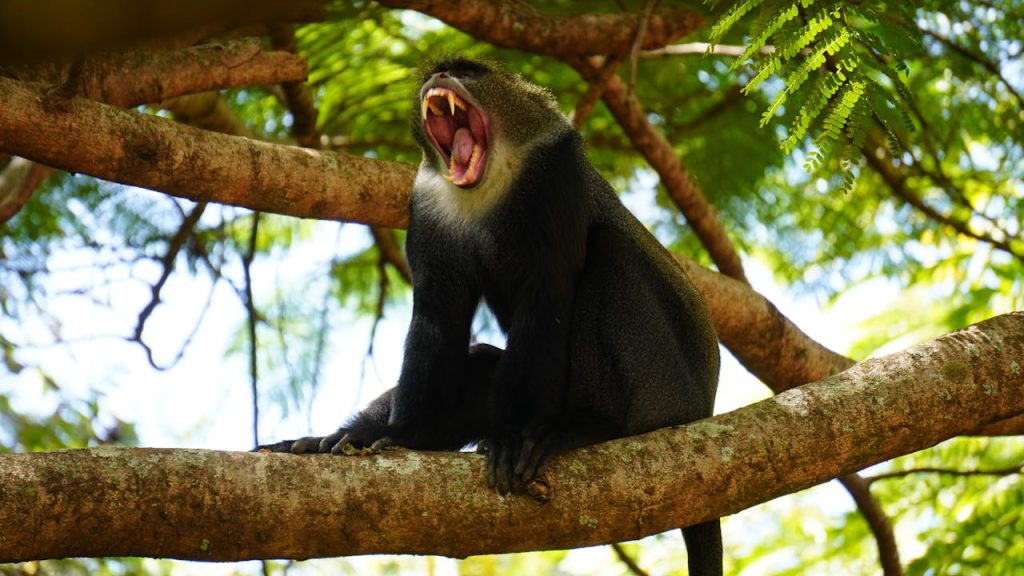
Climbers often see the blue monkey in the Kilimanjaro rainforest. Despite its name, it is not actually blue in color. Instead, it has a greyish coat with a slight bluish shine on its face, which gives it its name. These medium-sized monkeys move quickly through the trees in small groups and stay very active.
Blue monkeys mainly live in the dense rainforest zone between 1,800 and 3,000 meters. This area provides them with plenty of food such as fruits, leaves, flowers, and insects. They prefer living in trees, where they feel safe from predators and can easily move from branch to branch.
In terms of behavior, blue monkeys are alert but generally shy around humans. They may observe climbers from a distance before disappearing into the forest canopy. However, climbers often spot them in the early morning on popular routes like Machame and Lemosho while they search for food.
The chances of seeing blue monkeys on Kilimanjaro are quite high, especially if you are trekking through the rainforest zone. Most climbers encounter them at least once during their climb. Their playful movement, group behavior, and loud forest sounds make them one of the most memorable wildlife sightings on the mountain.
Black-and-White Colobus Monkey
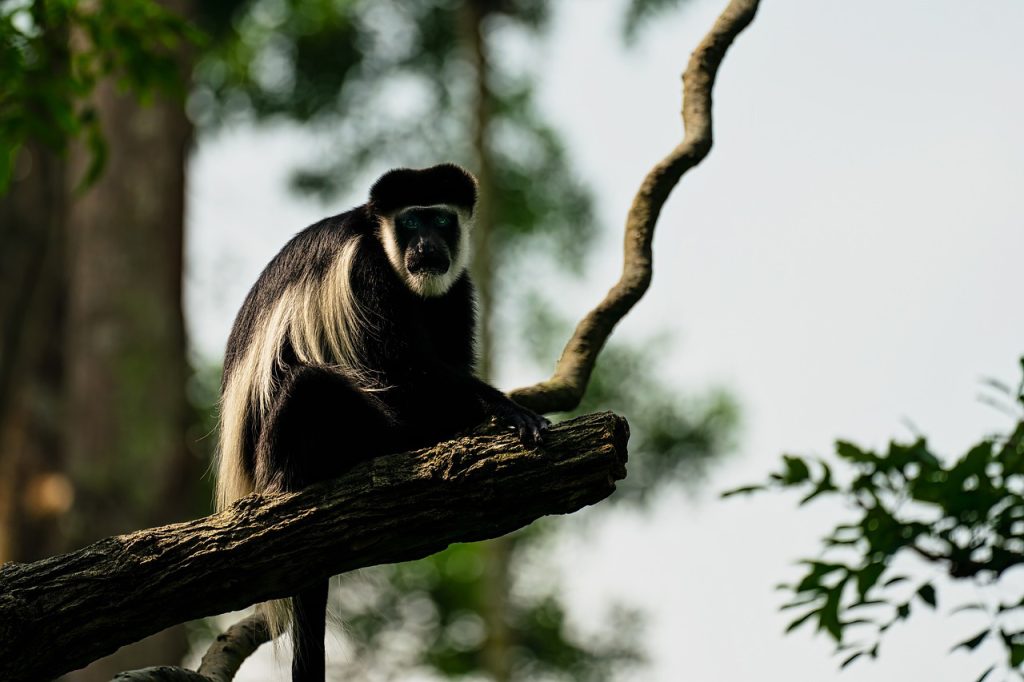
The black-and-white colobus monkey is one of the most iconic and beautiful animals on Mount Kilimanjaro. You can easily recognize it by its striking black body and long white mantle-like hair flowing along its sides. Its long tail, often used for balance while jumping between trees, adds to its unique appearance.
These monkeys mainly inhabit the dense rainforest zone, where they spend most of their time high in the tree canopy. Unlike blue monkeys, colobus monkeys are leaf-eaters and have a specialized stomach that helps them digest tough vegetation. This allows them to survive in areas where other animals might struggle.
Colobus monkeys are calm and less active on the ground.They move gracefully through trees in small groups and people often hear them before they see them. Their soft calls and rustling leaves can guide climbers to their location in the forest.
The chances of seeing black-and-white colobus monkeys are moderate. They are present in many forested areas but tend to stay hidden in the upper canopy. However, if you are trekking slowly and quietly, especially in the early morning or late afternoon, you may be lucky enough to spot them moving between branches.
Bushbuck
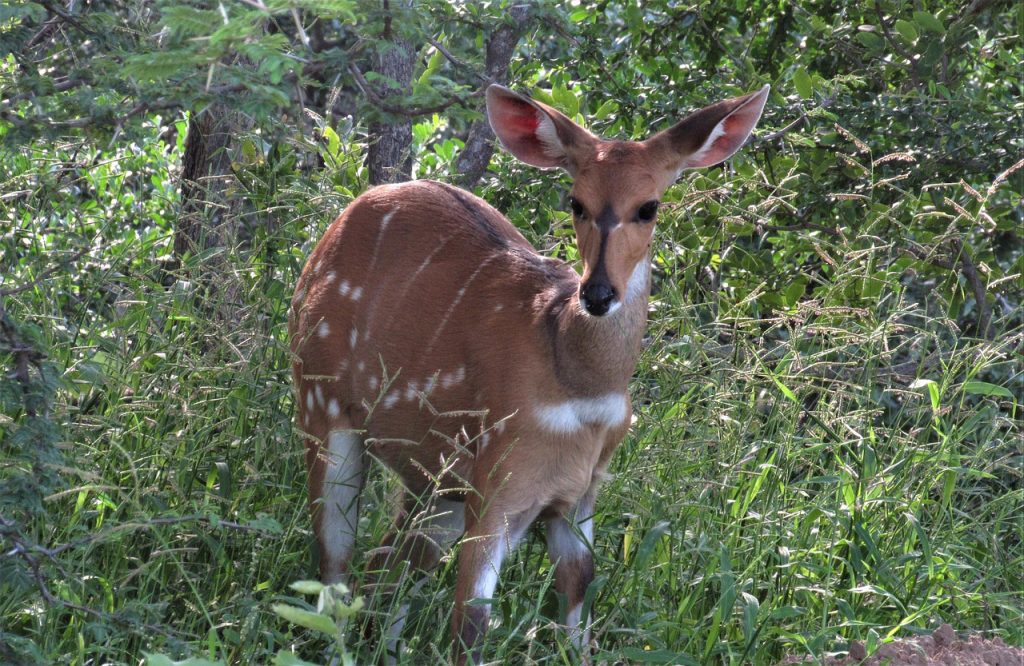
The bushbuck is a shy and solitary antelope found in the forest and lower moorland zones of Kilimanjaro. It has a reddish-brown coat with faint white markings, which helps it blend perfectly into its natural environment. This camouflage makes it one of the harder animals to spot on the mountain.
Bushbucks prefer dense vegetation where they can feed on leaves, shrubs, and grasses while staying hidden from predators. They are most active during early morning and late afternoon, resting in thick cover during the day. Unlike monkeys, bushbucks are usually alone or seen in very small groups.
Because of their shy nature, bushbucks rarely come close to trekking paths. However, climbers may occasionally spot them crossing forest clearings or standing quietly in thick vegetation. Their ability to remain motionless for long periods makes them difficult to detect, even when nearby.
The chances of seeing a bushbuck on Kilimanjaro are low to moderate. Sightings depend heavily on luck, timing, and how quietly climbers move through the forest. Most trekkers hear movement before they see the animal itself, making any encounter a special experience.
Duiker
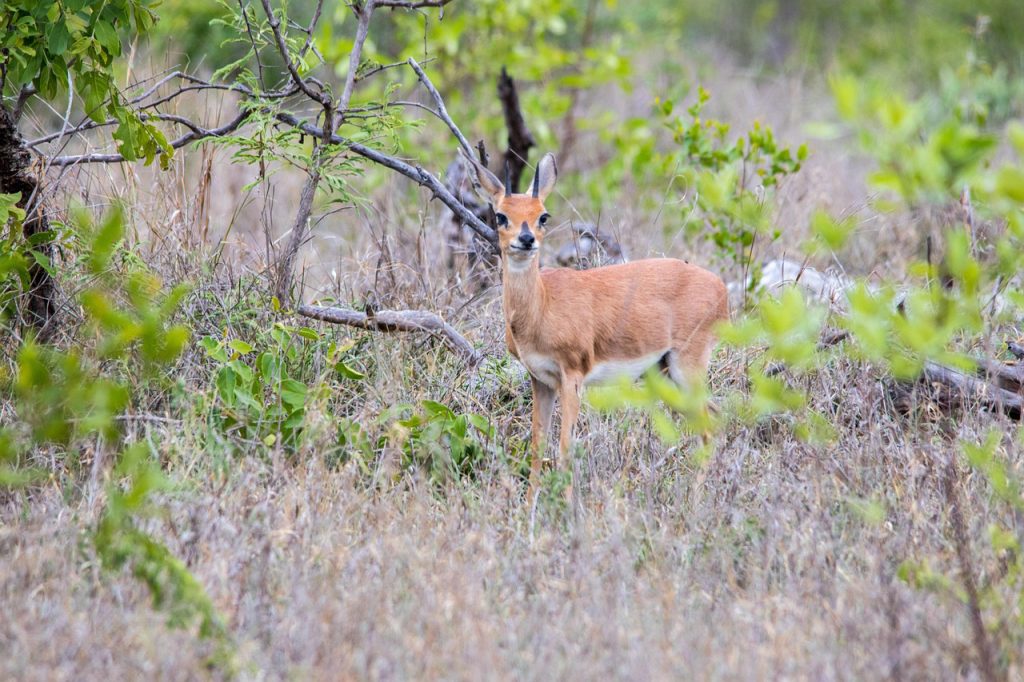
Duikers are small, forest-dwelling antelopes that are extremely secretive and rarely seen on Kilimanjaro. They are much smaller than bushbucks and adapt perfectly to life in dense vegetation. Their compact size and excellent camouflage help them avoid predators and human detection.
These animals feed on fallen fruits, leaves, and forest plants. They prefer staying deep within thick forest areas where they feel safe. Because of their shy behavior, duikers are usually active at night or in very early morning hours when human activity is low.
Spotting a duiker during a Kilimanjaro climb is very rare. Most climbers do not see them directly, even though they may be present nearby. Instead, they leave behind signs such as small footprints or movement in the bushes. Experienced guides usually confirm their presence through wildlife tracking.
The chances of seeing a duiker are very low, but knowing they are part of the ecosystem adds to the richness of Kilimanjaro’s biodiversity.
Olive Baboon
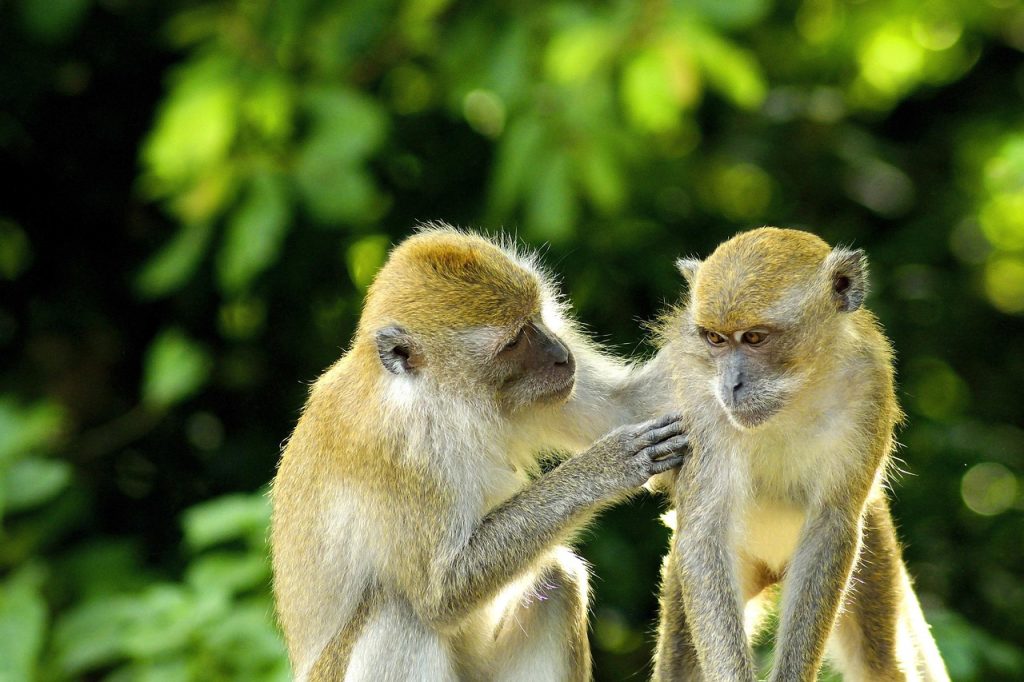
The olive baboon is one of the most noticeable and widespread animals on Mount Kilimanjaro. Unlike many other species on the mountain, baboons are highly adaptable and often travel on the ground in large social groups called troops. They are intelligent, vocal, and very active, making them easier to spot compared to other wildlife.
Olive baboons usually live in the lower forest zones and forest edges, where they feed on fruits, roots, insects, and sometimes small animals. Their strong social structure keeps them highly active, and climbers often see them interacting, grooming each other, or moving together as a group.
These baboons are not shy and sometimes approach trekking routes, especially in areas where they have become used to human presence. However, they can become aggressive if they feel threatened, so climbers should always keep a safe distance.
The chances of seeing olive baboons on Kilimanjaro are high, especially on popular routes that pass through forested areas. Their size, behavior, and loud calls make them one of the most memorable wildlife encounters during the climb.
Birds You May See While Climbing Kilimanjaro
Mount Kilimanjaro is not only rich in mammals like monkeys and antelopes, but it is also home to a wide variety of bird species. In fact, climbers often see birds among the most frequently seen animals during a Kilimanjaro climb, especially in the rainforest and moorland zones. Because birds can fly across different elevations, they are able to survive in almost all ecological zones of the mountain. Climbers often notice them in the early morning when they are most active, searching for food or soaring above the landscape. From large scavenger birds to small colorful nectar feeders, Kilimanjaro offers a unique birdwatching experience that adds beauty and life to the trekking journey.
White-necked Raven
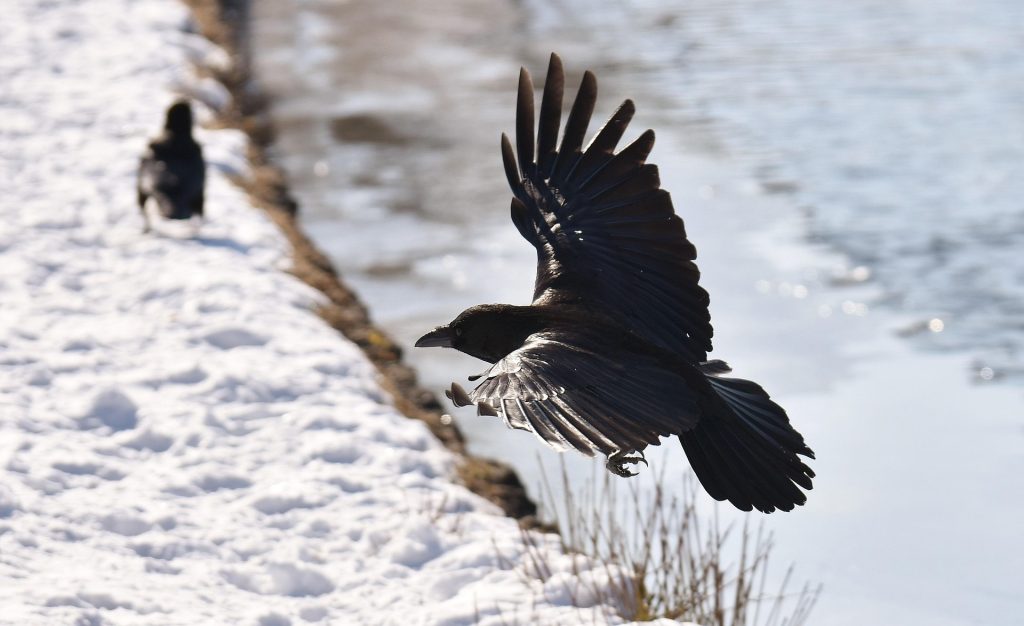
The white-necked raven is one of the most intelligent and adaptable birds found on Mount Kilimanjaro. It is a large black bird with a distinctive white patch on the back of its neck, making it easy to identify even from a distance. This bird is commonly seen in the higher zones of Kilimanjaro, including the heath, moorland, and even alpine desert areas.
White-necked ravens are highly skilled scavengers and feed on a wide range of food sources, including insects, food scraps, and small animal remains. They are also known for their curiosity and bold behavior, often approaching campsites in search of food. Their intelligence allows them to adapt well to harsh environments where other bird species may struggle to survive.
Climbers frequently see them flying above ridges or perched on rocks, especially in open areas where they can scan for food. The chances of spotting a white-necked raven on Kilimanjaro are very high, particularly as you ascend above the forest zone. Their presence adds a dramatic and wild feeling to the high-altitude landscape.
Augur Buzzard
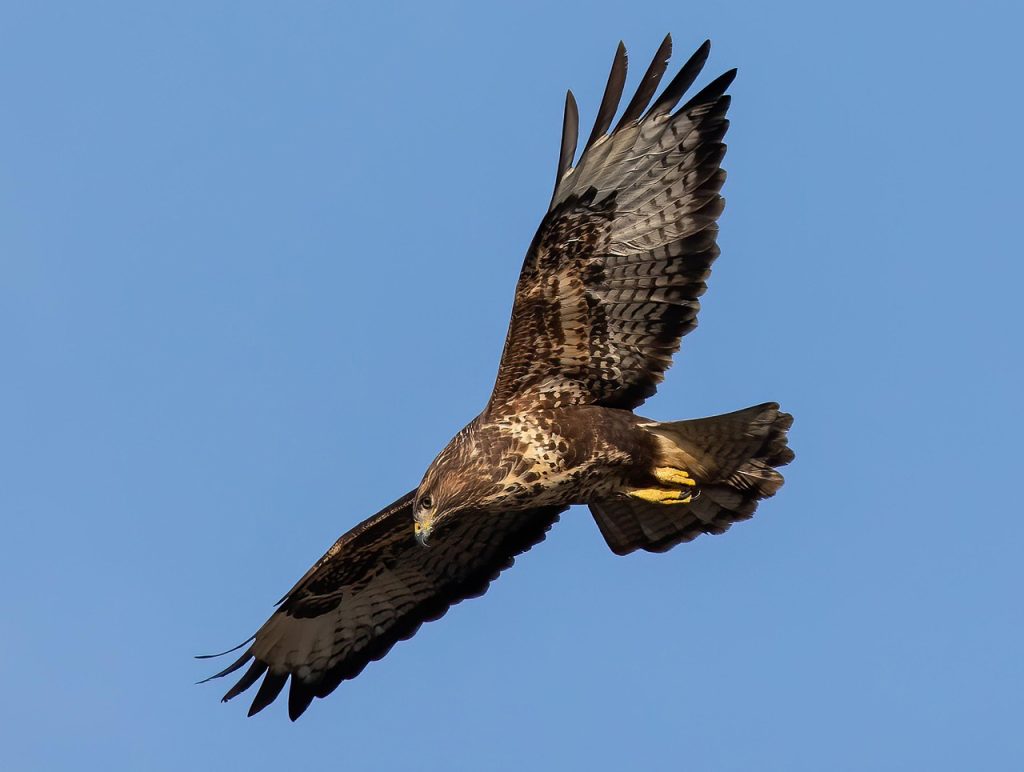
The augur buzzard is one of the most common birds of prey on Mount Kilimanjaro. It is a large, powerful raptor with dark plumage and a pale underside, often seen circling high above the mountain slopes. This bird is well adapted to a variety of habitats and can be found from lower forest edges all the way up to the moorland and alpine zones.
Augur buzzards are skilled hunters, feeding mainly on small mammals, reptiles, and insects. They are often seen soaring on thermal air currents, using their excellent vision to spot movement on the ground below. Their slow, graceful flight makes them easy to recognize during the climb.
For trekkers, spotting an augur buzzard is a common and exciting experience, especially in open areas where the sky is clear. They are most active during the daytime when warm air currents help them glide effortlessly over long distances. The chances of seeing an augur buzzard on Kilimanjaro are very high, making it one of the most reliable bird sightings on the mountain.
Malachite Sunbird
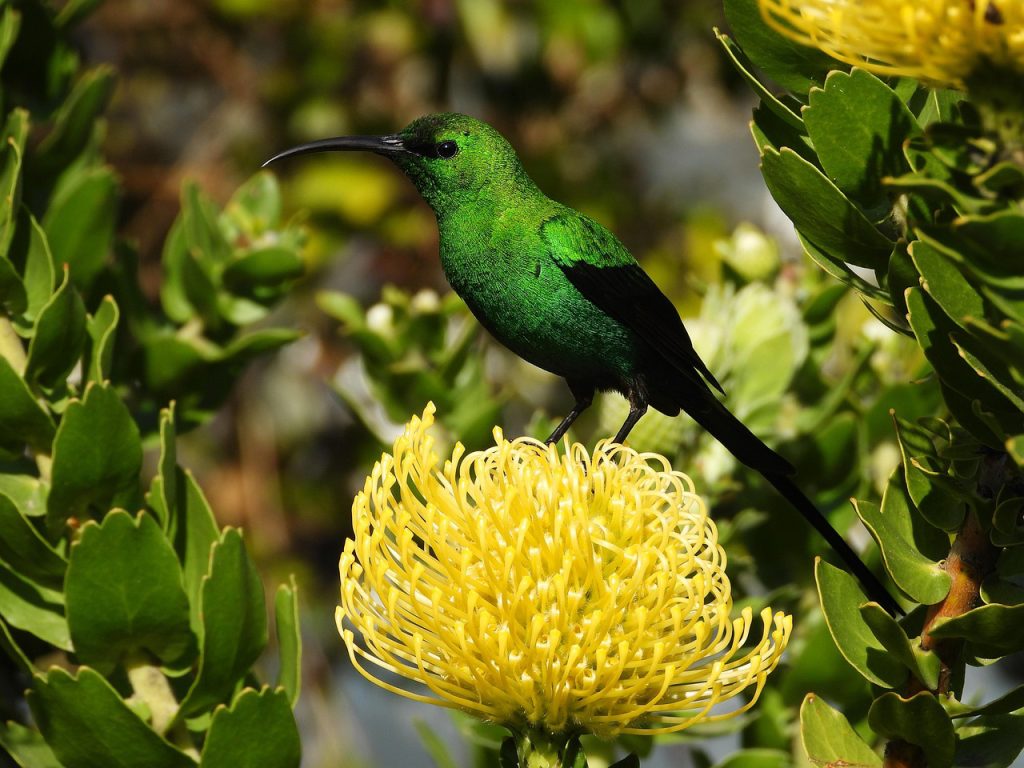
The malachite sunbird is one of the most beautiful and colorful birds you may encounter on Kilimanjaro. It is known for its shimmering green feathers and long tail, which make it stand out in the natural environment. This small bird is typically found in forested and moorland zones where flowers are abundant.
Malachite sunbirds feed mainly on nectar, using their long, curved beaks to reach deep into flowers. They are fast-moving and highly active, often seen darting between plants in search of food. Their bright colors and quick movements make them a favorite among birdwatchers.
Although they are small, malachite sunbirds are relatively easy to spot in areas with flowering vegetation, especially in the lower and middle zones of Kilimanjaro. The chances of seeing them are moderate to high depending on the season and the route you are taking.
Scarlet-tufted Malachite Sunbird
The scarlet-tufted malachite sunbird is one of Kilimanjaro’s most unique high-altitude bird species. It closely relates to the malachite sunbird but stands out because of its striking scarlet or red patches, especially around the head. This bird adapts well to the colder, harsher environments of the upper moorland and alpine desert zones.
Unlike many other birds, the scarlet-tufted malachite sunbird thrives at high elevations where oxygen levels are lower and vegetation is sparse. It feeds on nectar from hardy alpine flowers and small insects, often found in rocky or wind-exposed areas. Its ability to survive in such extreme conditions makes it one of the most fascinating bird species on Kilimanjaro.
For climbers, spotting this bird is a special experience, usually occurring when ascending above the moorland zone. Although not as commonly seen as other birds, its presence is a highlight for those interested in high-altitude wildlife. The chances of seeing a scarlet-tufted malachite sunbird are moderate but increase as you reach higher elevations.
Can You See Large Animals on Mount Kilimanjaro?
While Mount Kilimanjaro is home to a variety of smaller wildlife such as monkeys and birds, many climbers often wonder whether they might also encounter large African animals during the trek. The short answer is that sightings of large mammals are possible but extremely rare. Unlike safari destinations such as Serengeti or Ngorongoro, Kilimanjaro is not a major habitat for big game animals. As you climb higher into the mountain’s forest and moorland zones, conditions become colder, steeper, and less suitable for large wildlife. However, on the lower slopes and in the surrounding forest reserves, some large animals do occasionally pass through.
Elephants
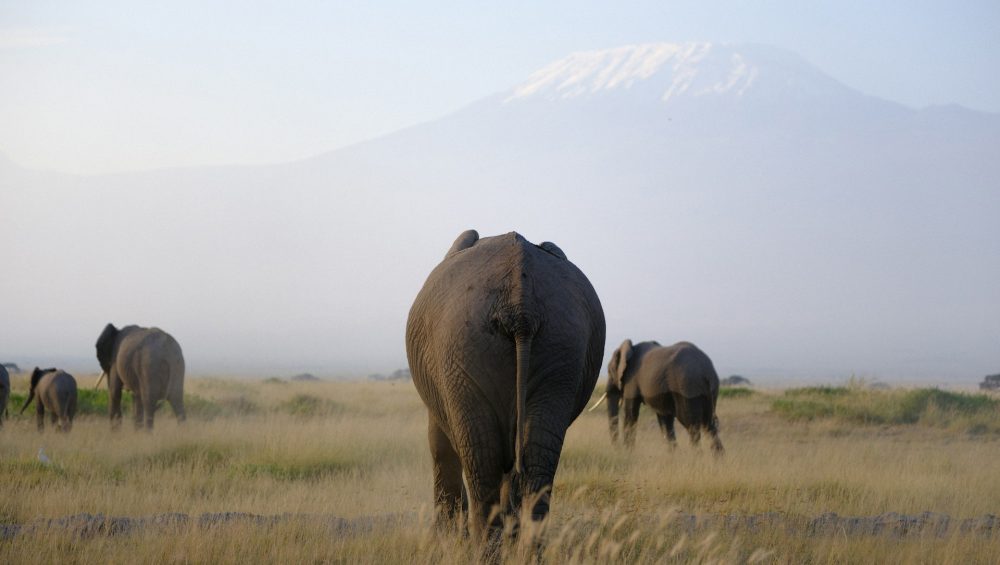
African elephants are sometimes reported in the lower forest areas around Mount Kilimanjaro, especially in protected forest corridors outside the main climbing routes. These elephants usually move between nearby conservation areas in search of food and water. However, climbers on the mountain itself rarely see them along trekking paths. The dense forest and human activity on popular routes generally keep elephants away from climbing trails. Because of this, elephant sightings during a Kilimanjaro climb are considered very rare. When they do occur, it is usually from a distance or in areas close to the forest edge rather than on the main ascent routes.
Buffalo
African buffalo are another large animal species in the broader Kilimanjaro ecosystem. They are strong, herd-living animals that prefer grasslands and open forest areas. While buffalo appear more commonly in nearby national parks, they sometimes move through the lower forest zones around the mountain. However, climbers rarely encounter buffalo while climbing Kilimanjaro, and most trekkers do not see them during their ascent. Guides monitor wildlife activity, but buffalo sightings on trekking routes remain rare and are not a typical part of the climbing experience.
Leopards
Leopards are among the most elusive and secretive predators in Africa, and their presence on Mount Kilimanjaro is extremely difficult to confirm. They prefer dense forest cover and are highly nocturnal, which makes them almost impossible to spot during a normal climb. There have been occasional reports and local stories of leopards inhabiting the mountain’s forest zones, but direct sightings by climbers are exceptionally rare. One of the most famous legends associated with Kilimanjaro is the story of a leopard near the higher elevations, even as far as the region below Uhuru Peak. While people have not verified this story and often consider it local folklore, it adds to the mountain’s mystique and cultural storytelling. In reality, any leopard encounter on Kilimanjaro would be extraordinary and highly unlikely for trekkers.
Overall, while large mammals such as elephants, buffalo, and leopards are part of the wider ecosystem around Mount Kilimanjaro, climbers should expect that wildlife encounters on the mountain itself will mainly involve smaller forest animals and birds rather than big game species.
What Animals Are Most Common on Each Kilimanjaro Route?
Wildlife sightings on Mount Kilimanjaro depend not only on altitude and ecosystem zones but also on the specific trekking route you choose. Some routes pass through longer stretches of dense rainforest, where animal activity is higher, while others move more quickly into moorland and alpine zones where wildlife becomes less common. Although all routes share similar ecological zones, the density of forest cover, traffic levels, and trail direction can influence how often climbers see animals. In general, routes with longer rainforest sections tend to offer better opportunities for spotting monkeys, antelopes, and birds.
Machame Route
The Machame Route is one of the most popular climbing paths and passes through a long stretch of lush rainforest at the beginning of the trek. This makes it one of the better routes for wildlife viewing. Climbers often encounter blue monkeys, black-and-white colobus monkeys, and various bird species during the early days. Because this route is busy, animals stay slightly deeper in the forest, but climbers still see them relatively often compared to higher routes.
Lemosho Route
Climbers and guides widely regard the Lemosho Route as one of the best routes for both scenery and wildlife. It enters Kilimanjaro through a remote western approach, meaning the rainforest is less disturbed and more pristine. This increases the chances of spotting monkeys, bushbucks, and a wide variety of birds. The quieter environment allows wildlife to behave more naturally, making Lemosho one of the top choices for climbers interested in nature and animal encounters.
Marangu Route
The Marangu Route, also known as the “Coca-Cola Route,” passes through rainforest but is generally more developed and has more traffic compared to other routes. Wildlife sightings are still possible, especially in the forest zone, but animals are often more hidden due to human activity. Climbers most commonly see blue monkeys and colobus monkeys here, although sightings require patience.
Rongai Route
The Rongai Route approaches Kilimanjaro from the northern side, which is drier and less densely forested. Because of this, climbers see wildlife less frequently than on southern routes. However, climbers may still encounter animals in the lower forest sections, including monkeys and some bird species. The drier environment limits biodiversity, making animal encounters more occasional.
Northern Circuit Route
The Northern Circuit Route is the longest route on Kilimanjaro and offers extended time in different ecological zones. While its wildlife density is not significantly higher than other routes, the longer duration increases the chances of encountering animals simply because climbers spend more time in forested areas. It is particularly good for birdwatching and occasional monkey sightings.
Umbwe Route
The Umbwe Route is the steepest and most direct route up Kilimanjaro. It moves quickly through the rainforest zone, so wildlife viewing opportunities are more limited than on longer routes. Climbers may still see monkeys and birds in the early stages, but the fast ascent reduces time in animal-rich areas, so wildlife encounters happen less often overall.
Wildlife Comparison Table by Route
| Route | Rainforest Exposure | Wildlife Chance | Common Sightings |
|---|---|---|---|
| Machame | High | High | Monkeys, birds, bushbucks |
| Lemosho | Very High | Very High | Monkeys, birds, bushbucks |
| Marangu | Moderate | Moderate | Monkeys, birds |
| Rongai | Low-Moderate | Low | Occasional monkeys, birds |
| Northern Circuit | High (long duration) | Moderate-High | Birds, monkeys |
| Umbwe | Short | Low | Rare sightings |
Best Time to See Wildlife on Mount Kilimanjaro
Read more about best time to see wildlife on Mount Kilimanjaro
The best time to see wildlife on Mount Kilimanjaro is during the dry seasons and in the early morning or late afternoon hours when animals are most active. While wildlife can be seen throughout the year, your chances of spotting monkeys, birds, and antelope increase when conditions are calm, visibility is clear, and animals move more freely in search of food and water. Because Kilimanjaro has different ecological zones, wildlife behavior also changes depending on weather, temperature, and time of day.
Dry Season (Best Time for Wildlife Viewing and Clear Sightings)
The dry season is generally the best time to see wildlife on Mount Kilimanjaro. During this period, the weather is more stable, trails are less slippery, and vegetation is not overly dense, making it easier to spot animals. The dry season usually brings clearer skies and better visibility in the rainforest and moorland zones, where most wildlife activity takes place.
Animals such as blue monkeys, colobus monkeys, bushbucks, and a variety of bird species are more likely to be seen because they move closer to water sources and feeding areas. With less rain and fewer thick clouds, trekkers also have better chances of spotting movement in the forest canopy. In addition, guides can more easily track animal activity due to clearer ground conditions.
Overall, the dry season provides the most comfortable trekking experience and the highest probability of seeing wildlife, especially in the lower forest zones where biodiversity is richest.
Wet Season (Lush Forest but Lower Visibility)
The wet season transforms Mount Kilimanjaro into a lush green environment with thick vegetation and frequent rainfall. While this creates a beautiful and vibrant landscape, it can make wildlife sightings more difficult. Dense foliage often hides animals, and heavy rain reduces visibility for trekkers.
However, the wet season is still home to active wildlife, especially in the rainforest zone. Birds are particularly abundant during this time, as many species are breeding or feeding on seasonal fruits and insects. Monkeys are still present and active, but they are often deeper in the forest, making them harder to see clearly.
Although sightings may be less frequent, the wet season offers a unique experience with fewer crowds and a more dramatic natural environment. For photographers and nature lovers, it can still be rewarding, even if wildlife encounters require more patience.
Early Morning Sightings (Peak Wildlife Activity Time)
Early morning is one of the best times of day to see wildlife on Mount Kilimanjaro. The best time is early morning because animals are most active during the cooler hours when they search for food after the night. In the rainforest zone, monkeys are often seen moving through the trees, and birds are highly active as they begin their daily feeding routines.
The cooler temperatures also make animals more comfortable moving around in open areas before the heat of the day sets in. For climbers, early morning hikes provide a higher chance of spotting movement in the forest canopy or along trekking paths. Guides often recommend starting sections of the trek early to increase wildlife viewing opportunities.
This time of day also offers excellent lighting conditions for photography, making it ideal for capturing clear images of Kilimanjaro’s wildlife.
Evening Wildlife Activity (Quiet and Subtle Encounters)
Evening hours on Mount Kilimanjaro also provide good opportunities for wildlife sightings, although they are generally quieter compared to mornings. The best time is late afternoon and early evening when temperatures begin to drop, and animals prepare to rest or feed before nightfall.
During this time, trekkers may notice bushbucks or duikers moving carefully through forest clearings. Birds also become active again, often returning to nesting areas or searching for last-minute food. In some cases, monkeys may still be seen in the canopy, especially in lower forest zones.
However, visibility decreases as light fades, and many animals become more cautious. While evening sightings are less frequent than morning encounters, they still offer a peaceful and atmospheric wildlife experience in the natural environment of Kilimanjaro.
Wildlife Safety Tips for Climbers
While climbing Mount Kilimanjaro, encountering wildlife is one of the most exciting parts of the journey. However, it is important to remember that all animals on the mountain are wild and should be treated with caution and respect. Most species, such as monkeys, bushbucks, and birds, are not dangerous when left undisturbed, but improper behavior from humans can lead to stress for animals or risky situations for climbers. Following basic wildlife safety guidelines helps ensure both your safety and the protection of Kilimanjaro’s natural ecosystem.
Keep a Safe Distance
The most important rule when encountering wildlife on Mount Kilimanjaro is to always keep a safe distance. Even if animals appear calm or used to human presence, they are still wild and can react unpredictably if they feel threatened. Monkeys, for example, may seem curious and sometimes approach trekking groups, but getting too close can cause stress or defensive behavior.
Maintaining distance also protects animals from becoming too accustomed to humans, which can disrupt their natural behavior. It is recommended to observe wildlife quietly without attempting to touch, chase, or follow them. Using binoculars or zoom lenses for photography is the best way to enjoy close-up views without disturbing the animals.
Keeping distance also ensures climbers remain safe, especially in forest areas where visibility may be limited. By respecting personal space between humans and wildlife, encounters remain peaceful and enjoyable.
Do Not Feed Animals
Feeding wildlife on Kilimanjaro is strongly discouraged and can have serious negative effects on both animals and the ecosystem. When animals become dependent on human food, they may lose their natural foraging behavior and become more aggressive or bold around people.
Monkeys, in particular, can quickly learn to associate humans with food, which can lead to unwanted encounters or even attempts to steal items from climbers. This not only creates safety risks but also disrupts the natural balance of the forest ecosystem.
Feeding animals can also introduce unhealthy foods into their diet, which may harm their health over time. To protect Kilimanjaro’s wildlife, all food should be stored securely, and climbers should never offer snacks or leftovers to any animal they encounter on the trail.
Follow Guide Instructions
Professional mountain guides play an essential role in ensuring safe and responsible wildlife encounters on Mount Kilimanjaro. They are trained to understand animal behavior, recognize potential risks, and guide climbers through areas where wildlife is present.
Always listen carefully to your guide’s instructions when animals are nearby. They may advise you to stop, stay quiet, or adjust your path depending on the situation. Guides also know the safest way to observe wildlife without disturbing their natural movement.
Following their guidance reduces the risk of accidents and ensures that encounters remain safe for both climbers and animals. Ignoring instructions or acting independently can increase the chance of disturbing wildlife or entering unsafe situations, especially in dense forest areas.
Respect the Ecosystem
Respecting the Kilimanjaro ecosystem means understanding that every plant and animal plays an important role in maintaining the mountain’s natural balance. From the smallest insects to the largest mammals, all species contribute to the health of the environment.
Climbers should avoid damaging vegetation, removing plants, or leaving waste behind. Staying on designated trails helps protect fragile habitats and prevents unnecessary disturbance to wildlife. Littering or disrupting natural areas can have long-term effects on the ecosystem and reduce the quality of the environment for future climbers.
By respecting nature, climbers help preserve Kilimanjaro’s biodiversity for future generations. Responsible trekking ensures that wildlife continues to thrive and that the mountain remains a beautiful and sustainable destination for both adventure and conservation.
Animals on Mount Kilimanjaro vs Safari Animals
Many travelers visiting Tanzania often wonder how wildlife on Mount Kilimanjaro compares to animals seen on a traditional safari. While both experiences take place in the same country, they are completely different in terms of environment, wildlife diversity, and animal visibility. Kilimanjaro is a mountain trekking destination with limited wildlife concentrated in specific ecological zones, especially the rainforest. In contrast, safari parks such as Serengeti and Ngorongoro offer open landscapes with large concentrations of African wildlife, including predators and large herbivores.
On Kilimanjaro, climbers mainly encounter smaller and more elusive animals such as monkeys, bushbucks, duikers, and various bird species. These animals are adapted to forest and high-altitude environments and are often difficult to spot due to dense vegetation and changing terrain. Large safari animals like lions, giraffes, and zebras are not part of the Kilimanjaro ecosystem, making wildlife encounters more subtle and less predictable.
In safari parks, however, animals are far more visible due to open grasslands and plains. Visitors can easily see large herds and predator-prey interactions in their natural environment. This makes safaris ideal for game viewing, while Kilimanjaro is more about trekking, scenery, and occasional forest wildlife encounters.
Wildlife Comparison Table
| Animal | Kilimanjaro | Safari Parks |
|---|---|---|
| Monkeys | Common | Common |
| Elephants | Rare | Common |
| Lions | No | Common |
| Giraffes | No | Common |
| Buffalo | Rare | Common |
Frequently Asked Questions About Animals on Mount Kilimanjaro
This section answers the most common questions climbers ask about wildlife on Mount Kilimanjaro. While the mountain is not a traditional safari destination, it still offers interesting animal encounters, especially in the lower rainforest zones. Understanding what to expect helps climbers prepare mentally and enjoy the experience without unrealistic expectations.
Most climbers will see monkeys, birds, and occasionally small antelopes during their Kilimanjaro trek. The most common animals include blue monkeys, black-and-white colobus monkeys, olive baboons, bushbucks, and duikers. These species are mainly found in the rainforest zone, where vegetation is dense and food is abundant. Birdlife is also very rich, with species such as sunbirds, hornbills, and buzzards often seen along the trail. As you climb higher, wildlife becomes less frequent due to colder temperatures and limited vegetation.
No, lions are not found on Mount Kilimanjaro. Lions prefer open savannah environments such as Serengeti and other national parks, where they can hunt large herbivores. Kilimanjaro’s dense forest, steep slopes, and cold high-altitude zones are not suitable habitats for lions. While Tanzania is famous for lion sightings, climbers should not expect to see them on any Kilimanjaro route.
Elephants are rarely seen on the climbing routes of Mount Kilimanjaro. They may occasionally move through surrounding forest reserves or lower foothill areas, but they do not typically enter the main trekking paths. The terrain becomes too steep and forested for regular elephant movement. Any elephant sighting during a climb would be considered unusual and depends heavily on location and chance.
The best routes for wildlife viewing are the Lemosho and Machame routes because they pass through longer and denser rainforest sections. These areas increase the chances of seeing monkeys, birds, and small antelopes. The Northern Circuit also offers good opportunities due to its long duration in varied ecosystems. In contrast, shorter or drier routes like Umbwe or Rongai offer fewer wildlife sightings.
Yes, encountering wildlife on Kilimanjaro is generally safe as long as climbers follow guide instructions and maintain a respectful distance. Most animals are shy and avoid human contact. However, climbers should never attempt to feed or approach animals, especially monkeys or baboons, as this can lead to unwanted interactions. Following safety guidelines ensures that both humans and wildlife remain safe throughout the trek.
Yes, climbers often see monkeys among the most common animals on Mount Kilimanjaro. Blue monkeys and black-and-white colobus monkeys appear frequently in the rainforest zone, especially in the early stages of the climb. Olive baboons also live in some areas and move on the ground in small troops. While sightings depend on route and timing, most climbers encounter monkeys at least once during their trek.
Final Thoughts: Animals on Mount Kilimanjaro
Mount Kilimanjaro offers a unique wildlife experience that is very different from a traditional safari. While it does not have large predators or vast herds of animals, it is home to a fascinating range of species that live mainly in the lower rainforest zones. Climbers often encounter monkeys such as blue monkeys and black-and-white colobus monkeys, along with olive baboons, bushbucks, duikers, and many colorful bird species.
As you ascend higher into the moorland, alpine desert, and arctic zones, wildlife becomes increasingly rare due to harsh weather conditions and limited vegetation. This natural change across ecological zones makes Kilimanjaro a mountain of contrasts, where every stage of the climb offers a different environment and experience.
Although climbers are not guaranteed to see wildlife, sightings add an exciting and memorable element to the journey. For many climbers, spotting a monkey in the forest or a bird soaring above the mountain becomes one of the highlights of their adventure. With the right route choice, timing, and attention, Kilimanjaro can offer surprising and beautiful wildlife encounters alongside the challenge of reaching Africa’s highest peak.