Gilman’s Point on Kilimanjaro: Everything You Need to Know
Estimated reading time: 15 minutes
Gilman’s Point is one of the most important landmarks on Mount Kilimanjaro. Located on the crater rim at an altitude of 5,685 meters (18,652 feet), it marks a major milestone for climbers making their summit attempt. Many trekkers reach Gilman’s Point during summit night after a challenging climb up steep volcanic scree from Barafu Camp or Kibo Hut.
Although some climbers think Gilman’s Point is the highest point on Kilimanjaro, the true summit is Uhuru Peak, which stands higher on the crater rim. However, reaching Gilman’s Point remains a remarkable achievement because it means you have successfully reached the edge of Kilimanjaro’s crater at extreme altitude.
Most climbers arrive at Gilman’s Point around sunrise, where they enjoy spectacular views of the mountain, glaciers, and surrounding landscapes. For many, this moment becomes one of the most memorable parts of the entire trek.
In this guide, you’ll learn where Gilman’s Point sits on Kilimanjaro, how difficult it is to reach, how it compares to Uhuru Peak, what to expect during summit night, and tips to improve your chances of success.
Table of contents
- Gilman’s Point on Kilimanjaro: Everything You Need to Know
- What Is Gilman’s Point?
- Where Is Gilman’s Point Located?
- How Difficult Is the Climb to Gilman’s Point?
- Gilman’s Point vs Uhuru Peak
- What Happens When You Reach Gilman’s Point?
- Wildlife and Scenery Around Gilman’s Point
- Tips for Reaching Gilman’s Point Successfully
- Frequently Asked Questions
- Final Thoughts
- Read Also:
What Is Gilman’s Point?
Gilman’s Point is one of the three official summit points on Mount Kilimanjaro. It sits on the edge of Kibo Crater and serves as a major milestone for climbers during their summit attempt. Many trekkers reach this point after several hours of climbing through the darkness on summit night. For many climbers, arriving at Gilman’s Point marks the moment when they realize they are close to achieving their goal of standing on Africa’s highest mountain.
Location on Mount Kilimanjaro
Gilman’s Point sits on the eastern side of Kibo Crater, the volcanic cone that forms Kilimanjaro’s highest summit area. Climbers usually reach it after ascending steep scree slopes from Barafu Camp or Kibo Hut during summit night.
The point stands on the crater rim and offers spectacular views across the mountain. From here, climbers can see parts of the crater, nearby glaciers, and the vast plains surrounding Kilimanjaro. Many routes that approach the summit from the south and east pass through Gilman’s Point before continuing toward Uhuru Peak.
Elevation of Gilman’s Point
Gilman’s Point stands at 5,685 meters (18,652 feet) above sea level. This elevation places it well within the extreme altitude zone, where oxygen levels are significantly lower than at sea level.
At this height, many climbers feel the effects of altitude. Shortness of breath, fatigue, and slower walking speeds become common. For this reason, guides encourage climbers to move slowly and maintain a steady pace during the final ascent.
Although Gilman’s Point is not the highest point on Kilimanjaro, reaching this elevation remains a significant achievement and demonstrates strong physical and mental determination.
Why It Matters to Climbers
Gilman’s Point represents a major milestone on the journey to the summit. Reaching this point means a climber has successfully completed the most demanding section of summit night and arrived at the crater rim.
Many climbers celebrate when they see the Gilman’s Point sign because it confirms they have reached one of Kilimanjaro’s official summit points. Some climbers choose to stop here due to altitude, weather, or exhaustion, while others continue toward Uhuru Peak, the highest point on the mountain.
Whether a climber stops at Gilman’s Point or continues to the main summit, reaching this landmark remains an unforgettable accomplishment and one of the highlights of the Kilimanjaro experience.
Where Is Gilman’s Point Located?
Many climbers hear about Gilman’s Point while planning their Kilimanjaro trek, but they often wonder exactly where it sits on the mountain. Gilman’s Point lies on the rim of Kibo Crater and serves as one of the key landmarks during summit night. Understanding its location helps climbers visualize the final stages of their ascent and prepare for the challenge ahead.
Position on the Crater Rim
Gilman’s Point sits on the eastern edge of Kibo Crater, the highest volcanic cone on Mount Kilimanjaro. Climbers reach this point after ascending steep volcanic scree during the final push to the summit area.
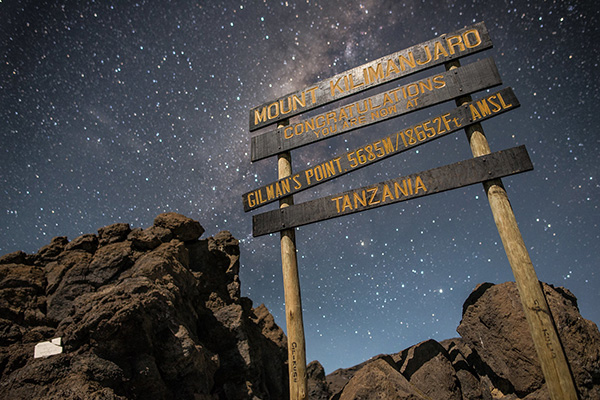
The location offers dramatic views across the crater, surrounding glaciers, and the plains below. Many trekkers arrive here around sunrise, creating one of the most memorable moments of the entire climb. The famous wooden sign at Gilman’s Point marks the spot and provides an excellent photo opportunity after a long night of trekking.
Distance From Uhuru Peak
Gilman’s Point is not the highest point on Kilimanjaro. Uhuru Peak holds that title and stands at 5,895 meters (19,341 feet), while Gilman’s Point sits at 5,685 meters (18,652 feet).
The distance between Gilman’s Point and Uhuru Peak is approximately 1.5 kilometers (0.9 miles) along the crater rim. Although this distance may seem short, the high altitude makes every step more challenging. Most climbers need between one and two hours to walk from Gilman’s Point to Uhuru Peak, depending on their pace, weather conditions, and physical condition.
Which Routes Reach Gilman’s Point?
Several Kilimanjaro routes lead climbers to Gilman’s Point during summit night. The most common routes include Machame, Lemosho, Umbwe, Rongai, and the Northern Circuit.
Climbers on the Machame, Lemosho, Umbwe, and Northern Circuit routes usually begin their summit attempt from Barafu Camp before reaching Gilman’s Point. Climbers on the Rongai Route typically start from Kibo Hut and approach the crater rim from the northern side.
The Marangu Route follows a different path but also reaches the crater rim near Gilman’s Point before continuing toward Uhuru Peak. As a result, many Kilimanjaro climbers pass through Gilman’s Point regardless of the route they choose.
How Difficult Is the Climb to Gilman’s Point?
Many climbers consider the trek to Gilman’s Point the most challenging part of the entire Kilimanjaro climb. The route does not require technical mountaineering skills, ropes, or rock climbing experience, but it demands determination, patience, and the ability to cope with high altitude. Most climbers begin this section around midnight and spend several hours climbing in darkness before reaching the crater rim.
The Challenge of Summit Night
Summit night tests both your body and mind. Most climbers leave camp between midnight and 1:00 a.m. and begin a slow ascent toward the crater rim. At this stage, you may already feel tired after several days on the mountain.
The cold temperatures, darkness, and thin air make the climb feel much harder than previous trekking days. Many climbers focus on one step at a time and follow their guide’s pace. Moving slowly helps conserve energy and improves your chances of reaching Gilman’s Point successfully.
Steep Scree Slopes
One of the biggest challenges between camp and Gilman’s Point is the steep scree slope. Scree consists of loose volcanic gravel and small rocks that shift under your feet as you climb.
Many climbers describe this section as taking two steps forward and sliding one step back. The steep terrain can feel frustrating, especially during the final hours before sunrise. Trekking poles help maintain balance and reduce pressure on your legs during the ascent.
Although the scree slope requires effort, most climbers can complete it by maintaining a steady pace and following their guide’s instructions.
Effects of High Altitude
Altitude creates the greatest challenge on the way to Gilman’s Point. At 5,685 meters (18,652 feet), the air contains much less oxygen than at sea level.
Many climbers experience shortness of breath, headaches, fatigue, or reduced energy levels during the ascent. Even simple movements can feel more difficult at this elevation. The effects vary from person to person, which is why proper acclimatization plays such an important role in summit success.
Guides closely monitor climbers throughout summit night and encourage regular hydration and a slow walking pace to help manage altitude effects.
Physical and Mental Preparation
You do not need advanced climbing skills to reach Gilman’s Point, but good preparation can make the experience much easier.
Regular hiking, cardiovascular exercise, and leg-strength training help prepare your body for long days on the mountain. Training several weeks before your trek improves endurance and confidence during the climb.
Mental preparation matters just as much as physical fitness. Summit night can feel long and demanding, especially when you climb in darkness and cold conditions. Climbers who stay positive, remain patient, and focus on small goals often handle the challenge more successfully.
With proper training, good acclimatization, and support from experienced guides, many first-time trekkers successfully reach Gilman’s Point and continue toward Uhuru Peak.
Gilman’s Point vs Uhuru Peak
Many climbers wonder whether reaching Gilman’s Point means they have reached the summit of Kilimanjaro. While Gilman’s Point is an important achievement, it is not the mountain’s highest point. Understanding the difference between Gilman’s Point and Uhuru Peak helps climbers set realistic expectations for summit night and appreciate each milestone along the journey.

Key Differences
Gilman’s Point and Uhuru Peak both sit within Kilimanjaro’s summit area, but they represent different stages of the final ascent. Gilman’s Point stands on the eastern rim of Kibo Crater and serves as a gateway to the summit plateau. Most climbers reach it first after climbing steep scree slopes during summit night.
Uhuru Peak sits farther along the crater rim and marks the highest point on Mount Kilimanjaro. Climbers who continue beyond Gilman’s Point follow a gradual trail across the summit area until they reach the famous Uhuru Peak sign.
The biggest difference is simple: Gilman’s Point marks arrival at the crater rim, while Uhuru Peak marks the highest point of the mountain.
Elevation Comparison
The elevation difference between these two points is significant.
- Gilman’s Point: 5,685 meters (18,652 feet)
- Uhuru Peak: 5,895 meters (19,341 feet)
This means Uhuru Peak stands approximately 210 meters (689 feet) higher than Gilman’s Point.
Although the elevation gain may seem small on paper, many climbers feel the effects of altitude strongly during this final section because they are already near the limit of human endurance.
Which Point Counts as the Summit?
Uhuru Peak counts as the true summit of Mount Kilimanjaro.
When climbers talk about standing on the roof of Africa, they refer to reaching Uhuru Peak. It holds the title of the highest point in Africa and represents the ultimate goal for most trekkers.
However, reaching Gilman’s Point still qualifies as a major achievement. Many climbers celebrate when they arrive at the crater rim because they have successfully completed the most demanding section of the climb.
Why Most Climbers Continue to Uhuru Peak
Most climbers continue to Uhuru Peak because they have already come so far and want to reach the highest point on the mountain.
The trail from Gilman’s Point to Uhuru Peak follows the crater rim and offers stunning views of glaciers, volcanic landscapes, and sunrise over Tanzania. Although the altitude remains challenging, the terrain becomes less steep than the scree slope below Gilman’s Point.
For many climbers, reaching Uhuru Peak completes the Kilimanjaro experience. The summit sign, panoramic views, and sense of accomplishment create memories that last a lifetime. After days of trekking and hours of effort on summit night, standing at Uhuru Peak becomes the reward for all the hard work.
What Happens When You Reach Gilman’s Point?
Reaching Gilman’s Point marks one of the most emotional moments on Mount Kilimanjaro. After hours of climbing in the dark, cold, and thin air, climbers finally arrive at the crater rim. This moment feels like a major victory because it confirms you have completed the hardest section of summit night.
Summit Sign and Photos
When you reach Gilman’s Point, you see the famous wooden summit sign. Many climbers stop here to take photos, celebrate, and rest after the long ascent. The sign becomes proof that you have reached the crater rim of Kilimanjaro.
Guides often encourage climbers to take a short break, drink water, and capture the moment before continuing toward Uhuru Peak. Even climbers who feel exhausted usually smile at this point because they realize how far they have come.
Sunrise Views
Many climbers arrive at Gilman’s Point just as the sun begins to rise. The sunrise over the African plains creates one of the most beautiful views on the mountain.
Golden light spreads across glaciers, clouds, and volcanic rocks, creating a powerful contrast between darkness and daylight. This view often gives climbers a second boost of energy after the long night climb.
Crater Rim Experience
At Gilman’s Point, you stand on the edge of Kibo Crater. The landscape feels dramatic and otherworldly, with steep walls, ice formations, and wide views across the summit area.
The air feels extremely thin, and every step requires effort. Despite the difficulty, many climbers describe this section as one of the most rewarding parts of the entire Kilimanjaro journey.
From this point, climbers can continue along the crater rim toward Uhuru Peak or rest briefly before making their final push.
Feeling the Effects of Altitude
The altitude at Gilman’s Point affects almost every climber. At over 5,600 meters, oxygen levels drop significantly, and the body works harder to function.
Climbers may feel shortness of breath, dizziness, or fatigue. Even simple movements feel slow and heavy. Guides closely monitor each climber and encourage a slow pace, steady breathing, and regular hydration.
Despite these challenges, most climbers push through because they know the final summit lies just ahead. Reaching Gilman’s Point shows strong determination and brings climbers very close to standing on the highest point in Africa.
Wildlife and Scenery Around Gilman’s Point
The area around Gilman’s Point offers some of the most dramatic scenery on Mount Kilimanjaro. At this high altitude, the environment becomes harsh and almost lifeless, yet it still delivers unforgettable views. Climbers experience a unique mix of glaciers, volcanic terrain, and wide-open landscapes that stretch far beyond the mountain.
Glaciers and Ice Fields
Near Gilman’s Point, climbers can see remnants of Kilimanjaro’s famous glaciers and ice fields. These frozen formations sit on the upper slopes of Kibo and create a striking contrast against the dark volcanic rock.
Although the glaciers have reduced over time, they still give climbers a powerful reminder of the mountain’s icy past. The early morning light often reflects off the ice, creating bright and dramatic scenes that many trekkers remember for life.
Volcanic Landscape
The climb to Gilman’s Point passes through a rugged volcanic environment shaped by ancient eruptions. Loose scree, sharp rocks, and steep slopes dominate the terrain during summit night.
This volcanic landscape feels raw and untouched. The ground shifts underfoot, and the lack of vegetation highlights the extreme conditions at this altitude. Every step shows the power of nature that formed Kilimanjaro millions of years ago.
Views Across Tanzania
From Gilman’s Point, climbers enjoy wide panoramic views across Tanzania. On clear mornings, the horizon stretches far into the distance, revealing clouds, plains, and sometimes even the curvature of the landscape below.
The sunrise often paints the sky in warm colors, turning the clouds into layers of gold and orange. These views reward climbers after a long and demanding ascent, creating one of the most memorable moments of the entire journey.
Tips for Reaching Gilman’s Point Successfully
Reaching Gilman’s Point requires more than fitness alone. Climbers succeed when they prepare well, manage altitude carefully, and follow their guide’s instructions. These simple but powerful strategies can improve your chances of reaching the crater rim safely and comfortably.
Acclimatize Properly
Good acclimatization helps your body adjust to high altitude. Choose a longer route that gives your body more time to adapt to lower oxygen levels. Spend extra days on the mountain when possible and avoid rushing the climb.
Climbers who acclimatize well reduce their risk of altitude sickness and increase their chances of reaching Gilman’s Point and continuing to Uhuru Peak.
Walk Slowly
A slow and steady pace improves your summit success. Many climbers fail because they move too fast and burn energy early.
Follow the “pole pole” style that guides recommend. Take small steps, maintain a steady rhythm, and avoid rushing even when the summit feels close. Slow walking helps your body conserve energy and handle the steep scree slopes more effectively.
Stay Hydrated
Proper hydration supports your body at high altitude. Drink water regularly throughout the climb, even when you do not feel thirsty.
Water helps reduce fatigue, supports circulation, and improves your body’s ability to handle altitude stress. Carry a hydration system or water bottles and sip frequently during summit night.
Listen to Your Guide
Your guide understands the mountain and monitors your condition throughout the climb. Follow their instructions closely, especially during summit night.
Guides control the pace, choose rest breaks, and watch for signs of altitude sickness. Listening to your guide improves your safety and increases your chance of reaching Gilman’s Point successfully.
Wear Proper Summit Gear
Correct clothing makes a big difference during the final ascent. Temperatures near Gilman’s Point drop far below freezing, especially at night.
Wear warm layers, a waterproof jacket, insulated gloves, and proper trekking boots. Use headlamps for visibility during night climbing and carry extra layers in case conditions change.
Good gear protects you from cold, wind, and fatigue, helping you focus on reaching the crater rim safely.
Frequently Asked Questions
No, Gilman’s Point is not the highest point on Kilimanjaro. Uhuru Peak holds that title. Gilman’s Point sits on the crater rim and marks an important milestone during summit night, but climbers must continue to Uhuru Peak to reach the true summit.
Gilman’s Point stands at 5,685 meters (18,652 feet) above sea level. At this altitude, oxygen levels drop significantly, and most climbers feel the effects of thin air during the final ascent.
Gilman’s Point sits about 1.5 kilometers (0.9 miles) from Uhuru Peak. Even though the distance seems short, the high altitude makes the walk challenging and slow for most climbers.
Yes, climbers can stop at Gilman’s Point if they feel too tired or experience altitude sickness. Some trekkers choose to rest here, while others continue to Uhuru Peak if they feel strong enough.
Most Kilimanjaro routes reach Gilman’s Point during summit night. These include Machame, Lemosho, Umbwe, Rongai, Northern Circuit, and Marangu routes. Each route approaches the crater rim from a different direction but often passes this key point.
The walk from Gilman’s Point to Uhuru Peak usually takes between 1 and 2 hours. The exact time depends on weather conditions, fitness level, and how well a climber handles high altitude.
Final Thoughts
Gilman’s Point stands as one of the most important milestones on Mount Kilimanjaro. It marks the moment climbers reach the crater rim after a long and demanding summit night. Many trekkers remember this point as a powerful achievement because it confirms they have conquered the hardest section of the climb.
Reaching Gilman’s Point shows real strength, determination, and resilience. Climbers face cold temperatures, thin air, and steep scree slopes before they arrive at this location. Even though it does not represent the highest point on the mountain, it still holds deep meaning for many who attempt Kilimanjaro.
The difference between Gilman’s Point and Uhuru Peak lies in elevation and final position. Gilman’s Point sits on the crater rim, while Uhuru Peak stands as the highest point in Africa. Climbers who continue beyond Gilman’s Point complete the final push and reach the true summit. However, both points represent major accomplishments on the journey.
Every climber experiences Kilimanjaro differently, but reaching Gilman’s Point always brings a sense of pride and achievement. With proper preparation, good pacing, and support from experienced guides, future climbers can increase their chances of reaching this memorable point and continuing all the way to Uhuru Peak.