
How Much Does It Cost to Climb Kilimanjaro? (2026 Complete Price Guide)
Estimated reading time: 30 minutes
How Much Does It Cost to Climb Kilimanjaro? The average cost of climbing Kilimanjaro ranges from $2,000 to $6,000 per person, depending on the route, trip length, group size, and the quality of the tour operator. Your total budget should also include Kilimanjaro National Park fees, guide and porter tips, flights, travel insurance, visas, personal gear, and other hidden costs. For most climbers, choosing a reputable local operator offers the best balance of safety, value, and summit success.
Planning your budget is one of the most important steps before climbing Africa’s highest mountain. While some companies advertise very low prices, the cheapest option does not always provide the best value. The quality of guides, safety equipment, porter welfare, accommodation, meals, and route selection all influence both the cost of your climb and your chances of reaching Uhuru Peak successfully.
This complete guide explains every expense you should expect, including park fees, route prices, crew wages, gear costs, travel expenses, and hidden fees. By the end, you’ll understand where your money goes, how to compare operators, and how to choose the best Kilimanjaro climb for your budget without compromising safety or the overall experience.
Planning Your Kilimanjaro Climb?
Choosing the right Kilimanjaro package involves more than comparing prices. The best itinerary depends on your budget, fitness level, travel dates, and summit goals. Our experienced local team can help you compare routes, explain what’s included in each package, and recommend the best option based on your travel plans.
Whether you’re looking for the most affordable climb, the highest summit success rate, or a private expedition, we’ll help you make an informed decision with transparent pricing and expert advice.
Table of contents
- How Much Does It Cost to Climb Kilimanjaro? (2026 Complete Price Guide)
- Planning Your Kilimanjaro Climb?
- How Much Does It Cost to Climb Kilimanjaro
- Example Pie Chart
- Our Experience Organizing Kilimanjaro Climbs
- Quick Kilimanjaro Cost Breakdown
- Kilimanjaro Cost by Route
- Which Kilimanjaro Route Offers the Best Value?
- Example Cost Breakdown of a 7-Day Machame Route
- Kilimanjaro Gear Costs
- Kilimanjaro Crew Tips Explained
- Why Are Some Kilimanjaro Climbs So Cheap?
- How to Save Money on a Kilimanjaro Climb
- Budget vs Mid-Range vs Luxury Kilimanjaro Climbs
- Local Kilimanjaro Operator vs International Travel Agency
- Is Kilimanjaro Worth the Cost?
- Still Have Questions About the Cost of Climbing Kilimanjaro?
- Frequently Asked Questions
- Final Thoughts on Kilimanjaro Climbing Costs
- Read Also:
How Much Does It Cost to Climb Kilimanjaro
The cost of climbing Mount Kilimanjaro varies widely depending on the route, trip length, group size, and the quality of services provided by the tour operator. Most climbers spend between $2,000 and $6,000 for a guided Kilimanjaro expedition. However, the total cost of the adventure often exceeds the tour price once you include flights, travel insurance, visas, tips, and personal trekking gear.
Many first-time climbers wonder why one company charges $2,000 while another charges more than $5,000 for what appears to be the same mountain. The answer lies in what the price includes. Factors such as guide experience, porter welfare, safety equipment, accommodation quality, food standards, group size, and route duration all influence the final cost.
Before booking your climb, it is important to understand where your money goes and what level of service you can expect. Choosing a climb based only on price can lead to disappointment, while understanding the true costs helps you select the best value for your budget and goals.
Average Kilimanjaro Cost
For most travelers, a Kilimanjaro climb falls into one of three price categories: budget, mid-range, or luxury. While prices vary between operators, the following ranges provide a realistic estimate of what climbers can expect to pay.
| Climb Type | Average Cost Per Person | Typical Experience |
|---|---|---|
| Budget Climb | $2,000 – $2,800 | Basic services, larger groups, fewer comfort features |
| Mid-Range Climb | $2,800 – $4,500 | Experienced guides, quality equipment, balanced value |
| Luxury Climb | $4,500 – $8,000 | Premium service, private support, maximum comfort |
These prices usually include park fees, mountain crew, meals during the trek, camping equipment, and transportation between Moshi and the trailhead. Most operators do not include international flights, visas, travel insurance, tips, or personal equipment.
Why Prices Vary Between Operators
No two Kilimanjaro operators provide exactly the same experience. While all climbers aim for Uhuru Peak, the quality of support on the mountain can differ significantly.
One of the biggest factors affecting price is route duration. A longer climb requires additional park fees, more food, extra staff wages, and additional logistical support. For example, an eight-day Lemosho Route typically costs more than a six-day Marangu Route because climbers spend more time inside the national park.
Staff quality also influences the price. Reputable operators invest in guide training, emergency procedures, medical equipment, and fair wages for guides and porters. These investments improve safety and contribute to higher summit success rates.
Equipment standards create another difference. Quality four-season tents, comfortable sleeping arrangements, dining tents, emergency oxygen, and communication equipment all increase operating costs but improve the overall climbing experience.
Group size also plays a role. Larger groups often reduce the cost per climber, while private climbs and small-group adventures usually cost more because fewer people share the expedition expenses.
Budget, Mid-Range, and Luxury Kilimanjaro Climbs
Understanding the differences between budget, mid-range, and luxury climbs helps you choose the right option for your expectations and budget.
Budget climbs focus on keeping costs low. These trips often use larger groups and provide fewer comfort features. While some budget operators offer excellent value, climbers should carefully research safety standards, equipment quality, and porter treatment before booking.
Mid-range climbs provide the best balance between cost and quality. Many experienced climbers choose this category because it combines professional guides, reliable equipment, good food, and strong safety practices without the premium price of luxury expeditions.
Luxury climbs deliver the highest level of comfort and personalized service. These trips often include private guides, spacious tents, upgraded accommodation before and after the trek, premium meals, and additional support staff.
For many climbers, the best value comes from a mid-range seven or eight-day route. These itineraries provide excellent acclimatization, strong summit success rates, and a comfortable experience without the higher cost of a luxury expedition.
Example Pie Chart
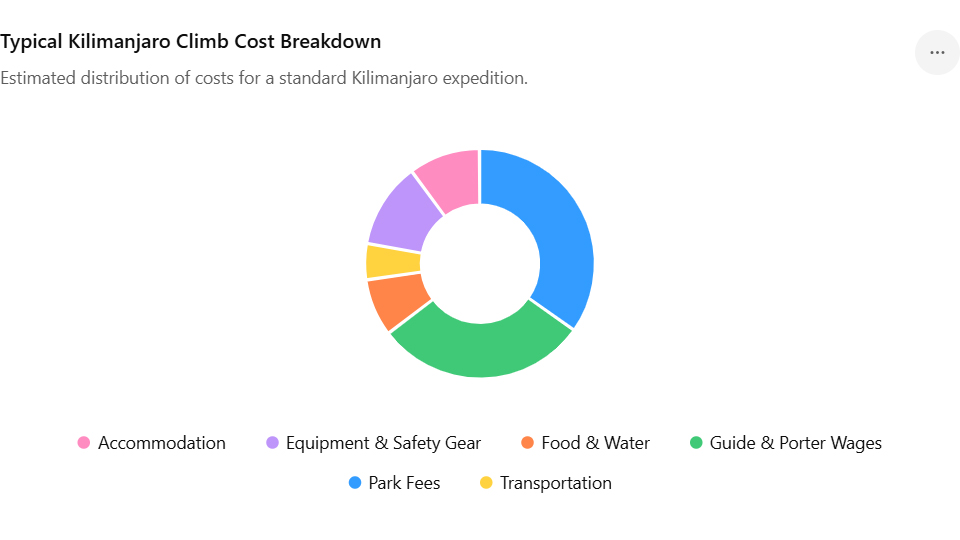
Typical Breakdown table
| Category | Share |
|---|---|
| Park Fees | 35 |
| Guide & Porter Wages | 30 |
| Food & Water | 8 |
| Transportation | 5 |
| Equipment & Safety Gear | 10 |
| Accommodation | 12 |
Our Experience Organizing Kilimanjaro Climbs
At WeWild Travel, we organize guided Mount Kilimanjaro climbs throughout the year using all major routes, including Lemosho, Machame, Marangu, Rongai, and the Northern Circuit. Every expedition gives us firsthand insight into the real cost of climbing Kilimanjaro. We manage park permits, guide and porter wages, mountain meals, transportation, accommodation, and safety equipment for every climb. Because we handle these logistics ourselves, we understand exactly what goes into the price of a Kilimanjaro expedition and why costs vary between operators. This guide is based on our experience helping climbers from around the world plan safe, successful, and well-organized adventures to the summit of Africa’s highest mountain.
Quick Kilimanjaro Cost Breakdown
Many climbers wonder why climbing Kilimanjaro costs several thousand dollars. While reaching the summit lasts only a few days, a successful expedition requires permits, experienced guides, porters, food supplies, transportation, safety equipment, and logistical support. Understanding these costs helps you compare operators and choose a climb that offers genuine value rather than simply the lowest price.
Park Fees
Read more about Kilimanjaro National Park fees
Kilimanjaro national park fees represent one of the largest expenses for every climb. The Tanzania National Parks Authority charges conservation fees, camping or hut fees, rescue fees, and other mandatory charges for each day spent on the mountain.
For many routes, park fees alone can exceed $1,000 per climber. Longer routes cost more because climbers spend additional days inside the national park. While these fees increase the overall price of a trek, they support conservation efforts and help maintain the mountain’s infrastructure.
Guide and Porter Wages
Every successful Kilimanjaro climb depends on a dedicated mountain crew. Guides lead the expedition, monitor climbers’ health, and manage safety throughout the trek. Porters carry tents, food, cooking equipment, and other supplies required for life on the mountain.
Responsible operators invest in fair wages, proper training, and good working conditions for their staff. Paying guides and porters fairly improves morale, supports local communities, and contributes to a safer climbing experience. For many operators, crew wages account for a significant portion of the expedition cost.
Food and Water
Climbing at high altitude requires proper nutrition and hydration. Mountain crews prepare breakfast, lunch, dinner, and snacks every day to help climbers maintain energy throughout the trek.
Food costs include fresh ingredients, transportation, kitchen equipment, cooking fuel, and chef support. Operators also provide treated drinking water during the climb. Quality meals play an important role in recovery and can greatly improve the overall experience on the mountain.
Transportation
Every Kilimanjaro expedition requires transportation between Moshi, Arusha, airports, hotels, and the trailhead. Route selection often influences transportation costs because some trailheads lie farther from town than others.
Transportation expenses include vehicle maintenance, fuel, driver services, and logistics support. Although transportation represents a smaller portion of the total budget, it remains an essential part of the climb.
Equipment and Safety Gear
Quality equipment directly affects comfort and safety on Mount Kilimanjaro. Professional operators invest in durable mountain tents, dining tents, tables, chairs, sleeping equipment, communication devices, and emergency supplies.
Safety equipment often includes oxygen systems, first-aid kits, pulse oximeters, and other tools used to monitor climbers during the ascent. Operators who regularly replace and maintain their gear usually charge higher prices, but these investments provide a better and safer experience.
Accommodation Before and After the Climb
Most Kilimanjaro packages include accommodation before the trek begins and after climbers return from the mountain. These hotel stays allow travelers to rest, prepare equipment, attend climb briefings, and celebrate a successful summit.
Accommodation costs vary depending on the standard of the hotel and the services included. Comfortable lodging before and after the trek adds convenience and helps climbers recover from the physical demands of the expedition.
Kilimanjaro Cost by Route
The cost of climbing Mount Kilimanjaro depends mainly on the route you choose. Each route has different trekking days, logistics, and difficulty levels. Longer routes cost more because they include more park fees, food, guide support, and better acclimatization. Short routes reduce cost but lower summit success rates.
Machame Route Cost
Machame Route costs between $1,500 and $4,500+ USD per person. The price depends on whether you choose a 6-day or 7-day itinerary and group size.
This route gives strong value because it balances cost and summit success. The 7-day option improves acclimatization and increases summit success rates. It is the most popular route for first-time climbers.
Lemosho Route Cost
Lemosho Route costs between $1,800 and $5,000+ USD per person. It is more expensive because it takes 7 to 8 days and starts from a remote location that requires extra transport.
The longer duration improves acclimatization and increases summit success rates. It is ideal for climbers who want a higher chance of reaching the summit and a quieter trekking experience.
Marangu Route Cost
Marangu Route costs between $1,400 and $3,500 USD per person. It is the cheapest route because it takes 5 to 6 days and uses hut accommodation instead of camping.
The shorter duration reduces acclimatization time, which lowers summit success rates. It is suitable for budget travelers who accept higher risk.
Rongai Route Cost
Rongai Route costs between $1,800 and $4,000+ USD per person. It starts from the northern side near the Kenya border, which increases transport and logistics costs.
The route is less crowded and drier than others. It offers moderate difficulty and balanced success rates depending on itinerary length.
Umbwe Route Cost
Umbwe Route costs between $1,600 and $3,800+ USD per person. It is short but very steep and physically demanding.
The fast ascent reduces acclimatization time, which lowers summit success rates. It is only recommended for experienced climbers.
Northern Circuit Cost
Northern Circuit Route costs between $2,200 and $5,500+ USD per person. The 9-day itinerary makes this the most expensive route, as additional park fees, meals, and guide costs increase the total price.
It offers the best acclimatization and the highest summit success rate. It is the best option for climbers who prioritize success.
Route Comparison Table (Cost, Duration, and Success Rate)
| Route | Cost Range | Duration | Summit Success Rate | Best For |
|---|---|---|---|---|
| Marangu | $1,400-$3,500 | 5-6 days | Low-Medium | Budget climbers |
| Machame | $1,500-$4,500 | 6-7 days | High | Best overall value |
| Lemosho | $1,800-$5,000 | 7-8 days | Very High | Highest success rate seekers |
| Rongai | $1,800-$4,000 | 6-7 days | Medium | Less crowded experience |
| Umbwe | $1,600-$3,800 | 5-6 days | Low | Experienced climbers only |
| Northern Circuit | $2,200-$5,500 | 8-9 days | Very High | Maximum success + experience |
Which Kilimanjaro Route Offers the Best Value?
The route you choose has one of the biggest impacts on the total cost of climbing Kilimanjaro. Longer routes usually cost more because they include additional park fees, meals, and crew support. However, they also provide better acclimatization and higher summit success rates, making them a worthwhile investment for many climbers.
If you’re unsure which route is right for you, compare our most popular Kilimanjaro climbs:
| Route | Duration | Best For |
|---|---|---|
| Machame Route | 7 Days | Excellent value, scenic landscapes, and high summit success. |
| Lemosho Route | 8 Days | Outstanding acclimatization, breathtaking scenery, and one of the highest success rates. |
| Rongai Route | 7 Days | Quieter trail, gentle ascent, and a great choice during the rainy season. |
| Marangu Route | 6 Days | Climbers who prefer hut accommodation and a shorter itinerary. |
| Northern Circuit | 9 Days | Maximum acclimatization, fewer crowds, and the highest summit success rate. |
Every climber has different goals and budgets. Our local Kilimanjaro experts can help you compare routes, explain the differences, and recommend the itinerary that offers the best value for your experience level and travel plans.
Ready to Choose Your Route?
- Compare All Kilimanjaro Routes
- Request a Free Personalized Quote
- Talk to a Local Kilimanjaro Expert
- Find the Best Route for Your Budget and Summit Goals
Example Cost Breakdown of a 7-Day Machame Route
Many climbers wonder where their money goes after booking a Kilimanjaro climb. While every operator has different operating costs, the example below shows how a typical 7-day Machame Route package may be divided. The figures are estimates designed to help you understand the main expenses involved in organizing a safe and well-supported expedition.
| Expense | Estimated Cost (USD) | Why It Matters |
|---|---|---|
| Kilimanjaro National Park Fees | $1,000-$1,200 | Mandatory conservation, camping, rescue, and park entry fees charged by TANAPA. |
| Guides and Porters | $700-$900 | Professional guides, porters, cooks, fair wages, and mountain support staff. |
| Food and Drinking Water | $120-$180 | Fresh meals, snacks, treated drinking water, and cooking supplies throughout the trek. |
| Transportation | $80-$150 | Airport transfers, hotel transfers, and transport to and from the trailhead. |
| Camping Equipment and Safety Gear | $180–$300 | Mountain tents, dining tent, tables, chairs, emergency oxygen, first-aid kit, and communication equipment. |
| Hotel Accommodation | $120-$250 | Hotel before and after the climb, including breakfast and climb briefing. |
| Administration and Operations | $150-$300 | Office support, permits, booking administration, staff coordination, taxes, and expedition planning. |
Estimated Total Package Price: $2,800-$3,900 per person
This example shows why reputable Kilimanjaro climbs cost more than many travelers expect. National park fees make up the largest portion of the price, followed by the experienced mountain crew who guide and support you throughout the trek. The remaining costs cover accommodation, transportation, quality equipment, food, safety systems, and the planning required to organize a successful expedition.
At WeWild Travel, we believe that understanding these costs helps climbers compare operators fairly. Instead of choosing the lowest advertised price, compare what each package includes, the quality of the mountain crew, safety standards, equipment, and the level of service provided throughout the journey.
Ready to Plan Your Budget?
Every Kilimanjaro climb is different. Route choice, trip length, group size, and travel dates all affect the final price. We can prepare a personalized quotation based on your travel plans, with no hidden fees.
Request Your Personalized Cost Estimate Today.
International Flights
Most Kilimanjaro operators do not include international flights in their packages. You will need to book your own flight to Tanzania, usually through Kilimanjaro International Airport (JRO).
Flight prices vary based on your departure country, travel season, and booking date. Travelers from Europe often pay between $600 and $1,500 for round-trip flights, while visitors from North America may spend $1,000 to $2,500 or more.
To save money, book your flights several months in advance and compare prices across multiple airlines.
Tanzania Visa Fees
Read more about visa to enter Tanzania.
Most visitors need a visa to enter Tanzania. In most cases, travelers apply and pay for their own visa before arrival or upon entry, depending on their nationality.
Visa fees vary by country. Many travelers pay around $50 for a standard tourist visa, while some nationalities may pay different amounts.
Before traveling, check the latest visa requirements for your country to avoid delays or unexpected costs.
Travel Insurance
Travel insurance is one of the most important expenses to include in your budget. Many Kilimanjaro operators require proof of insurance before the climb begins.
Your policy should cover high-altitude trekking, emergency medical treatment, trip cancellation, and evacuation if necessary.
Most climbers spend between $100 and $300 on travel insurance, depending on their age, coverage level, and country of residence.
Vaccinations and Medical Preparation
Before traveling to Tanzania, you may need certain vaccinations or health precautions based on your home country and travel history.
Some travelers also purchase altitude medication, first-aid supplies, and prescription medications before the climb.
Medical preparation costs vary widely, but many climbers spend between $50 and $300 before departure.
Consult your doctor or a travel health clinic several weeks before your trip to determine what you need.

Personal Spending Money
You should also set aside money for personal expenses during your trip. While many packages include meals and accommodation, you may want extra cash for items such as:
- Crew tips
- Souvenirs
- Snacks and drinks
- Laundry services
- Additional hotel nights
- Optional activities before or after the climb
Most climbers bring between $200 and $600 in additional spending money, depending on their travel style and plans.
How Much Should You Budget for Additional Costs?
As a general rule, most climbers should budget an extra $1,000 to $3,000 beyond the advertised Kilimanjaro package price. The exact amount depends on your flight costs, insurance coverage, visa requirements, and personal spending habits.
By planning for these expenses early, you can focus on enjoying your Kilimanjaro adventure without worrying about unexpected costs.
Kilimanjaro Gear Costs
Many climbers focus on the cost of permits, guides, and accommodation, but gear can also affect your overall Kilimanjaro budget. The amount you spend depends on what equipment you already own, what you need to buy, and what you choose to rent.
Some travelers already have hiking clothing and only need a few additional items. Others start from scratch and need to purchase most of their equipment. Understanding these costs before your trip helps you create a realistic budget and avoid last-minute expenses.
In this section, you’ll learn which gear you must buy, which items you can rent in Tanzania, how much most climbers spend on equipment, and how to keep your gear costs under control without compromising comfort or safety.
Essential Gear You Must Buy
You need several pieces of personal equipment to climb Kilimanjaro safely and comfortably. Start with a good pair of hiking boots because your feet will carry you through several days of trekking across different terrains. Choose boots that fit well and provide ankle support.
You should also buy moisture-wicking base layers, hiking socks, thermal clothing, gloves, a warm hat, sunglasses, and a headlamp. These items touch your skin directly, so buying your own gear gives you better comfort and hygiene throughout the climb.
Most climbers spend between $200 and $800 on essential gear, depending on the brands they choose and the equipment they already own.
Gear You Can Rent
You do not need to buy every item on the Kilimanjaro packing list. Many trekking companies in Tanzania offer rental equipment at reasonable prices.
You can rent sleeping bags, trekking poles, down jackets, gaiters, sleeping pads, and duffel bags. Renting helps you avoid large upfront costs, especially if Kilimanjaro is your first and only high-altitude trek.
Before accepting rental gear, inspect each item carefully. Check the zippers, insulation, and overall condition to make sure the equipment will perform well on the mountain.
Average Gear Budget
Your total gear budget depends on how much equipment you already own before booking your climb.
If you already hike regularly, you may only need a few additional items and spend between $200 and $500. Climbers who need several new pieces of equipment often spend between $500 and $1,000. Those who purchase premium outdoor gear from top brands may spend more than $1,500.
Many climbers find a balance by purchasing essential personal items and renting specialized mountain equipment.
How to Save Money on Equipment
You can reduce your gear costs without sacrificing comfort or safety. Start by reviewing your current hiking equipment. Many travelers already own waterproof jackets, backpacks, hiking pants, and base layers that work well on Kilimanjaro.
Renting expensive items such as sleeping bags, down jackets, and trekking poles can significantly lower your budget. Instead of purchasing equipment that you may only use once, you can pay a small rental fee during your climb.
You can also look for high-quality second-hand outdoor gear. Many outdoor products last for years and remain in excellent condition after only a few uses. Buying used equipment allows you to save money while still getting reliable performance.
When spending money, prioritize the items that matter most. Invest in comfortable hiking boots, warm clothing, and reliable waterproof layers. These items directly affect your comfort on the mountain and can make a major difference during your trek.
Kilimanjaro Crew Tips Explained
Many climbers ask the same question before booking their trek: How much should I tip on Kilimanjaro? The answer depends on the size of your crew, the length of your route, and whether you join a group or book a private climb.
Most Kilimanjaro operators do not include tips in the advertised climb price. As a result, many visitors underestimate this expense and face unexpected costs at the end of their trek. By understanding Kilimanjaro tipping guidelines before you travel, you can budget accurately and show appreciation to the people who help you reach the summit.
Why Tipping Is Important
Your Kilimanjaro crew works hard throughout the trek. Guides lead the climb, monitor your health, and help you acclimatize safely. Porters carry tents, food, cooking equipment, and other supplies up the mountain. Cooks prepare meals that keep you energized during long trekking days.
Tipping rewards the crew for their effort and dedication. It also supports local employment and helps many mountain workers provide for their families. While tipping remains voluntary, most climbers consider it an important part of the Kilimanjaro experience.
Recommended Guide Tips
Guides carry significant responsibility on the mountain. They manage daily schedules, assess weather conditions, monitor altitude sickness symptoms, and make critical decisions throughout the climb.
Most operators recommend tipping the lead guide between $20 and $30 per day from the group, while assistant guides often receive $15 to $20 per day from the group.
If your guide provides exceptional support, motivation, and care throughout the trek, many climbers choose to tip above the recommended amount.
Recommended Porter Tips
Porters play a vital role in every Kilimanjaro expedition. They transport equipment, set up camp, and ensure everything reaches each campsite before climbers arrive.
Most operators recommend tipping each porter between $6 and $10 per day. The exact amount depends on the route length and the level of service provided.
Because a typical climb involves several porters, these tips add up quickly. For this reason, climbers should include porter tips in their overall budget from the beginning.
Total Tip Budget
Most climbers spend between $250 and $500 per person on crew tips during a Kilimanjaro climb. The final amount depends on the route, crew size, and group size.
For example, a climber on a seven-day route may budget around $300 to $400 for tips, while a climber on a longer route with a larger crew may spend more.
Before your climb begins, ask your operator for a detailed tipping guideline. This information will help you plan your expenses and avoid surprises at the end of the trek.
When calculating the total cost of climbing Kilimanjaro, always include crew tips in your budget. Many climbers focus on the package price and forget this important expense, but proper planning helps you avoid unexpected costs and ensures you can thank your crew appropriately for their support.
Why Are Some Kilimanjaro Climbs So Cheap?
Some Kilimanjaro operators advertise prices that look much lower than the market average. While a low price may seem attractive, it often raises an important question: How can one company charge thousands of dollars less than another?
In many cases, cheap operators reduce costs by cutting spending on staff, equipment, food, safety measures, or porter welfare. A lower price does not always mean poor service, but climbers should understand exactly what they receive before making a booking decision.
Hidden Risks of Very Cheap Operators
Very cheap Kilimanjaro climbs often save money in areas that directly affect your experience on the mountain.
Some operators hire fewer crew members, provide lower-quality meals, use older equipment, or limit support services during the trek. Others advertise a low base price but add extra charges later.
Before booking, ask exactly what the package includes. Confirm the number of guides, meals, transfers, accommodation nights, and safety equipment. A slightly higher price often provides better value and a smoother experience.
Porter Welfare Concerns
Some budget operators reduce costs by paying porters less than industry recommendations or by providing poor working conditions.
Porters carry tents, food, cooking equipment, and supplies across difficult terrain. Fair wages, proper clothing, adequate food, and reasonable carrying loads help protect their health and wellbeing.
When choosing an operator, ask whether the company supports ethical porter treatment. Responsible companies invest in their staff and create better working conditions for the people who make Kilimanjaro climbs possible.
Safety and Emergency Equipment
Safety should never become an area for cost cutting on a high-altitude mountain.
Professional operators carry essential emergency equipment such as oxygen systems, first-aid kits, communication devices, and altitude monitoring tools. They also train guides to recognize altitude sickness and respond quickly when problems occur.
Before booking, ask what emergency equipment the company provides and how guides handle medical situations. Understanding these details can help you make a safer decision.
What to Check Before Booking
Before you choose a Kilimanjaro operator, compare more than just the price.
Ask these questions:
- How many guides and porters support each group?
- Does the company provide emergency oxygen?
- What medical training do the guides have?
- What equipment does the operator supply?
- Does the package include all park fees?
- How does the company treat its porters?
- What do recent customer reviews say?
A reputable operator answers these questions clearly and transparently. Instead of focusing only on the lowest price, look for a company that offers strong safety standards, fair porter treatment, reliable equipment, and experienced guides. That approach often leads to a safer and more enjoyable Kilimanjaro experience.
How to Save Money on a Kilimanjaro Climb
Many travelers ask whether they can reduce the cost of climbing Kilimanjaro without sacrificing safety or summit success. The answer is yes. You can lower your expenses by making smart decisions before you book your trip.
The best way to save money is not to choose the cheapest operator. Instead, focus on finding the best value. The following strategies can help you reduce costs while still enjoying a safe and rewarding Kilimanjaro experience.
Choose the Right Route
The route you choose has a direct impact on the total cost of your climb. In general, longer routes cost more because they require additional park fees, crew wages, food, and camping services.
For example, a six-day route often costs less than an eight-day route. However, shorter routes usually offer lower acclimatization time and lower summit success rates.
Many climbers consider the Machame and Lemosho routes good value because they balance cost, scenery, and success rates. Instead of focusing only on the cheapest route, compare the overall value and your chances of reaching the summit.
Travel During Low Season
Traveling during the low season can help you reduce the overall cost of your Kilimanjaro adventure.
Many operators offer discounts during the rainy seasons because fewer people visit the mountain. Hotels and flights may also cost less during these periods.
However, lower prices come with trade-offs. Rain, mud, and reduced visibility can affect your experience. Before choosing a low-season climb, consider whether the savings outweigh the weather challenges.
Join a Group Climb
Joining a group climb is one of the most effective ways to reduce costs.
When several climbers share guides, porters, transportation, and camping equipment, each person pays less. Group departures often cost significantly less than private climbs while still providing excellent support on the mountain.
If your schedule is flexible, ask operators about upcoming group departures. Many travelers save hundreds of dollars by joining an existing group instead of booking a private trek.
Rent Instead of Buying Gear
Many first-time climbers assume they need to purchase every item on the Kilimanjaro packing list. In reality, you can rent much of the expensive equipment in Tanzania.
Items such as sleeping bags, trekking poles, down jackets, gaiters, and duffel bags are widely available for rent. Renting these items can save several hundred dollars, especially if you do not plan to climb high mountains regularly.
Reserve your rental gear in advance and check its condition before the trek begins.
Book Directly With a Local Operator
Many international travel agencies sell Kilimanjaro climbs and then partner with local companies in Tanzania to operate the trek. While this arrangement can work well, it often increases the final price.
Booking directly with a reputable local operator can help you reduce costs because you avoid additional agency markups. You also gain direct access to the team that will organize your climb.
Before booking, compare reviews, ask detailed questions, and confirm exactly what the package includes. A trustworthy local operator can provide excellent service, fair crew treatment, and competitive pricing while helping you get the best value for your budget.
Sample Kilimanjaro Budget
Many travelers want a clear idea of how much they will spend on a Kilimanjaro climb before they book. The total cost depends on the level of service, route choice, travel season, and personal spending habits. Below are real-world examples that show what different types of climbers usually pay.
Budget Climber
A budget climber usually spends $2,000 to $3,200 USD for a full Kilimanjaro experience.
The climb package often costs around $1,400 to $1,900. This covers basic services such as guides, porters, meals, and camping equipment. However, climbers still need to add extra expenses such as tips for the crew, international flights, visa fees, gear rental or purchase, and travel insurance.
This option works best for travelers who want to complete Kilimanjaro at the lowest possible cost while accepting simple comfort and fewer luxury services.
Mid-Range Climber
A mid-range climber usually spends $3,400 to $5,300 USD in total.
This level offers a stronger balance between cost, safety, and comfort. The package includes more experienced guides, better meals, improved camping equipment, and stronger overall support on the mountain. Most climbers in this category also invest in better gear and choose more reliable operators.
This option suits travelers who want a safe and comfortable climb without paying luxury prices.
Luxury Climber
A luxury climber spends about $6,000 to $9,500+ USD per person.
This level focuses on comfort, privacy, and high-end service. Climbers receive top-quality meals, highly experienced guides, premium camping setups, and extra support throughout the journey. Many luxury packages also include additional recovery services and enhanced safety equipment.
This option works best for travelers who want a highly comfortable, well-supported climb with minimal stress and maximum service quality.
Budget vs Mid-Range vs Luxury Kilimanjaro Climbs
Choosing the right Kilimanjaro package is about more than finding the lowest price. Budget, mid-range, and luxury climbs offer different levels of service, comfort, and support. Understanding these differences helps you choose the option that best fits your goals and budget.
| Feature | Budget Climb | Mid-Range Climb | Luxury Climb |
|---|---|---|---|
| Typical Price | $2,000-$2,800 | $2,800-$4,500 | $4,500-$8,000+ |
| Group Size | Large groups | Small to medium groups | Private or very small groups |
| Guides | Basic support | Experienced guides | Senior guides with personalized support |
| Camping Equipment | Standard | High-quality | Premium mountain equipment |
| Meals | Simple mountain meals | Varied and nutritious meals | Premium menu with greater variety |
| Accommodation | Standard hotel | Comfortable hotel | Luxury lodge or premium hotel |
| Safety Equipment | Basic safety gear | Emergency oxygen and medical kit | Advanced safety equipment and additional support |
| Best For | Budget-conscious travelers | Most climbers seeking value | Travelers wanting maximum comfort and personalized service |
For most climbers, a mid-range Kilimanjaro climb offers the best value. It balances affordability with experienced guides, reliable safety standards, quality equipment, and a higher level of comfort without the premium cost of a luxury expedition.
Local Kilimanjaro Operator vs International Travel Agency
Many travelers book through international travel agencies without realizing that most agencies work with local operators in Tanzania. Understanding the difference can help you choose the option that provides the best value and support.
| Feature | Local Kilimanjaro Operator | International Travel Agency |
|---|---|---|
| Trip Operation | Organizes and leads the climb directly | Usually books through a local partner |
| Price | Often more competitive | Often includes an agency markup |
| Communication | Direct contact with the mountain team | Communication through an intermediary |
| Trip Customization | Flexible itinerary and personalized service | May offer fewer customization options |
| Local Knowledge | Firsthand knowledge of routes, weather, and logistics | Relies on local operating partners |
| Support During the Climb | Direct support from the operating company | Support provided by the local partner |
| Best For | Travelers seeking value and direct communication | Travelers who prefer booking through a familiar international brand |
Booking directly with a reputable local Kilimanjaro operator can provide better value because you communicate with the team that actually organizes your climb. You can ask detailed questions, customize your itinerary, and receive firsthand advice from people who work on the mountain throughout the year. Regardless of who you book with, always compare what the package includes, the company’s safety standards, guide experience, and commitment to fair porter treatment before making your decision.
Is Kilimanjaro Worth the Cost?
Many travelers ask a simple question before booking: Is climbing Kilimanjaro worth the money? The answer depends on what you expect from the experience. When you compare the cost with what you receive, Kilimanjaro offers strong value for most climbers.
What You Get for the Price
You pay for much more than a mountain trek when you climb Kilimanjaro. Your package includes professional guides who lead the climb, porters who carry equipment, cooks who prepare meals, and a full logistics team that supports your journey every day.
You also receive national park access, camping facilities, safety monitoring, and organized routes that take you through different climate zones. Each day on the mountain brings new landscapes, from rainforest to alpine desert and finally to the glacier zone near the summit.
When you combine all these services, the cost reflects a complete expedition experience rather than a simple hike.
Safety vs Saving Money
Safety plays the most important role on Kilimanjaro. Cheaper climbs often reduce costs by cutting support staff, using lower-quality equipment, or limiting safety resources. These choices can increase risk and reduce comfort during the trek.
A higher-quality operator invests in experienced guides, proper altitude monitoring, emergency equipment, and well-trained porters. These factors improve your chances of reaching the summit safely.
Instead of focusing only on the lowest price, smart climbers compare value, safety standards, and success rates before booking.
Lifetime Experience Value
Kilimanjaro gives you a once-in-a-lifetime experience. You walk through five different ecological zones, see unique wildlife, and stand on the highest point in Africa.
Most climbers remember the journey more than the cost. The challenge, the scenery, and the achievement create memories that last for life.
When you look at the experience as a whole, many travelers see Kilimanjaro as a valuable investment in adventure, personal growth, and achievement.
Still Have Questions About the Cost of Climbing Kilimanjaro?
Planning a Kilimanjaro expedition involves more than comparing prices. You may have questions about park fees, tipping, travel insurance, equipment rental, route selection, or what each package includes. Our experienced local team is here to help you understand every cost before you book, so you can plan your adventure with confidence.
Whether you’re traveling solo, joining a group, or planning a private climb, we’ll provide honest advice and a personalized quotation based on your budget, travel dates, and climbing goals.
Frequently Asked Questions
You save the most money by joining a group climb, choosing a mid-range route, and booking directly with a local operator. You also reduce costs when you rent gear instead of buying everything new.
You rarely complete Kilimanjaro for under $2,000. Very cheap trips often cut important services like safety equipment, proper food, or fair porter wages. Most safe climbs start above $2,000 when you include all required costs.
Most Kilimanjaro packages include park fees, guides, porters, cooks, meals, camping equipment, and mountain logistics. Some operators also include hotel stays before and after the climb.
No, most operators do not include international flights. You book your flight separately to Tanzania, usually into Kilimanjaro International Airport.
Yes, you need travel insurance. Most operators require it before you start the climb. Your insurance should cover high-altitude trekking, medical emergencies, and evacuation.
Most climbers tip between $250 and $500 in total. The amount depends on your route length, group size, and level of service.
Many climbers choose Machame or Lemosho because they balance cost, scenery, and summit success rates. These routes often give better value than shorter options.
Yes, some costs appear outside the main package. These include tips, gear rental, flights, visa fees, insurance, and personal spending money. Always check what your operator includes before you book.
Yes, longer routes increase your chances of reaching the summit. They also give your body more time to adjust to altitude, which improves safety and success rates. Most climbers prefer longer routes for a better overall experience.
Final Thoughts on Kilimanjaro Climbing Costs
Climbing Kilimanjaro costs more than a normal holiday, but the value matches the experience. You do not pay only for a hike. You pay for a full mountain expedition that includes guides, porters, food, camping, safety support, and national park access.
The total cost changes based on the route you choose, the operator you book, the gear you use, and the level of comfort you want. Budget climbs reduce the price but also reduce comfort and sometimes safety. Mid-range climbs give most travelers the best balance between cost, safety, and success rate. Luxury climbs focus on comfort and premium service.
When you plan your budget, you should not focus only on the lowest price. You should focus on value, safety, and success on the mountain. A slightly higher price often gives you better food, stronger support, and a higher chance to reach the summit.
You should also remember that Kilimanjaro creates a once-in-a-lifetime experience. You walk through different climate zones, see unique landscapes, and stand on the highest point in Africa. That experience often matters more than the cost itself.
If you plan your budget well and choose a responsible operator, you increase your chances of a safe, successful, and unforgettable climb.