What is Stella Point on Mount Kilimanjaro?
Estimated reading time: 10 minutes
Stella Point is one of the most important landmarks on the summit route of Mount Kilimanjaro. It is located on the crater rim and marks the point where climbers finally reach the top edge of the mountain after a long and difficult ascent. At this stage, trekkers are already at extreme altitude, and the environment becomes very harsh due to low oxygen, cold temperatures, and strong winds.
Stella Point is not the highest point on Kilimanjaro, but it is a major achievement in the summit journey. Reaching it means a climber has successfully completed the toughest section of the climb, usually done during the final night push from Barafu Camp. From Stella Point, the trail continues for about 30 to 60 minutes along the crater rim to reach Uhuru Peak, which is the highest point in Africa at 5,895 meters.
Many climbers consider Stella Point a powerful emotional milestone because it represents almost reaching the summit after hours of physical and mental challenge. The sunrise often happens around this area, making the moment even more memorable. In simple terms, Stella Point is the gateway to the summit of Kilimanjaro and a sign that the hardest part of the journey is already behind you.
Table of contents
Stella Point Altitude
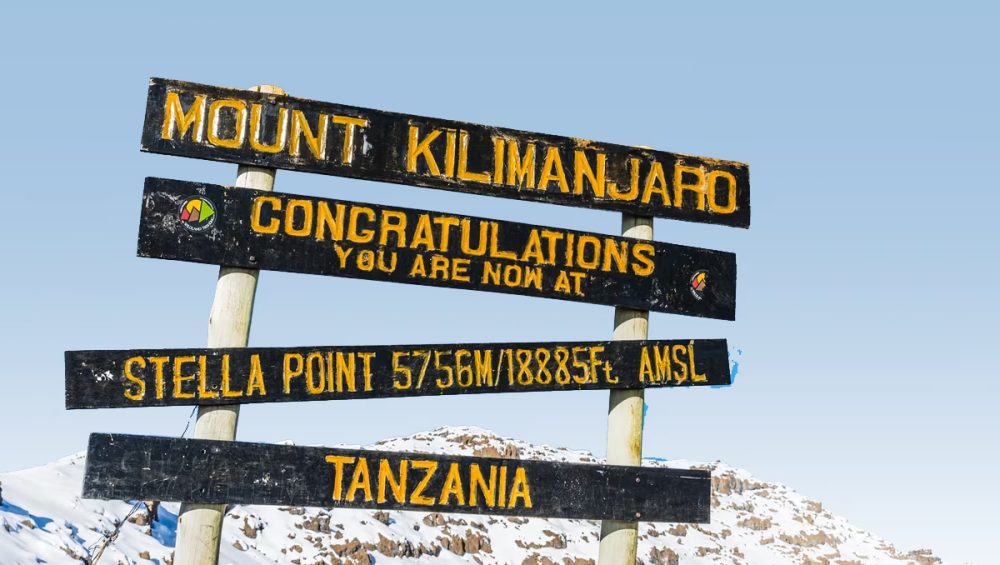
Stella Point is located at an altitude of 5,756 meters (18,885 feet) above sea level on Mount Kilimanjaro’s crater rim. This makes it one of the highest reachable points on the mountain before reaching the true summit, Uhuru Peak. At this elevation, the environment becomes extremely harsh, and climbers enter what experts call the “extreme altitude zone.”
At 5,756 meters, oxygen levels drop significantly compared to sea level, reaching almost half of what the human body normally experiences. Because of this, most climbers experience noticeable altitude effects such as heavy breathing, slow movement, fatigue, headaches, and reduced physical strength. Even simple steps can feel very demanding, and the body must work much harder to function normally.
The cold temperature at Stella Point also adds to the difficulty. It is common to experience freezing winds, especially during the summit night ascent. Despite these challenges, reaching Stella Point is a major achievement because it confirms that a climber has successfully reached the crater rim after hours of steep and exhausting trekking from Barafu Camp.
In simple terms, Stella Point’s altitude represents the final test of endurance before the last short push to Uhuru Peak. It is a place where mental strength becomes just as important as physical fitness, and every step forward brings climbers closer to standing on the roof of Africa.
Which Routes Reach Stella Point?
Not all climbing routes on Mount Kilimanjaro pass through Stella Point, but several popular routes reach it during the final summit push. Climbers usually access Stella Point through the crater rim near the summit, and most of them arrive there after passing Barafu Camp, which serves as the main high camp before the final ascent.
Machame Route
The Machame Route is one of the most popular routes to Mount Kilimanjaro and it does reach Stella Point during the summit climb. Climbers using this route typically ascend through different ecological zones and acclimatization camps before arriving at Barafu Camp, which serves as the base for the final summit attempt.
From Barafu Camp, climbers begin their summit push at midnight or early morning, climbing steep scree and rocky terrain in very low oxygen conditions. After several hours of slow and challenging ascent, they reach Stella Point on the crater rim. This is usually the first major achievement of summit day. From Stella Point, climbers continue along the crater rim for about 30 to 60 minutes to reach Uhuru Peak, the highest point in Africa.
The Machame Route offers a strong acclimatization profile, which helps climbers increase their chances of reaching the summit. Because of this advantage, many climbers prefer it, even though it demands strong physical effort.
Lemosho Route
The Lemosho Route also leads climbers to Stella Point through its standard summit approach. Many climbers choose this route because it offers some of the most scenic views on Kilimanjaro and provides a longer acclimatization period, which improves summit success rates.
After several days of trekking through rainforest, moorland, and alpine desert zones, climbers eventually join the Machame Route near the upper mountain section. From there, they proceed to Barafu Camp, which is the final base before the summit attempt.
During summit night, climbers leave Barafu Camp and make a slow, steady ascent toward the crater rim. After hours of climbing in freezing temperatures and thin air, they arrive at Stella Point. This moment is often emotional because it confirms that the hardest part of the climb is complete. From Stella Point, the final stretch to Uhuru Peak is relatively short but still very challenging due to extreme altitude.
Umbwe Route (via Barafu)
The Umbwe Route stands as the steepest and most direct route on Mount Kilimanjaro, which makes it one of the most physically demanding options. Although climbers face a difficult ascent, they still follow the same summit approach as other major routes to reach Stella Point.
Climbers on the Umbwe Route usually ascend quickly through the lower slopes and join the higher trails leading toward Barafu Camp. Because of its steep profile, proper acclimatization is very important for safety and success on this route.
From Barafu Camp, the summit push follows the same pattern as other routes: a nighttime ascent through extreme altitude conditions. After several hours of continuous climbing, trekkers reach Stella Point on the crater rim. This is a major milestone, especially for Umbwe climbers, as it confirms they have overcome one of the toughest ascent profiles on Kilimanjaro. The journey then continues for the final short section to Uhuru Peak.
Northern Circuit Route
The Northern Circuit Route is the longest and most scenic route on Mount Kilimanjaro. It circles around the northern slopes of the mountain, giving climbers more time to acclimatize and experience different landscapes such as rainforest, moorland, alpine desert, and high-altitude zones.
Yes, the Northern Circuit Route also reaches Stella Point during the summit push. Even though the route begins on the western side of Kilimanjaro (usually through Lemosho Gate), it eventually joins the same final summit path used by other major routes like Machame and Lemosho.
From Barafu Camp, climbers begin their final ascent at midnight in very cold and low-oxygen conditions. After several hours of slow and steady climbing, they reach Stella Point on the crater rim at 5,756 meters. This moment marks a major milestone on summit day and proves that climbers have already completed the hardest part of the climb. From Stella Point, it takes about 30 to 60 minutes to reach Uhuru Peak, the highest point in Africa.
The Northern Circuit Route achieves the highest summit success rate because it gives climbers more time to acclimatize, offers fewer crowds, and provides a better overall climbing experience.
Stella Point vs Uhuru Peak
Stella Point and Uhuru Peak are two important summit points on Mount Kilimanjaro, but they differ in altitude, purpose, and overall climbing experience.
Located on the crater rim at 5,756 meters, Stella Point is the first major milestone climbers reach during the final ascent. It represents the moment you step onto the summit zone after a long and exhausting climb.
Uhuru Peak, on the other hand, stands higher at 5,895 meters and is the true summit of Kilimanjaro. This is the final destination where climbers celebrate reaching the highest point in Africa after completing the full challenge.
Comparison Table (Explained)
| Feature | Stella Point | Uhuru Peak |
|---|---|---|
| Altitude | 5,756m | 5,895m |
| Meaning / Importance | First point on crater rim after long climb | Highest point in Africa and official summit |
| Difficulty | Very hard due to altitude and fatigue | Extremely hard, final push after exhaustion |
| Time between | About 30-60 minutes from Uhuru Peak | Final summit destination |
Simple Explanation of the Table
- Altitude: Stella Point is slightly lower than Uhuru Peak, but still at extreme high altitude where oxygen is very low.
- Importance: Stella Point shows you have reached the top edge of the mountain, while Uhuru Peak is the actual highest point where climbers celebrate success.
- Difficulty Both Stella Point and Uhuru Peak are very challenging to reach. However, climbers often find Uhuru Peak harder because they already feel exhausted after reaching Stella Point. At this stage, the body works under extreme fatigue, low oxygen, and freezing conditions, which makes the final push even more demanding.
- Time between: After reaching Stella Point, it takes around 30 to 60 minutes of walking along the crater rim to finally reach Uhuru Peak.
What to Expect on Summit Night
Reaching Stella Point usually happens early in the morning after climbers begin their summit push at midnight from Barafu Camp. This part of the climb is known as summit night, and it represents the most challenging section of the entire Mount Kilimanjaro journey. Climbers leave the camp in darkness and start a slow, steady ascent toward the crater rim.
During the climb, temperatures drop sharply and often fall well below freezing. The cold becomes intense as climbers gain altitude, and every step feels heavier due to the lack of oxygen. The air at this height is very thin, so the body works much harder to supply enough oxygen, which causes shortness of breath and slow movement.
Climbers also face a very slow trekking pace because the steep volcanic slope requires careful and controlled steps. Strong winds often blow across the upper mountain, especially near the crater rim, making the conditions even more challenging. At the same time, fatigue builds up from several days of trekking, so both the mind and body feel exhausted during this final push.
Despite these difficulties, climbers continue moving forward with determination because Stella Point is close. Reaching it brings a strong emotional reward, as it confirms that the hardest part of the ascent is already complete. From Stella Point, climbers stand on the edge of the summit zone and can see that they are almost at the top of Africa, with only a short final walk remaining to reach Uhuru Peak.
How Long Does It Take to Reach Stella Point?
The time it takes to reach Stella Point depends on where climbers start their summit push, how well they have acclimatized, and their overall fitness level. Most climbers begin the final ascent from Barafu Camp, which serves as the main high camp before the summit attempt.
From Barafu Camp, it usually takes about 5 to 7 hours of steep climbing to reach Stella Point. Climbers start at midnight or early morning and move very slowly because of the extreme altitude, cold temperatures, and thin air. Every step requires effort, and frequent short breaks help the body adjust to the low oxygen conditions.
The total duration also depends on the chosen route, physical preparation, and how well the body has adapted to altitude during previous days on the mountain. Climbers who acclimatize well often move more steadily and handle the ascent more comfortably, while others may take longer due to fatigue.
After reaching Stella Point, the final stretch to Uhuru Peak takes about 30 to 60 minutes. Although this section is shorter, it still feels challenging because climbers are already exhausted and are moving at the highest altitude on the mountain.
Is Stella Point the Summit?
Technically, Stella Point is not the summit of Mount Kilimanjaro. The true summit is Uhuru Peak, which stands as the highest point in Africa at 5,895 meters.
However, in real climbing experience, Stella Point still feels like a major summit achievement. Many climbers stop here to rest, take photos, and celebrate because they have already completed the hardest and most exhausting part of the climb. Reaching the crater rim at this altitude feels like a big victory after hours of steep climbing in cold, low-oxygen conditions.
Stella Point also serves as the first official “summit milestone” on the mountain. From this point, climbers stand on the edge of the volcanic crater and see that the final destination is very close. Even though it is not the highest point, the emotional impact is very strong because it marks success after a long and difficult journey.
Still, Uhuru Peak remains the official highest point, and most climbers continue for another 30 to 60 minutes to complete the full summit experience.
Final Thoughts
Stella Point stands as one of the most emotional and rewarding moments on Mount Kilimanjaro. Climbers reach this point after hours of tough ascent in extreme altitude conditions, where every step requires strength, focus, and determination.
Reaching Stella Point marks a powerful breakthrough in the journey. It shows that climbers have overcome the hardest part of the climb and have reached the crater rim after pushing through cold temperatures, thin air, and complete exhaustion.
Some climbers take a moment here to rest and celebrate their achievement, while others continue the final short stretch to Uhuru Peak. Both choices carry great meaning because Stella Point itself represents success on one of the toughest mountains in the world.
Whether a climber stops at Stella Point or continues to the highest point in Africa, reaching this location remains a life-changing experience that stays in memory forever.