Gilman’s Point on Kilimanjaro: Everything You Need to Know
Estimated reading time: 15 minutes
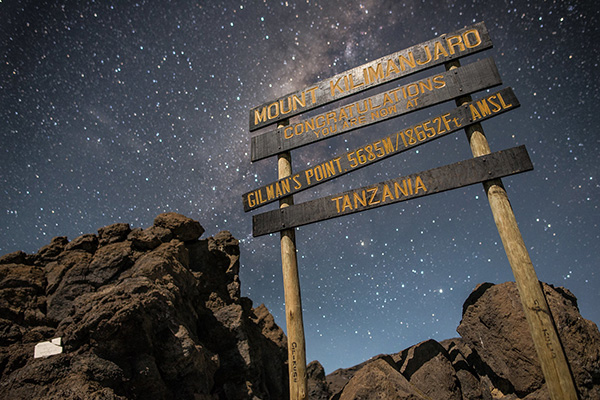
Gilman’s Point is one of the most important landmarks on Mount Kilimanjaro. Located on the crater rim at an altitude of 5,685 meters (18,652 feet), it marks a major milestone for climbers making their summit attempt. Many trekkers reach Gilman’s Point during summit night after a challenging climb up steep volcanic scree from Barafu Camp or Kibo Hut.
Although some climbers think Gilman’s Point is the highest point on Kilimanjaro, the true summit is Uhuru Peak, which stands higher on the crater rim. However, reaching Gilman’s Point remains a remarkable achievement because it means you have successfully reached the edge of Kilimanjaro’s crater at extreme altitude.
Most climbers arrive at Gilman’s Point around sunrise, where they enjoy spectacular views of the mountain, glaciers, and surrounding landscapes. For many, this moment becomes one of the most memorable parts of the entire trek.
In this guide, you’ll learn where Gilman’s Point sits on Kilimanjaro, how difficult it is to reach, how it compares to Uhuru Peak, what to expect during summit night, and tips to improve your chances of success.
Gilman’s Point is one of the three official summit points on Mount Kilimanjaro. It sits on the edge of Kibo Crater and serves as a major milestone for climbers during their summit attempt. Many trekkers reach this point after several hours of climbing through the darkness on summit night. For many climbers, arriving at Gilman’s Point marks the moment when they realize they are close to achieving their goal of standing on Africa’s highest mountain.
Location on Mount Kilimanjaro
Gilman’s Point sits on the eastern side of Kibo Crater, the volcanic cone that forms Kilimanjaro’s highest summit area. Climbers usually reach it after ascending steep scree slopes from Barafu Camp or Kibo Hut during summit night.
The point stands on the crater rim and offers spectacular views across the mountain. From here, climbers can see parts of the crater, nearby glaciers, and the vast plains surrounding Kilimanjaro. Many routes that approach the summit from the south and east pass through Gilman’s Point before continuing toward Uhuru Peak.
Elevation of Gilman’s Point
Gilman’s Point stands at 5,685 meters (18,652 feet) above sea level. This elevation places it well within the extreme altitude zone, where oxygen levels are significantly lower than at sea level.
At this height, many climbers feel the effects of altitude. Shortness of breath, fatigue, and slower walking speeds become common. For this reason, guides encourage climbers to move slowly and maintain a steady pace during the final ascent.
Although Gilman’s Point is not the highest point on Kilimanjaro, reaching this elevation remains a significant achievement and demonstrates strong physical and mental determination.
Why It Matters to Climbers
Gilman’s Point represents a major milestone on the journey to the summit. Reaching this point means a climber has successfully completed the most demanding section of summit night and arrived at the crater rim.
Many climbers celebrate when they see the Gilman’s Point sign because it confirms they have reached one of Kilimanjaro’s official summit points. Some climbers choose to stop here due to altitude, weather, or exhaustion, while others continue toward Uhuru Peak, the highest point on the mountain.
Whether a climber stops at Gilman’s Point or continues to the main summit, reaching this landmark remains an unforgettable accomplishment and one of the highlights of the Kilimanjaro experience.
Where Is Gilman’s Point Located?
Many climbers hear about Gilman’s Point while planning their Kilimanjaro trek, but they often wonder exactly where it sits on the mountain. Gilman’s Point lies on the rim of Kibo Crater and serves as one of the key landmarks during summit night. Understanding its location helps climbers visualize the final stages of their ascent and prepare for the challenge ahead.
Position on the Crater Rim
Gilman’s Point sits on the eastern edge of Kibo Crater, the highest volcanic cone on Mount Kilimanjaro. Climbers reach this point after ascending steep volcanic scree during the final push to the summit area.
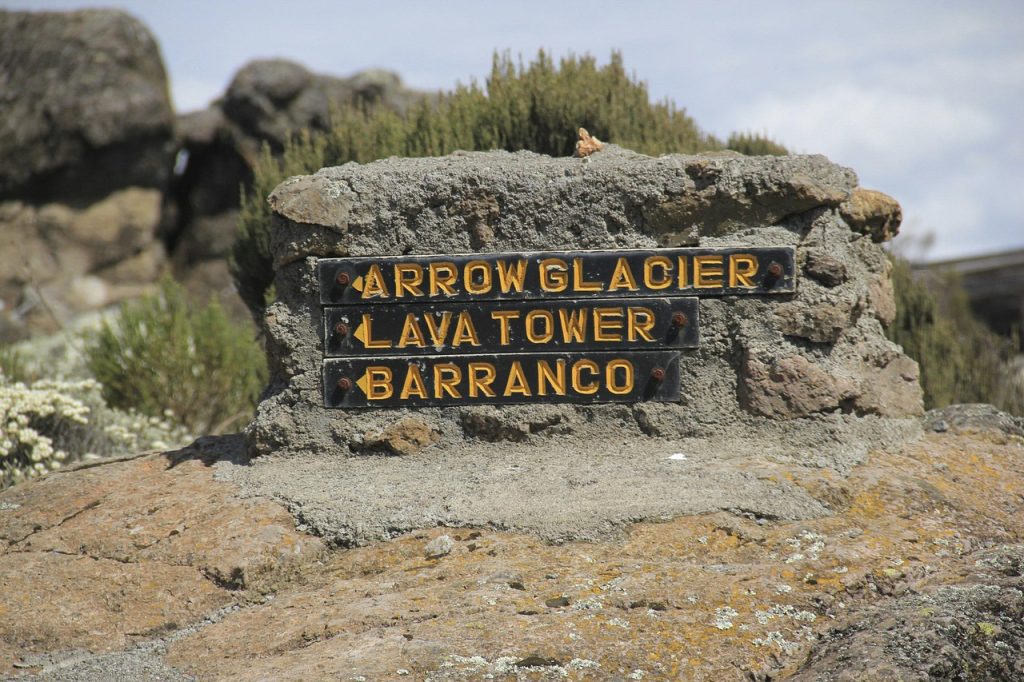
The location offers dramatic views across the crater, surrounding glaciers, and the plains below. Many trekkers arrive here around sunrise, creating one of the most memorable moments of the entire climb. The famous wooden sign at Gilman’s Point marks the spot and provides an excellent photo opportunity after a long night of trekking.
Distance From Uhuru Peak
Gilman’s Point is not the highest point on Kilimanjaro. Uhuru Peak holds that title and stands at 5,895 meters (19,341 feet), while Gilman’s Point sits at 5,685 meters (18,652 feet).
The distance between Gilman’s Point and Uhuru Peak is approximately 1.5 kilometers (0.9 miles) along the crater rim. Although this distance may seem short, the high altitude makes every step more challenging. Most climbers need between one and two hours to walk from Gilman’s Point to Uhuru Peak, depending on their pace, weather conditions, and physical condition.
Which Routes Reach Gilman’s Point?
Several Kilimanjaro routes lead climbers to Gilman’s Point during summit night. The most common routes include Machame,Lemosho, Umbwe, Rongai, and theNorthern Circuit.
Climbers on the Machame, Lemosho, Umbwe, and Northern Circuit routes usually begin their summit attempt from Barafu Camp before reaching Gilman’s Point. Climbers on the Rongai Route typically start from Kibo Hut and approach the crater rim from the northern side.
The Marangu Route follows a different path but also reaches the crater rim near Gilman’s Point before continuing toward Uhuru Peak. As a result, many Kilimanjaro climbers pass through Gilman’s Point regardless of the route they choose.
How Difficult Is the Climb to Gilman’s Point?
Many climbers consider the trek to Gilman’s Point the most challenging part of the entire Kilimanjaro climb. The route does not require technical mountaineering skills, ropes, or rock climbing experience, but it demands determination, patience, and the ability to cope with high altitude. Most climbers begin this section around midnight and spend several hours climbing in darkness before reaching the crater rim.
The Challenge of Summit Night
Summit night tests both your body and mind. Most climbers leave camp between midnight and 1:00 a.m. and begin a slow ascent toward the crater rim. At this stage, you may already feel tired after several days on the mountain.
The cold temperatures, darkness, and thin air make the climb feel much harder than previous trekking days. Many climbers focus on one step at a time and follow their guide’s pace. Moving slowly helps conserve energy and improves your chances of reaching Gilman’s Point successfully.
Steep Scree Slopes
One of the biggest challenges between camp and Gilman’s Point is the steep scree slope. Scree consists of loose volcanic gravel and small rocks that shift under your feet as you climb.
Many climbers describe this section as taking two steps forward and sliding one step back. The steep terrain can feel frustrating, especially during the final hours before sunrise. Trekking poles help maintain balance and reduce pressure on your legs during the ascent.
Although the scree slope requires effort, most climbers can complete it by maintaining a steady pace and following their guide’s instructions.
Effects of High Altitude
Altitude creates the greatest challenge on the way to Gilman’s Point. At 5,685 meters (18,652 feet), the air contains much less oxygen than at sea level.
Many climbers experience shortness of breath, headaches, fatigue, or reduced energy levels during the ascent. Even simple movements can feel more difficult at this elevation. The effects vary from person to person, which is why proper acclimatization plays such an important role in summit success.
Guides closely monitor climbers throughout summit night and encourage regular hydration and a slow walking pace to help manage altitude effects.
Physical and Mental Preparation
You do not need advanced climbing skills to reach Gilman’s Point, but good preparation can make the experience much easier.
Regular hiking, cardiovascular exercise, and leg-strength training help prepare your body for long days on the mountain. Training several weeks before your trek improves endurance and confidence during the climb.
Mental preparation matters just as much as physical fitness. Summit night can feel long and demanding, especially when you climb in darkness and cold conditions. Climbers who stay positive, remain patient, and focus on small goals often handle the challenge more successfully.
With proper training, good acclimatization, and support from experienced guides, many first-time trekkers successfully reach Gilman’s Point and continue toward Uhuru Peak.
Gilman’s Point vs Uhuru Peak
Many climbers wonder whether reaching Gilman’s Point means they have reached the summit of Kilimanjaro. While Gilman’s Point is an important achievement, it is not the mountain’s highest point. Understanding the difference between Gilman’s Point and Uhuru Peak helps climbers set realistic expectations for summit night and appreciate each milestone along the journey.
Key Differences
Gilman’s Point and Uhuru Peak both sit within Kilimanjaro’s summit area, but they represent different stages of the final ascent. Gilman’s Point stands on the eastern rim of Kibo Crater and serves as a gateway to the summit plateau. Most climbers reach it first after climbing steep scree slopes during summit night.
Uhuru Peak sits farther along the crater rim and marks the highest point on Mount Kilimanjaro. Climbers who continue beyond Gilman’s Point follow a gradual trail across the summit area until they reach the famous Uhuru Peak sign.
The biggest difference is simple: Gilman’s Point marks arrival at the crater rim, while Uhuru Peak marks the highest point of the mountain.
Elevation Comparison
The elevation difference between these two points is significant.
Gilman’s Point: 5,685 meters (18,652 feet)
Uhuru Peak: 5,895 meters (19,341 feet)
This means Uhuru Peak stands approximately 210 meters (689 feet) higher than Gilman’s Point.
Although the elevation gain may seem small on paper, many climbers feel the effects of altitude strongly during this final section because they are already near the limit of human endurance.
Which Point Counts as the Summit?
Uhuru Peak counts as the true summit of Mount Kilimanjaro.
When climbers talk about standing on the roof of Africa, they refer to reaching Uhuru Peak. It holds the title of the highest point in Africa and represents the ultimate goal for most trekkers.
However, reaching Gilman’s Point still qualifies as a major achievement. Many climbers celebrate when they arrive at the crater rim because they have successfully completed the most demanding section of the climb.
Why Most Climbers Continue to Uhuru Peak
Most climbers continue to Uhuru Peak because they have already come so far and want to reach the highest point on the mountain.
The trail from Gilman’s Point to Uhuru Peak follows the crater rim and offers stunning views of glaciers, volcanic landscapes, and sunrise over Tanzania. Although the altitude remains challenging, the terrain becomes less steep than the scree slope below Gilman’s Point.
For many climbers, reaching Uhuru Peak completes the Kilimanjaro experience. The summit sign, panoramic views, and sense of accomplishment create memories that last a lifetime. After days of trekking and hours of effort on summit night, standing at Uhuru Peak becomes the reward for all the hard work.
What Happens When You Reach Gilman’s Point?
Reaching Gilman’s Point marks one of the most emotional moments on Mount Kilimanjaro. After hours of climbing in the dark, cold, and thin air, climbers finally arrive at the crater rim. This moment feels like a major victory because it confirms you have completed the hardest section of summit night.
Summit Sign and Photos
When you reach Gilman’s Point, you see the famous wooden summit sign. Many climbers stop here to take photos, celebrate, and rest after the long ascent. The sign becomes proof that you have reached the crater rim of Kilimanjaro.
Guides often encourage climbers to take a short break, drink water, and capture the moment before continuing toward Uhuru Peak. Even climbers who feel exhausted usually smile at this point because they realize how far they have come.
Sunrise Views
Many climbers arrive at Gilman’s Point just as the sun begins to rise. The sunrise over the African plains creates one of the most beautiful views on the mountain.
Golden light spreads across glaciers, clouds, and volcanic rocks, creating a powerful contrast between darkness and daylight. This view often gives climbers a second boost of energy after the long night climb.
Crater Rim Experience
At Gilman’s Point, you stand on the edge of Kibo Crater. The landscape feels dramatic and otherworldly, with steep walls, ice formations, and wide views across the summit area.
The air feels extremely thin, and every step requires effort. Despite the difficulty, many climbers describe this section as one of the most rewarding parts of the entire Kilimanjaro journey.
From this point, climbers can continue along the crater rim toward Uhuru Peak or rest briefly before making their final push.
Feeling the Effects of Altitude
The altitude at Gilman’s Point affects almost every climber. At over 5,600 meters, oxygen levels drop significantly, and the body works harder to function.
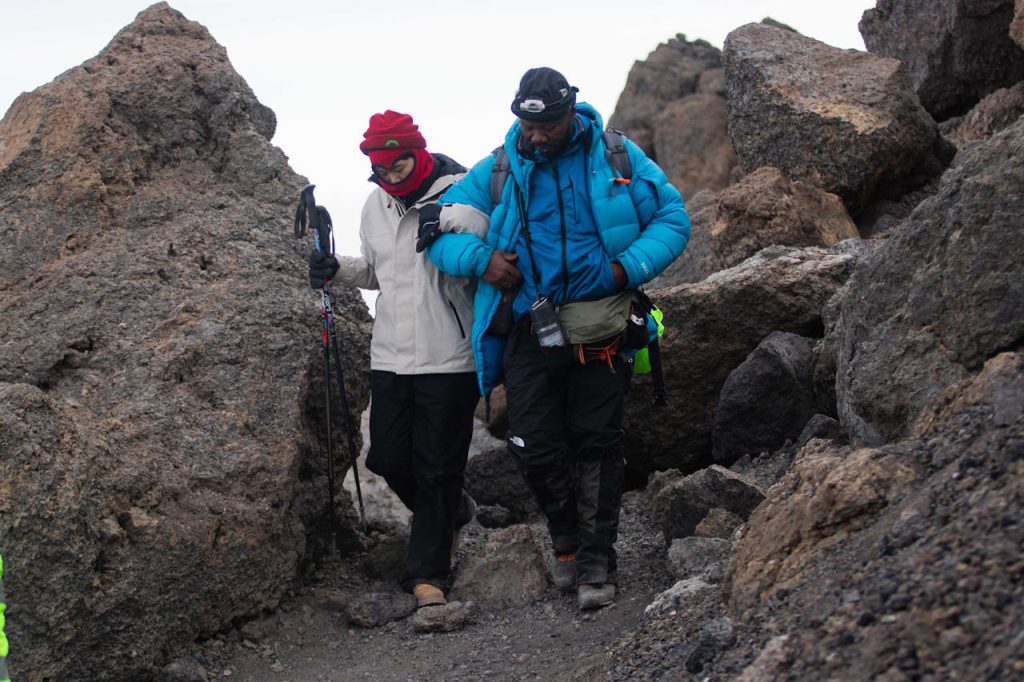
Climbers may feel shortness of breath, dizziness, or fatigue. Even simple movements feel slow and heavy. Guides closely monitor each climber and encourage a slow pace, steady breathing, and regular hydration.
Despite these challenges, most climbers push through because they know the final summit lies just ahead. Reaching Gilman’s Point shows strong determination and brings climbers very close to standing on the highest point in Africa.
Wildlife and Scenery Around Gilman’s Point
The area around Gilman’s Point offers some of the most dramatic scenery on Mount Kilimanjaro. At this high altitude, the environment becomes harsh and almost lifeless, yet it still delivers unforgettable views. Climbers experience a unique mix of glaciers, volcanic terrain, and wide-open landscapes that stretch far beyond the mountain.
Glaciers and Ice Fields
Near Gilman’s Point, climbers can see remnants of Kilimanjaro’s famous glaciers and ice fields. These frozen formations sit on the upper slopes of Kibo and create a striking contrast against the dark volcanic rock.
Although the glaciers have reduced over time, they still give climbers a powerful reminder of the mountain’s icy past. The early morning light often reflects off the ice, creating bright and dramatic scenes that many trekkers remember for life.
Volcanic Landscape
The climb to Gilman’s Point passes through a rugged volcanic environment shaped by ancient eruptions. Loose scree, sharp rocks, and steep slopes dominate the terrain during summit night.
This volcanic landscape feels raw and untouched. The ground shifts underfoot, and the lack of vegetation highlights the extreme conditions at this altitude. Every step shows the power of nature that formed Kilimanjaro millions of years ago.
Views Across Tanzania
From Gilman’s Point, climbers enjoy wide panoramic views across Tanzania. On clear mornings, the horizon stretches far into the distance, revealing clouds, plains, and sometimes even the curvature of the landscape below.
The sunrise often paints the sky in warm colors, turning the clouds into layers of gold and orange. These views reward climbers after a long and demanding ascent, creating one of the most memorable moments of the entire journey.
Tips for Reaching Gilman’s Point Successfully
Reaching Gilman’s Point requires more than fitness alone. Climbers succeed when they prepare well, manage altitude carefully, and follow their guide’s instructions. These simple but powerful strategies can improve your chances of reaching the crater rim safely and comfortably.
Acclimatize Properly
Good acclimatization helps your body adjust to high altitude. Choose a longer route that gives your body more time to adapt to lower oxygen levels. Spend extra days on the mountain when possible and avoid rushing the climb.
Climbers who acclimatize well reduce their risk of altitude sickness and increase their chances of reaching Gilman’s Point and continuing to Uhuru Peak.
Walk Slowly
A slow and steady pace improves your summit success. Many climbers fail because they move too fast and burn energy early.
Follow the “pole pole” style that guides recommend. Take small steps, maintain a steady rhythm, and avoid rushing even when the summit feels close. Slow walking helps your body conserve energy and handle the steep scree slopes more effectively.
Stay Hydrated
Proper hydration supports your body at high altitude. Drink water regularly throughout the climb, even when you do not feel thirsty.
Water helps reduce fatigue, supports circulation, and improves your body’s ability to handle altitude stress. Carry a hydration system or water bottles and sip frequently during summit night.
Listen to Your Guide
Your guide understands the mountain and monitors your condition throughout the climb. Follow their instructions closely, especially during summit night.
Guides control the pace, choose rest breaks, and watch for signs of altitude sickness. Listening to your guide improves your safety and increases your chance of reaching Gilman’s Point successfully.
Wear Proper Summit Gear
Correct clothing makes a big difference during the final ascent. Temperatures near Gilman’s Point drop far below freezing, especially at night.
Wear warm layers, a waterproof jacket, insulated gloves, and proper trekking boots. Use headlamps for visibility during night climbing and carry extra layers in case conditions change.
Good gear protects you from cold, wind, and fatigue, helping you focus on reaching the crater rim safely.
Frequently Asked Questions
Is Gilman’s Point the top of Kilimanjaro?
No, Gilman’s Point is not the highest point on Kilimanjaro. Uhuru Peak holds that title. Gilman’s Point sits on the crater rim and marks an important milestone during summit night, but climbers must continue to Uhuru Peak to reach the true summit.
How high is Gilman’s Point?
Gilman’s Point stands at 5,685 meters (18,652 feet) above sea level. At this altitude, oxygen levels drop significantly, and most climbers feel the effects of thin air during the final ascent.
How far is Gilman’s Point from Uhuru Peak?
Gilman’s Point sits about 1.5 kilometers (0.9 miles) from Uhuru Peak. Even though the distance seems short, the high altitude makes the walk challenging and slow for most climbers.
Can you stop at Gilman’s Point?
Yes, climbers can stop at Gilman’s Point if they feel too tired or experience altitude sickness. Some trekkers choose to rest here, while others continue to Uhuru Peak if they feel strong enough.
Which routes reach Gilman’s Point?
Most Kilimanjaro routes reach Gilman’s Point during summit night. These include Machame, Lemosho, Umbwe, Rongai, Northern Circuit, and Marangu routes. Each route approaches the crater rim from a different direction but often passes this key point.
How long does it take to walk from Gilman’s Point to Uhuru Peak?
The walk from Gilman’s Point to Uhuru Peak usually takes between 1 and 2 hours. The exact time depends on weather conditions, fitness level, and how well a climber handles high altitude.
Final Thoughts
Gilman’s Point stands as one of the most important milestones on Mount Kilimanjaro. It marks the moment climbers reach the crater rim after a long and demanding summit night. Many trekkers remember this point as a powerful achievement because it confirms they have conquered the hardest section of the climb.
Reaching Gilman’s Point shows real strength, determination, and resilience. Climbers face cold temperatures, thin air, and steep scree slopes before they arrive at this location. Even though it does not represent the highest point on the mountain, it still holds deep meaning for many who attempt Kilimanjaro.
The difference between Gilman’s Point and Uhuru Peak lies in elevation and final position. Gilman’s Point sits on the crater rim, while Uhuru Peak stands as the highest point in Africa. Climbers who continue beyond Gilman’s Point complete the final push and reach the true summit. However, both points represent major accomplishments on the journey.
Every climber experiences Kilimanjaro differently, but reaching Gilman’s Point always brings a sense of pride and achievement. With proper preparation, good pacing, and support from experienced guides, future climbers can increase their chances of reaching this memorable point and continuing all the way to Uhuru Peak.
Animals on Mount Kilimanjaro: What Wild Animals Will I See Climbing Kilimanjaro?
Estimated reading time: 32 minutes
Many people know Mount Kilimanjaro for its snow-capped summit, breathtaking landscapes, and challenging trekking routes. However, few climbers realize that animals on Mount Kilimanjaro add another fascinating dimension to the adventure. If you are wondering what wild animals you will see climbing Kilimanjaro, the answer depends largely on the route you choose and the ecological zones you pass through.
The most common animals on Mount Kilimanjaro include blue monkeys, black-and-white colobus monkeys, bushbucks, duikers, olive baboons, and numerous bird species. Most wildlife sightings occur in the lush rainforest zone, where dense vegetation provides food, shelter, and water for many animals. As climbers ascend into the heath, moorland, alpine desert, and arctic zones, wildlife becomes less common due to the harsh conditions and limited vegetation.
Unlike a traditional Tanzanian safari, climbing Kilimanjaro is not primarily a wildlife experience. You are unlikely to see large predators such as lions or cheetahs on the mountain. However, attentive trekkers often encounter playful monkeys swinging through the forest canopy, colorful birds feeding among giant heathers, and shy antelope moving quietly through the undergrowth.
The diverse ecosystems of Kilimanjaro create habitats for a wide range of species. From tropical rainforest animals at lower elevations to specialized birds adapted to higher altitudes, the mountain offers unique wildlife encounters that many climbers do not expect. These encounters add another layer of excitement to the journey and make every day on the trail different.
In this guide, we explore the animals on Mount Kilimanjaro, where they live, which routes offer the best opportunities for wildlife viewing, and what you can realistically expect to see during your climb.
Yes, Mount Kilimanjaro is home to a variety of wild animals, particularly in its lower rainforest zone. Climbers often spot monkeys, antelope, and numerous bird species while trekking through the forest. As you gain elevation and move into the moorland, alpine desert, and arctic zones, wildlife sightings become much less common due to the colder temperatures and limited vegetation.
Why Does Mount Kilimanjaro Have So Many Different Animals?
Mount Kilimanjaro supports a remarkable variety of wildlife because it contains several distinct ecological zones, each with its own climate, vegetation, and natural resources. As Africa’s highest mountain rises from the surrounding plains, it creates a range of habitats that allow different species to thrive at different elevations. From lush rainforest teeming with monkeys and birds to high-altitude moorlands home to specialized wildlife, Kilimanjaro offers a diverse environment that supports far more animals than many climbers expect. The mountain’s protected status and location within northern Tanzania also play an important role in preserving its rich biodiversity.
Diverse Climate Zones
One of the main reasons Mount Kilimanjaro is home to so many different animals is its unique range of climate zones. The mountain rises from cultivated farmlands at its base to the snow-covered summit of Uhuru Peak, creating several ecological zones along the way. These include the rainforest zone, heath and moorland zone, alpine desert zone, and arctic summit zone. Each zone has different temperatures, rainfall patterns, vegetation types, and living conditions, allowing various species to occupy habitats best suited to their needs.
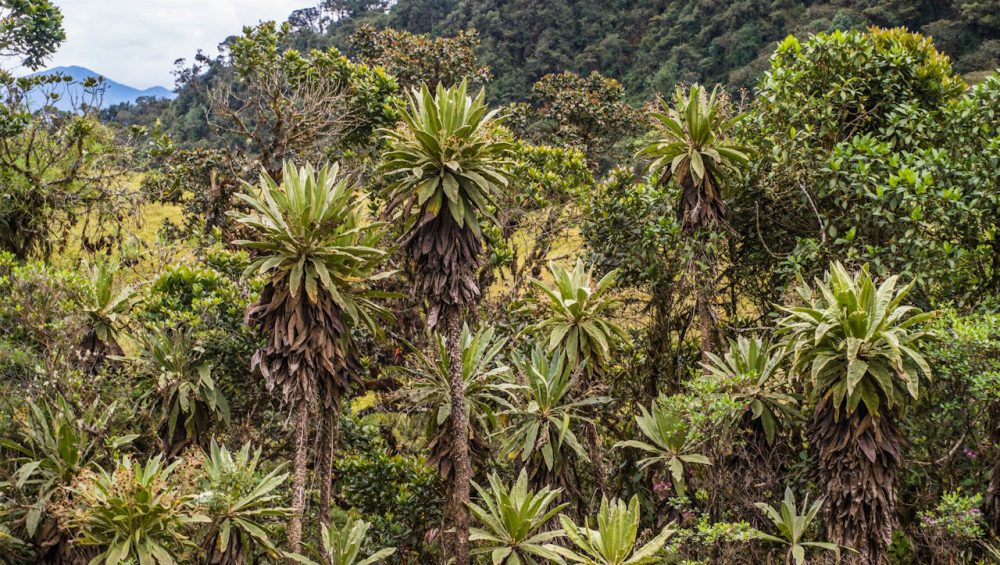
The rainforest zone, found on the lower slopes of the mountain, contains dense vegetation, abundant water, and a stable climate throughout much of the year. This environment supports some of Kilimanjaro’s most commonly seen animals, including blue monkeys, black-and-white colobus monkeys, bushbucks, and numerous bird species. As climbers move higher into the heath and moorland zone, the vegetation changes dramatically. Giant heathers, wildflowers, and unique alpine plants provide food and shelter for smaller mammals and specialized bird species adapted to cooler temperatures.
At even higher elevations, wildlife becomes less common because conditions become increasingly harsh. Nevertheless, certain birds and insects can still survive in these challenging environments. The variety of climate zones found on a single mountain creates a series of interconnected ecosystems, allowing Mount Kilimanjaro to support an impressive range of wildlife from the base to the upper slopes.
Protected Forest Ecosystem
Another reason Kilimanjaro hosts diverse wildlife is the protection provided by its forest ecosystem. Much of the mountain falls within protected conservation areas that help preserve natural habitats and limit human disturbance. These protected forests provide safe environments where animals can feed, breed, and move freely without the pressures commonly found in heavily developed regions.
The rainforest surrounding Kilimanjaro acts as a vital water catchment area and supports thousands of plant species that form the foundation of the mountain’s food web. Trees, shrubs, mosses, and flowering plants provide food for herbivores, while dense vegetation offers shelter from predators and harsh weather conditions. This rich ecosystem supports monkeys, antelope, birds, insects, and many other forms of wildlife that depend on healthy forest habitats for survival.
Protection efforts have helped maintain much of the mountain’s natural biodiversity despite increasing tourism and population growth in surrounding areas. National park regulations help reduce habitat destruction, control illegal hunting, and encourage sustainable tourism practices. As a result, many animal species continue to thrive within Kilimanjaro’s forests. For climbers, this means there is still an opportunity to experience wildlife in a relatively undisturbed natural environment while trekking through one of Africa’s most famous mountains.
Location Near Major Wildlife Areas
Mount Kilimanjaro’s location in northern Tanzania also contributes significantly to its wildlife diversity. The mountain lies within a region known for its rich ecosystems and world-famous wildlife destinations. Nearby conservation areas and migration corridors allow animals to move between habitats, increasing biodiversity throughout the region. This geographic position helps connect Kilimanjaro to broader ecological networks that support wildlife populations across northern Tanzania.
The surrounding landscapes include forests, grasslands, wetlands, and protected areas that provide additional habitats for many species. Some larger mammals occasionally move through lower forest areas around Kilimanjaro, while numerous bird species travel between different ecosystems in search of food and breeding grounds. These connections help maintain healthy wildlife populations and contribute to the variety of animals found on the mountain.
Northern Tanzania’s favorable climate also supports year-round vegetation growth in many areas, providing reliable food sources for wildlife. Seasonal rainfall patterns create conditions that sustain both resident and migratory species. As a result, Kilimanjaro benefits not only from its own ecosystems but also from its proximity to some of East Africa’s most important wildlife regions.
Together, Kilimanjaro’s diverse habitats, protected forests, and strategic location create an environment capable of supporting a wide range of animal species. This combination makes the mountain much more than a climbing destination it is also an important refuge for wildlife and a fascinating place for nature enthusiasts to explore.
Wildlife Zones of Mount Kilimanjaro
Mount Kilimanjaro is unique because animals live in specific ecological zones rather than spreading evenly across the mountain. As climbers ascend the mountain, they move through several distinct habitats, starting from dense tropical rainforest and ending in the icy, barren summit zone. Each zone supports different types of wildlife, and understanding these zones helps climbers know what animals they may encounter during their journey.
The lower slopes of Kilimanjaro are rich in biodiversity, while higher elevations become progressively harsher, limiting the number of species that can survive. This gradual change in environment creates a natural pattern where wildlife becomes less common as altitude increases.
Rainforest Zone (Most Wildlife)
The rainforest zone is the most important wildlife habitat on Mount Kilimanjaro. Located at the base of the mountain, this zone is warm, humid, and covered in dense vegetation. It receives high rainfall throughout the year, creating ideal conditions for plant growth and animal life. Because of this, most wildlife sightings on Kilimanjaro occur here, especially during the early stages of the climb.
Climbers passing through the rainforest often encounter animals such as blue monkeys, black-and-white colobus monkeys, and occasionally bushbucks moving through the undergrowth. The forest canopy hosts many bird species, including hornbills, turacos, and sunbirds.
The thick forest provides food, shelter, and protection, making it the most active wildlife zone on the mountain. The sounds of rustling leaves, bird calls, and distant animal movements create a lively and immersive trekking experience.
Heath and Moorland Zone
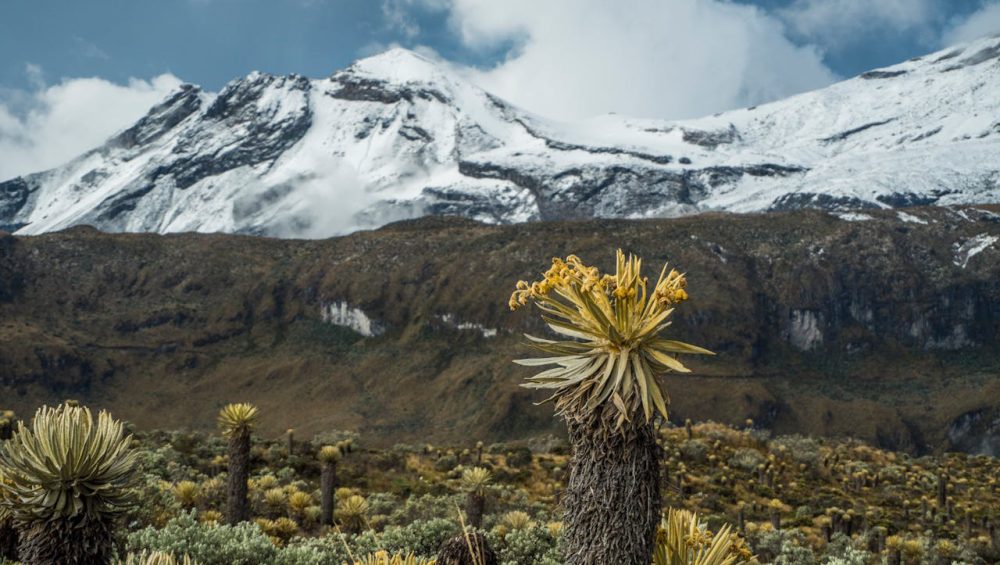
Above the rainforest lies the heath and moorland zone, where vegetation becomes shorter and more open. This zone is cooler and drier, with giant heathers, grasses, and scattered shrubs replacing dense forest. Wildlife becomes less abundant here than in the rainforest, but climbers can still spot birds and small mammals adapted to the changing conditions.
Animal sightings in this zone happen less frequently, but climbers may still see birds of prey and high-altitude species soaring above the landscape. The open terrain also makes it easier to spot wildlife from a distance, although animals tend to be more cautious due to the harsher environment and increased exposure.
Alpine Desert Zone
The alpine desert zone is one of the most extreme environments on Mount Kilimanjaro. This zone has rocky terrain, minimal vegetation, and large temperature variations between day and night. Because food and water sources are scarce, very few animals can survive in this zone.
Climbers may only see a few specially adapted insects and occasional bird species passing through. Most climbers experience this zone as a silent, barren landscape, emphasizing the harsh conditions of high-altitude environments.
Arctic Summit Zone
The arctic summit zone is the highest and most extreme part of Mount Kilimanjaro, located above 5,000 meters. This zone has ice, snow, and volcanic rock, along with freezing temperatures and strong winds. It is essentially a polar-like environment near the equator.
There is virtually no wildlife in this zone due to the extreme conditions. Climbers may only observe a few hardy microorganisms or occasional birds flying at high altitude. This section focuses entirely on reaching the summit rather than wildlife viewing.
Wildlife Activity Summary Table
Zone
Elevation
Wildlife Activity
Rainforest
1,800-3,000m
Very High
Heath & Moorland
3,000-4,000m
Moderate
Alpine Desert
4,000-5,000m
Low
Arctic Zone
Above 5,000m
Very Rare
Common Animals on Mount Kilimanjaro
Mount Kilimanjaro is not just about reaching Africa’s highest peak it is also home to a surprising variety of wildlife, especially in the lower forest zones. While you will not see large safari predators on the mountain, climbers often encounter monkeys, antelopes, and many bird species during the trek. Climbers may only observe a few hardy microorganisms or occasional birds flying at high altitude. This section focuses entirely on reaching the summit rather than wildlife viewing. As you move higher, wildlife becomes more limited due to colder temperatures and harsh conditions. Below are the most common animals you may see while climbing Mount Kilimanjaro.
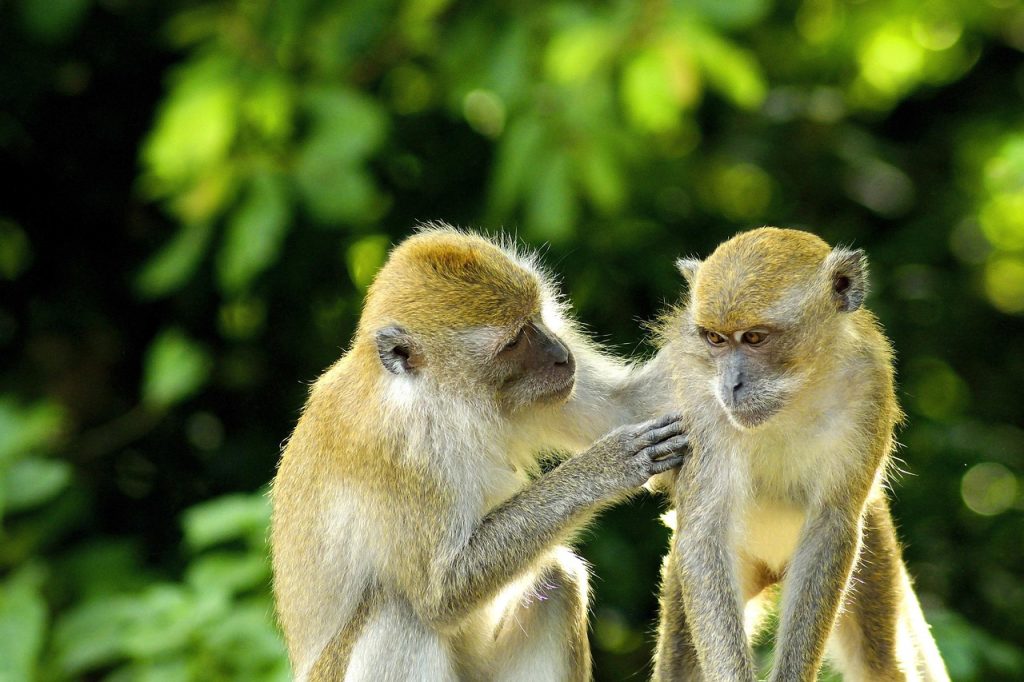
Blue Monkey
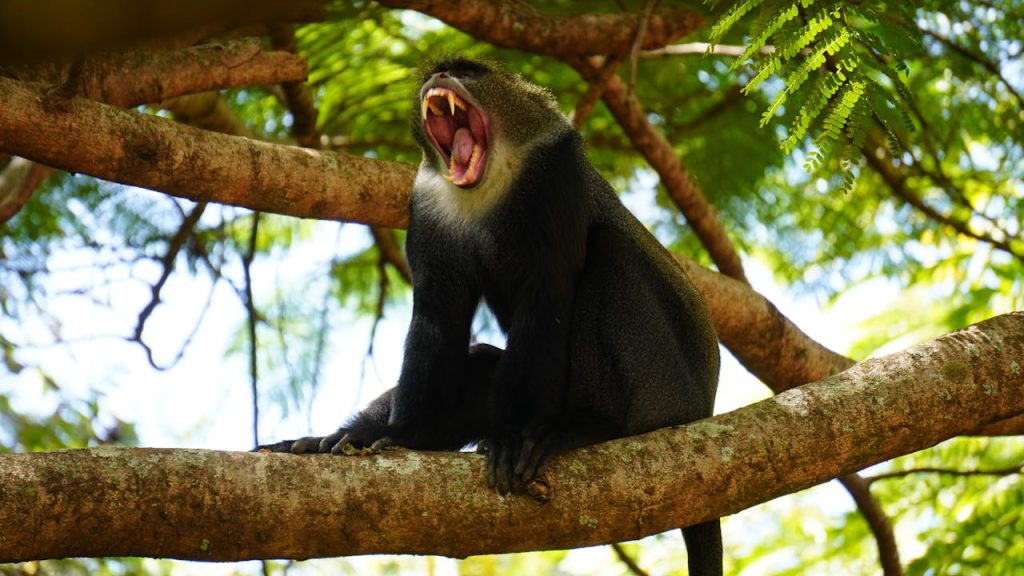
Climbers often see the blue monkey in the Kilimanjaro rainforest. Despite its name, it is not actually blue in color. Instead, it has a greyish coat with a slight bluish shine on its face, which gives it its name. These medium-sized monkeys move quickly through the trees in small groups and stay very active.
Blue monkeys mainly live in the dense rainforest zone between 1,800 and 3,000 meters. This area provides them with plenty of food such as fruits, leaves, flowers, and insects. They prefer living in trees, where they feel safe from predators and can easily move from branch to branch.
In terms of behavior, blue monkeys are alert but generally shy around humans. They may observe climbers from a distance before disappearing into the forest canopy. However, climbers often spot them in the early morning on popular routes like Machame and Lemosho while they search for food.
The chances of seeing blue monkeys on Kilimanjaro are quite high, especially if you are trekking through the rainforest zone. Most climbers encounter them at least once during their climb. Their playful movement, group behavior, and loud forest sounds make them one of the most memorable wildlife sightings on the mountain.
Black-and-White Colobus Monkey
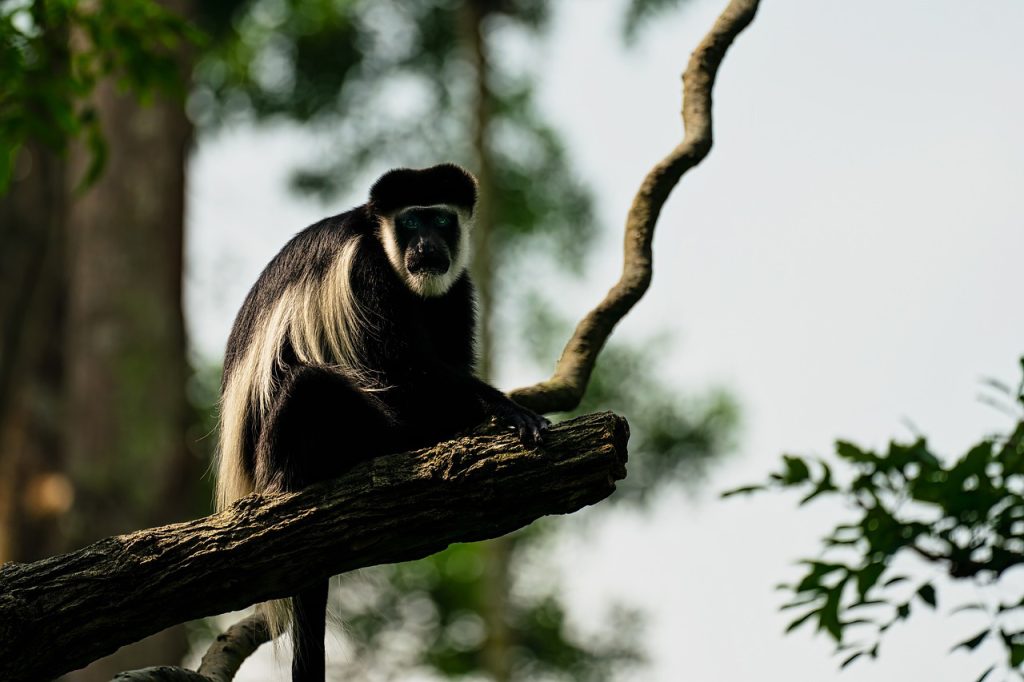
The black-and-white colobus monkey is one of the most iconic and beautiful animals on Mount Kilimanjaro. You can easily recognize it by its striking black body and long white mantle-like hair flowing along its sides. Its long tail, often used for balance while jumping between trees, adds to its unique appearance.
These monkeys mainly inhabit the dense rainforest zone, where they spend most of their time high in the tree canopy. Unlike blue monkeys, colobus monkeys are leaf-eaters and have a specialized stomach that helps them digest tough vegetation. This allows them to survive in areas where other animals might struggle.
Colobus monkeys are calm and less active on the ground.They move gracefully through trees in small groups and people often hear them before they see them. Their soft calls and rustling leaves can guide climbers to their location in the forest.
The chances of seeing black-and-white colobus monkeys are moderate. They are present in many forested areas but tend to stay hidden in the upper canopy. However, if you are trekking slowly and quietly, especially in the early morning or late afternoon, you may be lucky enough to spot them moving between branches.
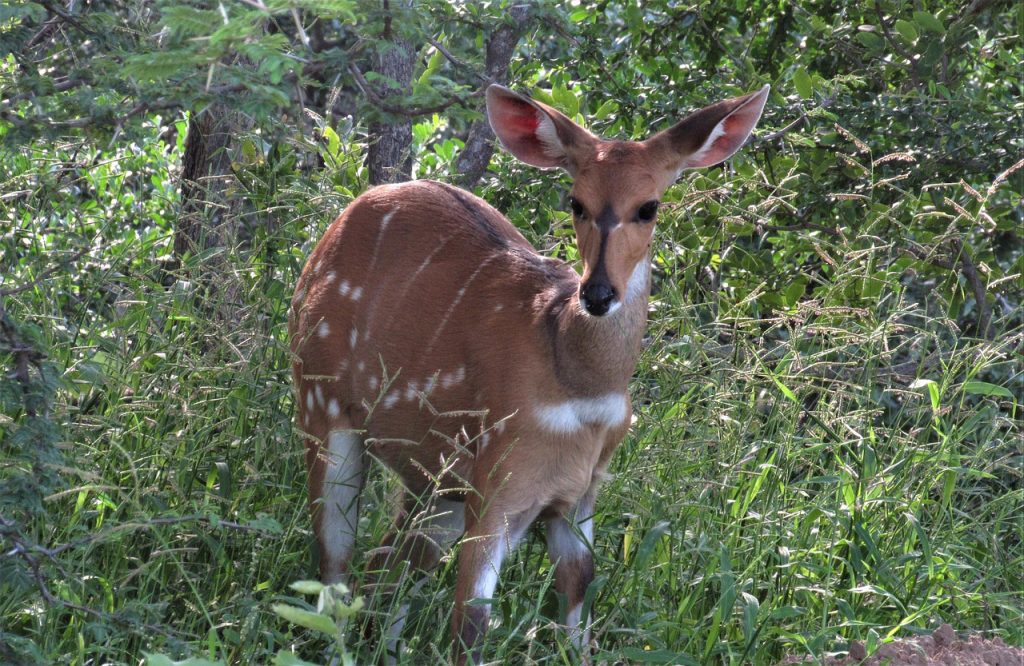
Bushbuck
The bushbuck is a shy and solitary antelope found in the forest and lower moorland zones of Kilimanjaro. It has a reddish-brown coat with faint white markings, which helps it blend perfectly into its natural environment. This camouflage makes it one of the harder animals to spot on the mountain.
Bushbucks prefer dense vegetation where they can feed on leaves, shrubs, and grasses while staying hidden from predators. They are most active during early morning and late afternoon, resting in thick cover during the day. Unlike monkeys, bushbucks are usually alone or seen in very small groups.
Because of their shy nature, bushbucks rarely come close to trekking paths. However, climbers may occasionally spot them crossing forest clearings or standing quietly in thick vegetation. Their ability to remain motionless for long periods makes them difficult to detect, even when nearby.
The chances of seeing a bushbuck on Kilimanjaro are low to moderate. Sightings depend heavily on luck, timing, and how quietly climbers move through the forest. Most trekkers hear movement before they see the animal itself, making any encounter a special experience.
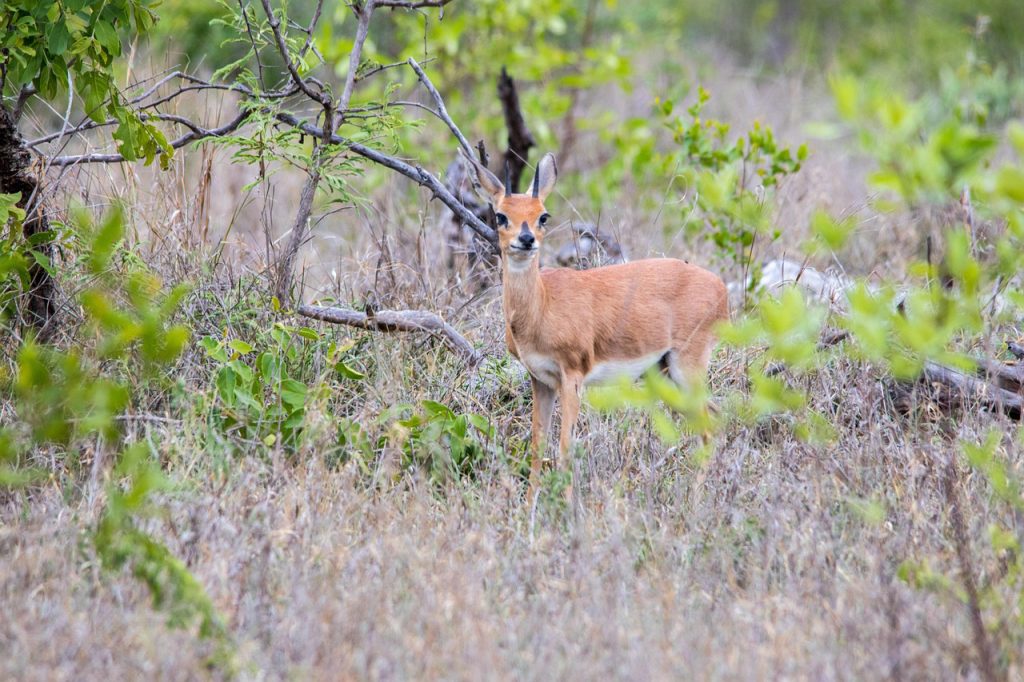
Duiker
Duikers are small, forest-dwelling antelopes that are extremely secretive and rarely seen on Kilimanjaro. They are much smaller than bushbucks and adapt perfectly to life in dense vegetation. Their compact size and excellent camouflage help them avoid predators and human detection.
These animals feed on fallen fruits, leaves, and forest plants. They prefer staying deep within thick forest areas where they feel safe. Because of their shy behavior, duikers are usually active at night or in very early morning hours when human activity is low.
Spotting a duiker during a Kilimanjaro climb is very rare. Most climbers do not see them directly, even though they may be present nearby. Instead, they leave behind signs such as small footprints or movement in the bushes. Experienced guides usually confirm their presence through wildlife tracking.
The chances of seeing a duiker are very low, but knowing they are part of the ecosystem adds to the richness of Kilimanjaro’s biodiversity.
Olive Baboon
The olive baboon is one of the most noticeable and widespread animals on Mount Kilimanjaro. Unlike many other species on the mountain, baboons are highly adaptable and often travel on the ground in large social groups called troops. They are intelligent, vocal, and very active, making them easier to spot compared to other wildlife.
Olive baboons usually live in the lower forest zones and forest edges, where they feed on fruits, roots, insects, and sometimes small animals. Their strong social structure keeps them highly active, and climbers often see them interacting, grooming each other, or moving together as a group.
These baboons are not shy and sometimes approach trekking routes, especially in areas where they have become used to human presence. However, they can become aggressive if they feel threatened, so climbers should always keep a safe distance.
The chances of seeing olive baboons on Kilimanjaro are high, especially on popular routes that pass through forested areas. Their size, behavior, and loud calls make them one of the most memorable wildlife encounters during the climb.
Birds You May See While Climbing Kilimanjaro
Mount Kilimanjaro is not only rich in mammals like monkeys and antelopes, but it is also home to a wide variety of bird species. In fact, climbers often see birds among the most frequently seen animals during a Kilimanjaro climb, especially in the rainforest and moorland zones. Because birds can fly across different elevations, they are able to survive in almost all ecological zones of the mountain. Climbers often notice them in the early morning when they are most active, searching for food or soaring above the landscape. From large scavenger birds to small colorful nectar feeders, Kilimanjaro offers a unique birdwatching experience that adds beauty and life to the trekking journey.
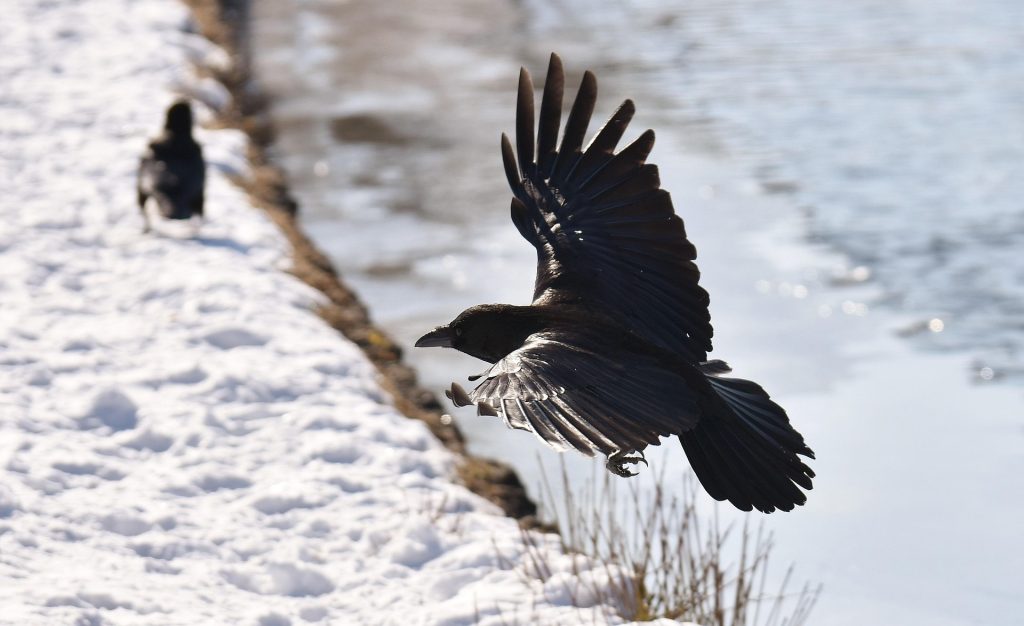
White-necked Raven
The white-necked raven is one of the most intelligent and adaptable birds found on Mount Kilimanjaro. It is a large black bird with a distinctive white patch on the back of its neck, making it easy to identify even from a distance. This bird is commonly seen in the higher zones of Kilimanjaro, including the heath, moorland, and even alpine desert areas.
White-necked ravens are highly skilled scavengers and feed on a wide range of food sources, including insects, food scraps, and small animal remains. They are also known for their curiosity and bold behavior, often approaching campsites in search of food. Their intelligence allows them to adapt well to harsh environments where other bird species may struggle to survive.
Climbers frequently see them flying above ridges or perched on rocks, especially in open areas where they can scan for food. The chances of spotting a white-necked raven on Kilimanjaro are very high, particularly as you ascend above the forest zone. Their presence adds a dramatic and wild feeling to the high-altitude landscape.
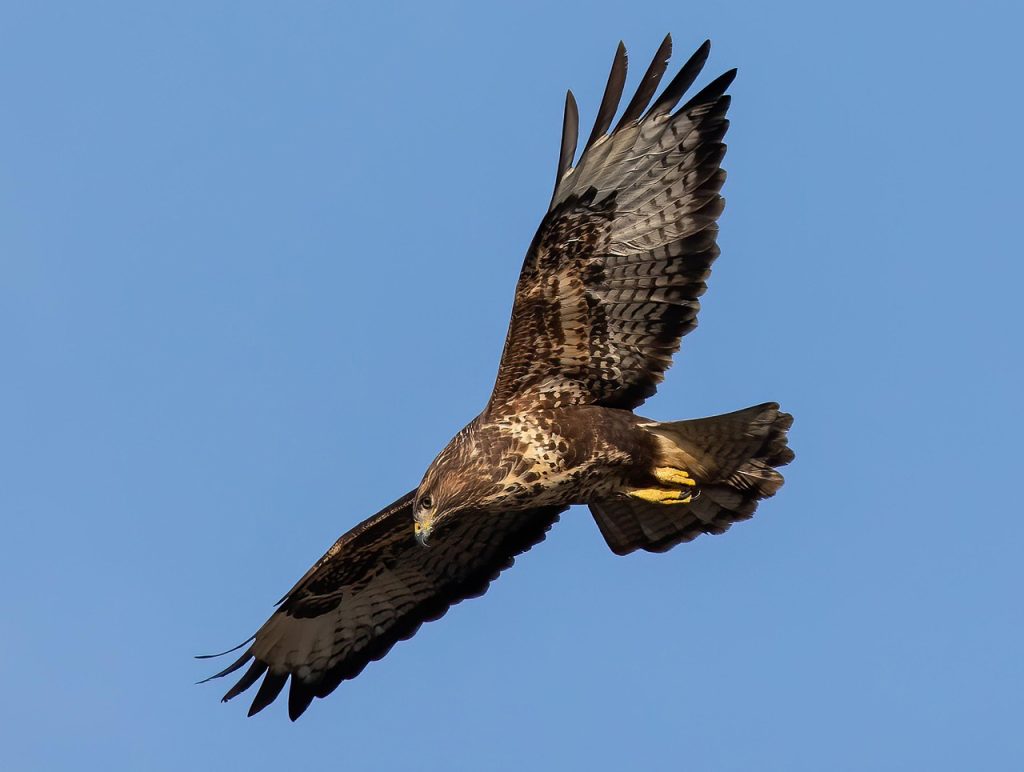
Augur Buzzard
The augur buzzard is one of the most common birds of prey on Mount Kilimanjaro. It is a large, powerful raptor with dark plumage and a pale underside, often seen circling high above the mountain slopes. This bird is well adapted to a variety of habitats and can be found from lower forest edges all the way up to the moorland and alpine zones.
Augur buzzards are skilled hunters, feeding mainly on small mammals, reptiles, and insects. They are often seen soaring on thermal air currents, using their excellent vision to spot movement on the ground below. Their slow, graceful flight makes them easy to recognize during the climb.
For trekkers, spotting an augur buzzard is a common and exciting experience, especially in open areas where the sky is clear. They are most active during the daytime when warm air currents help them glide effortlessly over long distances. The chances of seeing an augur buzzard on Kilimanjaro are very high, making it one of the most reliable bird sightings on the mountain.
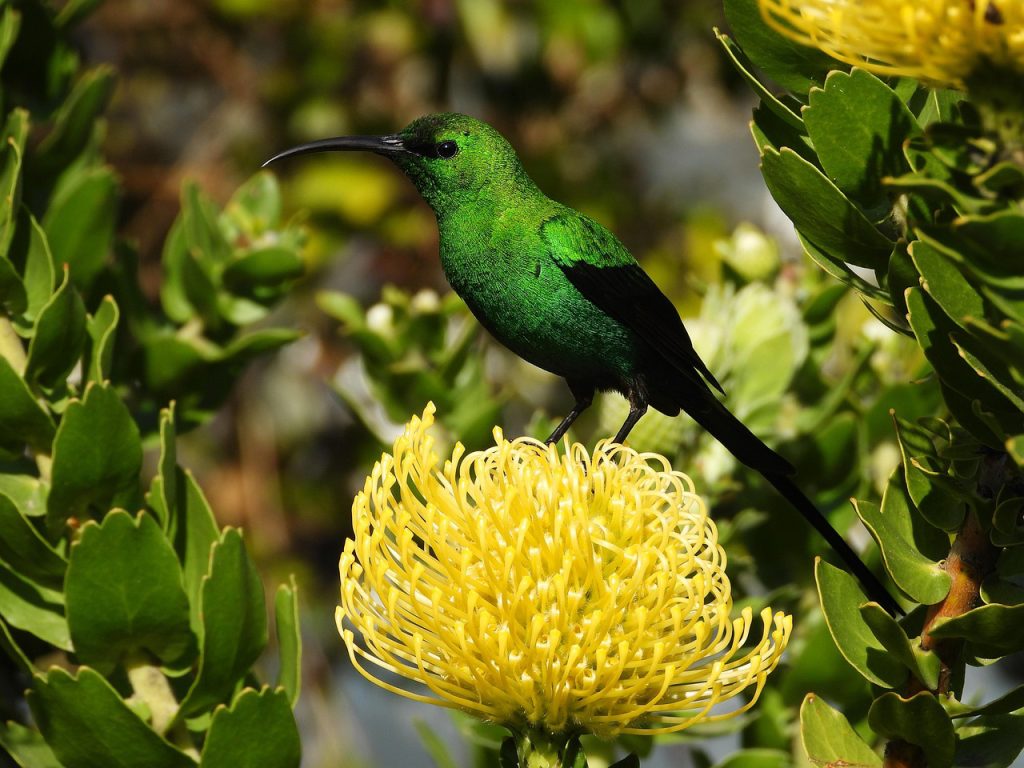
Malachite Sunbird
The malachite sunbird is one of the most beautiful and colorful birds you may encounter on Kilimanjaro. It is known for its shimmering green feathers and long tail, which make it stand out in the natural environment. This small bird is typically found in forested and moorland zones where flowers are abundant.
Malachite sunbirds feed mainly on nectar, using their long, curved beaks to reach deep into flowers. They are fast-moving and highly active, often seen darting between plants in search of food. Their bright colors and quick movements make them a favorite among birdwatchers.
Although they are small, malachite sunbirds are relatively easy to spot in areas with flowering vegetation, especially in the lower and middle zones of Kilimanjaro. The chances of seeing them are moderate to high depending on the season and the route you are taking.
Scarlet-tufted Malachite Sunbird
The scarlet-tufted malachite sunbird is one of Kilimanjaro’s most unique high-altitude bird species. It closely relates to the malachite sunbird but stands out because of its striking scarlet or red patches, especially around the head. This bird adapts well to the colder, harsher environments of the upper moorland and alpine desert zones.
Unlike many other birds, the scarlet-tufted malachite sunbird thrives at high elevations where oxygen levels are lower and vegetation is sparse. It feeds on nectar from hardy alpine flowers and small insects, often found in rocky or wind-exposed areas. Its ability to survive in such extreme conditions makes it one of the most fascinating bird species on Kilimanjaro.
For climbers, spotting this bird is a special experience, usually occurring when ascending above the moorland zone. Although not as commonly seen as other birds, its presence is a highlight for those interested in high-altitude wildlife. The chances of seeing a scarlet-tufted malachite sunbird are moderate but increase as you reach higher elevations.
Can You See Large Animals on Mount Kilimanjaro?
While Mount Kilimanjaro is home to a variety of smaller wildlife such as monkeys and birds, many climbers often wonder whether they might also encounter large African animals during the trek. The short answer is that sightings of large mammals are possible but extremely rare. Unlike safari destinations such as Serengeti or Ngorongoro, Kilimanjaro is not a major habitat for big game animals. As you climb higher into the mountain’s forest and moorland zones, conditions become colder, steeper, and less suitable for large wildlife. However, on the lower slopes and in the surrounding forest reserves, some large animals do occasionally pass through.
Elephants
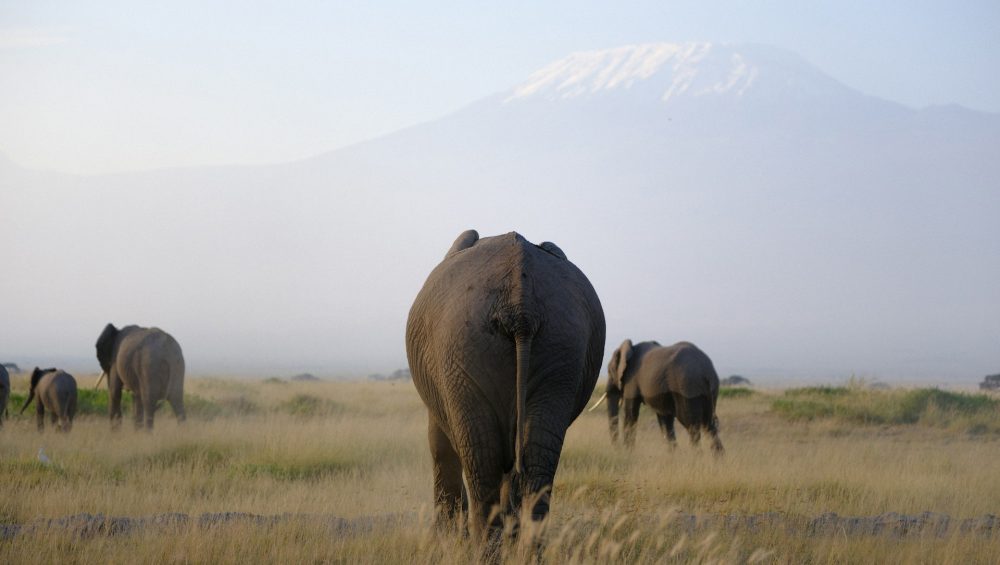
African elephants are sometimes reported in the lower forest areas around Mount Kilimanjaro, especially in protected forest corridors outside the main climbing routes. These elephants usually move between nearby conservation areas in search of food and water. However, climbers on the mountain itself rarely see them along trekking paths. The dense forest and human activity on popular routes generally keep elephants away from climbing trails. Because of this, elephant sightings during a Kilimanjaro climb are considered very rare. When they do occur, it is usually from a distance or in areas close to the forest edge rather than on the main ascent routes.
Buffalo
African buffalo are another large animal species in the broader Kilimanjaro ecosystem. They are strong, herd-living animals that prefer grasslands and open forest areas. While buffalo appear more commonly in nearby national parks, they sometimes move through the lower forest zones around the mountain. However, climbers rarely encounter buffalo while climbing Kilimanjaro, and most trekkers do not see them during their ascent. Guides monitor wildlife activity, but buffalo sightings on trekking routes remain rare and are not a typical part of the climbing experience.
Leopards
Leopards are among the most elusive and secretive predators in Africa, and their presence on Mount Kilimanjaro is extremely difficult to confirm. They prefer dense forest cover and are highly nocturnal, which makes them almost impossible to spot during a normal climb. There have been occasional reports and local stories of leopards inhabiting the mountain’s forest zones, but direct sightings by climbers are exceptionally rare. One of the most famous legends associated with Kilimanjaro is the story of a leopard near the higher elevations, even as far as the region below Uhuru Peak. While people have not verified this story and often consider it local folklore, it adds to the mountain’s mystique and cultural storytelling. In reality, any leopard encounter on Kilimanjaro would be extraordinary and highly unlikely for trekkers.
Overall, while large mammals such as elephants, buffalo, and leopards are part of the wider ecosystem around Mount Kilimanjaro, climbers should expect that wildlife encounters on the mountain itself will mainly involve smaller forest animals and birds rather than big game species.
What Animals Are Most Common on Each Kilimanjaro Route?
Wildlife sightings on Mount Kilimanjaro depend not only on altitude and ecosystem zones but also on the specific trekking route you choose. Some routes pass through longer stretches of dense rainforest, where animal activity is higher, while others move more quickly into moorland and alpine zones where wildlife becomes less common. Although all routes share similar ecological zones, the density of forest cover, traffic levels, and trail direction can influence how often climbers see animals. In general, routes with longer rainforest sections tend to offer better opportunities for spotting monkeys, antelopes, and birds.
Machame Route
The Machame Route is one of the most popular climbing paths and passes through a long stretch of lush rainforest at the beginning of the trek. This makes it one of the better routes for wildlife viewing. Climbers often encounter blue monkeys, black-and-white colobus monkeys, and various bird species during the early days. Because this route is busy, animals stay slightly deeper in the forest, but climbers still see them relatively often compared to higher routes.
Lemosho Route
Climbers and guides widely regard the Lemosho Route as one of the best routes for both scenery and wildlife. It enters Kilimanjaro through a remote western approach, meaning the rainforest is less disturbed and more pristine. This increases the chances of spotting monkeys, bushbucks, and a wide variety of birds. The quieter environment allows wildlife to behave more naturally, making Lemosho one of the top choices for climbers interested in nature and animal encounters.
Marangu Route
The Marangu Route, also known as the “Coca-Cola Route,” passes through rainforest but is generally more developed and has more traffic compared to other routes. Wildlife sightings are still possible, especially in the forest zone, but animals are often more hidden due to human activity. Climbers most commonly see blue monkeys and colobus monkeys here, although sightings require patience.
Rongai Route
The Rongai Route approaches Kilimanjaro from the northern side, which is drier and less densely forested. Because of this, climbers see wildlife less frequently than on southern routes. However, climbers may still encounter animals in the lower forest sections, including monkeys and some bird species. The drier environment limits biodiversity, making animal encounters more occasional.
Northern Circuit Route
The Northern Circuit Route is the longest route on Kilimanjaro and offers extended time in different ecological zones. While its wildlife density is not significantly higher than other routes, the longer duration increases the chances of encountering animals simply because climbers spend more time in forested areas. It is particularly good for birdwatching and occasional monkey sightings.
Umbwe Route
The Umbwe Route is the steepest and most direct route up Kilimanjaro. It moves quickly through the rainforest zone, so wildlife viewing opportunities are more limited than on longer routes. Climbers may still see monkeys and birds in the early stages, but the fast ascent reduces time in animal-rich areas, so wildlife encounters happen less often overall.
The best time to see wildlife on Mount Kilimanjaro is during the dry seasons and in the early morning or late afternoon hours when animals are most active. While wildlife can be seen throughout the year, your chances of spotting monkeys, birds, and antelope increase when conditions are calm, visibility is clear, and animals move more freely in search of food and water. Because Kilimanjaro has different ecological zones, wildlife behavior also changes depending on weather, temperature, and time of day.
Dry Season (Best Time for Wildlife Viewing and Clear Sightings)
The dry season is generally the best time to see wildlife on Mount Kilimanjaro. During this period, the weather is more stable, trails are less slippery, and vegetation is not overly dense, making it easier to spot animals. The dry season usually brings clearer skies and better visibility in the rainforest and moorland zones, where most wildlife activity takes place.
Animals such as blue monkeys, colobus monkeys, bushbucks, and a variety of bird species are more likely to be seen because they move closer to water sources and feeding areas. With less rain and fewer thick clouds, trekkers also have better chances of spotting movement in the forest canopy. In addition, guides can more easily track animal activity due to clearer ground conditions.
Overall, the dry season provides the most comfortable trekking experience and the highest probability of seeing wildlife, especially in the lower forest zones where biodiversity is richest.
Wet Season (Lush Forest but Lower Visibility)
The wet season transforms Mount Kilimanjaro into a lush green environment with thick vegetation and frequent rainfall. While this creates a beautiful and vibrant landscape, it can make wildlife sightings more difficult. Dense foliage often hides animals, and heavy rain reduces visibility for trekkers.
However, the wet season is still home to active wildlife, especially in the rainforest zone. Birds are particularly abundant during this time, as many species are breeding or feeding on seasonal fruits and insects. Monkeys are still present and active, but they are often deeper in the forest, making them harder to see clearly.
Although sightings may be less frequent, the wet season offers a unique experience with fewer crowds and a more dramatic natural environment. For photographers and nature lovers, it can still be rewarding, even if wildlife encounters require more patience.
Early Morning Sightings (Peak Wildlife Activity Time)
Early morning is one of the best times of day to see wildlife on Mount Kilimanjaro. The best time is early morning because animals are most active during the cooler hours when they search for food after the night. In the rainforest zone, monkeys are often seen moving through the trees, and birds are highly active as they begin their daily feeding routines.
The cooler temperatures also make animals more comfortable moving around in open areas before the heat of the day sets in. For climbers, early morning hikes provide a higher chance of spotting movement in the forest canopy or along trekking paths. Guides often recommend starting sections of the trek early to increase wildlife viewing opportunities.
This time of day also offers excellent lighting conditions for photography, making it ideal for capturing clear images of Kilimanjaro’s wildlife.
Evening Wildlife Activity (Quiet and Subtle Encounters)
Evening hours on Mount Kilimanjaro also provide good opportunities for wildlife sightings, although they are generally quieter compared to mornings. The best time is late afternoon and early evening when temperatures begin to drop, and animals prepare to rest or feed before nightfall.
During this time, trekkers may notice bushbucks or duikers moving carefully through forest clearings. Birds also become active again, often returning to nesting areas or searching for last-minute food. In some cases, monkeys may still be seen in the canopy, especially in lower forest zones.
However, visibility decreases as light fades, and many animals become more cautious. While evening sightings are less frequent than morning encounters, they still offer a peaceful and atmospheric wildlife experience in the natural environment of Kilimanjaro.
Wildlife Safety Tips for Climbers
While climbing Mount Kilimanjaro, encountering wildlife is one of the most exciting parts of the journey. However, it is important to remember that all animals on the mountain are wild and should be treated with caution and respect. Most species, such as monkeys, bushbucks, and birds, are not dangerous when left undisturbed, but improper behavior from humans can lead to stress for animals or risky situations for climbers. Following basic wildlife safety guidelines helps ensure both your safety and the protection of Kilimanjaro’s natural ecosystem.
Keep a Safe Distance
The most important rule when encountering wildlife on Mount Kilimanjaro is to always keep a safe distance. Even if animals appear calm or used to human presence, they are still wild and can react unpredictably if they feel threatened. Monkeys, for example, may seem curious and sometimes approach trekking groups, but getting too close can cause stress or defensive behavior.
Maintaining distance also protects animals from becoming too accustomed to humans, which can disrupt their natural behavior. It is recommended to observe wildlife quietly without attempting to touch, chase, or follow them. Using binoculars or zoom lenses for photography is the best way to enjoy close-up views without disturbing the animals.
Keeping distance also ensures climbers remain safe, especially in forest areas where visibility may be limited. By respecting personal space between humans and wildlife, encounters remain peaceful and enjoyable.
Do Not Feed Animals
Feeding wildlife on Kilimanjaro is strongly discouraged and can have serious negative effects on both animals and the ecosystem. When animals become dependent on human food, they may lose their natural foraging behavior and become more aggressive or bold around people.
Monkeys, in particular, can quickly learn to associate humans with food, which can lead to unwanted encounters or even attempts to steal items from climbers. This not only creates safety risks but also disrupts the natural balance of the forest ecosystem.
Feeding animals can also introduce unhealthy foods into their diet, which may harm their health over time. To protect Kilimanjaro’s wildlife, all food should be stored securely, and climbers should never offer snacks or leftovers to any animal they encounter on the trail.
Follow Guide Instructions
Professional mountain guides play an essential role in ensuring safe and responsible wildlife encounters on Mount Kilimanjaro. They are trained to understand animal behavior, recognize potential risks, and guide climbers through areas where wildlife is present.
Always listen carefully to your guide’s instructions when animals are nearby. They may advise you to stop, stay quiet, or adjust your path depending on the situation. Guides also know the safest way to observe wildlife without disturbing their natural movement.
Following their guidance reduces the risk of accidents and ensures that encounters remain safe for both climbers and animals. Ignoring instructions or acting independently can increase the chance of disturbing wildlife or entering unsafe situations, especially in dense forest areas.
Respect the Ecosystem
Respecting the Kilimanjaro ecosystem means understanding that every plant and animal plays an important role in maintaining the mountain’s natural balance. From the smallest insects to the largest mammals, all species contribute to the health of the environment.
Climbers should avoid damaging vegetation, removing plants, or leaving waste behind. Staying on designated trails helps protect fragile habitats and prevents unnecessary disturbance to wildlife. Littering or disrupting natural areas can have long-term effects on the ecosystem and reduce the quality of the environment for future climbers.
By respecting nature, climbers help preserve Kilimanjaro’s biodiversity for future generations. Responsible trekking ensures that wildlife continues to thrive and that the mountain remains a beautiful and sustainable destination for both adventure and conservation.
Animals on Mount Kilimanjaro vs Safari Animals
Many travelers visiting Tanzania often wonder how wildlife on Mount Kilimanjaro compares to animals seen on a traditional safari. While both experiences take place in the same country, they are completely different in terms of environment, wildlife diversity, and animal visibility. Kilimanjaro is a mountain trekking destination with limited wildlife concentrated in specific ecological zones, especially the rainforest. In contrast, safari parks such as Serengeti and Ngorongoro offer open landscapes with large concentrations of African wildlife, including predators and large herbivores.
On Kilimanjaro, climbers mainly encounter smaller and more elusive animals such as monkeys, bushbucks, duikers, and various bird species. These animals are adapted to forest and high-altitude environments and are often difficult to spot due to dense vegetation and changing terrain. Large safari animals like lions, giraffes, and zebras are not part of the Kilimanjaro ecosystem, making wildlife encounters more subtle and less predictable.
In safari parks, however, animals are far more visible due to open grasslands and plains. Visitors can easily see large herds and predator-prey interactions in their natural environment. This makes safaris ideal for game viewing, while Kilimanjaro is more about trekking, scenery, and occasional forest wildlife encounters.
Wildlife Comparison Table
Animal
Kilimanjaro
Safari Parks
Monkeys
Common
Common
Elephants
Rare
Common
Lions
No
Common
Giraffes
No
Common
Buffalo
Rare
Common
Frequently Asked Questions About Animals on Mount Kilimanjaro
This section answers the most common questions climbers ask about wildlife on Mount Kilimanjaro. While the mountain is not a traditional safari destination, it still offers interesting animal encounters, especially in the lower rainforest zones. Understanding what to expect helps climbers prepare mentally and enjoy the experience without unrealistic expectations.
What animals will I see climbing Kilimanjaro?
Most climbers will see monkeys, birds, and occasionally small antelopes during their Kilimanjaro trek. The most common animals include blue monkeys, black-and-white colobus monkeys, olive baboons, bushbucks, and duikers. These species are mainly found in the rainforest zone, where vegetation is dense and food is abundant. Birdlife is also very rich, with species such as sunbirds, hornbills, and buzzards often seen along the trail. As you climb higher, wildlife becomes less frequent due to colder temperatures and limited vegetation.
Are there lions on Mount Kilimanjaro?
No, lions are not found on Mount Kilimanjaro. Lions prefer open savannah environments such as Serengeti and other national parks, where they can hunt large herbivores. Kilimanjaro’s dense forest, steep slopes, and cold high-altitude zones are not suitable habitats for lions. While Tanzania is famous for lion sightings, climbers should not expect to see them on any Kilimanjaro route.
Are there elephants on Kilimanjaro?
Elephants are rarely seen on the climbing routes of Mount Kilimanjaro. They may occasionally move through surrounding forest reserves or lower foothill areas, but they do not typically enter the main trekking paths. The terrain becomes too steep and forested for regular elephant movement. Any elephant sighting during a climb would be considered unusual and depends heavily on location and chance.
Which route offers the best wildlife viewing?
The best routes for wildlife viewing are the Lemosho and Machame routes because they pass through longer and denser rainforest sections. These areas increase the chances of seeing monkeys, birds, and small antelopes. The Northern Circuit also offers good opportunities due to its long duration in varied ecosystems. In contrast, shorter or drier routes like Umbwe or Rongai offer fewer wildlife sightings.
Is it safe to encounter wildlife on Kilimanjaro?
Yes, encountering wildlife on Kilimanjaro is generally safe as long as climbers follow guide instructions and maintain a respectful distance. Most animals are shy and avoid human contact. However, climbers should never attempt to feed or approach animals, especially monkeys or baboons, as this can lead to unwanted interactions. Following safety guidelines ensures that both humans and wildlife remain safe throughout the trek.
Can I see monkeys on Kilimanjaro?
Yes, climbers often see monkeys among the most common animals on Mount Kilimanjaro. Blue monkeys and black-and-white colobus monkeys appear frequently in the rainforest zone, especially in the early stages of the climb. Olive baboons also live in some areas and move on the ground in small troops. While sightings depend on route and timing, most climbers encounter monkeys at least once during their trek.
Final Thoughts: Animals on Mount Kilimanjaro
Mount Kilimanjaro offers a unique wildlife experience that is very different from a traditional safari. While it does not have large predators or vast herds of animals, it is home to a fascinating range of species that live mainly in the lower rainforest zones. Climbers often encounter monkeys such as blue monkeys and black-and-white colobus monkeys, along with olive baboons, bushbucks, duikers, and many colorful bird species.
As you ascend higher into the moorland, alpine desert, and arctic zones, wildlife becomes increasingly rare due to harsh weather conditions and limited vegetation. This natural change across ecological zones makes Kilimanjaro a mountain of contrasts, where every stage of the climb offers a different environment and experience.
Although climbers are not guaranteed to see wildlife, sightings add an exciting and memorable element to the journey. For many climbers, spotting a monkey in the forest or a bird soaring above the mountain becomes one of the highlights of their adventure. With the right route choice, timing, and attention, Kilimanjaro can offer surprising and beautiful wildlife encounters alongside the challenge of reaching Africa’s highest peak.
Understanding the Real Risks of Climbing Kilimanjaro
Estimated reading time: 31 minutes
Mount Kilimanjaro deaths are a topic that concerns many climbers planning to trek Africa’s highest mountain. While thousands of people successfully reach the summit every year, questions about death statistics, climbing dangers, and safety risks remain common. Understanding the real risks helps climbers prepare properly and make informed decisions before attempting the climb.
One of the most common questions people ask is whether anyone dies on Kilimanjaro. The answer is yes. Although fatalities are relatively rare, they do occur each year. Most reported deaths are linked to altitude-related illnesses rather than accidents or falls. This is why proper preparation, acclimatization, and choosing the right route are so important.
The good news is that Kilimanjaro remains one of the safest high-altitude mountains in the world. Tens of thousands of climbers successfully reach the summit every year, and the overall mortality rate is very low compared to many other major mountains. Understanding the risks does not make the climb more frightening it helps you make informed decisions and greatly improves your chances of having a safe and successful adventure.
In this guide, we explore Kilimanjaro death statistics, the main causes of fatalities, the dangers climbers may face, and the practical steps you can take to stay safe while climbing Africa’s highest mountain.
How Many People Die on Mount Kilimanjaro Each Year?
Mount Kilimanjaro is one of the most climbed mountains in the world, attracting adventurers from across the globe. Although the mountain is considered relatively safe compared to many other high-altitude peaks, a small number of fatalities occur each year.
Annual Death Statistics
Available reports and estimates suggest that between 3 and 10 climbers die on Mount Kilimanjaro annually. Most of these deaths result from severe altitude-related illnesses rather than climbing accidents. Because Tanzania does not publish comprehensive official mortality reports for the mountain, the exact number may vary from year to year.
Despite these cases, the vast majority of climbers complete their expeditions safely and return home with unforgettable memories of reaching Africa’s highest summit.
Kilimanjaro Mortality Rate
The mortality rate on Kilimanjaro remains extremely low. With tens of thousands of people attempting the climb every year, the estimated death rate is approximately 0.02%, or about 1 death for every 4,500 to 5,000 climbers.
This figure makes Kilimanjaro significantly safer than many famous mountaineering destinations, including Mount Everest and several technical peaks in the Himalayas.
How Many People Climb Kilimanjaro Every Year?
In recent years, Mount Kilimanjaro has welcomed approximately 50,000 to 70,000 climbers annually. These visitors come from all over the world to experience the challenge of trekking to Uhuru Peak at 5,895 meters (19,341 feet).
The mountain’s popularity comes from the fact that climbers can reach the summit without technical climbing equipment. However, the high altitude still demands proper preparation, gradual acclimatization, and professional guidance to maximize safety and summit success.
When the annual number of climbers is compared to the relatively small number of fatalities, it becomes clear that Kilimanjaro offers a high level of safety for those who follow recommended climbing practices and choose experienced operators.
Is Mount Kilimanjaro Dangerous?
Mount Kilimanjaro is not considered one of the world’s most dangerous mountains, but it is not risk-free. Every year, thousands of climbers successfully reach the summit, yet the mountain’s high altitude, changing weather conditions, and physical demands can create serious challenges for those who arrive unprepared.
The good news is that most risks on Kilimanjaro can be managed through proper acclimatization, a suitable route, experienced guides, and careful attention to your health throughout the climb.
Why Kilimanjaro Is Considered Challenging
The biggest challenge on Kilimanjaro is altitude. As climbers ascend higher, the amount of available oxygen decreases significantly. This can lead to altitude sickness, which affects many trekkers to varying degrees.
In addition to altitude, climbers face several other challenges:
Long hiking days over multiple consecutive days
Cold temperatures near the summit
Rapid weather changes
Physical and mental fatigue
Limited comfort at high-altitude camps
Unlike technical mountains, Kilimanjaro does not require ropes, ice axes, or advanced climbing skills on the standard routes. However, reaching 5,895 meters (19,341 feet) remains a serious physical achievement that requires preparation and determination.
Comparing Kilimanjaro to Other Major Mountains
When compared to many famous mountains around the world, Kilimanjaro ranks among the more accessible high-altitude climbs.
For example, mountains such as Everest, K2, Annapurna, and Denali require advanced mountaineering skills, specialized equipment, and extensive climbing experience. Climbers on these peaks often face extreme weather, glaciers, crevasses, avalanches, and technical rock or ice climbing.
Kilimanjaro differs because trekkers can reach the summit by walking. This makes it achievable for beginners and first-time high-altitude climbers who prepare properly and choose an appropriate itinerary.
Is Kilimanjaro More Dangerous Than Everest?
No. Mount Everest is significantly more dangerous than Mount Kilimanjaro.
Everest stands at 8,849 meters (29,032 feet), nearly 3,000 meters higher than Kilimanjaro. Climbers on Everest face extreme altitude, severe weather, avalanches, icefalls, and the infamous “Death Zone” above 8,000 meters, where the human body cannot survive for extended periods without supplemental oxygen.
Kilimanjaro has no Death Zone and does not require technical climbing skills. Its mortality rate is estimated at around 0.02%, while Everest’s mortality rate is considerably higher.
Although Kilimanjaro is much safer than Everest, climbers should never underestimate the mountain. Proper acclimatization, hydration, and professional guidance remain essential for a safe and successful summit attempt.
What Causes Most Deaths on Kilimanjaro?
Yes – most deaths on Mount Kilimanjaro occur because of altitude-related illnesses rather than accidents. Although Kilimanjaro does not require technical climbing skills, climbers ascend to 5,895 meters (19,341 feet), where oxygen levels are significantly lower than at sea level. As the body struggles to adapt to the reduced oxygen, some climbers develop serious medical conditions that can become life-threatening if they are not recognized and treated quickly. Other contributing factors include dehydration, hypothermia, pre-existing health conditions, and, in rare cases, accidents caused by falling rocks or slips on steep terrain.
Acute Mountain Sickness (AMS)
Acute Mountain Sickness (AMS) is the most common health problem experienced by climbers on Kilimanjaro. AMS develops when the body ascends faster than it can acclimatize to high altitude. Symptoms often begin above 2,500 meters and may include headaches, nausea, dizziness, fatigue, and difficulty sleeping. While mild AMS is common and usually manageable, ignoring symptoms and continuing to climb can allow the condition to progress into far more dangerous forms of altitude illness. This is why experienced guides closely monitor climbers throughout the expedition and encourage a slow climbing pace to support proper acclimatization.
High Altitude Pulmonary Edema (HAPE)
High Altitude Pulmonary Edema (HAPE) is considered one of the leading causes of death on Mount Kilimanjaro. This condition occurs when fluid accumulates in the lungs due to the body’s response to low oxygen levels at high altitude. As the lungs fill with fluid, breathing becomes increasingly difficult, even while resting. Climbers may experience severe shortness of breath, persistent coughing, chest tightness, and extreme weakness. Without immediate descent and medical attention, HAPE can rapidly become fatal. Research on altitude-related fatalities consistently identifies pulmonary edema as one of the most serious threats facing climbers on high mountains around the world.
High Altitude Cerebral Edema (HACE)
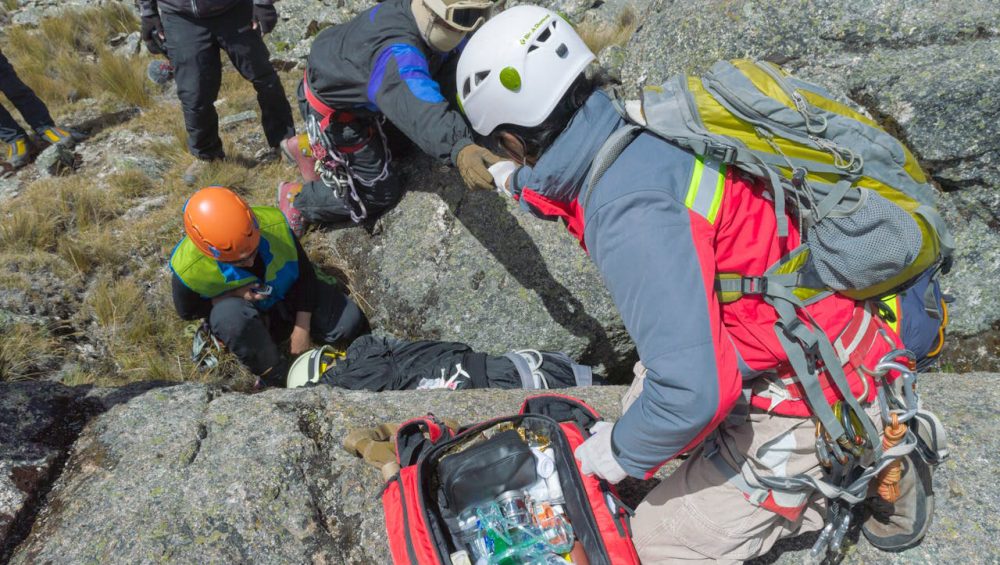
High Altitude Cerebral Edema (HACE) is another severe form of altitude sickness and represents a medical emergency. HACE develops when swelling occurs in the brain due to inadequate oxygen supply at high altitude. Although less common than HAPE, it is extremely dangerous and can progress quickly. Climbers suffering from HACE may become confused, lose coordination, struggle to walk normally, or display unusual behavior. As the condition worsens, it can lead to unconsciousness and death. Immediate evacuation to lower altitude is the only effective treatment, making early recognition essential for survival.
Hypothermia
Many climbers underestimate how cold Kilimanjaro can become, particularly during summit night. Temperatures near the summit frequently drop below freezing, and strong winds can make conditions feel even colder. Climbers who wear inadequate clothing or become wet from rain, snow, or sweat may lose body heat rapidly. This can result in hypothermia, a dangerous condition in which the body’s core temperature falls below normal levels. Severe hypothermia affects physical coordination, decision-making ability, and overall survival. Proper layering systems and high-quality cold-weather gear play a critical role in preventing this risk.
Dehydration
Dehydration contributes to many altitude-related problems on Kilimanjaro and can worsen symptoms of AMS. The mountain’s dry air, physical exertion, and increased breathing rate cause climbers to lose significant amounts of fluid throughout the trek. Because cooler temperatures often reduce feelings of thirst, some climbers fail to drink enough water. Even mild dehydration can lead to headaches, fatigue, dizziness, and reduced physical performance. Most professional guides encourage climbers to drink several liters of water each day to maintain hydration and improve acclimatization.
Pre-Existing Medical Conditions
Certain underlying medical conditions can increase the risks associated with climbing Kilimanjaro. Heart disease, respiratory illnesses, high blood pressure, diabetes, and other chronic health conditions may become more difficult to manage at high altitude. While many people with these conditions successfully summit Kilimanjaro, they should seek medical advice before booking a climb and follow any recommendations provided by their healthcare professionals. Understanding personal health limitations is an important part of preparing for a safe expedition.
Accidents and Falling Rocks
Although altitude illness causes most fatalities on Kilimanjaro, accidents occasionally occur. Slips, falls, and injuries can happen on steep sections of trail, especially during descent when climbers are tired and less focused. Certain parts of the mountain have also experienced rockfall incidents, particularly in areas with unstable volcanic terrain. However, these events remain relatively uncommon compared to altitude-related medical emergencies. Modern route management, professional guiding standards, and improved safety procedures help reduce the likelihood of serious accidents on the mountain.
Overall, altitude sickness remains by far the greatest danger on Mount Kilimanjaro. The majority of serious medical emergencies and fatalities occur when climbers ascend too quickly or ignore warning signs that their bodies are struggling to adapt to high altitude. Choosing a longer route, maintaining proper hydration, and climbing with experienced guides are among the most effective ways to reduce risk and improve safety on Africa’s highest mountain.
At What Altitude Do Most Problems Occur?
Yes most serious health problems on Mount Kilimanjaro occur above 3,500 meters (11,483 feet), where the effects of high altitude become much more noticeable. As climbers gain elevation, the amount of oxygen available in the air decreases significantly. Although the percentage of oxygen remains the same, the lower air pressure means that the body receives less oxygen with each breath. This forces the body to work harder to perform even simple activities such as walking, eating, and sleeping.
Many climbers begin to notice mild altitude-related symptoms between 2,500 and 3,500 meters. However, the risk of developing more serious conditions increases substantially above 4,000 meters (13,123 feet). This is why Kilimanjaro itineraries include gradual ascents and acclimatization hikes designed to help the body adjust to changing altitude conditions. Climbers who ascend too quickly often experience more severe symptoms and face a higher risk of altitude sickness.
Understanding High Altitude Risks
High altitude presents the greatest challenge on Mount Kilimanjaro because the human body requires time to adapt to reduced oxygen levels. As altitude increases, the body responds by increasing breathing and heart rate in an effort to deliver more oxygen to vital organs and muscles. During this adjustment period, many climbers experience headaches, fatigue, shortness of breath, dizziness, and difficulty sleeping.
The risk becomes more serious above 4,500 meters (14,764 feet), where some climbers may develop severe forms of altitude sickness such as High Altitude Pulmonary Edema (HAPE) or High Altitude Cerebral Edema (HACE). Medical studies conducted on Kilimanjaro have shown that many severe altitude-related cases occur between approximately 4,500 and 5,500 meters. This altitude range includes key locations such as Lava Tower, Barafu Camp, Kosovo Camp, School Hut, and the upper sections of the mountain leading toward the summit.
One important fact that many climbers do not realize is that physical fitness alone cannot prevent altitude sickness. Even experienced athletes can develop serious altitude-related complications if their bodies fail to acclimatize properly. This is why experienced guides place such a strong emphasis on climbing slowly, staying hydrated, and monitoring symptoms throughout the expedition.
Why Summit Night Is the Most Difficult Part
Summit night is widely considered the most challenging and demanding stage of the entire Kilimanjaro climb. Most climbers begin their summit attempt around midnight and spend several hours trekking in darkness while temperatures often fall well below freezing. At the same time, they are approaching the highest altitude of the expedition, where oxygen levels are at their lowest.
The combination of extreme altitude, cold temperatures, physical exhaustion, and lack of sleep creates conditions that place significant stress on the body. By summit night, climbers have already spent several days hiking and sleeping at high altitude. Fatigue accumulates, appetite often decreases, and many people struggle to get adequate rest before the final ascent.
Most altitude-related emergencies occur during or shortly after summit night because climbers are operating in the most demanding environment of the entire trek. The section between Barafu Camp and Uhuru Peak is particularly challenging, as trekkers gain substantial elevation while their bodies receive significantly less oxygen than at lower camps. Symptoms that seemed mild at lower altitudes can become much more severe during this stage.
Despite these challenges, thousands of climbers successfully reach Uhuru Peak every year. Proper acclimatization, a well-planned itinerary, experienced guides, and a slow climbing pace greatly improve the chances of a safe and successful summit. For most climbers, summit night represents the toughest part of the journey, but it is also the moment when months of preparation and determination come together on the roof of Africa.
Does Kilimanjaro Have a Death Zone?
No Mount Kilimanjaro does not have a Death Zone. Although Kilimanjaro reaches an impressive height of 5,895 meters (19,341 feet), it remains far below the altitude where mountaineers use the term “Death Zone.” This is one of the reasons why Kilimanjaro is considered significantly safer than many of the world’s highest mountains.
However, the absence of a Death Zone does not mean that Kilimanjaro is free from danger. Climbers still face serious challenges related to altitude, cold temperatures, and physical exhaustion, particularly near the summit. Understanding the difference between high altitude and the Death Zone helps climbers better appreciate both the risks and the relative safety of climbing Africa’s highest mountain.
What Is a Death Zone?
The Death Zone refers to altitudes above 8,000 meters (26,247 feet) above sea level. At this elevation, the air contains so little available oxygen that the human body can no longer acclimatize effectively. Even healthy and experienced climbers begin to deteriorate physically if they remain in the Death Zone for extended periods.
Above 8,000 meters, the body struggles to obtain enough oxygen to support normal functions. Climbers may experience severe fatigue, impaired judgment, loss of coordination, and an increased risk of life-threatening altitude illnesses. Recovery becomes difficult because the body consumes energy faster than it can replace it. For this reason, mountaineers aim to spend as little time as possible in the Death Zone before descending to safer altitudes.
Several famous mountains contain Death Zone elevations, including Everest, K2, Kangchenjunga, Annapurna, and other peaks that exceed 8,000 meters. These mountains present extreme physiological challenges that do not exist on Kilimanjaro.
Why Kilimanjaro Is Different From Everest
The most obvious difference betweenKilimanjaro and Everest is altitude. Mount Everest rises to 8,849 meters (29,032 feet), placing a significant portion of the mountain inside the Death Zone. In contrast, Kilimanjaro’s summit stands at 5,895 meters (19,341 feet), nearly 3,000 meters lower than Everest’s peak.
Because Kilimanjaro remains below the Death Zone threshold, climbers do not face the same extreme oxygen deprivation experienced on Everest. They also do not require supplemental oxygen under normal circumstances. While oxygen levels on Kilimanjaro are much lower than at sea level, the body can still acclimatize when given enough time through a gradual ascent.
Another major difference is the nature of the climb itself. Everest requires technical mountaineering skills, specialized equipment, fixed ropes, ice climbing techniques, and extensive high-altitude experience. Climbers must navigate dangerous hazards such as crevasses, avalanches, icefalls, and severe storms. Kilimanjaro, on the other hand, is primarily a trekking mountain. Most climbers reach the summit by walking rather than technical climbing.
Although Kilimanjaro does not have a Death Zone, climbers should never underestimate the effects of altitude. The summit still reaches an extreme elevation where oxygen levels are significantly lower than at sea level. This is why altitude sickness remains the leading health risk on the mountain. Proper acclimatization, adequate hydration, and a carefully planned itinerary remain essential for a safe and successful climb.
In simple terms, Kilimanjaro does not have a Death Zone like Everest, but it still demands respect. The mountain’s altitude presents real challenges, yet with proper preparation and guidance, most climbers can safely experience the unforgettable achievement of standing on the highest point in Africa.
Notable Death Cases on Mount Kilimanjaro
Although Mount Kilimanjaro has a relatively low mortality rate compared to many famous mountains around the world, several tragic incidents over the years have attracted international attention. These cases highlight the different risks that climbers can face, ranging from altitude sickness and extreme weather to falling rocks and unexpected accidents.
It is important to remember that these incidents are rare when compared to the tens of thousands of people who successfully climb Kilimanjaro each year. However, they provide valuable lessons about the importance of preparation, safety procedures, and respecting the mountain’s unique challenges.
Famous Incidents and Accidents
One of the most widely reported fatalities involved Scott Dinsmore, an American entrepreneur, motivational speaker, and founder of Live Your Legend. In 2015, Dinsmore was climbing Kilimanjaro as part of a global journey with his wife when a falling rock struck him near the summit. Despite being close to reaching Uhuru Peak, he died from his injuries. His death demonstrated that, although uncommon, natural hazards such as rockfall can occur even on non-technical trekking routes.
Another well-known case involved Ian McKeever, an experienced Irish mountaineer and adventure leader who had successfully guided numerous Kilimanjaro expeditions. In 2013, McKeever died after a lightning strike near Lava Tower during adverse weather conditions. The incident shocked the climbing community because it involved a highly experienced mountain professional rather than an inexperienced trekker.
Several climbers have also died from altitude-related illnesses despite reaching or approaching the summit. In recent years, news reports have documented cases involving trekkers who developed severe altitude sickness, including High Altitude Pulmonary Edema (HAPE) and High Altitude Cerebral Edema (HACE). These cases reinforce the fact that altitude remains the mountain’s most significant health risk.
One of the most tragic events in Kilimanjaro’s history occurred in 2006 at Arrow Glacier Camp near the Western Breach route. During the night, a rockfall struck the campsite and killed several climbers. Following the accident, authorities temporarily closed the route while safety assessments were conducted. Although the Western Breach later reopened under specific conditions, the event remains one of the most significant accidents ever recorded on the mountain.
Kilimanjaro’s history also includes several aviation accidents involving aircraft that crashed on or near the mountain. While these incidents did not involve climbers, they contributed to the mountain’s broader history of fatalities and demonstrate how rapidly changing weather and challenging terrain can affect activities around Kilimanjaro.
What Climbers Can Learn From These Cases
The most important lesson from notable Kilimanjaro fatalities is that preparation and decision-making matter. Many serious incidents occur when climbers underestimate the effects of altitude, ignore symptoms of illness, or push beyond their physical limits in an effort to reach the summit.
These cases also show the importance of choosing a reputable operator with experienced guides who conduct regular health checks and follow strict safety procedures. Professional guides play a critical role in identifying early signs of altitude sickness and making difficult decisions when a climber needs to descend.
Another key lesson is that success on Kilimanjaro should never come before safety. Reaching Uhuru Peak is an incredible achievement, but no summit is worth risking your life. Climbers who listen to their guides, follow acclimatization schedules, stay hydrated, and respect changing mountain conditions significantly improve their chances of having a safe and successful expedition.
While stories of fatalities can sound alarming, they represent a very small fraction of all Kilimanjaro climbs. Every year, thousands of trekkers safely reach the summit and return home with life-changing memories. By learning from past incidents and following established safety practices, climbers can greatly reduce risks and enjoy one of the world’s most rewarding trekking experiences.
Who Is Most at Risk on Kilimanjaro?
Mount Kilimanjaro welcomes a very wide range of climbers, from first-time trekkers to experienced hikers in their 60s and beyond. While most people complete the climb safely, certain groups face a higher risk of developing altitude-related illnesses or experiencing difficulties during the ascent. The key risk factor is not age or fitness alone, but how the body responds to high altitude and how quickly the climb is undertaken.
Older Climbers
Older climbers can successfully reach the summit of Kilimanjaro, and many do every year. However, age can sometimes increase vulnerability to altitude-related conditions, especially if there are underlying health issues such as heart or lung conditions. As the body ages, it may take longer to adapt to reduced oxygen levels, and recovery from physical exertion can also be slower.
That said, age itself is not a barrier. Many older trekkers perform extremely well on Kilimanjaro when they choose longer routes, climb at a steady pace, and receive proper medical clearance before the expedition. Experience, discipline, and careful pacing often matter more than age alone.
Fast Ascenders
Fast ascenders represent one of the highest-risk groups on Kilimanjaro. The mountain requires gradual acclimatization, but some itineraries attempt to reach high altitudes too quickly. When climbers ascend faster than their bodies can adjust, the risk of Acute Mountain Sickness (AMS) and more severe conditions such as HAPE or HACE increases significantly.
Climbers who rush the ascent often experience stronger symptoms, especially above 3,000–4,000 meters. Short itineraries of five or six days are particularly associated with higher altitude illness rates. In contrast, longer routes that allow gradual elevation gain give the body more time to adapt and greatly improve safety.
Climbers With Medical Conditions
People with pre-existing medical conditions can climb Kilimanjaro, but they must take extra precautions. Conditions such as heart disease, high blood pressure, asthma, or chronic lung issues may become more challenging at high altitude due to reduced oxygen levels and increased physical stress.
In many cases, climbers with stable conditions successfully complete the trek after receiving medical advice and choosing appropriate routes. However, ignoring medical risks or failing to seek professional clearance can increase the likelihood of complications on the mountain. Proper planning and honest health assessment are essential before attempting the climb.
Inexperienced Trekkers
Inexperienced trekkers are not automatically at high risk, but lack of mountain experience can make the climb more challenging. Many first-time climbers are unfamiliar with how altitude affects the body, how to pace themselves, or how to recognize early symptoms of altitude sickness.
Without this awareness, some trekkers may push too hard, ignore warning signs, or underestimate the importance of hydration and rest. However, Kilimanjaro remains a trekking mountain, and most beginners successfully reach the summit when guided by experienced professionals and supported by a well-structured itinerary.
Good guides play a crucial role in supporting inexperienced climbers by setting a safe pace, monitoring health, and making decisions that prioritize safety over speed.
The Most Important Factor: How You Climb
While certain groups may have higher risk levels, the most important factor on Kilimanjaro is not who you are, but how you climb. A slow, well-planned ascent, proper hydration, good nutrition, and attentive guiding reduce risk significantly for all climbers.
In many cases, a fit and young climber who ascends too quickly is at higher risk than an older but well-prepared climber on a longer route. This is why Kilimanjaro success depends less on background and more on preparation, pacing, and respect for altitude.
How to Stay Safe on Mount Kilimanjaro
Climbing Mount Kilimanjaro is a rewarding experience, but safety depends heavily on how well climbers prepare and how they behave during the trek. Most risks on the mountain are preventable when climbers follow proper acclimatization practices, stay hydrated, and respect the advice of professional guides. Safety is not about fitness alone—it is about pacing, awareness, and making the right decisions throughout the journey.
Choose a Longer Route
One of the most effective ways to stay safe on Kilimanjaro is to choose a longer itinerary. Routes that take seven to nine days give the body more time to adjust to increasing altitude, which significantly reduces the risk of altitude sickness. Shorter climbs may seem appealing, but they force the body to ascend too quickly, increasing the likelihood of AMS, HAPE, and HACE. Longer routes may require more time and budget, but they greatly improve both safety and summit success rates.
Climb Pole Pole (Slowly)
The Swahili phrase “pole pole,” meaning “slowly, slowly,” is one of the most important rules on Kilimanjaro. Walking at a slow, steady pace allows the body to conserve energy and adapt gradually to lower oxygen levels. Climbers who rush often become exhausted faster and are more likely to develop altitude symptoms. A controlled pace is not a sign of weakness it is a proven strategy used by experienced guides to help climbers reach the summit safely.
Drink Enough Water
Hydration plays a major role in preventing altitude-related problems. At high elevation, the body loses water faster due to increased breathing rate and dry mountain air. Many climbers underestimate how much they need to drink because cold temperatures reduce the feeling of thirst. However, dehydration can worsen symptoms of altitude sickness and reduce physical performance. Drinking regularly throughout the day helps the body function properly and supports acclimatization.
Eat Properly During the Trek
Proper nutrition is essential for maintaining energy during the climb. As altitude increases, appetite often decreases, but the body still requires fuel to function effectively. Eating balanced meals provided by the trekking team helps maintain strength and endurance. Skipping meals or eating too little can lead to fatigue, weakness, and reduced ability to cope with altitude stress. Even when appetite is low, small consistent meals are important for safety and performance.
Dress for Extreme Temperature Changes
Kilimanjaro has multiple climate zones, ranging from warm rainforest to freezing summit conditions. Temperatures can change dramatically within a single day, especially during summit night. Wearing proper layered clothing helps climbers adjust to these changes and prevents hypothermia or overheating. A good clothing system typically includes base layers, insulating layers, and a waterproof outer shell. Proper gear ensures the body remains warm and dry in all conditions.
Listen to Your Guides
Experienced guides are one of the most important safety factors on Kilimanjaro. They monitor climbers daily, check for symptoms of altitude sickness, and make critical decisions about pace, rest, or descent. Many serious problems on the mountain can be prevented when climbers follow guide instructions without hesitation. Ignoring symptoms or pushing beyond recommended limits can quickly turn mild altitude issues into dangerous situations. Trusting and communicating with guides is essential for a safe and successful climb.
Overall, staying safe on Kilimanjaro comes down to preparation, patience, and discipline. Climbers who follow these basic principles significantly increase their chances of reaching Uhuru Peak safely while enjoying the journey to the roof of Africa.
How Tour Operators Improve Climber Safety
Tour operators play a central role in keeping climbers safe on Mount Kilimanjaro. While the mountain itself presents natural risks such as altitude sickness and harsh weather, most serious emergencies are managed or prevented entirely by professional guiding teams. A well-organized operator does far more than lead the route; they actively monitor health, respond to symptoms early, and coordinate emergency procedures when needed.
Medical Checks on the Mountain
Reputable Kilimanjaro tour operators carry out regular medical checks throughout the climb. Guides typically monitor climbers at least once or twice a day, especially during higher altitude stages where risks increase. These checks focus on key indicators such as heart rate, oxygen saturation levels, fatigue, headache severity, and general physical condition.
By tracking these signs daily, guides can detect early symptoms of altitude sickness before they become serious. This early intervention is one of the most important factors in preventing emergencies, because altitude-related conditions often worsen quickly if ignored. Regular monitoring ensures that climbers receive advice early, whether that means slowing down, resting longer, or descending to a lower camp.
Emergency Oxygen
Many professional operators carry emergency oxygen systems as part of their safety equipment. Oxygen is not used as a standard climbing aid on Kilimanjaro, but it becomes extremely important in emergency situations where a climber shows signs of severe altitude sickness or sudden health deterioration.
Emergency oxygen can help stabilize a climber temporarily while evacuation is being arranged. It does not replace descent, but it can reduce symptoms and improve survival chances during critical moments. Having oxygen available on the mountain provides an additional layer of safety, especially in remote high-altitude sections where immediate medical facilities are not accessible.
Wilderness First Aid Training
Experienced Kilimanjaro guides are trained in wilderness first aid, which prepares them to respond effectively in remote environments where hospitals are far away. This training includes recognizing altitude-related illnesses, treating injuries, managing hypothermia, and stabilizing patients until evacuation is possible.
Because Kilimanjaro has limited infrastructure beyond designated camps, this type of training is essential. Guides must often make fast decisions in challenging conditions, and their ability to correctly assess symptoms can significantly influence outcomes. Well-trained guides are often the difference between a manageable situation and a medical emergency.
Emergency Evacuation Procedures
Evacuation systems are a critical part of safety management on Kilimanjaro. When a climber becomes seriously ill or injured, tour operators coordinate immediate descent to a lower altitude, where oxygen levels are higher and symptoms often improve. In severe cases, stretcher evacuation may be used to transport climbers down the mountain safely.
Some operators also coordinate helicopter evacuations when conditions require faster medical access. These procedures depend on weather, location, and severity of the condition, but the goal is always the same: move the climber to a safer environment as quickly as possible.
Efficient evacuation planning is one of the strongest safety advantages of climbing with a professional operator. Without proper support, it would be extremely difficult to manage emergencies in Kilimanjaro’s remote high-altitude terrain.
Why Professional Support Matters Most
Although Kilimanjaro is a non-technical trekking mountain, altitude makes it unpredictable. Even strong and healthy climbers can develop sudden symptoms. For this reason, tour operators act as both guides and safety managers throughout the expedition.
A well-organized team significantly reduces risk through monitoring, early intervention, medical preparedness, and structured evacuation systems. In most cases, climbers who follow their guides closely and climb with reputable operators have a much higher chance of both reaching the summit and returning safely.
Safest Routes for Climbing Kilimanjaro
All standard routes on Mount Kilimanjaro are considered safe when climbers follow proper acclimatization rules and climb with experienced guides. However, some routes provide better safety conditions than others because they allow slower ascents, longer itineraries, and more gradual altitude gain. In general, the safest routes are those that give the body more time to adapt to high altitude, which reduces the risk of altitude sickness.
Lemosho Route
The Lemosho Route is widely regarded as one of the safest and most scenic routes on Kilimanjaro. It begins on the western side of the mountain and offers a longer, more gradual ascent compared to shorter routes. This slow progression allows climbers more time to acclimatize, which significantly lowers the risk of altitude-related illness.
Lemosho also benefits from lower traffic in the early days, which creates a more relaxed hiking experience. Climbers gradually join the Machame route later in the trek, but by that stage, their bodies are already better adjusted to altitude changes. Because of its combination of safety, scenery, and success rate, Lemosho is often recommended for first-time climbers.
Northern Circuit Route
The Northern Circuit Route is considered the safest route on Kilimanjaro due to its long duration and excellent acclimatization profile. It is the longest standard route on the mountain, typically taking 8 to 9 days to complete. This extended itinerary gives climbers the best possible chance for gradual altitude adjustment.
The route circles around the quieter northern slopes of Kilimanjaro, offering a steady and controlled ascent profile. Because climbers spend more time at moderate altitudes before pushing higher, the risk of Acute Mountain Sickness is significantly reduced. The Northern Circuit also has one of the highest summit success rates, making it ideal for climbers who prioritize safety and performance over speed.
Machame Route
The Machame Route is one of the most popular routes on Kilimanjaro and is often called the “Whiskey Route” due to its challenging but rewarding profile. While it is slightly steeper than Lemosho or the Northern Circuit, it remains safe when done over 6 to 7 days with proper acclimatization.
Machame includes important acclimatization features such as the “climb high, sleep low” strategy, which helps the body adjust more effectively to altitude changes. However, because it is more physically demanding and attracts a large number of climbers, proper pacing is essential. When rushed, this route can increase the risk of altitude sickness.
Rongai Route
The Rongai Route approaches Kilimanjaro from the northern side, near the Kenya border. It is considered one of the drier and more stable routes in terms of weather conditions, which can improve safety during certain seasons. Rongai also tends to be less crowded, creating a quieter and more controlled trekking environment.
Although the ascent is slightly faster in some sections, the route is still considered relatively safe, especially when combined with a 6 to 7-day itinerary. It is often recommended during the rainy season because the northern slopes receive less precipitation, reducing risks related to slippery trails and poor visibility.
Which Route Is the Safest?
Among all routes, the Northern Circuit is generally considered the safest due to its long duration and excellent acclimatization profile. However, Lemosho is a close second and is often preferred for its balance of scenery, comfort, and safety.
Ultimately, safety on Kilimanjaro depends less on the route alone and more on how the climb is managed. A slower pace, proper hydration, good nutrition, and experienced guiding make any route significantly safer and increase the chances of reaching Uhuru Peak successfully.
Can Beginners Climb Kilimanjaro Safely?
Yes – beginners can safely climb Mount Kilimanjaro, and many successful summits each year are achieved by first-time high-altitude trekkers. Unlike technical peaks that require ropes or climbing experience, Kilimanjaro is primarily a trekking mountain. This means that with the right preparation, guidance, and pacing, most healthy beginners can reach the summit without needing prior mountaineering skills.
However, safety for beginners depends less on experience and more on preparation, physical readiness, and respect for altitude. The mountain is physically demanding and exposes climbers to high elevation conditions that the body must gradually adapt to. For this reason, beginners who follow proper guidelines often perform better than experienced hikers who underestimate altitude.
Fitness Requirements
Climbing Kilimanjaro does not require elite athletic fitness, but a basic level of cardiovascular endurance and stamina is important. Beginners should be able to walk for several hours a day on uneven terrain while carrying a light daypack. Activities such as hiking, jogging, cycling, or long-distance walking in the weeks leading up to the climb can significantly improve comfort and performance on the mountain.
It is important to understand that Kilimanjaro is not a race. Even physically strong individuals can struggle if they climb too fast or ignore rest periods. A steady pace, combined with endurance fitness, is more valuable than intense training or peak athletic ability. Many beginners successfully reach the summit because they follow a slow and controlled approach rather than relying purely on strength.
Mental Preparation
Mental preparation plays a major role in a beginner’s success on Kilimanjaro. The climb is long, repetitive, and sometimes uncomfortable due to cold temperatures, altitude effects, and limited sleep. Beginners often underestimate the psychological challenge of waking up early, hiking for many hours, and continuing even when tired or cold.
A strong mindset helps climbers stay consistent during difficult moments, especially on summit night when fatigue and altitude effects are strongest. Understanding that discomfort is normal and temporary helps beginners stay focused and motivated. Many climbers find that mental resilience becomes just as important as physical fitness during the final stages of the ascent.
Importance of Acclimatization
Acclimatization is the most important factor for beginner safety on Kilimanjaro. The human body needs time to adjust to reduced oxygen levels at higher altitudes, and this process cannot be rushed. Beginners who choose longer routes with gradual elevation gain significantly reduce their risk of altitude sickness.
Proper acclimatization allows the body to adapt by producing more red blood cells and improving oxygen efficiency. Without this adjustment period, climbers are more likely to develop symptoms such as headaches, nausea, and fatigue, which can escalate into serious conditions if ignored.
Experienced guides manage acclimatization by controlling ascent speed, encouraging hydration, and monitoring health throughout the trek. This support system is especially important for beginners, as it ensures early detection of altitude-related issues and safe decision-making during the climb.
Overall, beginners can climb Kilimanjaro safely when they prepare properly, choose the right route, and follow professional guidance. With patience and respect for altitude, even first-time climbers have a strong chance of reaching Uhuru Peak successfully.
Final Verdict: Is Climbing Kilimanjaro Worth the Risk?
Climbing Mount Kilimanjaro is often described as a once-in-a-lifetime adventure, but like any high-altitude expedition, it comes with real risks. The key question most people ask is whether those risks are worth it. When you look at the data, safety systems, and success rates, the answer becomes clearer: Kilimanjaro is challenging, but it is also one of the safest high mountains in the world when climbed correctly.
Balanced Conclusion
Kilimanjaro does involve risks, mainly from altitude-related illnesses such as AMS, HAPE, and HACE. However, the mountain does not require technical climbing skills, and most of the dangers are manageable with proper preparation and guidance. Thousands of climbers reach the summit every year, and the vast majority return safely. The difference between a difficult experience and a dangerous one usually comes down to pacing, acclimatization, and the quality of the guiding team.
In simple terms, Kilimanjaro is not a “dangerous climbing mountain” in the traditional sense. Instead, it is a high-altitude endurance challenge where the body must adapt gradually. When climbers respect the mountain, the risk remains low and manageable.
Statistics in Context
Available reports and field observations suggest that roughly 50,000 to 75,000 people attempt Kilimanjaro each year. Estimates of fatalities vary, but most sources place the number between 3 and 10 climbers per year, with additional cases sometimes unreported or evacuated.
This means the mortality rate is extremely low compared to many other high-altitude mountains. In context, more climbers successfully summit Kilimanjaro in a single week than serious incidents reported in an entire year. While every fatality is tragic, the overall probability of a life-threatening event remains very small when proper procedures are followed.
It is also important to understand that most emergencies are preventable. The majority of serious cases are linked to fast ascents, poor acclimatization, dehydration, or ignoring early warning signs of altitude sickness.
Safety Recommendations
Climbers significantly reduce risk by following a few key principles. Choosing a longer route (such as 7-9 days) allows the body to adapt gradually to altitude. Maintaining a slow pace, often described as “pole pole,” helps prevent unnecessary physical stress. Drinking enough water, eating regularly, and wearing proper cold-weather gear also play an essential role in maintaining health on the mountain.
Equally important is selecting a reputable and licensed tour operator. Professional guides monitor climbers daily, recognize early symptoms of altitude sickness, and make critical decisions about rest or descent. Their role is often the most important safety factor on the entire expedition.
Reassurance for Climbers
Despite the risks, Kilimanjaro remains one of the most achievable high-altitude summits in the world. It offers a rare combination of accessibility, natural beauty, and personal challenge without requiring technical climbing experience. For many people, reaching Uhuru Peak is not only a physical achievement but also a deeply personal milestone.
With proper preparation, realistic expectations, and a responsible guiding team, the climb is safe for most healthy individuals. The risks exist, but they are well understood and manageable. For the vast majority of climbers, Kilimanjaro is not just worth the risk it is one of the most rewarding journeys they will ever undertake.
Introduction: What It Feels Like to Stand on the Summit of Kilimanjaro
Estimated reading time: 14 minutes
Standing on the summit of Mount Kilimanjaro is one of the most powerful and emotional moments a climber can ever experience. It is not just about reaching the highest point in Africa it is about everything your body and mind go through to get there. At the very top, when you finally see the “Uhuru Peak” sign, many climbers feel a mix of exhaustion, relief, happiness, and even tears. It feels like time stops for a moment, and every step you took up the mountain suddenly becomes worth it.
But this feeling does not happen instantly. It is the result of a long and challenging journey that starts long before you reach the summit. First comes training, where you prepare your body for long walking days, steep paths, and changing weather conditions. Without proper preparation, the climb becomes much harder, especially when altitude starts to affect your energy.
After training, the real adventure begins as you move through different trekking zones. You pass from rainforest to moorland, then to alpine desert, where the landscape becomes colder, drier, and more extreme. Each zone feels like a different world, slowly guiding you closer to the top of the mountain.
One of the most exciting and challenging parts of the climb is the Barranco Wall, a steep but rewarding section that tests your confidence and balance. It is not technical climbing, but it feels like a big achievement once you reach the top.
Finally comes the summitattempt, usually starting at night. In freezing temperatures and darkness, you take slow steps toward Uhuru Peak. This is where mental strength becomes more important than physical strength. And when you finally arrive at the summit, all the struggle turns into pure emotion and unforgettable achievement.
Before climbing Mount Kilimanjaro, training is one of the most important steps that helps you prepare your body and mind for the journey ahead. The climb is not a technical mountaineering expedition, but it is still physically demanding because of long trekking days, changing weather, and high altitude. Good preparation makes the experience safer, more enjoyable, and increases your chances of reaching the summit successfully.
Physical preparation builds endurance
Physical training is all about building endurance so your body can handle several hours of walking each day. On Kilimanjaro, you may walk for 5 to 8 hours daily, sometimes even longer depending on the route. Because of this, your legs, lungs, and overall stamina need to be ready.
Endurance training does not require advanced fitness levels or professional athletic ability. Instead, it focuses on gradually improving your ability to walk longer distances without becoming too tired. The more consistent your preparation is, the more comfortable you will feel during the actual climb. This helps reduce fatigue and allows you to enjoy the journey instead of struggling with every step.
Walking, stairs, and stamina training
One of the simplest and most effective ways to prepare is regular walking. Long walks, especially on uneven paths or small hills, help your body get used to trekking conditions. Stair climbing is also very helpful because it strengthens your legs and simulates the uphill sections of the mountain.
Some climbers also include light jogging or hiking with a backpack to build strength and balance. Carrying a small weight while training helps simulate the real experience on the mountain, where you will carry a daypack. The goal is not to become extremely fit, but to build steady stamina so your body can adapt gradually to long days of movement.
Mental preparation is equally important
While physical training prepares your body, mental preparation prepares your mindset. Climbing Kilimanjaro is a journey of patience, especially when altitude makes you feel slower or more tired than usual. Understanding this in advance helps you stay calm during difficult moments.
A positive mindset is very important because the mountain challenges everyone differently. Some days may feel easy, while others may feel very demanding. Being mentally prepared helps you accept these changes without frustration. It also helps you trust your guides, follow the “pole pole” (slowly, slowly) pace, and stay focused on your goal.
Entering the High Altitude Zone (Alpine Desert Feel)
As climbers continue their journey up Mount Kilimanjaro, one of the most noticeable changes is entering the high altitude zone, often called the alpine desert. This stage of the mountain feels very different from the lower forests and green landscapes seen earlier in the climb. The environment becomes more extreme, the air feels lighter, and the body begins to react more strongly to the altitude. For many trekkers, this is the moment when they truly start to feel they are high above the ground.
Oxygen becomes thinner
As altitude increases, the amount of oxygen in the air gradually decreases. This is one of the most important changes climbers experience. Breathing may start to feel slightly harder, especially during uphill sections. Even simple walking can require more effort than before.
This does not mean something is wrong it is a natural response to high altitude. The body is simply adjusting to lower oxygen levels. That is why climbers are always encouraged to move slowly, take regular breaks, and drink enough water. When the body is given time to adapt, it becomes easier to continue the climb safely and steadily.
Landscape becomes dry and cold
In the alpine desert zone, the scenery changes dramatically. Trees become very rare, and the environment turns dry, rocky, and open. The air feels colder, especially in the mornings and evenings, even though the sun may still be strong during the day.
This unique landscape can feel both beautiful and challenging at the same time. There is less vegetation, fewer natural shelters, and stronger winds in some areas. Because of this, climbers need proper clothing to stay warm and comfortable throughout the day. The contrast between hot sunlight and cold wind makes this zone feel like a completely different world compared to the lower rainforest.
Body starts to slow down
At this stage of the climb, many trekkers notice that their body naturally slows down. Steps become more deliberate, breathing becomes deeper, and energy levels may drop more quickly. This is a normal part of high-altitude trekking and happens to almost everyone, even experienced climbers.
The key is not to fight this feeling but to accept it and adjust your pace. Walking slowly, resting when needed, and listening to your body are very important. This helps prevent exhaustion and supports better acclimatization.
Barranco Wall Challenge
One of the most memorable and exciting sections during the climb of Mount Kilimanjaro is the Barranco Wall. This famous part of the route is often called the “Breakfast Wall” because many climbers start tackling it soon after their morning meal. Even though it looks steep and intimidating from a distance, it is one of the most rewarding experiences on the mountain and a moment that many trekkers remember for a long time.
The famous “Breakfast Wall” climb
The Barranco Wall is well-known among climbers as a fun yet challenging section of the journey. From below, it appears like a huge rocky wall rising sharply into the sky. Many first-time climbers may feel nervous when they see it, but once they start climbing, they quickly realize that it is manageable with the right pace and guidance.
The climb involves moving slowly, carefully, and using both hands and feet at times. Guides often encourage climbers with positive support, helping everyone feel safe and confident. Despite its dramatic appearance, the wall is not about speed or strength-it is about steady movement and trust in the process.
Steep but safe scrambling section
Although the Barranco Wall looks very steep, it is considered a non-technical scrambling section, which means no ropes or special climbing equipment are required. Climbers simply use natural rock steps and handholds to move upward.
Safety is always a priority, and guides are experienced in helping climbers choose the best paths. The key is to move carefully, follow instructions, and take your time. Many trekkers are surprised at how enjoyable it becomes once they settle into a rhythm. The sense of achievement after reaching the top is very rewarding.
Confidence booster for climbers
The Barranco Wall is more than just a physical challenge-it is also a big confidence booster. After completing it, many climbers feel more capable and ready for the rest of the journey. It shows that they can handle difficult sections of the mountain with patience and focus.
For many, this moment builds trust in their ability to reach higher sections of Kilimanjaro. It becomes a turning point in the climb where fear turns into motivation, and hesitation turns into confidence.
Final Summit Attempt (Night Climb)
The final summit attempt on Mount Kilimanjaro is the most demanding and emotional part of the entire journey. This is the moment when climbers leave camp in the middle of the night and begin their slow, steady push toward Uhuru Peak. It is a section where physical strength, mental focus, and determination all come together. Even experienced climbers find this stage extremely challenging because of the cold, darkness, and high altitude conditions.
Start around midnight in cold darkness
The summit attempt usually begins around midnight when the mountain is completely dark and temperatures are at their lowest. Climbers wake up, dress in multiple warm layers, and start walking under a sky full of stars. There is no sunlight, only headlamps lighting the narrow trail ahead.
This early start is carefully planned so that climbers can reach the summit around sunrise. Although the conditions feel harsh, the quiet and darkness also create a unique atmosphere. Each step feels slow and focused, and climbers often walk in silence, concentrating only on their breathing and movement.
Low oxygen and slow movement
As climbers go higher, oxygen levels become even lower, making this section physically demanding. Every step requires more effort, and breathing becomes deeper and more controlled. This is where the “pole pole” (slowly, slowly) approach becomes extremely important.
Walking slowly is not optional it is necessary for conserving energy and allowing the body to cope with altitude. Many climbers describe this part as feeling like a long, endless uphill walk, where progress is slow but steady. Rest breaks become more frequent, and hydration is essential to maintain strength.
Mental strength becomes everything
At this stage, mental strength becomes more important than physical ability. Fatigue, cold temperatures, and altitude can make climbers feel exhausted, but staying focused and determined helps them continue forward.
Positive thinking, trust in the guides, and motivation from the goal ahead all play a big role. Many climbers remind themselves why they started the journey in the first place. Step by step, they move closer to the summit, proving that patience and resilience are key to success.
Reaching Uhuru Peak (The Summit Moment)
Reaching Uhuru Peak on Mount Kilimanjaro is the moment every climber dreams of, but few fully understand until they experience it. After hours of slow, exhausting night climbing, the final steps suddenly feel different. The air is thin, the body is tired, and yet there is a powerful feeling of excitement growing inside. This is the summit moment where every challenge of the journey comes together into one unforgettable achievement.
Emotional achievement
When climbers finally see the “Uhuru Peak” sign, emotions often take over. Many feel a mix of joy, relief, pride, and disbelief. Some smile, some cry, and others simply stand in silence trying to absorb the moment. It is not just about reaching the top of Africa; it is about proving to yourself that you can overcome physical and mental limits. Every step taken during training, trekking, and summit night suddenly feels worth it.
Sunrise above the clouds
One of the most magical parts of reaching the summit is witnessing the sunrise above the clouds. As the first light of the day appears, the sky slowly changes colors, and the world below is covered in a sea of white clouds. Standing at this height feels like being above everything, as if the mountain has lifted you into another world.
This view is often described as one of the most beautiful sights in Africa. The cold air, golden light, and silence together create a peaceful and unforgettable atmosphere. It is a moment that stays in memory forever.
Realization of personal strength
At the summit, many climbers realize something very important they are stronger than they thought. The journey shows that patience, discipline, and determination can overcome even the hardest challenges. Reaching Uhuru Peak is not only a physical achievement but also a deep personal victory.
This realization often stays with climbers long after they leave the mountain. It becomes a reminder that with the right mindset, preparation, and support, difficult goals in life are always possible.
Why This Journey Changes Every Climber
Climbing Mount Kilimanjaro is not just a physical adventure it is a life experience that transforms every climber in a unique way. Whether it is your first time or a return journey, the mountain challenges your body, tests your mindset, and teaches important lessons about patience, endurance, and self-belief. After completing the climb, many people return home with a completely new perspective on what they are capable of achieving.
Physical mental transformation
The journey up Kilimanjaro affects both the body and the mind. Physically, climbers become stronger through long trekking days, high altitude walking, and challenging summit night conditions. The body learns to adapt to less oxygen and continues moving step by step even when tired.
Mentally, the transformation is even deeper. Climbers develop patience, discipline, and resilience. They learn to slow down, focus on the present moment, and trust the process instead of rushing. Challenges such as altitude, cold weather, and exhaustion teach important lessons about staying calm under pressure. This combination of physical effort and mental strength creates a powerful personal change that lasts long after the climb ends.
Memory that lasts forever
One of the most beautiful parts of the Kilimanjaro experience is that it creates memories that stay for a lifetime. From walking through different ecological zones to reaching the summit, every stage of the journey becomes a story worth remembering. The friendships formed with guides and fellow climbers, the quiet moments on the trail, and the emotional summit experience all become part of a personal achievement that cannot be forgotten.
Many climbers find themselves thinking back to the journey years later, remembering how they felt during difficult moments and how they overcame them step by step.
Respect for the mountain
After completing the climb, most people develop a deep respect for Mount Kilimanjaro. The mountain is not just a destination it is a powerful natural environment that demands preparation, humility, and awareness. Climbers realize that success is not only about reaching the top but also about respecting the conditions, listening to guides, and moving with patience.
This respect stays with climbers and often changes how they approach other challenges in life. Kilimanjaro becomes more than a mountain it becomes a lesson in discipline, endurance, and respect for nature.
FAQ – Climbing Mount Kilimanjaro
How hard is it to climb Mount Kilimanjaro?
Climbing Mount Kilimanjaro is challenging but not technical. It does not require ropes or climbing experience, but it needs good fitness, mental strength, and proper acclimatization. The biggest difficulty is high altitude, not climbing skills.
Do I need experience to climb Kilimanjaro?
No, you do not need mountaineering experience. Most climbers are beginners. However, basic fitness and preparation like walking, hiking, or stair training will make the journey much easier and more enjoyable.
What is the hardest part of Kilimanjaro?
The hardest part for most climbers is summit night. It involves climbing in cold temperatures, darkness, and low oxygen levels. This section requires strong mental focus, patience, and a slow pace.
How long does it take to reach Uhuru Peak?
Most routes take between 6 to 9 days depending on the itinerary. Longer routes give better acclimatization and higher summit success rates.
What is the best route to climb Kilimanjaro?
Popular and successful routes include Machame and Lemosho. These routes are preferred because they offer better acclimatization and scenic views, increasing the chances of reaching the summit safely.
Why is altitude so important on Kilimanjaro?
Altitude affects oxygen levels. As you go higher, oxygen becomes lower, which can cause tiredness, headache, and slow movement. Proper acclimatization and a slow pace help the body adjust safely.
Why choose WeWild Travel for Kilimanjaro?
With WeWild Travel, climbers get experienced guides, proper safety support, and well-planned itineraries. This increases comfort, safety, and summit success rates while ensuring a well-organized trekking experience.
Final Thought
The journey up Mount Kilimanjaro is often more meaningful than the summit itself. While reaching Uhuru Peak is an incredible achievement, the real value of the experience comes from everything that happens along the way. Every step, every challenge, and every moment of doubt contributes to a deeper understanding of your own strength and resilience.
Each stage of the climb builds something important. Training prepares your body, trekking through different zones builds endurance, the Barranco Wall builds confidence, and the summit attempt builds mental strength. By the time you reach the top, you are not the same person who started the journey you are stronger, more patient, and more aware of what you are capable of achieving.
This is why climbing Kilimanjaro is not just about reaching a destination. It is about personal growth, discipline, and learning to move forward even when conditions are difficult. The mountain teaches you to slow down, stay focused, and trust the process step by step.
To every climber preparing for this adventure, the message is simple: believe in your journey, prepare well, and respect the mountain. With the right mindset and support, this experience can become one of the most life-changing moments of your life.
How to Climb Mount Kilimanjaro : (2026 Complete Expert Guide)
Estimated reading time: 18 minutes
How to climb Mount Kilimanjaro starts with choosing the right route, preparing your body, and allowing enough time to acclimatize. You do not need technical climbing skills to reach the summit, but you do need proper planning, good fitness, and the right equipment. A slow pace and an experienced guide also play a major role in a successful climb.
Every year, thousands of people climb Mount Kilimanjaro, Africa’s highest mountain, and many are first-time trekkers. Success depends on preparation rather than speed or strength. Choosing a longer route, training before your trip, packing the right gear, and understanding altitude sickness can greatly improve your chances of reaching Uhuru Peak.
This guide explains how to climb Mount Kilimanjaro step by step. You will learn how to prepare, choose the best route, train for the climb, pack essential gear, manage altitude, and increase your summit success.
Many people climb Mount Kilimanjaro because it offers the chance to stand on Africa’s highest peak without using technical climbing skills. The mountain combines breathtaking scenery, diverse landscapes, and the challenge of reaching Uhuru Peak at 5,895 meters (19,341 feet). For many climbers, reaching the summit is a personal achievement that creates lifelong memories.
Reach the Roof of Africa
Standing on Uhuru Peak marks a major milestone for many adventurers. At 5,895 meters, it is the highest point in Africa. Reaching the summit rewards you with spectacular sunrise views and a strong sense of accomplishment.
Experience Five Climate Zones
Mount Kilimanjaro takes you through five unique climate zones in just a few days. You begin in lush rainforest and continue through heathland, moorland, alpine desert, and the Arctic summit. Few mountains in the world offer such diverse scenery on a single trek.
No Technical Climbing Skills Required
Unlike many famous mountains, Mount Kilimanjaro does not require ropes, ice axes, or rock climbing experience. Anyone with good preparation, determination, and a licensed guide can attempt the climb. This makes Kilimanjaro one of the world’s most popular high-altitude trekking destinations.
Challenge Yourself and Create Lasting Memories
Climbing Kilimanjaro tests your physical and mental strength. Every step brings you closer to a goal that many people only dream about. The journey, the friendships you build, and the moment you reach the summit create memories that last a lifetime.
Kilimanjaro Routes Overview
Mount Kilimanjaro offers several different routes to the summit, and each one provides a unique trekking experience. These Kilimanjaro routes vary in difficulty, scenery, duration, and overall success rates, so choosing the right one is an important part of planning your climb.
Some routes are designed for better acclimatization, giving trekkers more time to adjust to high altitude, while others are shorter and more direct but physically more demanding. The Lemosho and Northern Circuit routes are known for longer itineraries and higher summit success rates due to better altitude adaptation. The Machame route is popular for its scenic variety but can be more crowded. The Marangu route is shorter and offers hut accommodation, though it has a lower success rate because of limited acclimatization time. The Rongai route approaches from the north and is quieter with drier conditions.
Each Kilimanjaro route creates a different rhythm of ascent, scenery, and challenge. The best choice depends on fitness level, budget, and how much time a climber has available for the expedition.
Lemosho Route (Highly Recommended )
Duration: 7-8 days
Success rate: Very high
Crowd level: Low
Best for: First-time climbers
The Lemosho Route is one of the best ways to climb Mount Kilimanjaro, especially for first-time trekkers. It is known for its beautiful scenery, gradual ascent, and excellent summit success rates. The journey usually takes 7 to 8 days, which gives the body more time to adjust to altitude changes and improves acclimatization.
This route starts on the western side of the mountain and passes through remote rainforest before joining the main trail at Shira Plateau. Because it begins in a less crowded area, trekkers enjoy a quieter and more peaceful experience in the early days. Wildlife sightings and untouched landscapes make the first stage of the climb especially memorable.
One of the biggest advantages of the Lemosho Route is its slow and steady elevation gain. This reduces the risk of altitude sickness and increases the chance of reaching Uhuru Peak successfully. The longer itinerary also allows climbers to follow the “climb high, sleep low” principle more effectively, which is important for safe acclimatization.
Overall, the Lemosho Route is widely considered the best balance between scenery, difficulty, and success rate. It is ideal for climbers who want a high chance of summiting Kilimanjaro while enjoying one of the most scenic trekking experiences in Africa.
Machame Route (“Whiskey Route”)
Duration: 6-7 days
Success rate: High
Crowd level: High
Best for: Adventurous trekkers
The Machame Route, often called the “Whiskey Route,” is one of the most popular ways to climb Mount Kilimanjaro. It is known for its adventurous spirit, varied landscapes, and physically demanding nature, making it a favorite choice for trekkers who want a more challenging experience on the mountain.
This route usually takes 6 to 7 days to complete, which allows for a decent level of acclimatization while still maintaining a steady pace toward the summit. The trail passes through several ecological zones, starting from dense rainforest and gradually moving into moorland, alpine desert, and finally the icy summit zone. Each section of the climb offers dramatic scenery and constant changes in environment, which is one of the main attractions of the Machame experience.
The Machame Route is considered more challenging than some other options because of its steeper sections and longer trekking days. However, its “climb high, sleep low” profile helps improve acclimatization, which contributes to its high success rate. The route is also quite busy, especially during peak seasons, as many trekkers are drawn to its reputation for beauty and adventure.
Overall, the Machame Route is ideal for travelers seeking a physically engaging and visually rewarding climb. It combines strong summit success potential with some of the most scenic views on Kilimanjaro, making it a powerful option for adventurous hikers.
Marangu Route (“Coca-Cola Route”)
Duration: 5-6 days
Success rate: Lower
Accommodation: Huts (not tents)
Best for: Budget climbers
The Marangu Route, often called the “Coca-Cola Route,” is one of the oldest and most established ways to climb Mount Kilimanjaro. It is well known for being the only route that offers hut accommodation instead of camping, which makes it more comfortable for some trekkers, especially those who prefer a bed and shelter at night.
This route usually takes 5 to 6 days to complete, making it one of the shortest options on the mountain. Because of the shorter itinerary, climbers experience less time for acclimatization, which can reduce the overall summit success rate compared to longer routes. The rapid ascent is the main challenge for many trekkers on this trail.
Despite this, the Marangu Route remains popular due to its relatively direct path and simpler logistics. The trail passes through rainforest and moorland before reaching the higher alpine zones, offering a steady but fast progression toward the summit. However, the quicker pace means climbers must be more physically prepared and aware of altitude risks.
Overall, the Marangu Route is best suited for budget-conscious climbers or those who prefer hut accommodation over camping. It offers comfort and tradition but requires strong endurance and careful pacing to increase the chances of reaching Uhuru Peak successfully.
Rongai Route
Duration: 6-7 days
Success rate: Medium-High
Crowd level: Low
Best for: Quiet, remote experience
The Rongai Route is one of the quieter and more remote ways to climb Mount Kilimanjaro. It is known for its peaceful atmosphere and less crowded trails, making it ideal for trekkers who prefer a more natural and isolated mountain experience away from the busier southern routes.
This route typically takes 6 to 7 days to complete, allowing a steady pace of ascent with improved acclimatization compared to shorter options. It starts on the northern side of the mountain near the Kenya border and gradually climbs through dry forest, alpine zones, and volcanic landscapes. The scenery is different from other routes because it is drier and less lush, especially in the early stages.
One of the main advantages of the Rongai Route is its lower crowd level. Trekkers often enjoy long stretches of quiet trail, which creates a more personal and peaceful connection with the mountain. The route is also considered less muddy during rainy seasons due to its drier northern approach.
Overall, the Rongai Route offers a balanced experience with moderate difficulty and a good success rate. It is best suited for climbers who want a calm, less crowded ascent while still having a strong chance of reaching Uhuru Peak.
Northern Circuit Route (Best Success Rate )
Duration: 8-9 days
Success rate: Highest
Crowd level: Very low
Best for: Maximum acclimatization
The Northern Circuit Route is the longest and most gradual way to climb Mount Kilimanjaro, and it is widely known for having the highest summit success rate. It is designed for climbers who want maximum acclimatization time and the best possible chance of reaching Uhuru Peak safely.
This route usually takes 8 to 9 days, giving the body enough time to adjust slowly to increasing altitude. The extended itinerary allows climbers to ascend at a comfortable pace, reducing the risk of altitude sickness. Because of this careful progression, the Northern Circuit is often recommended for first-time trekkers who want a safer and more supported experience.
The trail begins on the western side of the mountain and circles around the quieter northern slopes before joining the main summit path. This creates a unique and less crowded journey compared to other routes. Trekkers enjoy wide open landscapes, diverse ecological zones, and long stretches of peaceful hiking with very few other groups on the trail.
Overall, the Northern Circuit Route offers the most complete Kilimanjaro experience. It combines high success rates, low crowds, and excellent acclimatization, making it the best option for climbers who prioritize safety and summit success over speed.
Kilimanjaro Route Comparison
Kilimanjaro Route Comparison
Route
Days
Success Rate
Crowds
Best For
Lemosho
7–8
⭐⭐⭐⭐⭐
Low
Beginners
Machame
6–7
⭐⭐⭐⭐
High
Adventure seekers
Marangu
5–6
⭐⭐
High
Budget trekkers
Rongai
6–7
⭐⭐⭐⭐
Low
Quiet trekking
Northern Circuit
8–9
⭐⭐⭐⭐⭐
Very low
Best success
How the Kilimanjaro Climb Works
The climb up Mount Kilimanjaro is a gradual journey through several distinct ecological zones. Each stage of the mountain changes in climate, terrain, and difficulty, which makes the experience feel like moving through completely different worlds as you ascend toward the summit.
The first stage is the Rainforest Zone, usually during Day 1 to Day 2. This section is humid, green, and full of life. The trails are often muddy, and climbers pass through dense forest where monkeys, birds, and rich vegetation are common. It feels warm and tropical compared to the higher parts of the mountain.
From Day 2 to Day 4, the trail enters the Moorland Zone. The landscape opens up, with giant heathers, volcanic rocks, and cooler air. The views become wider and more dramatic as you gain elevation. This stage is important for acclimatization as the air begins to thin and the pace slows down.
Between Day 4 and Day 6, climbers reach the Alpine Desert Zone. The environment becomes dry, cold, and rocky with very little vegetation. Oxygen levels are noticeably lower, and breathing becomes more difficult. Nights are colder, and this section prepares climbers for the final challenge.
The final stage is Summit Night, one of the most demanding parts of the journey. Climbers start around midnight in extreme cold conditions, often between -10°C and -20°C. The trail is steep and volcanic, but after several hours of steady climbing, you reach Uhuru Peak at sunrise. Standing at the top of Africa makes every step of the journey worth it.
Summit Night Explained (The Hardest Part of Kilimanjaro)
Summit night is the most demanding and defining moment of the entire climb.
You typically begin just after midnight, when temperatures are at their lowest and the mountain is completely dark. From here, you’ll trek for 6 to 8 hours uphill in extreme conditions.
During the ascent, climbers face:
Freezing winds and sub-zero temperatures
Reduced oxygen at high altitude
Long, slow, and mentally exhausting climbing pace
Physical fatigue and strong mental pressure
This section is less about speed and more about endurance, determination, and steady focus step by step.
But everything changes at sunrise.
Reaching Uhuru Peak, the highest point in Africa, is an unforgettable reward. The first light over the glaciers and the feeling of standing on the Roof of Africa makes every difficult step worth it.
Climbing Kilimanjaro successfully requires choosing a 7 to 8 day route like Lemosho or Machame for better acclimatization, training your body with cardio exercises, and preparing for high-altitude trekking conditions. Success depends on pacing slowly, staying hydrated, and following your guide’s instructions.
The main routes vary in difficulty, scenery, and duration, but longer routes generally increase summit success rates. Costs typically include park fees, guides, porters, food, and accommodation, making Kilimanjaro a fully supported expedition rather than a simple hike.
The mountain is located in northern Tanzania and rises dramatically above the surrounding plains, making it visible from far distances. It stands at 5,895 meters above sea level, making it the highest mountain in Africa and one of the famous “Seven Summits” of the world. People from different countries travel here not only to reach the top but also to experience the beauty of its changing environments and the sense of achievement that comes with standing on Uhuru Peak. For many adventurers, climbing Kilimanjaro is not just a physical challenge but also a personal goal that represents endurance, discipline, and courage.
How to Prepare for Climbing Mount Kilimanjaro
Preparing for Mount Kilimanjaro starts with improving your fitness, choosing the right route, and planning your climb well in advance. You should also train for long hiking days, pack the correct gear, and learn how to reduce the risk of altitude sickness. Good preparation makes your climb safer, more comfortable, and increases your chances of reaching the summit.
Improve Your Fitness
Build your fitness at least 8 to 12 weeks before your climb. Focus on hiking, walking, running, cycling, or swimming to improve your endurance. Include strength exercises for your legs and core to help you handle long days on the mountain.
Choose the Right Route
Select a route that matches your experience, fitness level, and schedule. Longer routes such as Lemosho and the Northern Circuit give your body more time to acclimatize and usually offer higher summit success rates than shorter routes.
Train for Long Hiking Days
Practice hiking on hills or uneven trails while carrying a daypack. Gradually increase the distance and elevation of your hikes. This training prepares your body for several consecutive days of trekking.
Pack the Right Gear
Bring clothing and equipment that can handle changing mountain weather. Essential items include sturdy hiking boots, warm layers, waterproof clothing, gloves, a hat, a sleeping bag, and a headlamp. Good-quality gear helps keep you safe and comfortable from the rainforest to the summit.
Learn About Altitude Sickness
Understand the symptoms of altitude sickness before your climb. Learn how to recognize early warning signs and follow your guide’s advice throughout the trek. Climbing slowly and allowing enough time to acclimatize are the best ways to reduce your risk.
Prepare Your Travel Documents
Check that your passport is valid and arrange any required visa before you travel. Buy travel insurance that covers high-altitude trekking and emergency evacuation. Planning these details early helps you avoid last-minute problems.
Category
Preparation Details
Physical Training (Start 6–8 Weeks Before)
To prepare your body for long trekking days:
Go on long hikes (5–10 km or more)
Practice stair climbing to build leg strength
Jogging or cycling for stamina and cardio fitness
Train with a backpack to simulate real trekking conditions
Consistency matters more than intensity.
Mental Preparation
Kilimanjaro is as much mental as it is physical:
Get used to slow walking (“pole pole” pace)
Prepare for fatigue and long days
Accept cold, wind, and discomfort as part of the journey
Stay patient — summit success is about endurance, not speed
Essential Gear
Packing the right equipment is critical for safety and comfort:
Waterproof hiking boots (well broken-in)
Warm layered clothing system (base, mid, outer layers)
Sleeping bag rated to -10°C or lower
Trekking poles for stability
Headlamp (very important for summit night)
Accommodation on Mount Kilimanjaro
Accommodation on Mount Kilimanjaro depends on the route you choose. Most climbers sleep in mountain tents, while the Marangu Route offers simple mountain huts. Both options provide a safe place to rest before the next day’s hike, but they offer different levels of comfort and facilities.
Camping on Most Kilimanjaro Routes
Most Kilimanjaro routes, including Lemosho, Machame, Rongai, Shira, Umbwe, and the Northern Circuit, use camping accommodation. Your trekking team sets up tents at designated camps before you arrive. You will sleep in a sleeping tent and eat your meals in a separate dining tent. Camps also have basic toilet facilities, although the quality varies by location.
Mountain Huts on the Marangu Route
The Marangu Route is the only Kilimanjaro route with mountain huts instead of tents. The huts provide shared sleeping rooms with bunk beds and mattresses. Climbers usually need to bring a sleeping bag because temperatures become very cold at higher elevations. Shared toilets and washing facilities are available at each hut.
What to Expect at Kilimanjaro Camps
Kilimanjaro camps offer basic facilities rather than luxury accommodation. Most camps have toilets, dining areas, and space for tents or huts. Electricity, hot showers, and mobile phone service are limited or unavailable at many camps. As you climb higher, temperatures become colder, so warm clothing and a good sleeping bag are essential for a comfortable night’s rest.
Kilimanjaro Cost Breakdown (2026 Estimate)
The cost of climbing Mount Kilimanjaro varies depending on the route, level of comfort, and quality of services included. A typical expedition price is made up of several key components that ensure safety, logistics, and a successful summit experience.
One of the largest portions of the total cost is park fees. These are mandatory charges set by the national park authorities and include conservation fees, camping or hut fees, and rescue fees. They directly support the protection and maintenance of the mountain.
Another major cost is the mountain crew, which includes professional guides, porters, and cooks. Guides lead the climb safely, porters carry equipment and supplies, and cooks prepare meals throughout the trek. Their teamwork is essential for a successful and safe ascent.
Accommodation costs are also included, whether you are camping on routes like Machame, Lemosho, or Rongai, or staying in huts on the Marangu route. Food and cooking services are part of the package, ensuring climbers receive enough energy for the demanding trek.
Transport to and from the mountain is another standard cost, including transfers from nearby towns such as Moshi or Arusha. Finally, tips for the mountain crew are an important part of the overall budget, as they recognize the hard work and dedication of the team supporting your climb.
Overall, Kilimanjaro climbing costs are usually divided into three categories. Budget climbs offer more basic services at lower prices, standard climbs provide a balance of comfort and quality, and luxury climbs include premium services such as better tents, upgraded meals, and additional support.
No matter the budget level, proper planning ensures a safe and memorable journey to the summit at Uhuru Peak.
Climb Level
Cost Range (USD)
What You Get
Budget
$1,800 – $2,500
Basic services, simple tents, standard food, shared equipment
Premium tents, private toilet, top guides, upgraded food and service
Tips for a Successful Summit on Mount Kilimanjaro
Reaching the summit of Mount Kilimanjaro is not just about fitness, it is about smart preparation, pacing, and mindset.
First, choosing a longer route is one of the most important decisions you can make. Routes with more days give your body time to adjust to altitude, increasing your chances of reaching the summit safely.
Hydration is also essential. Drinking plenty of water every day helps reduce the effects of altitude and keeps your body functioning well during long trekking hours.
Walking slowly is key, the famous “pole pole” (slowly, slowly) approach is used by all successful climbers. It allows your body to conserve energy and adapt to the thin air.
Eating regularly is important, even if you lose appetite at high altitude. Your body needs constant energy to keep moving forward, especially during summit night.
Getting enough rest is equally important. Sleeping early each night helps your body recover from the physical demands of the climb and prepares you for the next day.
Finally, trust your guides. Professional mountain guides understand the terrain, weather, and altitude effects. Their experience greatly improves your safety and summit success rate, especially when aiming for the final push to Uhuru Peak.
With the right mindset and discipline, the summit becomes not just achievable, but unforgettable.
Why Climb with WeWild Travel?
At WeWild Travel, we are committed to making your journey up Mount Kilimanjaro safe, ethical, and successful from start to finish.
We work with experienced and certified mountain guides who understand the terrain, weather, and altitude challenges. Their knowledge helps ensure a safer and more enjoyable climb for every traveler.
We also prioritize ethical treatment of porters. This means fair wages, proper working conditions, and respect for every team member who supports your journey up the mountain.
Our carefully planned expeditions are designed to maximize summit success rates. We choose smart routes, proper acclimatization schedules, and steady pacing to give climbers the best possible chance of reaching the top.
We offer both budget-friendly and premium packages, allowing travelers to choose a climb that fits their needs without compromising safety or quality.
Every itinerary is built with safety as the top priority. From daily health checks to gradual altitude gain, we ensure your body is properly prepared for high-altitude conditions.
Most importantly, we don’t just guide you up the mountain, we prepare you for success, both physically and mentally, all the way to Uhuru Peak.
With WeWild Travel, your climb becomes more than a trek, it becomes a well-supported, life-changing achievement.
Final Thoughts
Climbing Mount Kilimanjaro is more than just a trek, it is a true test of endurance, mindset, and determination. Every step challenges your body, but also builds your mental strength in ways few other journeys can.
With proper preparation, the right route selection, and a reliable support team, reaching the summit becomes not only possible but highly achievable. Choosing longer routes for acclimatization, pacing yourself correctly, and following expert guidance all play a major role in your success.
Standing at Uhuru Peak is a moment that stays with you forever. It represents persistence, discipline, and courage, everything you put into the climb finally coming together at the top of Africa.
And when the sun rises above the clouds, lighting up glaciers and the vast landscape below, every difficult step suddenly feels worth it. It is not just a destination, it is an unforgettable achievement and a personal victory.
We are a team of seasoned African travel experts with over a decade of combined experience in the safari industry designing the best affordable safari adventures in Tanzania, without compromising on quality.